Contents12 sections
This guide was first published in German on handgetestet.de.
With wireless in-ears, purchases rarely fall short on sound. Many people decide based on brand and advertising and only notice later that half the features do not even work with their own smartphone. Our approach is therefore simple. With an iPhone, the AirPods Pro 3 are the obvious choice; with Android, models from Sony, Samsung, Bose or Sennheiser are more suitable. And if you do not like ear tips and only need light noise reduction, put the AirPods 5 on your shortlist.
Does my phone even play along?
This question comes before any spec sheet. Apple ties features such as automatic device switching, live translation and hearing health to current Apple devices. Samsung requires a Galaxy smartphone for its own high-resolution SSC-UHQ codec and states itself that Galaxy features may be missing on phones from other manufacturers. If a new phone is due anyway, read our smartphone buying guide (in German) first.
It is similar with codecs. LDAC, aptX Adaptive or SSC only bring something if the smartphone supports them. On the iPhone, all models run over AAC.
Why is fit so important?
Because without a seal, no noise cancellation works properly. Closed in-ears with silicone tips seal the ear canal, and only then can ANC show its strength. Sony includes four sizes, Apple five with the AirPods Pro 3, and Bose combines three tips with three stability bands. Open designs like the AirPods 5 only sit in the outer ear. They let more of the surroundings through.
What helps with calls, and what with battery life?
Lots of microphones alone are not enough. Sony and Sennheiser add bone conduction sensors that detect your own voice through vibrations, which achieves more on the street and in the wind than the number of microphones alone. For battery life, manufacturers like to quote the higher figure without noise cancellation. Commuters should look at the runtime per charge with ANC. IPX4 is enough against splashes; according to the manufacturers, IP57 also withstands brief submersion and protects against dust.
Battery aging is almost always overlooked. After a few years, battery life drops noticeably, and until now that usually meant buying new. Sennheiser takes a different approach with its new model.
Six noise-canceling in-ears compared
| Model | Battery per charge (manufacturer information) | Design and protection | Best for |
|---|---|---|---|
| Apple AirPods Pro 3 | up to 8 h with ANC, up to 24 h with case | closed, 5 tip sizes, IP57 | iPhone users, sports |
| Apple AirPods 5 | up to 4 h with ANC (up to 5 h with wireless charging case) | open, no tips | iPhone users who do not like anything in the ear canal |
| Sony WF-1000XM6 | up to 8 h with ANC (LDAC: 5 h), up to 24 h with case | closed, 4 tip sizes, IPX4 | Android users, frequent callers |
| Bose QuietComfort Ultra Earbuds (2nd Gen) | up to 6 h (4 h with immersive audio), case recharges up to three times | closed, tips plus stability bands, IPX4 | Anyone seeking quiet on trains and planes |
| Samsung Galaxy Buds4 Pro | up to 6 h with ANC, up to 26 h with case | closed, 3 tip sizes, IP57 | Galaxy smartphone owners |
| Sennheiser MOMENTUM True Wireless 5 | up to 12 h, up to 40 h with case | closed, IP54, replaceable battery | Sound enthusiasts, long-term users |
Apple AirPods Pro 3: hard to beat with an iPhone
Apple quotes eight hours with noise cancellation as the maximum, and up to 24 hours with the MagSafe charging case. Earbuds and case are rated IP57. On top of that come a heart rate sensor, hearing test, hearing aid feature and hearing protection, and for calls, two beamforming microphones and an inward-facing microphone with voice isolation. With an Android phone? Only the basic functions remain. There, the money is better spent elsewhere.
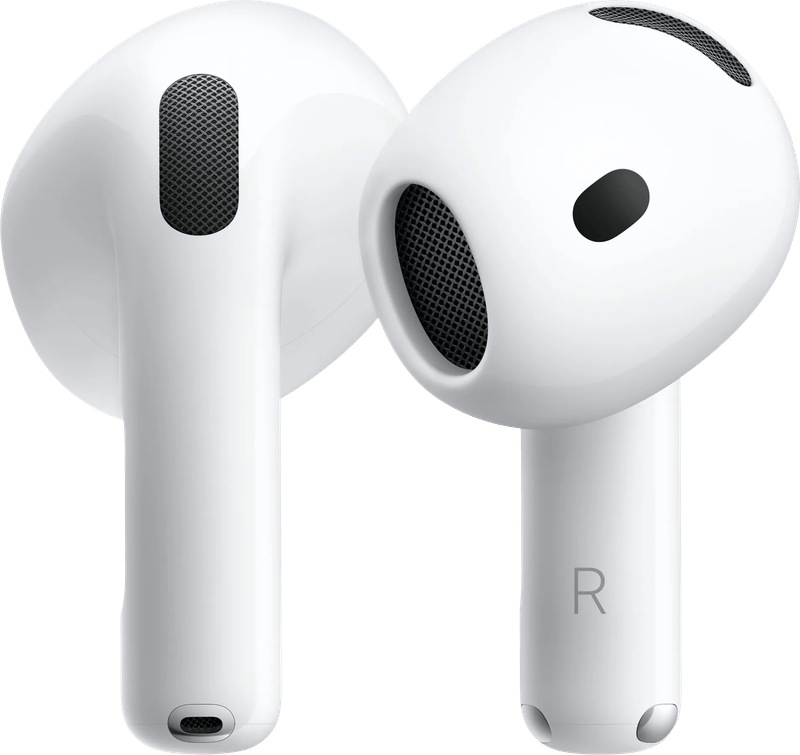
Apple AirPods 5: noise cancellation without ear tips
The AirPods 5, introduced in September 2026, also keep the open design. According to Apple, they filter up to 50 percent more noise than the AirPods 4 with ANC. But physics is physics. Without a seal, they cannot match the Pro models. The version with a wireless charging case lasts one hour longer and lets you adjust the volume by swiping the stem.
Sony WF-1000XM6: the strongest choice for Android
Eight hours with noise canceling over AAC, five with LDAC. That is what Sony states. The case also charges on Qi pads and brings the total time to 24 hours. Each earbud has two microphones and a bone conduction sensor, and multipoint is on board. The app does suggest a tip size, but it does not replace trying them yourself, because according to Sony, the left and right ears may need different sizes.
Bose QuietComfort Ultra Earbuds (2nd Gen): when quiet matters
Ear tips and stability bands in three sizes each, which combine into nine variations. For an extra charge, Bose offers a set with XS and XL sizes. Battery life is tight: six hours, only four with immersive audio. With Snapdragon Sound phones, aptX Adaptive works, and four microphones per earbud help with calls.
Samsung Galaxy Buds4 Pro: made for Galaxy phones
According to Samsung, the Pro version has a two-way system with an 11 mm woofer, plus adaptive noise cancellation that is supposed to recognize voices and sirens. Samsung quotes up to six hours with ANC and IP57. The case charges via a USB-C cable or wirelessly. With an iPhone, you give up too much here. Incidentally, the cheaper Galaxy Buds4 without the Pro are an open design and reduce noise correspondingly less.
Sennheiser MOMENTUM True Wireless 5: long battery life, replaceable battery
Sennheiser quotes twelve hours per charge and up to 40 hours with the Qi charging case. The battery is the more interesting part. According to the manufacturer, the earbuds and case have cells that you can replace yourself with a small screwdriver. For calls, Sennheiser combines six microphones with two bone conduction sensors. aptX Adaptive up to 24-bit/96 kHz and aptX Lossless only work with compatible Android phones.
Which in-ears are right for me?
- iPhone, on the go a lot, sports: AirPods Pro 3. They offer the strongest noise reduction in Apple’s lineup, IP57 and heart rate measurement.
- iPhone, but no ear tips: AirPods 5, ideally with the wireless charging case for the longer battery life.
- Android and lots of calls: Sony WF-1000XM6 or Sennheiser MOMENTUM True Wireless 5, both with bone conduction sensors.
- Galaxy smartphone: Galaxy Buds4 Pro, because only here do SSC-UHQ and the Galaxy features work fully.
- Hard-to-fit ears: Bose QuietComfort Ultra Earbuds (2nd Gen) with their combinable stability bands.
If you want your headphones to last many years, the replaceable battery speaks for Sennheiser.
On price: the AirPods 5 are in the mid-range, all the others in the upper price range. And on long flights, none of these in-ears comes close to a good pair of over-ears. If you mainly want quiet on planes, take a look at the larger noise-canceling headphones (in German). If you are choosing between iPhone models, read our iPhone comparison (in German).
For buying during the sales weeks, our guide Black Friday headphones (in German) has tips on strike-through prices and bundles.
Frequently asked questions
Do AirPods work with Android?
Only with the basic functions. Apple ties automatic device switching, live translation and hearing health features to current Apple devices. Samsung is similar: the SSC-UHQ codec requires a Galaxy smartphone. With an Android phone, the money for AirPods Pro 3 is better spent elsewhere.
Why is fit so important with in-ears?
Without a seal, no noise cancellation works properly. Closed in-ears with silicone tips seal the ear canal. Sony includes four sizes, Apple five with the AirPods Pro 3, and Bose combines three tips with three stability bands. Open designs like the AirPods 5 let more of the surroundings through.
Which in-ears are good for phone calls?
The Sony WF-1000XM6 and the Sennheiser MOMENTUM True Wireless 5. Both add bone conduction sensors to their microphones, which detect your own voice through vibrations. On the street and in the wind, that achieves more than the number of microphones alone.
Which in-ears have a replaceable battery?
The Sennheiser MOMENTUM True Wireless 5. According to the manufacturer, the earbuds and case have cells that you can replace yourself with a small screwdriver. Sennheiser also specifies twelve hours per charge and up to 40 hours with the case. If you want your headphones to last many years, that speaks for Sennheiser.
What do LDAC and aptX bring to in-ear headphones?
Only something if the smartphone supports the codec. On the iPhone, all models run over AAC. With Sony, battery life drops from eight to five hours with LDAC. aptX Lossless on Sennheiser and aptX Adaptive on Bose only work with compatible Android phones.
Sources
- Apple: AirPods Pro 3, technical specifications
- Apple: AirPods 5, technical specifications
- Apple Newsroom: introducing AirPods 5
- Sony WF-1000XM6 Help Guide: available operating time
- Sony: WF-1000XM6 specifications
- Sony WF-1000XM6 Help Guide: replacing the earbud tips
- Bose: QuietComfort Ultra Earbuds (2nd Gen) specifications
- Bose: finding your fit
- Samsung: Galaxy Buds4 Pro and Galaxy Buds4 compared
- Samsung: Galaxy Buds4 Pro
- Sennheiser: introducing the MOMENTUM True Wireless 5
Where to buy
- Apple AirPods Pro 3View at CoolblueCheck price at Amazon.de
- Apple AirPods 5View at CoolblueCheck price at Amazon.de
- Sony WF-1000XM6View at CoolblueCheck price at Amazon.de
- Bose QuietComfort Ultra Earbuds (2. Gen.)View at Coolblue
- Samsung Galaxy Buds4 ProView at CoolblueCheck price at Amazon.de
- Sennheiser MOMENTUM True Wireless 5View at Coolblue