Contents13 sections
This guide was first published in German on handgetestet.de.
Whether an IPL device works isn’t decided by the brand. Hair color and skin tone decide. If your hair is suitable, a Philips Lumea from the 9900 series is a well-rounded choice in our view, because it runs both corded and cordless and comes with attachments for body, face, bikini line and underarms. If that’s too expensive, go for the Braun Silk·expert Pro 3.
Does IPL work on my hair at all?
That’s the first and most honest question. Germany’s Federal Office for Radiation Protection (BfS) writes that IPL works best when the hair contains a lot of melanin and the skin little. According to the BfS, red, light blond, gray or white hair contains only a little of it. In that case, the desired effect may not be achieved. No sensor changes anything about this physics.
The manufacturers see it similarly. Philips names naturally dark blond, brown and black hair as suitable; with light blond, gray, red or white hair, the treatment is not effective. Braun and Ulike say almost the same.
Our own long-term test confirms this: with the Philips Lumea Advanced, dark hair barely grew back, while light and gray hair showed no effect.
And if my skin is darker?
Philips and Braun state skin tones I to V, while Ulike names tones I to IV in its guide. According to the BfS, the darker the skin, the higher the risk of side effects. According to the manufacturers, the skin sensors are designed not to fire on skin that is too dark.
How do the devices differ in everyday use?
Mainly in the treatment schedule. The schedules vary widely, and if you have little time, you should know this beforehand. Then the attachments: for the face and bikini line, you need a small precision attachment. If you only get a body attachment, you have a tool for the legs, not for the upper lip.
Cord or battery? Cordless is more convenient on the legs and back. A power cord is less of a nuisance than many think, because according to the manufacturers a session takes minutes rather than hours.
How safe are home devices?
According to the BfS, home devices usually reach a lower energy density than devices used in salons. They are still not harmless. With incorrect settings, the BfS lists burns, hyper- or hypopigmentation and scars as possible consequences. The skin should not be tanned before treatment. You should avoid teas or medications containing St. John’s wort, because they increase sensitivity to light.
Moles and pigmented spots don’t belong under the flash. The BfS recommends having them checked by a dermatologist beforehand, because otherwise a later cancer diagnosis can be made more difficult. Braun additionally excludes tattoos, permanent makeup, warts and dermal fillers. On eye protection, the BfS is clear: if the radiation hits the eye, damage is possible. Braun, by contrast, states that no protective eyewear is required for the Skin i·expert. Never work toward the eyes; that applies to every device. In case of skin conditions, medication or uncertainty, the BfS advises seeking medical advice.
Five IPL devices to choose from in 2026
| Model | Attachments according to the manufacturer | Special feature | Best for |
|---|---|---|---|
| Philips Lumea IPL 9900 (BRI951) | 4: body, face, bikini line, underarms | Corded and cordless, skin sensor, app | Most people who want to treat the whole body |
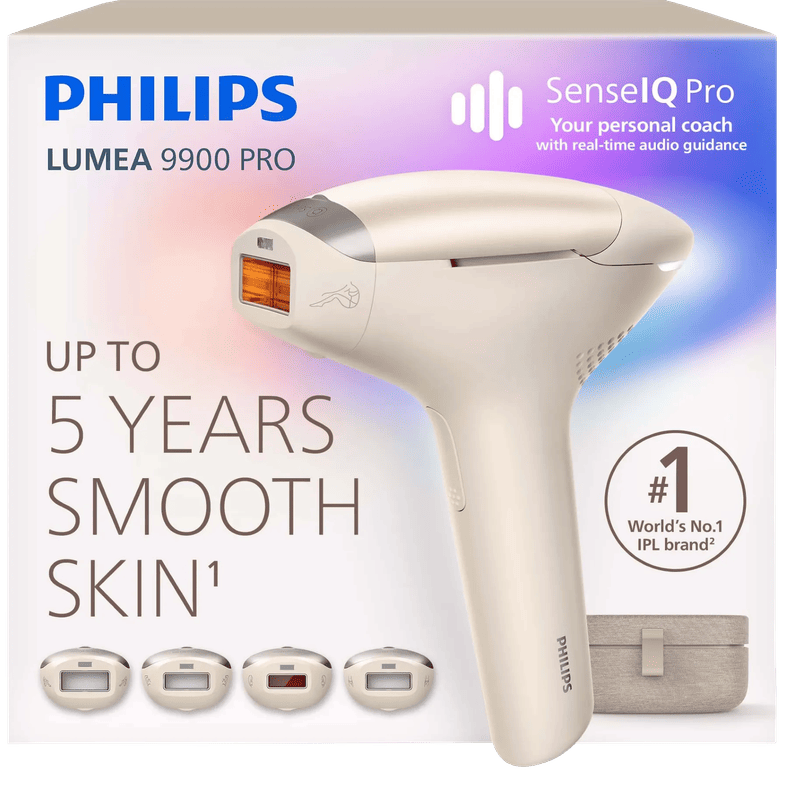
| Philips Lumea IPL 9900 Pro | 4 curved attachments | SenseIQ Pro with feedback on skin contact and coverage | Anyone who wants real-time guidance |
| Braun Skin i·expert PL7431 | 4: SmartFlex, intimate, mini precision, standard | 3 settings, app with coverage tracker, 400,000 flashes | Tech fans with a big budget |
| Braun Silk·expert Pro 3 | Standard, wide, precision (depending on the bundle) | Skin sensor, power cord, 300,000 flashes | Getting started on a smaller budget |
| Ulike Air 10 Pro | Depending on the bundle | Sapphire cooling, two lamps, skin sensor | Anyone who doesn’t tolerate heat well during flashing |
Philips Lumea IPL 9900 (BRI951)
According to Philips, the device works both corded and cordless and comes with four attachments in this version. The SmartSkin sensor detects the skin tone and helps choose the light intensity. Philips plans four treatments 14 days apart, then one every four weeks. Hardly any schedule in the field is more relaxed. The 9900 is also available with two or three attachments; if you want to treat your face and bikini line, check the bundle number.
Philips Lumea IPL 9900 Pro
On top of that, the Pro version adds voice guidance and SenseIQ Pro. According to Philips, the system gives feedback on skin contact and coverage and tracks progress. Philips advertises more than 80 percent hair reduction after two treatments, citing average results on the legs in a footnote. This figure comes from the manufacturer. The extra cost over the standard 9900 is considerable, and in most cases we don’t think it’s justified just for better guidance.
Braun Skin i·expert PL7431
Braun doesn’t skimp on accessories here: SmartFlex, intimate, mini precision and standard attachments, plus a Venus razor. The sensor measures skin tone and adjusts the intensity, with Sensitive, Standard and Power settings to choose from. The app shows in real time which area has already been treated. Braun states 95 percent hair reduction after three treatments, based on its own study. Six sessions every two weeks are planned.
Braun Silk·expert Pro 3
The cheaper way into Braun. According to the manufacturer, SensoAdapt technology measures skin tone 80 times per second and adjusts each flash. The device is corded. According to Braun, a full-body treatment takes 13 minutes, but once a week for four to twelve weeks. If you can’t keep up that routine, you throw away the price advantage. On Amazon, the device usually appears as the PL3222 with three attachments, and the equipment varies depending on the model number.
Ulike Air 10 Pro
Ulike fits a sapphire surface whose contact temperature, according to Ulike, is no more than 15.6 degrees Celsius. Two lamps are said to cover a larger area. According to Ulike, the skin sensor sets the power and blocks the flash on skin that is too dark. The schedule is demanding: two to three treatments per week in the first month. In addition, Ulike’s guide only names skin tones I to IV as suitable. That is one level fewer than with Philips and Braun.
Which device suits me?
- Whole body, little effort: Philips Lumea IPL 9900 with four attachments. The two-week rhythm fits into almost any routine.
- Smaller budget: Braun Silk·expert Pro 3, provided you stick to the weekly schedule and the cord doesn’t bother you.
- Lots of guidance wanted: Braun Skin i·expert or Lumea 9900 Pro. Both cost significantly more.
- Sensitive to heat: Ulike Air 10 Pro, provided your skin tone falls within Ulike’s narrower range.
- Light blond, red or gray hair: Better no IPL device. A good razor is the more honest solution in that case, for men, for example, from our electric shaver guide (in German).
Do the results last?
All manufacturers stress that results vary individually and only last with touch-up treatments. So an IPL device doesn’t replace shaving overnight. It reduces the effort over months if your hair and skin are suitable.
Frequently asked questions
Does IPL work on light or gray hair?
Hardly. According to Germany's Federal Office for Radiation Protection (BfS), IPL works best when the hair contains a lot of melanin and the skin little. Red, light blond, gray or white hair contains little of it, so the effect may not be achieved. Philips, Braun and Ulike take a similar view. A razor is the more honest solution in that case.
Can I use an IPL device on dark skin?
Only to a limited extent. Philips and Braun state skin tones I to V, while Ulike names tones I to IV. According to the BfS, the darker the skin, the higher the risk of side effects. According to the manufacturers, the skin sensors are designed not to fire on skin that is too dark.
How safe are IPL devices for home use?
According to the BfS, home devices usually reach a lower energy density than salon devices, but they are still not harmless. With incorrect settings, burns, pigmentation disorders and scars are possible. Have moles checked by a dermatologist beforehand, never work toward the eyes, and seek medical advice if you take medication or have skin conditions.
How often do I need to treat with IPL?
The schedules vary widely. Philips plans four treatments 14 days apart, then one every four weeks. Braun plans once a week for four to twelve weeks with the Silk·expert Pro 3, Ulike two to three times a week in the first month. If you have little time, check this beforehand.
Is IPL hair removal permanent?
Not without upkeep. All manufacturers stress that results vary individually and only last with touch-up treatments. An IPL device doesn't replace shaving overnight; it reduces the effort over months if your hair and skin are suitable. Percentages for hair reduction come from the manufacturers.
Sources
- Federal Office for Radiation Protection: permanent hair removal (epilation), as of August 4, 2026 (in German)
- Philips: Lumea IPL compared
- Philips: Lumea IPL 9900 Pro
- Philips: Is Lumea suitable for all skin tones and hair colors?
- Philips: using the Lumea 9900 Pro
- Braun: Skin i·expert PL7431
- Braun: Silk·expert Pro 3 PL3221
- Ulike: Air 10 Pro
- Ulike: how to use
- Ulike: IPL and dark skin
Where to buy
- Philips Lumea IPL 9900 BRI951View at CoolblueAvailable in Germany: CoolblueCheck price at Amazon.deAvailable in Germany: Amazon.de
- Braun Silk-expert Pro 3 PL3222Check price at Amazon.deAvailable in Germany: Amazon.de
- Philips Lumea IPL 9900 ProView at CoolblueAvailable in Germany: CoolblueCheck price at Amazon.deAvailable in Germany: Amazon.de
- Braun Skin i-expert PL7431Check price at Amazon.deAvailable in Germany: Amazon.de
- Ulike Air 10 ProCheck price at Amazon.deAvailable in Germany: Amazon.de