Contents11 sections
This guide was first published in German on handgetestet.de.
Someone weighs 65 kilos and orders the 10-kilo version because „more pressure“ sounds like more effect. Often, after just two nights, they’re back under their old comforter. With weighted blankets, buying too heavy is more common than buying too light. As a starting point for adults, we consider a blanket weighing about one tenth of your own body weight, with glass beads in small pockets and a cover that can go in the washing machine, to be sensible. Everything else is fine-tuning.
Despite the German name „Therapiedecke“ (therapy blanket), a blanket like this is not a therapy. What research says about it is further down, with sources.
How heavy, how big, what filling
The common rule of thumb is about 10 percent of body weight, which is also what the German health magazine Apotheken Umschau says. In clinical studies, blankets for adults mostly weighed between 6 and 12 kilos. At a body weight of 70 kilos, you end up at around 7 kilos. And if you’re between two weights? When in doubt, the lighter one. The pressure should feel pleasant, not constricting. Manufacturers see it differently: Original Therapiedecke also advises the lighter weight, CURA names 10 to 15 percent, WOLTU 8 to 12 percent.
A blanket like this doesn’t need to hang over the edge of the bed. It should lie on your body, not on the mattress. For one person, 135 × 200 or 150 × 210 cm is enough.
Four of the five blankets below are filled with glass beads. Small, quilted pockets are crucial so nothing slides to the side. One exception is firmly attached stainless steel balls, as used in the zipper version of the Original Therapiedecke. They don’t shift, but this inner blanket can’t be washed.
Which brings us to washing. An 8-kilo blanket doesn’t fit in every household washing machine, and the range between manufacturers is wide: CURA allows 60 degrees Celsius for the Pearl Classic, Original Therapiedecke allows 30 degrees at no more than 800 rpm for its loop insert, and WOLTU rules out washing the flannel/sherpa blanket entirely. If you tend to sweat, plan on a removable cover, or better two. Then there’s warmth. Heavy blankets lie close to the body, and it can get warm underneath. In summer, cotton feels less bulky than plush or sherpa.
What studies show and what they don’t
The best-known study comes from Sweden. In 2020, Ekholm and colleagues randomly assigned a total of 120 adults with sleep disorders and a psychiatric diagnosis (such as depression, bipolar disorder, anxiety disorder, ADHD) to two groups: for four weeks, one group slept under an 8-kilo chain blanket, the other under a light control blanket made of plastic chains. Ten participants switched to 6 kilos because 8 was too heavy for them. In the group with the heavy blanket, the score on the insomnia questionnaire dropped significantly more. However, the authors themselves point out limitations, including the lack of sleep diaries and no measurement in a sleep lab.
In Apotheken Umschau, sleep researcher Christine Blume points out that objective measurements have not confirmed longer sleep; a review calls for more research. Dieter Riemann of the German Sleep Society (Deutsche Gesellschaft für Schlafforschung und Schlafmedizin) considers the blankets often not yet well studied scientifically and advises having persistent sleep problems checked by a doctor first. Our reading: a weighted blanket can feel pleasant. It can’t treat anything.
Who is better off without one
For babies, the situation is clear. In a 2024 statement, CPSC Commissioner Richard Trumka refers to the U.S. Consumer Product Safety Commission’s advice not to use weighted blankets and swaddles on infants, and to several deaths; the statement also cites the American Academy of Pediatrics (AAP), noting reduced oxygen levels. According to Apotheken Umschau, children under three years or under 25 kilos of body weight should not use a weighted blanket at all, because they could become trapped or suffocate. The same applies to anyone who can’t push the blanket off on their own.
With serious cardiovascular disease, respiratory problems or circulatory disorders, ask your doctor first. CURA additionally names severely limited muscle function and an increased risk of pressure sores. People with claustrophobia may experience the pressure as stress rather than calm. WOLTU explicitly rules out its blanket for pregnant women. Here, too: consult a doctor first.
Five weighted blankets compared
| Model | Filling and cover according to the manufacturer | Sizes, weights, washing | Best for |
|---|---|---|---|
| Original Therapiedecke (formerly Gravity), set with 2 covers | Glass beads in small pockets, cotton insert with loops; covers made of cotton, flannel or a cotton-polyester blend | 135 × 200 cm (4 to 12 kg), also 150 × 220 cm; insert and covers 30 °C | Adults who want to switch between a warm and a breathable cover |
| CURA Pearl Classic | Glass beads and polyester wadding in pockets, top side 100% cotton, Oeko-Tex Standard 100 | 150 × 210 cm in 3 to 15 kg (2 kg steps), also 135 × 200 cm; 60 °C | Heavier people and anyone who wants to wash hot |
| Original Therapiedecke zipper version (formerly Balance) | Firmly attached stainless steel balls, cotton insert, zippered cover | 135 × 200 cm in 6 to 12 kg, also 150 × 220 cm; only the cover is washable (30 °C) | Anyone who doesn’t want shifting filling |
| CURA Minky | Glass beads and polyester wadding in 15 × 15 cm pockets, polyester plush fabric | 140 × 200 cm, 6 kg; 40 °C | Evenings on the sofa, as a layer over the comforter |
| WOLTU weighted blanket flannel/sherpa | Glass beads (0.8 to 1 mm) in 10 × 10 cm pockets, one side flannel, one sherpa | 135 × 200 cm (7 kg), 150 × 200 cm (7, 9, 11 kg); not washable | Anyone who gets cold at night and can do without washing |
Original Therapiedecke set
This blanket became known under the name Gravity; today it’s sold as Original Therapiedecke. The set contains the loop insert with glass beads, plus two covers. You can choose cotton for summer, flannel for winter and an all-season fabric made of cotton and polyester. It’s precisely because of this switch that the set comes first for us: one cover is on the blanket, the other is in the wash. The insert itself can go in the machine at 30 degrees, no dryer. The manufacturer’s weight chart assigns a body weight of 70 to 89 kilos to the 8-kilo blanket and 50 to 69 kilos to the 6-kilo blanket.
CURA Pearl Classic
The Swedish brand CURA builds the Pearl Classic from seven layers, with glass beads and polyester wadding in pockets and a cotton top side. Two things set it apart. The weights range from 3 to 15 kilos in 2-kilo steps, so even very heavy people can find a suitable weight. And according to the manufacturer, it can handle 60 degrees. It doesn’t have its own cover, but eight loops hold a regular duvet cover. CURA gives its warmth rating as 3.1 tog and classifies it as cool.
Original Therapiedecke with zipper
The former Balance uses stainless steel balls that sit firmly in the fabric and don’t shift. That sounds like the better system. In everyday use, not so much, because according to the manufacturer, the insert is not washable, not even by hand. It’s aired out and spot-cleaned; only the cover is washed. If shifting beads bother you and you always sleep with a clean cover, you can live with it.
CURA Minky
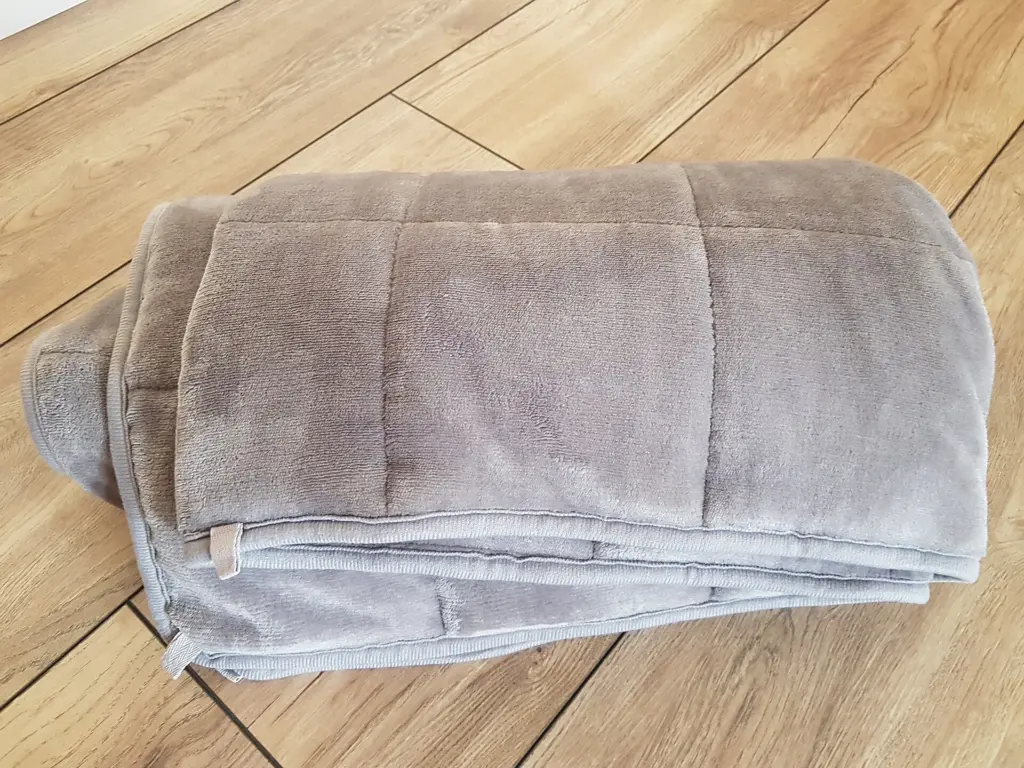
Not a comforter in the strict sense. CURA describes the Minky as a blanket for the sofa or as a layer over your regular comforter, 140 × 200 cm in size and 6 kilos in weight, with soft polyester plush. It can go in the machine at 40 degrees. The manufacturer doesn’t recommend it for children under three. If all you want is a little weight on your shoulders and legs in the evening, you don’t need more.
WOLTU flannel/sherpa
One side flannel, one side sherpa, with fine glass beads in 10-centimeter pockets in between. That’s a decidedly warm construction. And one that can’t be washed: WOLTU rules out washing, tumble drying and ironing, and only provides for spot cleaning. According to the manufacturer, pregnant women, children and people who can’t move a heavy blanket on their own should not use it. We advise against it as an everyday comforter. For people who always feel cold on the sofa, it works.
Our recommendations
- As the standard for adults: Original Therapiedecke set with two covers, weight according to the 10 percent rule.
- If you weigh well over 100 kilos or want to wash hot: CURA Pearl Classic.
- If the beads shouldn’t shift: the zipper version, knowing that only the cover can go in the wash.
- For the sofa: CURA Minky.
By the way, a weighted blanket doesn’t replace every regular comforter. In winter, some people use it as an extra layer. What the comforter underneath should be able to do is explained in our article on comforters. If you’re only after a soft blanket for the sofa without the weight, our throw blanket guide (in German) is the lighter solution. Is waking up more of a problem than falling asleep? Then sunrise alarm clocks (in German) are the better topic.
Frequently asked questions
How heavy should a weighted blanket be?
The common rule of thumb is about 10 percent of body weight, so around 7 kilos at 70 kilos. If you're between two weights, choose the lighter one when in doubt; the pressure should feel pleasant, not constricting. Manufacturers see it differently: CURA names 10 to 15 percent, WOLTU 8 to 12 percent.
Does a weighted blanket help you sleep?
A Swedish study with 120 adults showed better scores on an insomnia questionnaire, but the authors themselves point out limitations. Objective measurements have not confirmed longer sleep, and a review calls for more research. A weighted blanket can feel pleasant, but it can't treat anything.
Can you wash a weighted blanket?
That depends heavily on the model. CURA allows 60 degrees Celsius for the Pearl Classic, and Original Therapiedecke allows 30 degrees at no more than 800 rpm for its loop insert. WOLTU rules out washing the flannel/sherpa blanket entirely. A removable cover, or better two, therefore makes sense.
Who is a weighted blanket not suitable for?
Babies and, according to the German health magazine Apotheken Umschau, children under three years or under 25 kilos, as well as anyone who can't push the blanket off on their own. With serious cardiovascular disease, respiratory problems or circulatory disorders, consult a doctor first. WOLTU explicitly rules out its blanket for pregnant women.
Glass beads or stainless steel balls as filling?
Glass beads in small, quilted pockets are the usual filling. Firmly attached stainless steel balls, as in the zipper version of the Original Therapiedecke, don't shift. However, according to the manufacturer, this insert can't be washed; only the cover is washed.
What size does a weighted blanket need to be?
It doesn't need to hang over the edge of the bed; it should lie on your body, not on the mattress. For one person, 135 × 200 or 150 × 210 cm is enough.
Sources
- Apotheken Umschau: Sleeping under a weighted blanket (02/11/2026, in German)
- Ekholm, Spulber, Adler: A randomized controlled study of weighted chain blankets for insomnia in psychiatric disorders, J Clin Sleep Med 2020
- U.S. Consumer Product Safety Commission, statement by Commissioner Richard Trumka on weighted infant blankets (04/15/2024)
- Original Therapiedecke: Weighted blanket set with 2 covers
- Original Therapiedecke: Insert with loops (formerly Gravity)
- Original Therapiedecke: Insert with zipper (formerly Balance)
- Original Therapiedecke: Washing instructions
- CURA of Sweden: Pearl Classic
- CURA of Sweden: Minky
- WOLTU: Weighted blanket flannel/sherpa
Where to buy
- Original Therapiedecke (früher Gravity), Set mit 2 BezügenCheck price at Amazon.de
- CURA Pearl ClassicCheck price at Amazon.de
- Original Therapiedecke ReißverschlussCheck price at Amazon.de
- CURA MinkyCheck price at Amazon.de
- WOLTU Gewichtsdecke Flanell SherpaCheck price at Amazon.de