Contents13 sections
This guide was first published in German on handgetestet.de.
The bathroom window is tilted open after a shower, and in the evening it’s still tilted. If all you want is to get rid of that forgetfulness, you don’t need a motor. The Winflip closes a tilted window after a set time, purely mechanically, with no electricity and no battery. Only when the window should react to rain or open remotely does it become electrical, and then we are talking about a chain actuator, a rain sensor and a qualified electrician.
How does a window close without any electricity?
With the Winflip, a cylinder with a spring sits on top of the sash, and a thin cord connects it to the frame. You pull the handle at an angle, the locking gives way, and the window tilts open. The spring then pulls the sash shut again in a damped motion. According to the data sheet, you can set the airing time steplessly between 5 minutes and 5 hours; the tilt opening may be up to 22 centimeters, and the sash must be at least 48 centimeters wide. Tilting it open takes around 2 kilograms of pulling force at first and about 6 at the end.
What the Winflip can’t do: detect rain. It closes by the clock, not by the weather.
Which components are available?
| Model | Job | Power and system | Best for |
|---|---|---|---|
| Winflip automatic window closer | closes a tilted window after 5 min to 5 h | no electricity, no hub | bathroom, kitchen, storage room |
| Homematic IP window handle sensor HmIP-SRH | reports open, tilted, closed | battery, Homematic IP hub | overview in the app, lowering the heating |
| Homematic IP rain sensor HmIP-SRD | detects rain and snow | power supply 10 to 19 V, Homematic IP hub | warning or trigger for actuators |
| Homematic IP shutter actuator HmIP-FROLL | switches a motor open and closed | 230 V flush-mounted, neutral wire required | wireless control of an actuator |
| Topp C20 chain actuator 230 V | opens and closes tilt and top-hung sashes | 230 V or 24 V, 300 N push force | hard-to-reach transom windows |
Winflip automatic window closer
For the classic tilt-and-turn window in the bathroom or kitchen, this is our recommendation. It is mounted on the handle side with a 2.5 millimeter drill bit and a Phillips screwdriver; you must not drill through the sash. If the hardware runs stiffly, the manufacturer advises lubricating it first or having it adjusted by a professional. The closing force is at most 75 newtons. One buyer reports on the ELV site (German retailer) that this was not enough for his heavy window. If you have large uPVC windows with triple glazing, test this beforehand with one finger on the top edge of the sash: if the tilted window closes easily, it will work.
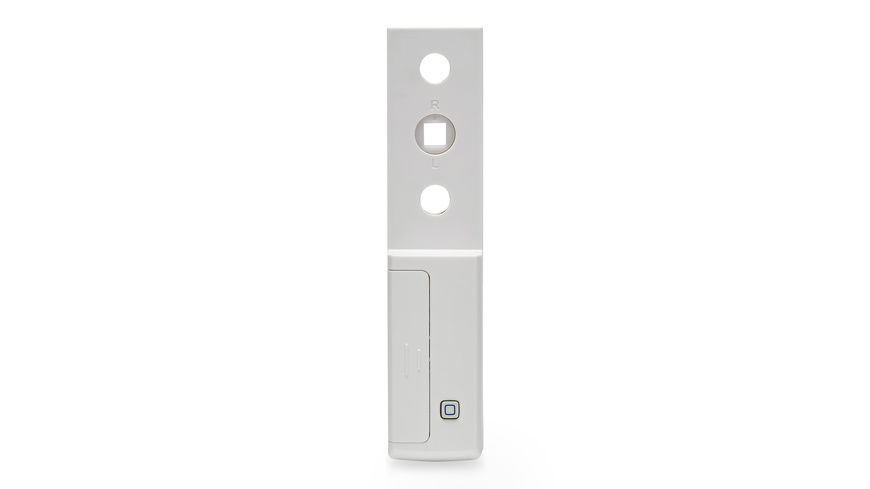
Homematic IP window handle sensor HmIP-SRH
The sensor sits under the window handle and uses its position to detect whether the window is open, tilted or closed. A simple magnetic contact on the frame usually only reports open or closed. According to ELV, the battery typically lasts two years. It won’t work without an access point or hub. How contacts and thermostats work together is explained in our guides to door and window contacts (in German) and smart radiator thermostats (in German).
Homematic IP rain sensor HmIP-SRD
According to eQ-3, a heated sensor surface detects even small amounts of rain and snow and then dries quickly so that dew does not trigger a false alarm. Mounting at a 45-degree angle is recommended, and the sensitivity can be adjusted in the app. Two things are in the fine print of the data sheet: the power supply is not included, and the housing is only rated IP44. On its own, the sensor sends a notification to your phone. It can only close something via an actuator module with a motor.
Homematic IP shutter actuator HmIP-FROLL
ELV explicitly lists closing roof windows in combination with the rain sensor as a use case. The flush-mounted actuator switches motors up to 500 VA and needs a neutral wire in the wall box. ELV tested it with tubular motors from several brands; chain actuators are not on the list. Whether a particular actuator works with it is something a qualified electrician will check using the wiring diagram.
Topp C20 chain actuator 230 V
Topp describes the C20 for roof windows in residential buildings as well as top-hung and tilt windows. Push force 300 newtons, pull force 200, stroke switchable to 24 or 36 centimeters. At 8 millimeters per second, it moves deliberately slowly, around 46 seconds for the full stroke. It detects the closed end position by the rise in current. Protection rating IP30, so indoor use only.
Chain actuator or window closer: which is right for me?
The chain actuator opens and closes via a button, schedule or sensor and also reaches a transom window 3 meters up. In return, it needs a cable at the window, often an actuator module in the wall and someone qualified to connect 230 volts. The Winflip needs no cable but only opens when you pull it by hand. For forgotten tilted windows, it is enough. If you want to sleep soundly on vacation during a thunderstorm, there is no way around a motor and sensor. For roof windows, see our guide to smart roof windows (in German), because VELUX and Roto have their own retrofit motors.
How dangerous is a window that closes by itself?
More dangerous than you might think. The Winflip instructions clearly warn of the risk of crushing and advise not to leave children unsupervised near tilted windows. The closing area must stay clear: no flower pots, no towel. In wind and drafts, the sash can even slam shut earlier. For the C20, Topp does not list its own anti-trap protection on the product page. With the larger C40, on the other hand, Topp limits the pulling force over the last 10 centimeters. Ask specifically about this when buying a motorized actuator, especially for a child’s room.
Does it really save heating energy?
ELV advertises the Winflip with rooms that cool down less. Neither the retailer nor the manufacturer gives a figure. The effect is plausible where a window stays tilted for hours in winter while the radiator below is running. A combination does more. A handle sensor reports the tilt position, and the thermostat in the same room turns down until the sash is closed again. But don’t expect miracles: if you already air your rooms with short, full bursts, you will save little with either.
Is an automatically closed window also burglar-proof?
No. The German police state unmistakably on their advice site K-Einbruch: tilted windows are open windows and easy for burglars to open. Windows should be locked even when you’re away briefly. A window closer does pull the sash against the frame, but the handle remains in the tilt position. Winflip itself admits that the locking can break during a break-in attempt and that an insurer could consider the window not locked. The manufacturer therefore advises turning the handle when you are away for longer. Electric multi-point locks do exist; Topp, for example, offers one for 24 volts, but that is a job for the window installer.
For windows that are often left tilted, such as a ground-floor toilet, the police recommend a tested grille according to DIN EN 1627 (European burglar resistance standard) from resistance class RC 2. How to retrofit windows against prying is covered in our guide to window security (in German).
Which system for which window?
- Bathroom, kitchen, storage room, window gets forgotten: Winflip, no cable and no app.
- You just want to know whether anything is still tilted somewhere: window handle sensor HmIP-SRH with access point.
- Transom or window just below the ceiling that should close when it rains: a chain actuator such as the Topp C20, rain sensor HmIP-SRD and a suitable actuator module, installed by an electrician.
- Ground floor, long absence: turn the handle. No automatic device replaces that.
Frequently asked questions
How does a window close automatically without electricity?
With the Winflip, a cylinder with a spring sits on top of the sash, and a cord connects it to the frame. Pulling the handle at an angle tilts the window open; the spring then pulls the sash shut again in a damped motion. It does not detect rain; it closes on a timer.
Is the Winflip strong enough for heavy windows?
The closing force is at most 75 newtons; one buyer reports on the ELV site (German retailer) that this was not enough for his heavy window. With large uPVC windows with triple glazing, test beforehand with one finger on the top edge of the sash: if the tilted window closes easily, it will work.
What is the difference between a chain actuator and a window closer?
A chain actuator opens and closes via a button, schedule or sensor and can also reach high transom windows. However, it needs a cable, often an actuator module in the wall and someone qualified to connect 230 volts. The Winflip needs no cable but only opens when you pull it by hand.
Is an automatically closed window burglar-proof?
No. The closer pulls the sash against the frame, but the handle stays in the tilt position. Winflip admits that the locking can break during a break-in attempt and that an insurer could consider the window not locked. When you are away for longer, turn the handle.
Does a window closer save heating energy?
Neither retailer nor manufacturer gives a figure. The effect is plausible where a window stays tilted for hours in winter. A combination of handle sensor and thermostat, which turns the heating down until the sash is closed, does more. With short bursts of airing, there is little to gain.
How dangerous is a window that closes by itself?
The Winflip instructions warn of the risk of crushing and advise not to leave children unsupervised near tilted windows. The closing area must stay clear. For the Topp C20, the manufacturer does not list its own anti-trap protection; ask specifically about it when buying a motorized actuator.
Sources
- ELV: Winflip automatic window closer
- Winflip: installation instructions (PDF)
- Winflip: data sheet (PDF)
- Winflip: tips for correct operation (PDF)
- ELV: Homematic IP window handle sensor HmIP-SRH
- ELV: Homematic IP rain sensor HmIP-SRD
- eQ-3: data sheet rain sensor HmIP-SRD (PDF)
- ELV: Homematic IP shutter actuator HmIP-FROLL
- Topp: chain actuator C20
- Topp: chain actuator C40
- Topp: electric multi-point lock M00
- German police, K-Einbruch: behavior tips
- German police, K-Einbruch: windows
Where to buy
- Winflip automatischer FensterschließerView at ELV
- Homematic IP Fenstergriffsensor HmIP-SRHView at ELVCheck price at Amazon.de
- Homematic IP Regensensor HmIP-SRDView at ELVCheck price at Amazon.de
- Homematic IP Rollladenaktor HmIP-FROLLView at ELVCheck price at Amazon.de
- Topp C20 Kettenantrieb 230 V (weiß)Check price at Amazon.de