Contents13 sections
This guide was first published in German on handgetestet.de.
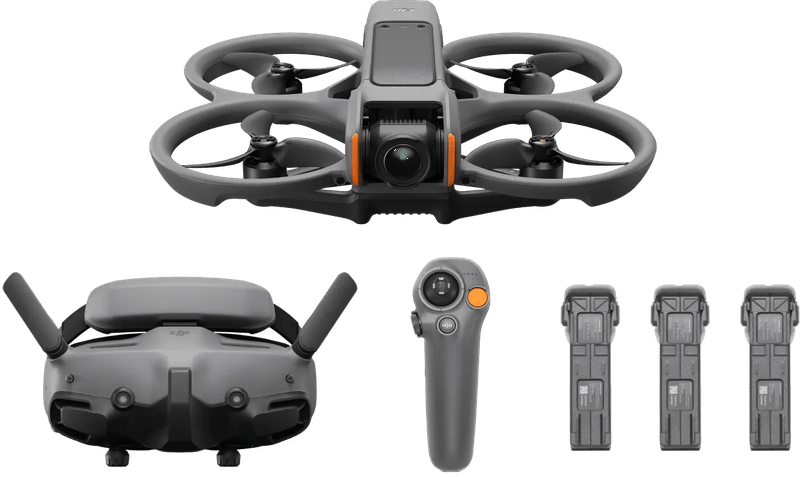
Do I really need a kit with a stick remote and a simulator right away for FPV? No. To try it out without risking a lot of money, a light drone with propeller guards and a motion controller is enough, such as the DJI Neo 2 in the kit with goggles. The DJI Avata 2 and Avata 360 deliver better footage. And the cheapest way to learn „real“ manual flying is a whoop kit from BetaFPV or Emax.
One rule applies to all of them. With goggles on your head, EU law requires a second person as an observer.
Classic camera drones for aerial photography are covered in our article on buying a drone (in German). This guide is about drones you control with video goggles from the aircraft’s point of view (FPV, first person view). All specifications come from the manufacturers.
Am I even allowed to fly alone with video goggles?
No. With goggles, you only see the camera image; the surroundings remain hidden from you. According to the EU agency EASA, that is not enough for the required visual line of sight. EU Regulation 2019/947 nevertheless allows FPV in the open category, but under clear conditions.
A second person, called a „UA observer“ by the EASA, stands right next to you. They keep the drone in sight with their own eyes at all times, watch the airspace and must be able to warn you immediately, for example by calling for an immediate landing. The EASA does not require a formal qualification for this, but the observer must know the rules. Germany’s Federal Aviation Office (Luftfahrt-Bundesamt, LBA) speaks of a second „qualified“ person. We therefore think it makes sense for the observer to be familiar with the A1/A3 online course as well. You as the remote pilot nevertheless remain fully responsible.
Spectators are a separate issue. Uninvolved people may not be overflown in the open category, and according to the EASA, flights in front of an audience belong in the „specific“ category, which requires authorization.
What do I need to register, and what do I need to prove?
If the drone has a camera, you must register with the Luftfahrt-Bundesamt, even under 250 g. When you do, you state your liability insurance. From a takeoff mass of 250 g, the A1/A3 proof of competency is mandatory before you take off for the first time; below that, it is recommended. A maximum of 120 m above ground and the geographical zones apply as with any drone. The map on dipul.de shows where you may fly (which other apps are useful is covered in the guide Drone map: where am I allowed to fly? (in German)); registration and the test run via lba-openuav.de.
The radio side is easily overlooked. Analog kits usually transmit the video signal in the 5.8 GHz band, where Germany’s Federal Network Agency (Bundesnetzagentur) permits 25 mW (EIRP) for general short-range radio applications. Many kits can do more. So check the transmit power setting.
Hand control or two sticks?
That is the most important decision. A motion controller (the RC Motion 3 at DJI) steers the drone by tilting your hand, and beginners get the hang of it quickly. A classic FPV remote with two sticks can do much more but takes practice, ideally in a simulator first. If you lose interest after the first crash, you usually moved to sticks too early.
Digital or analog?
Digital systems like DJI’s show a sharp image in the goggles. Analog kits cost less and are more robust. Their image, however, is considerably coarser.
What else should I look out for?
Propeller guards. In cinewhoop designs, they run all the way around the rotors and make contact with branches or walls less dangerous; all models here have them. Under 250 g (C0), you don’t need a proof of competency; from C1, it is mandatory. Obstacle sensing takes work off beginners‘ hands; the low-cost kits lack it entirely.
If you wear glasses, ask whether your own glasses fit under the video goggles. According to the manufacturer, the DJI Goggles N3 are designed for this; they have no diopter adjustment. And then there are the batteries. Small whoops fly only a few minutes per charge, so a single battery is little more than a foretaste.
Five beginner kits with goggles
| Model | Weight / class | Video | Flight time* | Best for |
|---|---|---|---|---|
| DJI Neo 2 (Motion Fly More Combo) | 151 g, 160 g with digital transmitter / C0 | 4K, up to 100 fps with controller | approx. 19 min. | Affordable FPV start with goggles |
| DJI Avata 2 (Fly More Combo) | approx. 377 g / C1 | 4K/100 fps, 1/1.3-inch | approx. 23 min. | Flying fun and first-person videos |
| DJI Avata 360 (Motion Fly More Combo) | approx. 455 g / C1 | 8K/60 fps 360°, two 1/1.1-inch | approx. 23 min. | Those who choose the angle later on the computer |
| BetaFPV Cetus X FPV Kit | Whoop, 1S battery / no C class stated | analog | approx. 5 min. | Learning to fly manually |
| Emax Tinyhawk III Plus RTF Kit | Whoop, 1S battery / no C class stated | analog or HDZero | not stated | Tinkerers and freestyle newcomers |
* Manufacturer figure under laboratory conditions; usually less outdoors.
DJI Neo 2 with goggles: the gentlest start
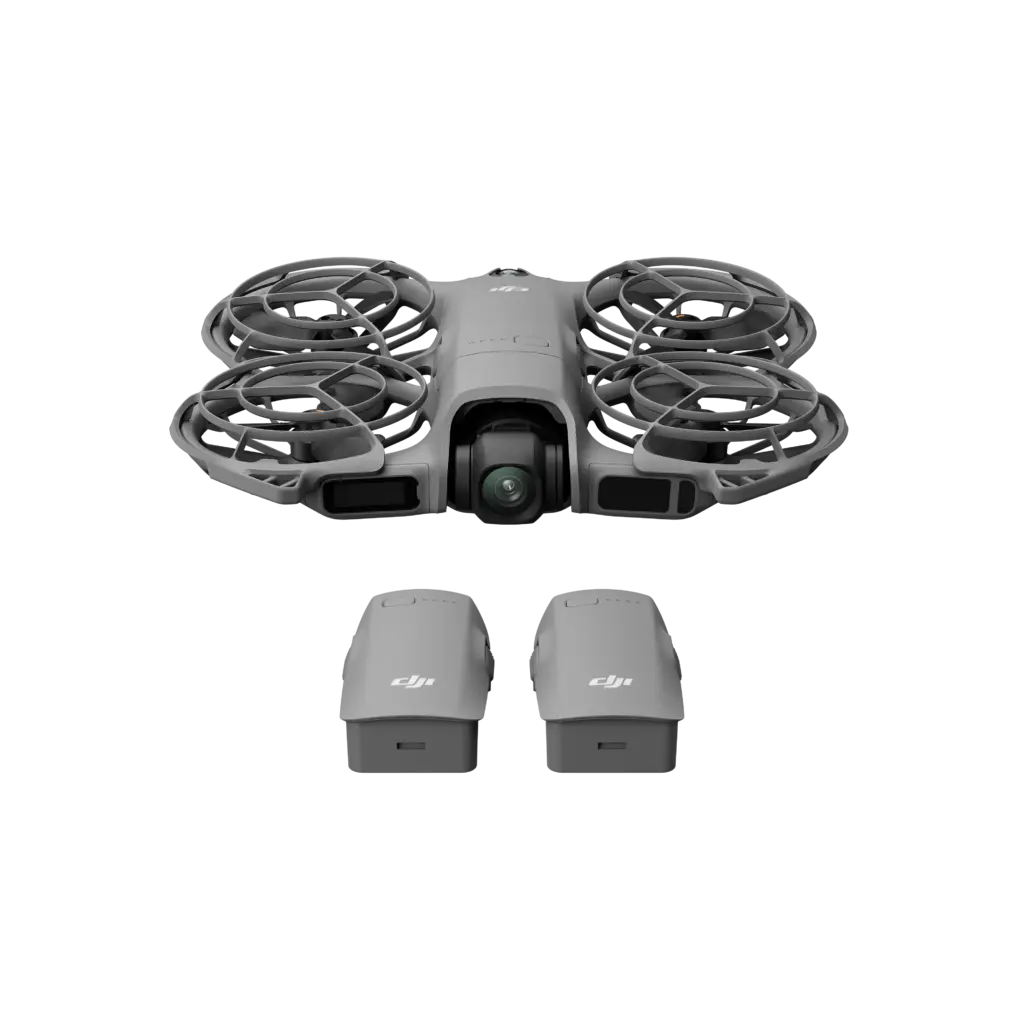
The Neo 2 is actually a selfie drone with hand launch and gesture control. It becomes an FPV drone in the Motion Fly More Combo, which according to the Amazon listing includes the Goggles N3, the RC Motion 3 and the necessary digital transmitter. DJI cites omnidirectional obstacle sensing and fully enclosed propeller guards. At under 250 g, you don’t need a proof of competency. You do need the observer.
DJI Avata 2: aerobatics at the push of a button
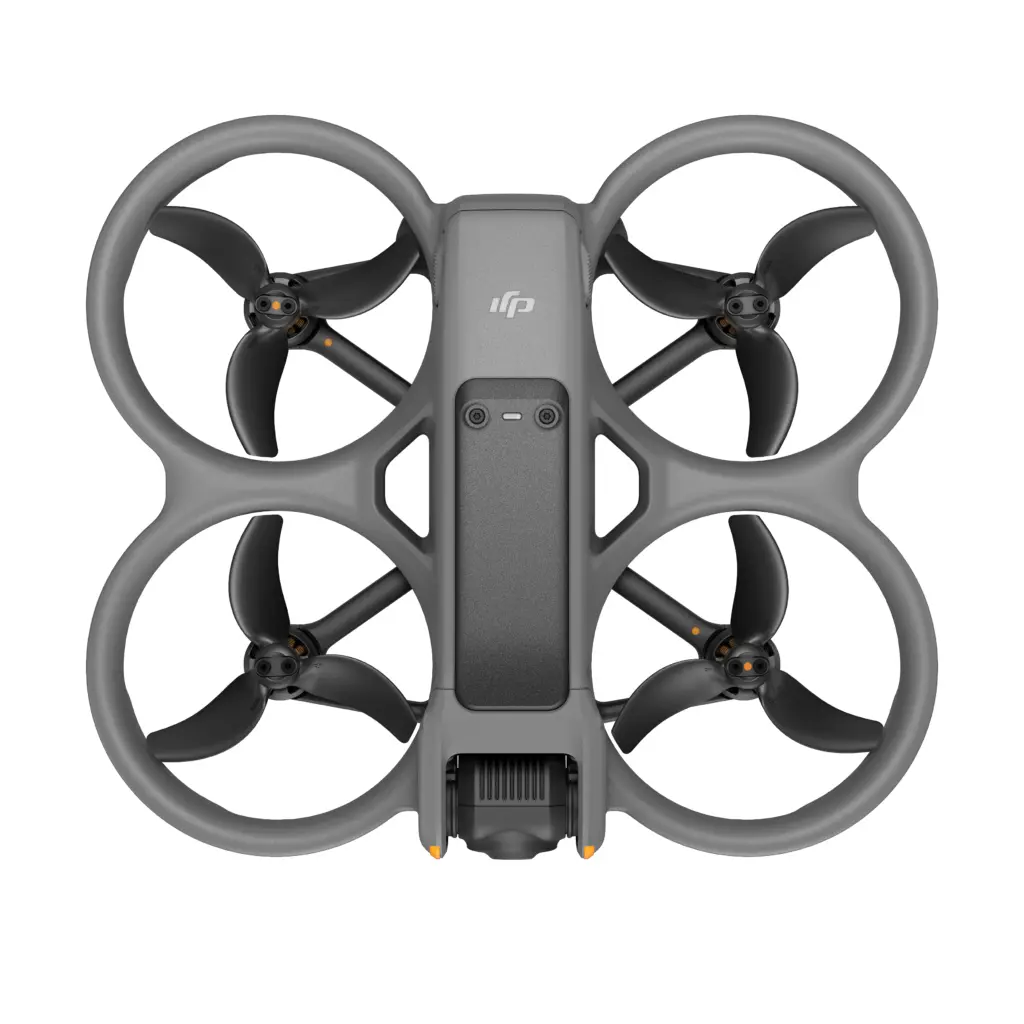
DJI’s classic cinewhoop comes with the Goggles 3 and RC Motion 3; flips and rolls work at the push of a button. According to the manufacturer, the Avata 2 films in 4K at up to 100 frames per second. Sensors are located only at the bottom and rear. So if you fly forward through tight gaps, you’re on your own. Because of the C1 class, you need the A1/A3 certificate.
DJI Avata 360: fly first, then choose the frame
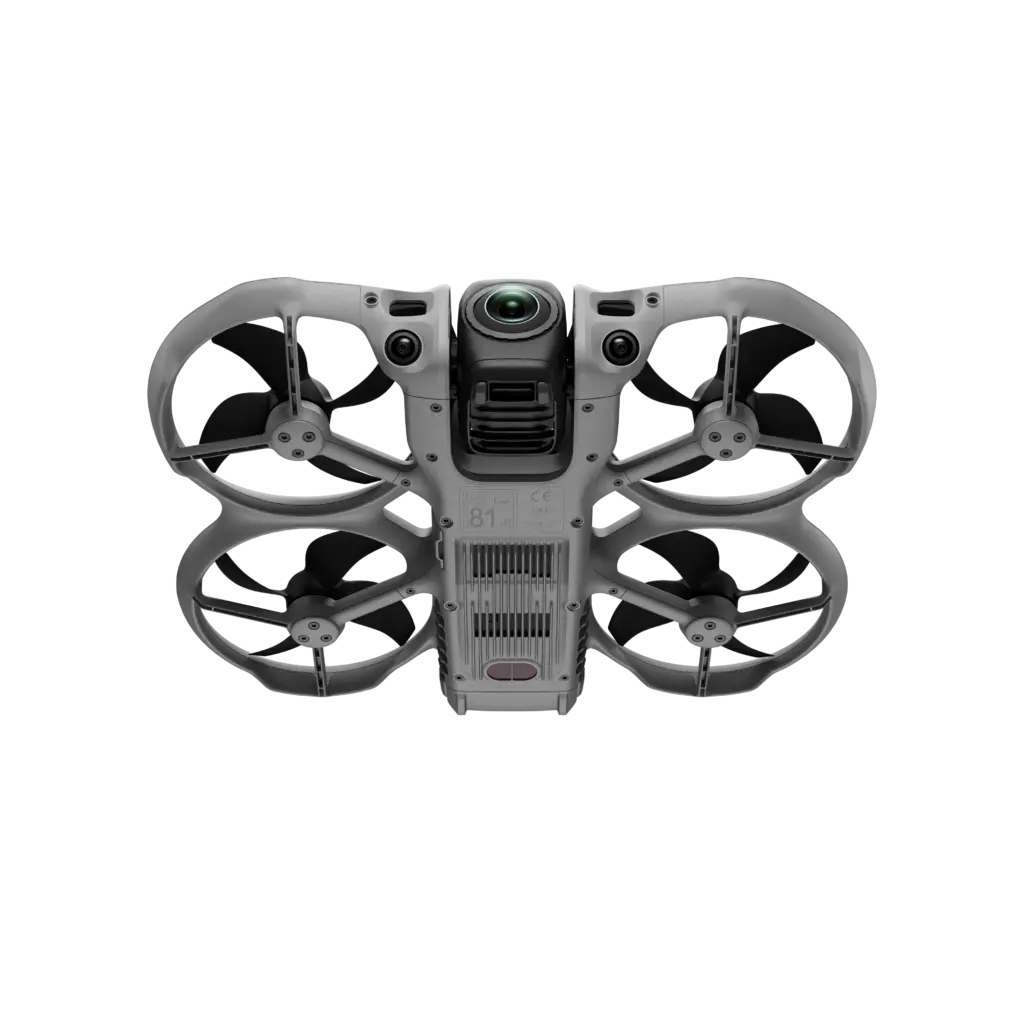
Two cameras film all around in up to 8K. You set the frame afterward on your computer or phone, and a single-lens mode with 4K is also on board. DJI cites omnidirectional obstacle sensing.
The drone is compatible with the Goggles 3 or N3, the RC Motion 3 and the FPV Remote Controller 3. The motion kit includes the Goggles N3 and RC Motion 3.
BetaFPV Cetus X FPV Kit: pay attention to the variant
The kit includes the drone, the LiteRadio 3 remote and the analog VR03 goggles with recording function. Look closely when ordering. According to BetaFPV, only the variant with „Cetus FC“ holds its position; the Betaflight variant flies without this assistance. For outdoors, the manufacturer recommends the Cetus X; for indoors, the tamer sister model Cetus Pro.
Emax Tinyhawk III Plus RTF Kit: everything in one box
Drone, remote, goggles, batteries and charger. Emax cites an ELRS receiver and an analog video transmitter with up to 400 mW. In Germany, it has to be set to 25 mW. A more expensive version of the kit with a digital HDZero image is also available.
So which kit should I get?
To get a taste, the DJI Neo 2 Motion Fly More Combo: light, C0, with goggles and motion controller. For good-looking first-person flight videos, the DJI Avata 2 makes a strong case with its larger sensor and aerobatics at the push of a button. The DJI Avata 360 suits anyone who wants to film all around and edit later, with 360-degree video and omnidirectional obstacle sensing.
You learn to fly properly by hand with the BetaFPV Cetus X or Emax Tinyhawk III Plus. Both are affordable and robust, ideally after a few hours in the simulator.
The obligations remain the same with every kit. Registration, insurance, the A1/A3 certificate for C1 and always an observer next to you.
The same applies to model airplanes: practice in the simulator first. Which beginner models fly with stabilization is shown in our guide to model airplanes (in German).
Frequently asked questions
Can I fly alone with FPV goggles?
No. With goggles, you only see the camera image, and according to the EASA, that is not enough for the required visual line of sight. A second person stands right next to you, keeps the drone in sight at all times and must be able to warn you immediately. You as the remote pilot nevertheless remain responsible.
Do I need a drone license for an FPV drone?
From a takeoff mass of 250 g, the A1/A3 proof of competency is mandatory before the first flight; below that, it is recommended. If the drone has a camera, you must register with the German Federal Aviation Office (LBA), even under 250 g, and state your liability insurance. Registration and the test run via lba-openuav.de.
Motion controller or a remote with two sticks?
That is the most important decision. A motion controller like the DJI RC Motion 3 steers the drone by tilting your hand, and beginners get the hang of it quickly. A classic remote with two sticks can do much more but takes practice, ideally in a simulator first.
What is the difference between digital and analog FPV?
Digital systems like DJI's show a sharp image in the goggles. Analog kits cost less and are more robust, but their image is considerably coarser. Analog kits usually transmit in the 5.8 GHz band, where 25 mW is permitted in Germany. So check the transmit power setting.
Which FPV drone is best for good-looking flight videos?
For first-person flight videos, the DJI Avata 2 makes a strong case with its larger sensor, 4K at up to 100 frames per second and aerobatics at the push of a button. The DJI Avata 360 films all around with two cameras in up to 8K, and you choose the frame afterward. Both belong to class C1 and require the A1/A3 certificate.
Do the video goggles work for people who wear glasses?
People who wear glasses should check this beforehand. According to the manufacturer, the DJI Goggles N3 are designed so that your own glasses fit underneath; they have no diopter adjustment. The N3 are included in the motion kits of the Neo 2 and Avata 360.
Sources
- EASA: FPV with goggles in the open category
- EASA: FPV flying and drone racing, spectators
- German Federal Aviation Office (LBA OpenUAV): safe operation and observers
- dipul: registration and proof of competency
- Bundesnetzagentur: general frequency assignments (Order 91/2025, German)
- DJI Neo 2: specifications
- DJI Avata 2: specifications
- DJI Avata 360: specifications
- DJI Goggles N3: specifications
- BetaFPV: Cetus X FPV Kit
- Emax: Tinyhawk III Plus RTF Kit
Where to buy
- DJI Neo 2 Motion Fly More ComboView at CoolblueCheck price at Amazon.de
- DJI Avata 2 Fly More ComboView at CoolblueCheck price at Amazon.de
- DJI Avata 360 Motion Fly More ComboView at CoolblueCheck price at Amazon.de
- BetaFPV Cetus X FPV Kit (Betaflight, ELRS)Check price at Amazon.de
- Emax Tinyhawk III Plus RTF Kit (analog)Check price at Amazon.de