Contents10 sections
This guide was first published in German on handgetestet.de.
A two-hour train ride, a full Steam library, and the laptop stays in the backpack. A typical situation for a handheld PC. Many bad purchases start here with the device that has the most powerful chip.
If it’s mainly about Steam games on the couch or on the train, you’re usually better off with the Steam Deck OLED than with a much more expensive Windows handheld. More processing power only pays off if you play current big-budget games in Full HD or need games outside Steam.
In 2026, there’s an unwelcome extra factor: memory has become scarce and expensive. According to Notebookcheck, Valve raised prices for the Steam Deck OLED significantly in May 2026, and ASUS has made the Xbox Ally X more expensive in Japan and Australia. So check current prices before settling on a price bracket.
What to clarify before you buy
First, the operating system. SteamOS (Steam Deck, Legion Go S in the SteamOS version) is designed for controllers and starts quickly. Windows devices, on the other hand, open any launcher, including the Xbox app, Epic or Ubisoft. Some online games with anti-cheat protection don’t run on SteamOS. Valve labels in its store how well a title runs on the Deck.
Then the battery. The range runs from 50 Wh in the Steam Deck OLED to 80 Wh in the Xbox Ally X and MSI Claw A8, but more capacity doesn’t automatically mean longer runtime, because more powerful chips also use more power.
On the display side, OLED delivers deep blacks and HDR. Higher resolution looks sharper and costs performance: at 1280 × 800 pixels, the chip has to handle far less than at 1920 × 1200. Weight is often underestimated. Even between 640 grams (Steam Deck OLED) and 765 grams (MSI Claw A8) there is a noticeable difference if you play for more than an hour without resting it on something.
And storage? Three or four big games fill up 512 GB. All the devices here have a microSD slot. But it loads more slowly than the internal SSD.
Six handhelds you can buy right now
| Model | Chip and RAM | Display | Battery | Best for |
|---|---|---|---|---|
| Valve Steam Deck OLED | AMD Zen 2 / RDNA 2, 16 GB | 7.4-inch OLED, 1280 × 800, up to 90 Hz, HDR | 50 Wh | Steam players who want a mature all-round package |
| ASUS ROG Xbox Ally X | Ryzen AI Z2 Extreme, 24 GB | 7-inch IPS, 1920 × 1080, 120 Hz, VRR | 80 Wh | Windows players with Game Pass and high performance demands |
| ASUS ROG Xbox Ally | Ryzen Z2 A, 16 GB | 7-inch IPS, 1920 × 1080, 120 Hz | 60 Wh | Windows beginners with older and smaller games |
| Lenovo Legion Go 2 | Up to Ryzen Z2 Extreme, LPDDR5X | 8.8-inch OLED, 1920 × 1200, up to 144 Hz | 74 Wh | Anyone who wants the biggest screen and often plays with the kickstand |
| Lenovo Legion Go S (SteamOS) | Ryzen Z2 Go or Z1 Extreme, up to 32 GB | 8-inch IPS, 1920 × 1200, 120 Hz, VRR | 55.5 Wh | SteamOS fans who want a bigger display than the Deck’s |
| MSI Claw A8 | Ryzen Z2 Extreme, 24 GB | 8-inch IPS, 1920 × 1200, 48–120 Hz, VRR | 80 Wh | Windows players who value runtime over weight |
Valve Steam Deck OLED
On paper, the Steam Deck is the weakest device here. Valve specifies a 6 nm chip with four Zen 2 cores and RDNA 2 graphics, plus 16 GB of RAM. Because the display shows only 1280 × 800 pixels, that’s enough for a surprising number of games. According to Valve, the HDR OLED reaches up to 1,000 nits, and the 50 Wh battery should last 3 to 12 hours depending on the game. At around 640 grams, it weighs less than the Xbox Ally (670 g) and the Claw A8 (765 g). That leaves the price since May 2026. It hurts. Valve sells the Deck directly through Steam and occasionally offers refurbished units.
ASUS ROG Xbox Ally X
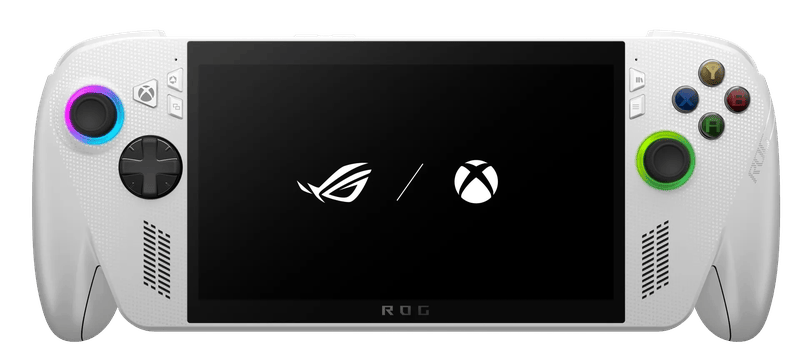
The Xbox Ally X is the successor to the 2024 ROG Ally X and represents what Windows handhelds can currently do. ASUS fits the eight-core Ryzen AI Z2 Extreme, 24 GB of LPDDR5X, a 1 TB SSD and an 80 Wh battery. The 7-inch display shows Full HD at 120 Hz with FreeSync Premium. You launch games with the controller via the Xbox full-screen interface, with a full Windows 11 running underneath. Casual gamers are paying for performance they rarely need here.
Since mid-October 2026, there has also been the Xbox Ally X20 with a 7.4-inch OLED. According to PC Games Hardware, it uses the same computing hardware, so the extra cost is purely for the display.
ASUS ROG Xbox Ally
The base model shares its housing and screen with the Ally X. Inside, however, is a four-core Ryzen Z2 A, plus 16 GB, a 512 GB SSD and a 60 Wh battery. The Full HD display demands more performance than this chip delivers. In new games, that means reduced resolution. It makes sense for indie titles, older games and Game Pass on the go.
Lenovo Legion Go 2
The Legion Go 2 goes big. The 8.8-inch OLED shows 1920 × 1200 pixels at up to 144 Hz, and according to Lenovo the battery grows to 74 Wh, more than half again as much as its predecessor. The controllers detach, and the right one works as a mouse in FPS mode. Handy on a table. But it also makes the device large and heavy. Lenovo offers it with a Ryzen Z2 or Z2 Extreme, so the exact configuration in the listing matters.
Lenovo Legion Go S with SteamOS
Lenovo also ships the Legion Go S with SteamOS from the factory, meaning the same interface as the Steam Deck. Lenovo specifies an 8-inch display at 1920 × 1200 pixels and 120 Hz, a 55.5 Wh battery and fast charging. It comes with a Ryzen Z2 Go or the more powerful Z1 Extreme. Some listings carry the Windows version or a foreign-language version, so the configuration deserves a close look.
MSI Claw A8
MSI combines the Ryzen Z2 Extreme with 24 GB of RAM, a 1 TB SSD and an 80 Wh battery. The 8-inch display runs at 48 to 120 Hz with variable refresh rate. That costs weight: 765 grams according to MSI, around 125 grams more than the Steam Deck OLED. If you play for long stretches and rest the device on your knees, that matters less.
Back on the train: which device for whom
If you play almost exclusively through Steam, get the Steam Deck OLED. Light, mature, with an efficient display, and the lower processing power matters less often at 1280 × 800 pixels than the spec sheet suggests. If you want SteamOS with more screen area, the Legion Go S in the SteamOS version fits, ideally with the Z1 Extreme.
With Game Pass or several launchers and the desire to play current games in Full HD, you’ll end up with the ROG Xbox Ally X or the MSI Claw A8. The Ally is lighter. The Claw has the bigger display. At a table with its kickstand, the Legion Go 2 plays to its strengths with its detachable controllers.
And if what you’re really looking for is a console for the TV? Then a handheld PC is a detour, and our overview of game consoles (in German) will help. Full performance at the desk is more the domain of gaming laptops (in German), and Switch owners will find suitable accessories for the Switch 2 (in German).
Older generations such as the first Legion Go or the 2024 ROG Ally X still turn up at retailers. In that case, look closely at which generation is in the listing.
If you game on a PC and want to immerse yourself more deeply, our VR headset guide (in German) covers the three ways into PC VR and which graphics card is enough for it.
Frequently asked questions
SteamOS or Windows: which is better for a handheld?
SteamOS is designed for controllers and starts quickly. Windows devices, on the other hand, open any launcher, including the Xbox app, Epic or Ubisoft. Some online games with anti-cheat protection don't run on SteamOS. Valve labels in its store how well a title runs on the Steam Deck.
Does a bigger battery mean more runtime on a handheld?
Not automatically. The range runs from 50 Wh in the Steam Deck OLED to 80 Wh in the Xbox Ally X and MSI Claw A8. But more powerful chips also use more power, so more capacity doesn't necessarily mean longer play. Valve states 3 to 12 hours for the Deck, depending on the game.
Why is the weaker chip in the Steam Deck often enough?
The Steam Deck's display shows only 1280 × 800 pixels. At that resolution, the chip has to handle far less than at 1920 × 1200. The lower processing power therefore matters less often than the spec sheet suggests.
How important is the weight of a handheld PC?
It is often underestimated. Between 640 grams for the Steam Deck OLED and 765 grams for the MSI Claw A8 there is a noticeable difference if you play for more than an hour without resting it on something. If the device rests on your knees or on a table, weight matters less.
Is 512 GB of storage enough in a handheld?
Three or four big games fill up 512 GB. All devices in the comparison have a microSD slot, but it loads more slowly than the internal SSD. The Xbox Ally X and MSI Claw A8 come with a 1 TB SSD.
Is the ROG Xbox Ally without the X worth it?
The base model shares its housing and screen with the Ally X, but runs on a four-core Ryzen Z2 A. The Full HD display demands more performance than this chip delivers, which means reduced resolution in new games. It makes sense for indie titles, older games and Game Pass on the go.
Sources
- Valve: Steam Deck, technical specifications
- ASUS: ROG Xbox Ally X, technical specifications
- ASUS: ROG Xbox Ally, technical specifications
- Lenovo: Legion Go user guide (8.8″, Gen 2)
- Lenovo: Legion Go Gen 2
- Lenovo: Legion Go S Powered by SteamOS
- MSI: Claw A8 BZ2EM, specifications
- Notebookcheck: Steam Deck OLED price increase (in German)
- PC Games Hardware: ROG Xbox Ally X20 (in German)
Where to buy
- Valve Steam Deck OLED 512 GBCheck price at Amazon.de
- ASUS ROG Xbox Ally XCheck price at Amazon.de
- ASUS ROG Xbox AllyCheck price at Amazon.deView at Coolblue
- Lenovo Legion Go 2Check price at Amazon.de
- Lenovo Legion Go S SteamOSCheck price at Amazon.deView at Coolblue
- MSI Claw A8Check price at Amazon.deView at Coolblue