Contents12 sections
This guide was first published in German on handgetestet.de.
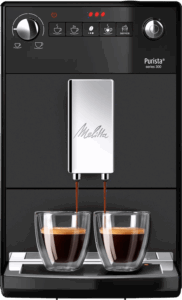
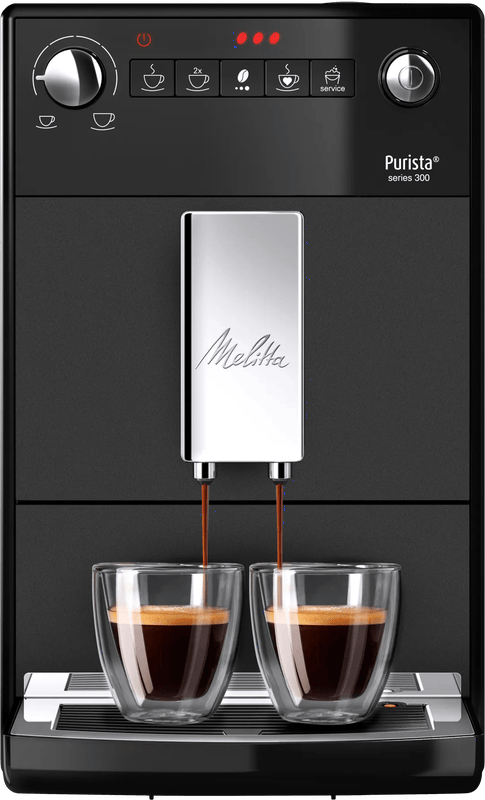
Two cups before work, maybe three on Sunday. A bean-to-cup coffee machine in a single-person household rarely has to do more than that, and that’s exactly where many purchases go wrong: the machine is designed for families, the beans sit in the hopper for weeks, the milk stays in the tube. Among the machines compared here, we recommend the Melitta Purista, because it is only 20 centimeters wide, holds few beans and has no milk system at all. If you drink cappuccino every day, take the Melitta Latticia OT and make rinsing a fixed part of your routine.
The big market overview with seven models is in our bean-to-cup coffee machine guide (in German). Here, only everyday life with just you and the machine counts.
How long does one hopper of beans last?
Let’s do the math. Jura specifies a brewing unit for 6 to 10 grams for the ENA 4. Assuming 8 grams per cup and two cups a day, you use 16 grams. A 125-gram hopper is therefore empty after just under eight days, one with 250 grams after a good two weeks. If you only drink one cup, both figures double.
Two weeks or more sitting open in the machine is not nothing. Jura specifically equips the ENA 4 with an aroma-preservation lid to make the aroma last longer, and advises wiping the hopper dry from time to time, because the oily film from the beans spoils the taste. According to the manufacturer, the three Melitta machines in this comparison have no such lid. Manufacturers don’t give a binding time limit in weeks, and roasters give very different figures. Our rule of thumb is therefore simple: never fill in more than about a week’s worth.
So a large hopper is no advantage if it stays half empty. The same goes for the one-kilo bag. At 16 grams a day, it lasts about two months. Better to buy 250 grams and seal the package well.
What piles up when only one person drinks?
More than you’d think, because maintenance doesn’t depend on the number of cups. For the ENA 4, Jura requires changing the water daily and emptying and rinsing both the drip tray and the grounds container every day. The fact that the container holds ten portions doesn’t change that. If you come home from the office in the evening and find yesterday’s damp grounds in the morning, it’s worth getting into the two-minute habit.
The cleaning program is interesting. The ENA asks for it after 160 preparations or 80 switch-on rinses. With one start a day and two cups, both come due after about 80 days, which means four to five cleanings a year. If you switch it on in the morning and in the evening, it’s already nine. So drinking little hardly saves maintenance if the machine wakes up often. It’s better to brew your coffee in one session than to make many single cups spread over the day. Incidentally, it only rinses when switching off if a coffee was made beforehand.
Standby? Hardly an issue. Jura specifies 0 watts, and the Melitta machines have a 0-watt switch. Whether you should also filter your water is covered in our water filter guide (in German).
Milk for one cup: do you need the system?
Rarely. A milk system has to be cleaned after every use, regardless of whether one cup or four went through. For the Latticia OT, Melitta recommends regular cleaning after milk drinks, at least in two steps: tube into clean water, start the program. For a daily cappuccino, that’s reasonable. For one latte on the weekend, it’s effort with nothing to show for it. And if you really only drink one cup a day and don’t care much about freshly ground beans, honestly consider whether a capsule machine (in German) would do, because no beans go stale in an open hopper there.
For the occasional milky coffee, you’re better off with a machine without milk and a separate device; see our milk frother guide (in German).
Does the machine fit under the wall cabinet?
Width is rarely the problem; height is. The three Melitta models are 20 centimeters wide, but at 35.2 centimeters the Latticia OT is taller than the Purista at 33.4. The Siemens EQ300 needs 38.3 centimeters, and at 25.1 centimeters wide it only partly belongs in a single person’s kitchen. Don’t forget the depth. All five are between 43 and 46 centimeters, and you need to be able to pull the tray out at the front.
Five compact bean-to-cup machines by beans and milk
| Model | W × H × D according to the manufacturer | Beans, water | Milk | Best for |
|---|---|---|---|---|
| Melitta Purista | 20 × 33.4 × 45.9 cm | 125 g, 1.2 l | None | Black coffee, quiet mornings |
| Melitta Solo | 20 × 33.4 × 45.9 cm | 125 g, 1.2 l | None | Small budget |
| Melitta Latticia OT | 20 × 35.2 × 45.9 cm | 250 g, 1.5 l | Tube, cleaning program | Daily cappuccino |
| Jura ENA 4 | 27.1 × 32.3 × 44.5 cm | 125 g, 1.1 l | None | Espresso, aroma protection |
| Siemens EQ300 TF303E07 | 25.1 × 38.3 × 43.3 cm | 250 g, 1.4 l | Frothing in the cup | Milk without a cleaning program, more space |
Melitta Purista
Café crème and espresso at the push of a button, five grind settings, three temperature levels, one memory slot for your favorite recipe. That’s all it offers, and here that’s an argument in its favor. According to Melitta, the conical burr grinder is particularly quiet, which counts in an open-plan studio apartment. There’s no hot water. In the reviews on the manufacturer’s website, individual buyers complain about fragile plastic parts and leaks, but the average still comes to 4.4 out of 5 stars.
Melitta Solo
The same dimensions, the same hopper, but the lowest tier in Melitta’s price list. The difference is in the details: the quiet grinder is missing, and Melitta doesn’t list once-a-year descaling for it either. If you live alone and nobody is bothered by the grinding noise, saving money here is justifiable. With thin walls, we’d take the Purista.
Melitta Latticia OT
Six drinks, including cappuccino and latte macchiato, in the same width. Melitta mentions double frothing and the „Quick & Clean“ milk cleaning. At 9.3 kg, it is significantly heavier than the Purista at 7.2 kg, and as a single person you’re better off filling the 250-gram hopper only halfway. In return, it spares you a second appliance on the countertop.
Jura ENA 4
Jura itself calls it a one-cup bean-to-cup machine. Four specialties, no milk system, standby at 0 watts, plus the aroma-preservation lid. For espresso drinkers who want little waste, that’s a good match. At 27.1 centimeters, however, it is wider than the Melitta machines, the tank holds only 1.1 liters, and Jura prescribes its care products: original products only. Factor that into your calculation.
Siemens EQ300 TF303E07
Five drinks and a 1.4-liter tank, with frothing directly in the cup. According to Siemens, it has no cleaning program for the milk system, but the milk nozzle can go in the dishwasher. Some people prefer that to a rinse program. For a single person’s kitchen, it remains the largest machine in the comparison. It makes sense if there’s space and a guest regularly joins you for coffee.
How we would decide
- Black coffee, little space, little noise: Melitta Purista.
- The same for less money, grinding noise doesn’t matter: Melitta Solo.
- Milky coffee every day: Melitta Latticia OT.
- Espresso and aroma come first: Jura ENA 4.
- Milk occasionally, dishwasher available: Siemens EQ300 TF303E07.
A final thought on the beans. If you want to switch varieties or control the grind more precisely, none of these machines will get you far. For that, there’s the separate coffee grinder (in German) and a different brewing method. For two cups in the morning, the compact machine is enough.
Frequently asked questions
How long does one hopper of beans last in a single household?
At around 8 grams per cup and two cups a day, a 125-gram hopper is empty after just under eight days, one with 250 grams after a good two weeks. Manufacturers don't give a binding time limit. Our rule of thumb: never fill in more than about a week's worth.
Does a single person need a bean-to-cup machine with a milk system?
Rarely. A milk system has to be cleaned after every use, whether one cup went through or four. For a daily cappuccino, that's reasonable; for one latte on the weekend, it's effort with nothing to show for it. In that case, you're better off with a machine without milk and a separate milk frother.
How much maintenance does a bean-to-cup machine need if you drink little coffee?
Maintenance doesn't depend on the number of cups. For the ENA 4, Jura requires changing the water daily and emptying the drip tray and grounds container. The cleaning program is due after 160 preparations or 80 switch-on rinses. Brewing your coffee in one session saves maintenance compared with many single cups spread over the day.
Does a bean-to-cup machine fit under a wall cabinet?
Usually the height decides. The Melitta Purista measures 33.4 centimeters, the Latticia OT 35.2, the Siemens EQ300 38.3. All five machines are between 43 and 46 centimeters deep, and you need to be able to pull the tray out at the front.
Melitta Purista or Solo, what is the difference?
Dimensions and bean hopper are the same, but the Solo sits one tier lower in Melitta's price list. It lacks the quiet conical burr grinder, and Melitta doesn't list once-a-year descaling for it. If nobody is bothered by the grinding noise, saving money is justifiable. With thin walls, we'd choose the Purista.
Sources
- Melitta: Purista
- Melitta: Solo
- Melitta: Latticia OT
- Jura: ENA 4
- Jura: ENA 4 user manual (in German)
- Siemens: EQ300 TF303E07
Where to buy
- Melitta Purista (F230-102, silber)Check price at Amazon.de
- Melitta Solo (E950-103, silber/schwarz)Check price at Amazon.de
- Melitta Latticia OTCheck price at Amazon.de
- Jura ENA 4Check price at Amazon.deView at Coolblue
- Siemens EQ300 TF303E07View at CoolblueCheck price at Amazon.de
- Melitta PuristaView at Coolblue
- Melitta SoloCheck price at Amazon.deView at Coolblue