Contents19 sections
This guide was first published in German on handgetestet.de.
A garden pond, a Sunday afternoon, a brand-new brushless boat running on three LiPo cells. Two turns later, it is stuck in the reeds. Nothing was broken; the boat was simply too fast for that water. If you are buying an RC boat for the first time, start with the water: for a pond or club lake, a complete set such as the Pro Boat Recoil 2 18″ with battery, charger and self-righting button is the right fit, and for kids aged eight and up a leisurely NiMH boat such as the Carson RC Fire Boat. And if what you are really after is calm, a DF65-class sailboat will make you happier than any racing hull.
This guide sorts out the hull types, explains motors, batteries and maintenance, and tells you where in Germany you are allowed to run a boat at all. At the end, seven boats available in stores in 2026 are compared side by side in two data tables. All technical specifications come from the manufacturers or are marked as retailer information.
Water first, then the boat
A model boat is only as good as the place where it is allowed to run. Once that is settled, size, drive and battery almost follow on their own.
On a garden pond five meters long, a 66-centimeter deep-V hull has no room to run out. There, maneuverability and low speed are what count. On an open quarry lake with a light breeze, things are different: small, light hulls hop over the ripples and lose contact with the water, while a larger boat sits more calmly.
Then there is water depth. In the manual for the Recoil boats, Horizon Hobby writes that they should never be run in water less than 30.5 centimeters deep, because the propeller and rudder sit under the hull. For shallow banks, streams with gravel or a pond full of weeds, there is a separate design, the jet boat. According to the manufacturer, the Pro Boat Jetstream can go into water just 2 inches deep, or just over five centimeters.
And there is something else in each of these manuals. The boats are built for fresh water in calm conditions. You should avoid waves, eddies, fast-flowing water, floating debris, overhanging branches and aquatic plants. In other words: no river with a current, no harbor basin on the Baltic Sea.
Deep-V, catamaran, hydro, jet: what the hull shape tells you
The shape below the waterline determines how a boat handles. Four designs come up again and again in stores.
The deep-V hull, often also called a mono, has a deep, pointed keel. It cuts through waves, handles predictably in turns and forgives driving mistakes. Almost all entry-level speedboats are built this way, and many right themselves at the push of a button after capsizing. For your first fast boat, it is the sensible choice.
Catamarans run on two hulls, with air building up between them. On smooth water, they sit firmly and corner very fast. In return, they need more power. Pro Boat calls for two 2S LiPos with 5000 mAh each for the Blackjack 24″, and Horizon Hobby currently lists this boat as backordered in Europe. We have therefore not included it in the comparison.
At full speed, hydroplanes touch the water at only a few points. This is the design for racing on marked courses, with a lot of speed and little tolerance. It is not suitable as a first boat.
Jet boats have no exposed propeller; a pump draws in water and pushes it out the back. That protects against weeds and pebbles and allows shallow water. On the Jetstream, a flap closes off the jet for reversing.
There are also scale working models: fireboats with water cannons, tugboats, police boats, plus kits from manufacturers such as Robbe that you can spend whole winters building. They run slowly and true to the original. A bait boat for anglers, on the other hand, is a tool and a topic of its own; if you want to go fishing, you will find a starting point in our guide to fishing gear for beginners (in German).
Brushed or brushless?
Brushed motors are inexpensive, robust and enough for kids‘ and pool boats. Brushless motors work without carbon brushes and are more efficient and considerably more powerful. Their speed is given in Kv, meaning revolutions per minute per volt. The small Recoil 2 18″ has a motor with 2950 Kv, the large Recoil 2 V2 26″ one with 2300 Kv, which turns a larger propeller instead.
More power means more heat. Fast boats cool the motor and speed controller with lake water that flows through a tube as soon as the boat is moving. Horizon Hobby explicitly points out that very slow running does not push enough water through the cooling system. So if you circle in front of the bank at half throttle for minutes on end, you put more strain on the electronics than someone who drives briskly and takes breaks. While running, make sure that a thin stream of water actually comes out of the hull. If it stops, the tube is clogged.
The speed controller also has to match the battery. The Recoil 2 18″ uses a 30 A controller for 2S and 3S, the 26-inch boat one rated at 100 A. According to the manual, a larger propeller or one with more pitch than the stock one will damage the electronics and batteries. So tuning does not belong in your first season.
Capsizing, reverse, range
Every fast boat ends up keel-up at some point. In the middle of the lake, one feature then decides whether the afternoon continues. The Recoil boats right themselves when you hold down a button on the transmitter; the weight of the motor rolls the hull back over. For the Waveracer Brushless, Carson lists a flip function via the transmitter as well as reverse. The Fire Boat runs forward and in reverse.
Without self-righting, all you can do is wait for the wind to push the boat ashore. Never swim after a capsized boat. Horizon Hobby states this in the manual, with the advice to use a fishing rod or a second boat to retrieve it instead.
For range, Carson states up to 100 meters for the Fire Boat. That sounds like little, but it is rarely the limit. At 80 meters, a 45-centimeter boat is just a dot, and you guess its direction rather than see it. Start slowly near the bank, as the Recoil manual also says, and only increase the distance once you know the boat.
NiMH, Li-ion or LiPo?
The battery determines run time, speed and how much care the boat demands. You will find three battery types in stores.
- NiMH: robust and forgiving, but delivers little power. According to Carson, the Fire Boat runs for up to 45 minutes on 7.2 volts and 1000 mAh.
- Li-ion: more energy; the Waveracer charges conveniently via USB in about three and a half hours. Carson gives the run time as 12 minutes.
- LiPo: the most power for little weight. According to Horizon, one battery lasts about 5 to 7 minutes in the Recoil, depending on throttle.
Five to seven minutes. That is not a weakness of these boats, just physics at full throttle. If you are planning an afternoon at the lake, buy two or three extra batteries and charge in between.
Charging LiPos without risking the garage
The safety instructions from battery manufacturer Swaytronic leave no room for interpretation. Charging unattended is prohibited, and you may only charge with a device that is explicitly approved for lithium cells, with a balancer. The ambient temperature should be 15 to 35 degrees Celsius. LiPos are neither charged nor stored in the car; they are stored and transported in a fireproof, insulated container. As the charging current, Swaytronic recommends one to two times the capacity, so 3.2 to 6.4 amps for a 3200 mAh battery.
In its boat manuals, Horizon Hobby adds two sentences that many people skip over. Never charge batteries overnight. Children under 14 do not charge batteries.
For longer breaks, Swaytronic specifies a storage voltage of about 3.8 volts per cell, which is roughly half full, in air that is as dry as possible. Good chargers have a dedicated program for this. A swollen or damaged battery no longer belongs in the boat and must be disposed of properly. If a LiPo does catch fire, water is the wrong extinguishing agent according to Swaytronic; dry sand, a fire blanket or a fire extinguisher for electrical fires are suitable. Which chargers can do all this is covered in our guide to the LiPo charger (in German).
A boat battery also gets wet. Dry it and the connectors before charging. The speed controller of the Recoil boats cuts the motor at 3.2 volts per cell so the battery does not drop below 3 volts, which would damage it. When the boat noticeably loses power, use the remaining thrust to head back to the bank instead of giving it more throttle.
Does all of this sound too complicated? Then a boat with a NiMH or Li-ion battery is the more honest solution.
After running: dry it, grease it, keep it out of the sun
Most boats are splash-proof but not waterproof. The speed controller, receiver and servos can tolerate moisture, but bearings, screws, the shaft and plug contacts will rust if nobody maintains them. Horizon Hobby describes the same routine after every run: disconnect the battery, pull the drain plug, let the water run out of the hull, dry the boat and cooling system completely, and remove the canopy for storage, because mold will form otherwise. The flexible drive shaft gets marine grease regularly.
After running, the boat does not belong in direct sunlight or in a hot car. And salt water? Horizon Hobby explicitly names fresh water as the intended use. If you run at the sea anyway, rinse everything with clean water and dry it immediately.
Algae and filamentous weed like to wrap themselves around the shaft and propeller. So do not drive through mats of plants, and check the propeller after every run.
Where are you allowed to run an RC boat?
There is no nationwide rule in Germany. Whether a lake is open is set out in the state’s water act, in municipal ordinances on common use or in protected-area ordinances.
We analyzed the situation using Bavaria as an example. Article 18 of the Bavarian Water Act counts the operation of model boats without a combustion engine as common use, meaning something anyone may do without a permit as long as the water, banks, animals and plants are not significantly affected. However, electric model boats are excluded there from sites of community importance, bird sanctuaries and nature reserves. Boats with a combustion engine need a body of water that the district administrative authority has specifically approved for this. And the same authority can restrict or prohibit common use by ordinance or in individual cases.
Two examples show what that looks like in practice. The Munich district office requires boaters to stay away from reed beds and has issued separate ordinances for individual lakes such as Feringasee, Garchinger See and Unterföhringer See. The city of Nuremberg permits model boats without a combustion engine only on the Unterer Wöhrder See, in the marked area of the Großer Dutzendteich and on the Main-Danube Canal. At the Dutzendteich, only members of the local model-building club may run boats because of a lease agreement.
So check with your municipality or district office before your first run; outside Bavaria, the water act of your own German state applies. Swimmers, anglers and waterfowl have priority anyway. Often the easiest option is a model-building club with its own body of water, where the rules have already been sorted out.
On the radio question: all boats in our comparison are controlled on 2.4 GHz, so the old practice of coordinating crystal channels at the bank no longer applies. For the transmitter of the Recoil boats, Horizon states a transmission power below 100 mW.
That leaves liability. A speedboat at 30 km/h can injure a swimmer or damage someone else’s boat. Whether your personal liability insurance covers remote-control models depends on each individual policy. If in doubt, have your insurer confirm it in writing; what else matters in such policies is covered in our guide to personal liability insurance (in German). The German model aviation association DMFV offers its members separate liability insurance for car, ship and railroad models, with coverage of up to one million euros and for an additional premium. The association’s standard model aviation insurance explicitly excludes ship models.
Which age, which boat?
The manufacturers draw clear lines. Carson recommends the Fire Boat for ages eight and up and the Waveracer Brushless for 14 and up. Horizon Hobby writes in the manuals for the Recoil boats: not for children under 14; this is not a toy.
For elementary school kids, that specifically means a slow boat with a NiMH battery that you can easily keep an eye on from the bank. According to the manufacturers, anything faster is for teenagers aged 14 and up and adults, and with a LiPo boat, charging belongs in adult hands. Sailboats demand less quick reaction, but patience and some feel for the wind instead.
Seven RC boats compared by the data
| Model | Type | Length | Speed according to manufacturer | Best for |
|---|---|---|---|---|
| Carson RC Fire Boat 2.4G | Fireboat with water cannon | 56 cm | approx. 10 km/h | Kids aged 8 and up, pond and pool |
| Carson Waveracer Brushless | Speedboat, mono, flip function | 40 cm | approx. 30 km/h | Teenagers, beginners without LiPo |
| Pro Boat Recoil 2 18″ | Deep-V, self-righting | 45.4 cm | not stated | First brushless boat |
| Pro Boat Recoil 2 V2 26″ | Deep-V, self-righting | 66 cm | not stated | Larger lakes, more speed |
| Pro Boat Jetstream 24″ | Jet boat with reverse flap | 24 inches (about 61 cm) | not stated | Shallow water, advanced users |
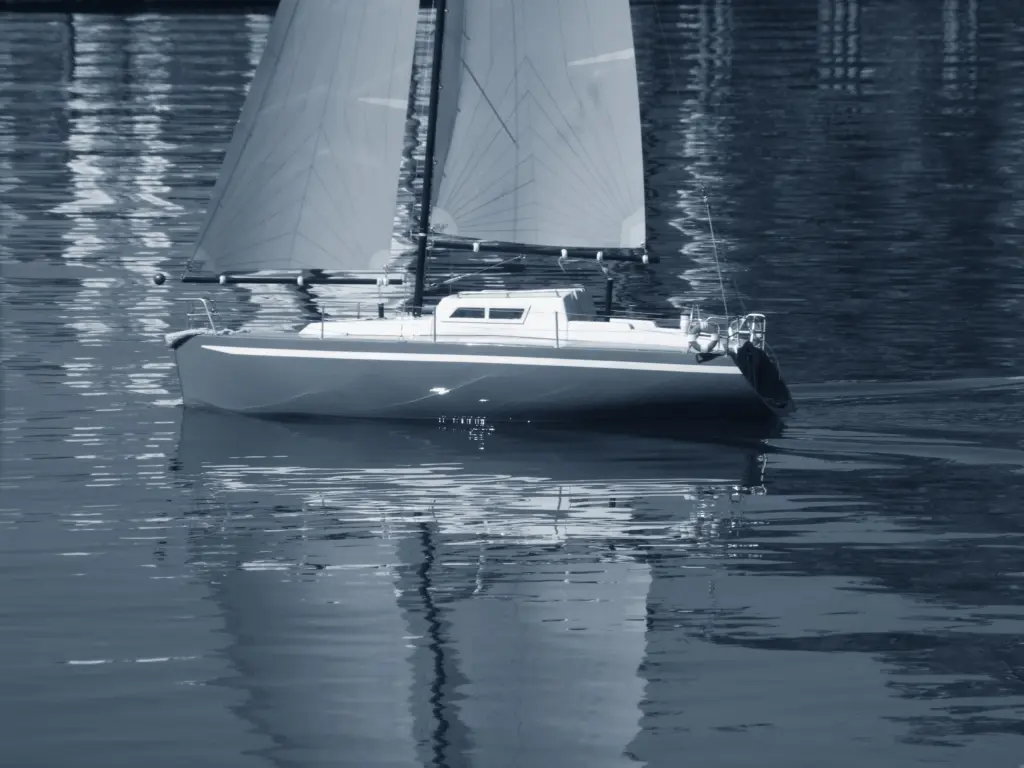
| Joysway Dragon Force 65 V7 | Sailboat, DF65 class | 65 cm, total height 133.8 cm | Wind | Getting started in regatta sailing |
| Joysway Dragon Flite 95 V2 | Sailboat, RG95 class | 95 cm, total height 147 cm | Wind | Sailors with room in the car |
| Model | Drive | Battery | Run time according to manufacturer | Age | Price class |
|---|---|---|---|---|---|
| Carson RC Fire Boat 2.4G | Electric motor | NiMH 7.2 V, 1000 mAh, included | up to 45 min | 8 and up | Entry-level |
| Carson Waveracer Brushless | Brushless outrunner, water-cooled mount | Li-ion 7.4 V, 2500 mAh, USB, included | 12 min | 14 and up | Entry-level |
| Pro Boat Recoil 2 18″ | Brushless 2950 Kv, 30 A controller | 3S LiPo 1300 mAh and USB-C charger included | 5–7 min | 14 and up | Lower mid-range |
| Pro Boat Recoil 2 V2 26″ | Brushless 2300 Kv, 100 A controller | 3S LiPo 3200 mAh and charger included | 5–7 min | 14 and up | Mid-range |
| Pro Boat Jetstream 24″ | Brushless 1600 Kv, water-cooled 100 A controller | 4S LiPo 5000 mAh required, not included | not stated | not stated | Upper mid-range |
| Joysway Dragon Force 65 V7 | Rudder servo with metal gears, sail winch | 8 AA cells for transmitter and receiver | Battery change | not stated | Mid-range |
| Joysway Dragon Flite 95 V2 | Rudder servo and sail winch with metal gears | 8 AA cells for transmitter and receiver | Battery change | not stated | Upper mid-range |
The data for the sailboats comes from retailer information, the rest from Carson and Horizon Hobby (as of November 2026).
Carson RC Fire Boat 2.4G: slow on purpose
Around 10 km/h, a rotating water cannon, navigation lights switched from the transmitter and, according to the manufacturer, up to 45 minutes of run time. For kids, that is the more honest choice than a speedboat: they keep the boat in sight and can steer it deliberately. The NiMH battery with 7.2 volts and 1000 mAh charges via USB. Carson states a range of up to 100 meters. The manufacturer currently lists the spare battery and USB charger as coming back soon or available only through customer service; but a second battery is less urgent here than with a racing boat anyway.
Carson Waveracer Brushless: brushless without LiPo
For the Waveracer, Carson relies on a Li-ion battery with 7.4 volts and 2500 mAh that charges via USB in about three and a half hours. More convenient than any balance charger. The brushless outrunner sits in a water-cooled aluminum mount and, according to the manufacturer, takes the 40-centimeter boat to about 30 km/h. Reverse, a flip function, a low-voltage warning and LED lighting are on board. At twelve minutes per charge, a second battery would make sense; Carson currently lists it as coming back soon, and the boat itself cannot be ordered directly from the manufacturer at the moment either.
Pro Boat Recoil 2 18″: the sensible way into brushless boating
45.4 centimeters long, an ABS hull, a 3S LiPo with 1300 mAh, a smart charger with USB-C, a transmitter, a boat stand and even the AA cells for the transmitter are in the box. Horizon Hobby adds that nothing else is needed. After capsizing, a long press on the self-righting button is enough. The transmitter has a three-stage throttle limiter that lets you release only part of the power at first.
For most people who want to step up from a toy boat, this is our recommendation. But it is still a LiPo boat, and the charging rules above apply without exception. And with five to seven minutes of run time, plan on a second battery right away.
Pro Boat Recoil 2 V2 26″: more hull for bigger water
Same principle, one class larger. 66 centimeters long, 20.2 centimeters wide, a Spektrum motor with 2300 Kv, a 100 A speed controller and a 3S LiPo with 3200 mAh including a charger. Self-righting works at the push of a button, just like on its little brother. The larger hull sits noticeably calmer in wind and small waves, but it also brings more mass into play when something goes wrong. For a garden pond, that is too much boat. On an open lake with a club behind you, it is the logical second step.
Pro Boat Jetstream 24″: for shallow water
The 1:6 scale jet boat is the exception in this comparison. Instead of a propeller, a pump does the work, driven by a Spektrum motor with 1600 Kv and a water-cooled 100 A speed controller. According to Horizon Hobby, just over five centimeters of water depth is enough, and a flap behind the nozzle allows reversing and true-to-scale maneuvering. The battery and charger are not in the box; you need a 4S LiPo with 5000 mAh. With these accessories, the boat costs clearly more than the Recoil models. For gravel, weeds and shallow banks, it is still the right tool.
Joysway Dragon Force 65 V7: getting started in regatta sailing
The DF65 is a one-design class of its own, and many clubs sail exactly this boat. According to retailer information, the hull measures 650 millimeters and the rig 915 millimeters, the sail area is 2,226 square centimeters, and the boat weighs around 1,200 grams without batteries. The V7 has 50-micron Mylar sails, a digital rudder servo with metal gears and a powerful sail winch. Power comes from eight AA cells, four each for the transmitter and receiver.
Joysway has since followed up with a V8 featuring revised fittings, stainless steel bearings and a new sail winch, with nearly identical dimensions according to retailer information. Before buying, ask at your club which version is sailed there. A sailboat is a different hobby from a speedboat. Calmer, more technical, with a lot of time on the bank.
Joysway Dragon Flite 95 V2: more hull, more demanding
A 95-centimeter hull, a total height of 147 centimeters, 3,736 square centimeters of sail. According to retailer information, the boat is designed for the RG95 racing class, the keel and mast are made of carbon, and the sail of Mylar. Batteries are not included; you will need eight AA cells separately. It is priced well above the DF65, so it is hardly a first boat you buy out of curiosity. Think through how you will transport it beforehand.
Which boat suits whom
For a child aged eight and up at the pond, we would choose the Carson RC Fire Boat: slow, long run time, no LiPo. Teenagers who want speed but should not be handling a balance charger yet are well served by the Carson Waveracer Brushless.
The Pro Boat Recoil 2 18″ makes the step to your first brushless boat with a LiPo easy, because the battery, charger and self-righting are already included. A fireproof charging bag still belongs with it. The Recoil 2 V2 26″ remains a boat for open, large water, and the Jetstream for shallow banks and drivers who choose their own battery and charger.
Sailing at a club almost always means the Dragon Force 65. Prefer sailing alone on a large lake and have enough room in your car? Then the Dragon Flite 95 is worth a look.
If the air tempts you as well as the water, suitable beginner models are covered in our article on model airplanes for beginners and in our guide to the RC helicopter. For driving on land, our comparison of remote-control cars will help. Prefer to stay on land? Which scale and which battery suit an RC car is covered in our RC car guide, and the right tools in our guide to model-building tools (in German).
Frequently asked questions
Which RC boat is suitable for beginners?
A self-righting deep-V boat as a complete set, such as the Pro Boat Recoil 2 18" with a 3S LiPo, USB-C charger and transmitter in the box. It is 45.4 centimeters long, rights itself at the push of a button after capsizing and has a throttle limiter on the transmitter. If you do not want a LiPo, go for the Carson Waveracer Brushless with a Li-ion battery and USB charging.
Brushed or brushless for an RC boat?
Brushed motors are inexpensive and are enough for kids' and pool boats. Brushless motors are more efficient and considerably more powerful, but they need water cooling and a matching speed controller. The cooling only works while the boat is moving; according to Horizon Hobby, very slow circling puts more strain on the electronics.
Where are you allowed to run a remote-control boat?
There is no nationwide rule in Germany. In Bavaria, operating model boats without a combustion engine counts as common use under Article 18 of the Bavarian Water Act, but electric boats are excluded from Natura 2000 sites, bird sanctuaries and nature reserves. District offices and cities can regulate or close individual lakes; Nuremberg, for example, permits only three bodies of water. Check with your municipality or district office before your first run.
How long does an RC boat run on one battery?
That depends on the battery. According to the manufacturer, the Carson Fire Boat with a NiMH battery runs for up to 45 minutes, and the Waveracer with a Li-ion battery for 12 minutes. According to Horizon Hobby, fast LiPo boats like the Recoil 2 manage about 5 to 7 minutes. For an afternoon at the lake, you will need two to three batteries.
How do you charge and store an RC boat's LiPo battery safely?
Never charge unattended and never overnight, only with a charger approved for lithium cells with a balancer, at 15 to 35 degrees Celsius and not in the car. Store it in a fireproof container, at about 3.8 volts per cell for longer breaks. Dry a wet battery first. Swollen batteries must be disposed of properly.
What does a flip function do on an RC boat?
In the middle of the lake, it turns a capsized boat back over at the push of a button or with a burst of throttle. The Recoil boats from Pro Boat and the Carson Waveracer have such a function. Without it, all you can do is wait for the wind to push the boat ashore. Never swim after a boat; Horizon Hobby recommends retrieving it with a fishing rod or a second boat.
How deep does the water need to be for an RC boat?
For boats with a propeller under the hull, Horizon Hobby states at least 30.5 centimeters for the Recoil. For shallow water, there are jet boats without an exposed propeller; the manufacturer sends the Pro Boat Jetstream into water just over five centimeters deep.
Can I run my RC boat in salt water?
Manufacturers build entry-level boats for fresh water in calm conditions. Bearings, screws, the shaft and contacts corrode if they are not maintained. If you run at the sea anyway, rinse everything with clean water afterward, dry the hull and cooling system, and grease the shaft.
What age is an RC boat suitable for?
Carson recommends the RC Fire Boat for ages 8 and up and the Waveracer Brushless for 14 and up. Horizon Hobby does not approve the Recoil boats for children under 14, and children under 14 should not charge batteries.
Which remote-control sailboat suits club regattas?
Sailing at a club almost always means the Joysway Dragon Force 65; the DF65 is a one-design class of its own. According to retailer information, the V7 measures 650 millimeters with a sail area of 2,226 square centimeters, and there is now a V8. If you sail alone on a large lake, take a look at the Dragon Flite 95 in the RG95 class.
Do I need insurance for an RC boat?
Damage to swimmers or other people's boats can get expensive. Whether personal liability insurance covers remote-control models depends on each individual policy, so get it confirmed in writing. The German model aviation association DMFV offers its members separate liability insurance for ship models.
Sources
- Horizon Hobby: Pro Boat Recoil 2 18″ RTR
- Horizon Hobby: Recoil 2 18″ user manual (PDF, in German)
- Horizon Hobby: Pro Boat Recoil 2 V2 26″
- Horizon Hobby: Recoil 2 V2 26″ user manual (PDF, in German)
- Horizon Hobby: Pro Boat Jetstream 24″ RTR
- Horizon Hobby: Pro Boat Blackjack 24″ V2
- Carson: Waveracer Brushless
- Carson: RC Fire Boat 2.4G
- Hobbyshop.ch: Joysway Dragon Force 65 V7 RTR (retailer information)
- Rynos: Joysway Dragon Force 65 V8 (retailer information)
- Lindinger: Joysway Dragon Flite 95 V2 RTR (retailer information)
- Swaytronic: Safety instructions for lithium polymer batteries (PDF, in German)
- Bavarian Water Act, Art. 18 Common use (in German)
- Munich district office: Water sports, diving, model boats (in German)
- City of Nuremberg, Environmental Agency: Model boats (in German)
- DMFV: Insurance (in German)
Where to buy
- Pro Boat Recoil 2 18"Check price at Amazon.deAvailable in Germany: Amazon.de
- Carson Waveracer BrushlessCheck price at Amazon.deAvailable in Germany: Amazon.de
- Carson RC Fire Boat 2.4GCheck price at Amazon.deAvailable in Germany: Amazon.de
- Pro Boat Recoil 2 V2 26"Check price at Amazon.deAvailable in Germany: Amazon.de
- Pro Boat Jetstream 24"Check price at Amazon.deAvailable in Germany: Amazon.de
- Joysway Dragon Force 65 V7Check price at Amazon.deAvailable in Germany: Amazon.de
- Joysway Dragon Flite 95 V2Check price at Amazon.deAvailable in Germany: Amazon.de