
Contents13 sections
This guide was first published in German on handgetestet.de.
Devices first, then the hub. Doing it the other way around almost always goes wrong, because which smart home hub is right depends almost entirely on which thermostats, roller shutters and lamps are already installed in the house or are still to come. If you mix many wireless standards, such as Z-Wave, Zigbee and Matter, you need an open hub such as Homey Pro, homee or Home Assistant.
If you stay entirely within one system such as Homematic IP or Bosch Smart Home, take its own hub. For pure Matter devices, a HomePod mini or a suitable Echo speaker is often enough.
Why the wireless standard decides everything
A hub is essentially a translator. It can only talk to devices whose language it speaks, and in the smart home there are surprisingly many of them. So make a list of your devices and note the wireless standard next to each one.
In Europe, Z-Wave transmits at around 868 MHz and gets through walls well. Zigbee and Thread use 2.4 GHz. Alongside these are manufacturers with their own protocols: Homematic IP, Bosch (first generation), Warema WMS or Hörmann BiSecur. Not every hub understands them.
Matter, bridge, border router
Three terms that constantly get mixed up. Matter is an open standard that runs over Wi-Fi or Thread, which means Matter devices can be used with several systems at the same time. A Matter bridge is something else. It only makes a hub’s own devices visible to other systems and does not control third-party Matter devices. This is where many bad purchases happen.
And the border router? Matter devices using Thread also need a Thread border router in the house. Many speakers and hubs already have one built in.
Local or cloud, subscription or not
Local hubs store data and routines on the device. If the internet goes down, automations keep running. Cloud solutions, on the other hand, need a connection to the outside, and wherever possible we would prefer local.
Also ask whether remote access, backups or additional features require a subscription. Some hubs can add missing wireless standards via a USB stick or add-on module; these parts belong in the calculation right away. And some need a network cable to the router. The nicest spot on the shelf is of little use if there is no port there.
Seven hubs compared
| Model | Wireless according to the manufacturer | Matter | Operation | Best for |
|---|---|---|---|---|
| homee Brain Cube with cubes | Wi-Fi; Z-Wave, Zigbee, EnOcean, Warema WMS, Hörmann BiSecur, Becker CentronicPlus each as a cube | Matter bridge | local | Mixed setups, roller shutters and awnings |
| Homey Pro | Wi-Fi, Bluetooth LE, Zigbee 3.0, Z-Wave, Thread, 433 MHz, infrared | yes, Thread border router | local | many brands, little tinkering |
| Homey Pro mini | Zigbee 3.0, Thread, Ethernet; the rest via Homey Bridge | yes, Thread border router | local | Zigbee and Matter households |
| Homematic IP Home Control Unit | Homematic IP (868 MHz), LAN or Wi-Fi | not mentioned | local, cloud optional | Heating and security with Homematic IP |
| Home Assistant Green | Ethernet; Zigbee, Thread, Z-Wave via USB adapter | yes, with Thread adapter | local | Tech enthusiasts, full control |
| Bosch Smart Home Controller II | Zigbee 3.0; 868 MHz with radio stick; LAN | Matter bridge | stored locally | Bosch heating and security |
| Apple HomePod mini / Amazon Echo Dot Max | Wi-Fi, Thread border router | Matter controller | Apple Home or Alexa | pure Matter households |
homee Brain Cube: the modular system
homee builds its system from cubes. The white Brain Cube is the hub and runs over Wi-Fi, and according to the manufacturer, each additional cube adds a wireless standard: Z-Wave, Zigbee or EnOcean, plus partner cubes for Warema WMS, Hörmann BiSecur and Becker CentronicPlus. According to homee, the data stays local in the Brain Cube. Since firmware 2.40, there has been a Matter bridge that brings homee devices into other systems. In houses with roller shutters and awnings from different manufacturers, this modular principle is hard to beat.
We know homee from two of our own reviews. In the review FIBARO Roller Shutter 3 with homee (Z-Wave), the roller shutter actuator ran via the Z-Wave cube, and the Warema awning with homee and WMS cube also ran with homee in our review. One point homee itself emphasizes: the Warema cube only communicates with WMS, not with the older EWFS.
Homey Pro and Homey Pro mini: many brands, little tinkering
According to Homey, almost everything in the house that can transmit is covered by the Homey Pro: Wi-Fi, Bluetooth, Zigbee 3.0, Z-Wave, 433 MHz, infrared and Matter with a Thread border router. Everything runs locally. No subscription is needed; only cloud backups cost extra as an option, and Homey promises updates until at least June 2031. If you want to bring many brands together without tinkering, you will hardly find anything more convenient.
The smaller Homey Pro mini is limited to Zigbee, Thread, Matter and Ethernet. Wi-Fi and Bluetooth are missing. Z-Wave, 433 MHz and infrared are added by the separately available Homey Bridge. Price-wise, it sits one class below the Homey Pro, although the gap shrinks once you add the Bridge.
Homematic IP Home Control Unit: for the Homematic home
The Home Control Unit (HCU1) is the local hub of Homematic IP and, according to the manufacturer, manages up to 350 devices, 120 of them wireless. In offline mode, it works without the cloud; only the initial setup needs the internet. Via plugins, Philips Hue and energy devices via EEBUS, for example, can be added. Homematic IP does not mention Matter for the HCU1. The cheaper Access Point 2 stores data in the cloud, and that is exactly why many people choose the HCU1.
Home Assistant Green: everything open, a lot to learn
Ready-made hardware for the free Home Assistant software, with Gigabit Ethernet and two USB ports. It has no built-in radio for Zigbee, Thread or Z-Wave. That comes from the Connect ZBT-2 (Zigbee or Thread, not both at the same time) and the Connect ZWA-2 for Z-Wave.
The range of functions is huge. So is the learning curve. If you do not want to spend your evenings fine-tuning automations, you are better off elsewhere. Nabu Casa stopped making the Home Assistant Yellow in October 2025.
Bosch Smart Home Controller II: for Bosch devices
The Controller II controls the Bosch system via Zigbee 3.0; older Bosch devices with 868 MHz need the radio stick. According to Bosch, it must be connected to the router with a network cable. Data is stored locally by default. An update turns it into a Matter bridge for many Bosch devices, but some functions remain reserved for the Bosch app.
Apple HomePod mini and Amazon Echo as Matter controllers
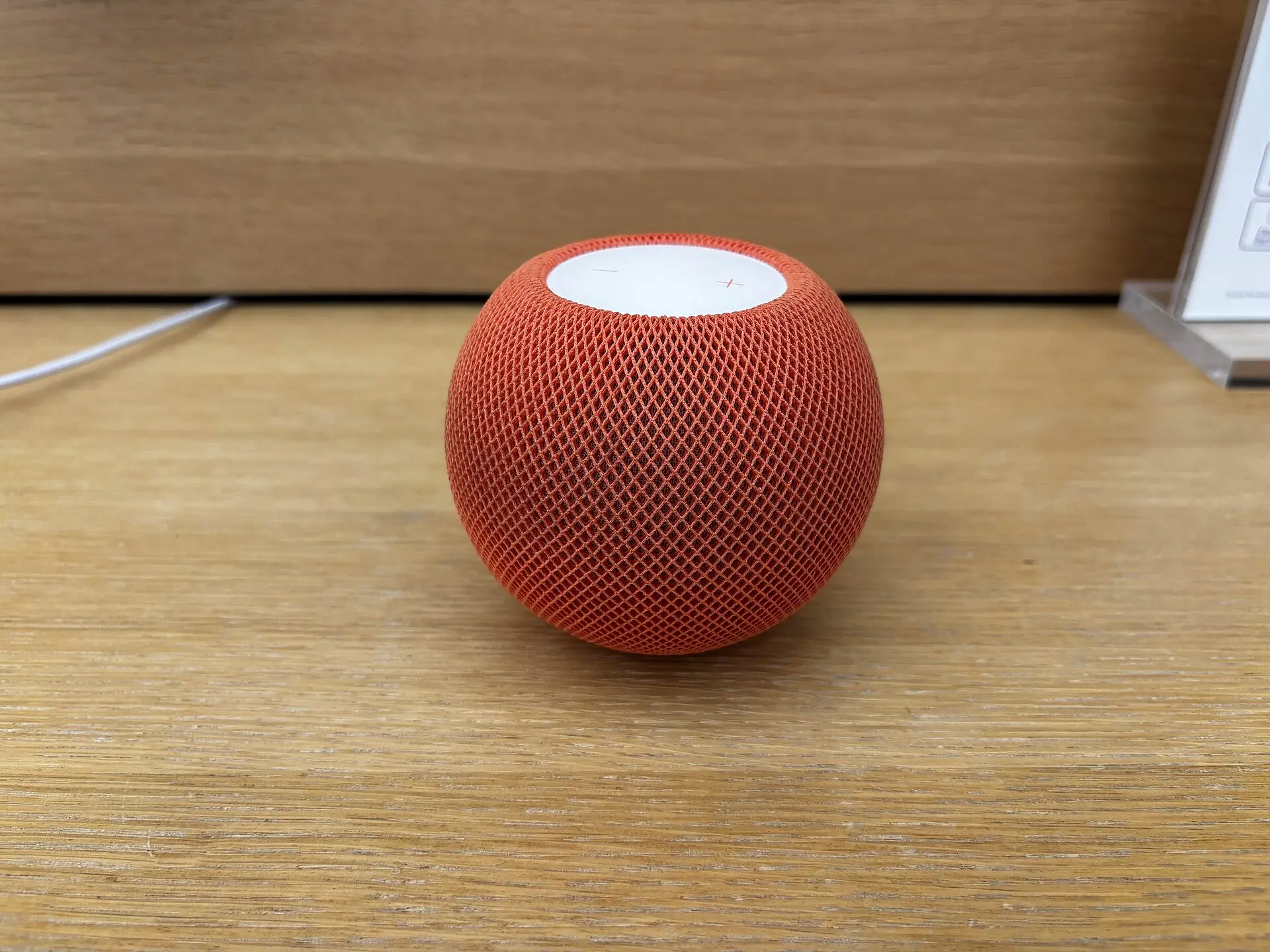
Apple Home needs a home hub to add Matter devices. According to Apple, the HomePod mini and the Apple TV 4K (3rd generation) with Ethernet support Thread. At Amazon, many Echo devices work as Matter controllers; according to Amazon, those with a Thread border router include the Echo Dot Max (2025) and the Echo Hub.
Apple does not mention Zigbee or Z-Wave for the HomePod mini. Other wireless standards are therefore not its territory. For a pure Matter household, it is nevertheless often the least expensive solution.
From the device list to the right hub
Many wireless standards and no desire to tinker lead to the Homey Pro, our choice for most households with mixed devices. If there are roller shutters, awnings and Z-Wave actuators in the house, homee with the matching cubes is the obvious choice, though with Warema only with WMS. For Zigbee and Matter on a tight budget, the Homey Pro mini is enough. Tech enthusiasts who want full control take Home Assistant Green with ZBT-2 and, if needed, ZWA-2. Your heating runs on Homematic IP? Then the Home Control Unit. For Bosch devices, the Bosch Smart Home Controller II, and if you only use Matter with Apple or Alexa, a HomePod mini or Echo Dot Max will do.
All information comes from the manufacturers (as of October 2026), and firmware and features change often. So before buying, take a look at the hub’s compatibility list and check whether your existing devices are on it.
If you want to hard-wire lighting, roller shutters and heating in a new build, you will find the setup with bus and DIN rail in the guide to Homematic IP Wired (in German).
The wireless system from Germany is explained in the Homematic IP (in German) guide, and choosing its hub in the guide Choosing a Homematic hub (in German).
Black Friday: check starter sets against your device list first
For Black Friday on November 27 and before Christmas, hubs often appear in bundles, for example with a thermostat, smart plug or smoke detector. Such a set is only a good deal if the extras suit your home. So proceed in the same order as above: first write down your existing devices, then read the hub’s compatibility list, then look at the offer. A discounted Zigbee thermostat is of little use if your radiators already run on Homematic IP.
With strikethrough prices, the rule in Germany is: anyone advertising a price reduction must state the lowest price of the last 30 days (§ 11 of the German Price Indication Ordinance). For our choice, the Homey Pro, you can set a price alert above. More price drops at our partner retailers are collected on the Black Friday 2026 (in German) page.
If the hub is to get a control panel on the wall, the guide Tablet for the wall (in German) compares a tablet with mount, the Echo Hub and the Shelly Wall Display.
Frequently asked questions
What is the difference between a Matter controller and a Matter bridge?
A Matter controller adds Matter devices and controls them. A Matter bridge, by contrast, only makes a hub's own devices visible to other systems and does not control third-party Matter devices. This is where many bad purchases happen, for example with homee or the Bosch Smart Home Controller II, which work as Matter bridges.
What do you need a Thread border router for?
Matter devices using Thread also need a Thread border router in the house. Many speakers and hubs have one built in; according to the manufacturers, these include the Homey Pro, Homey Pro mini, HomePod mini, Echo Dot Max and Echo Hub.
Local hub or cloud solution?
Local hubs store data and routines on the device, and automations keep running if the internet goes down. Cloud solutions need a connection to the outside. Wherever possible, this guide prefers local. With Homematic IP, for example, the Access Point 2 stores data in the cloud, while the Home Control Unit works without it in offline mode.
Which hub suits roller shutters and awnings from different manufacturers?
homee with its modular system is the obvious choice here. Depending on your needs, cubes for Z-Wave, Zigbee and EnOcean plus partner cubes for Warema WMS, Hörmann BiSecur and Becker CentronicPlus are added to the Brain Cube. According to homee, the Warema cube only communicates with WMS, not with the older EWFS.
Is Home Assistant Green suitable for beginners?
It is more for tech enthusiasts. The range of functions is huge, and so is the learning curve. The box has no built-in radio for Zigbee, Thread or Z-Wave; that comes from the Connect ZBT-2 and the Connect ZWA-2. If you do not want to spend your evenings fine-tuning automations, Homey Pro is the more convenient choice.
Does a smart home hub cost a subscription?
That varies by provider and should be clarified before buying, for example for remote access, backups or additional features. According to the manufacturer, Homey Pro needs no subscription; only cloud backups cost extra as an option. Missing wireless standards via USB stick or add-on module also belong in the calculation.
Which smart home hub is right for me?
Your devices decide. If you mix Z-Wave, Zigbee and Matter from different brands, an open hub such as Homey Pro, homee or Home Assistant is the right fit. If you stay within one system such as Homematic IP or Bosch Smart Home, take its own hub. For pure Matter households, a HomePod mini or an Echo with Thread is often enough.
Sources
- homee: Z-Wave Gen7
- homee: Brain Cube
- Homey: Homey Pro
- Homey: Homey Pro mini
- Homematic IP: Home Control Unit
- Homematic IP: Comparison of hubs (PDF)
- Home Assistant: Green
- Home Assistant: Connect ZBT-2
- Home Assistant: Connect ZWA-2
- Home Assistant: End of production for the Yellow
- Bosch Smart Home: Controller II
- Apple: HomePod or Apple TV as a home hub
- Amazon: Matter support on Echo devices
- Connectivity Standards Alliance: Matter
- German Price Indication Ordinance, § 11: Price reductions
Where to buy
- homee Brain CubeCheck price at Amazon.deAvailable in Germany: Amazon.de
- homee Z-Wave Cube Gen7Check price at Amazon.deAvailable in Germany: Amazon.de
- Homey Pro (2026)View at CoolblueAvailable in Germany: CoolblueCheck price at Amazon.deAvailable in Germany: Amazon.de
- Homey Pro miniView at CoolblueAvailable in Germany: CoolblueCheck price at Amazon.deAvailable in Germany: Amazon.de
- Homematic IP Home Control UnitView at ELVAvailable in Germany: ELVCheck price at Amazon.deAvailable in Germany: Amazon.de
- Home Assistant GreenCheck price at Amazon.deAvailable in Germany: Amazon.de
- Home Assistant Connect ZBT-2Check price at Amazon.deAvailable in Germany: Amazon.de
- Home Assistant Connect ZWA-2Check price at Amazon.deAvailable in Germany: Amazon.de
- Bosch Smart Home Controller IIView at CoolblueAvailable in Germany: CoolblueCheck price at Amazon.deAvailable in Germany: Amazon.de
- Apple HomePod mini (weiß)Check price at Amazon.deAvailable in Germany: Amazon.de
- Amazon Echo Dot MaxCheck price at Amazon.deAvailable in Germany: Amazon.de