Contents14 sections
This guide was first published in German on handgetestet.de.
When it comes to wallboxes, people often think too big. A normal household gets by with 11 kW, and in Germany such a box only has to be registered with the grid operator, not approved. If there’s solar power on the roof, solar surplus charging and switching between single-phase and three-phase charging belong on the wish list.
New wallboxes also fall under Section 14a of the German Energy Industry Act (EnWG) and must allow control by the grid operator. Installation and connection are a job for a licensed electrician. Not a weekend project. This guide compares six models based on manufacturer information. We did not test the devices ourselves.
First stop: electrician and grid operator
Charging stations may only be installed by a licensed electrician, and the manufacturers also require a qualified electrician in their documentation. The German consumer advice center (Verbraucherzentrale) recommends having the existing house wiring checked first. Afterward, you’ll know more precisely what the old cable to the garage can handle.
Every private wallbox is reported to the local grid operator before installation. Up to 11 kW, registration is enough, and the grid operator may not object. From 12 kW, approval is required under Section 19(2) of the German low-voltage connection ordinance (NAV) (ADAC, Verbraucherzentrale). The electrician usually handles the registration. But according to the ADAC, Germany’s largest automobile club, the person using the power connection remains responsible.
Second stop: Section 14a EnWG and the grid fee
Since January 1, 2024, private wallboxes over 4.2 kW count as controllable consumption devices. The grid operator may not refuse the connection by pointing to a possible overload. In return, it may throttle the wallbox if overload threatens, but not below 4.2 kW and not switch it off entirely (Federal Network Agency, Bundesnetzagentur). As compensation, there’s a reduced grid fee, in three variants. Module 1 is an annual flat rate. Module 2 lowers the per-kWh rate and requires a separate meter. Module 3 with time-variable fees requires a smart metering system and can only be chosen together with Module 1. If you don’t choose, you get Module 1 (Bundesnetzagentur).
Third stop: funding and rented homes
There’s currently no federal funding for wallboxes at single-family homes. The federal program for multi-unit buildings with three or more apartments only accepted applications until fall 2026: homeowners‘ associations until November 2, small businesses and private owners until November 10, 2026 at the latest (program website, as of November 9, 2026). Individual municipalities and municipal utilities pay their own grants, which usually have to be applied for before buying.
And for renters? Tenants with a fixed parking space can demand that the landlord allow the installation of a charging station. They bear the costs themselves (Section 554 of the German Civil Code, BGB; Verbraucherzentrale).
This overview is not legal advice. The linked sources, your grid operator and your licensed electrician are authoritative.
Fourth stop: the power your car actually uses
11 kW charges a typical electric car fully overnight. More rarely helps, especially since some cars can’t take that much. If a car only charges on a single phase, at most 3.7 kW flows from an 11 kW wallbox (Verbraucherzentrale). So before you choose a wallbox, put the vehicle’s data sheet on the table.
With solar power, the lower limit is what counts. An electric car charges at a minimum of 1.4 kW (Verbraucherzentrale); three-phase charging needs at least 4.2 kW of surplus (go-e). Automatic phase switching therefore also makes use of the weak sunny hours in spring and fall. This usually requires a meter or energy management at the house connection.
Fifth stop: the features
A permanently attached Type 2 cable is convenient. A socket is more flexible but requires a separate charging cable. Because of Section 14a, ask about a control input or an interface like Modbus through which the grid operator’s control box can limit the power. For protection, built-in DC residual current detection (6 mA) should be included. Whether an additional Type A residual current device (RCD) is needed in the distribution board is stated in the data sheet. If you settle charging costs with your employer, you need a version compliant with German calibration law, with an MID or MessEV meter.
Six wallboxes by connection and control
| Model | Connection | Smart and solar (according to manufacturer) | Best for |
|---|---|---|---|
| go-e Charger Gemini 2.0 11 kW | Type 2 socket, 1.4 to 11 kW | App, Wi-Fi, cellular, OCPP; solar with go-e Controller | Smart wallbox with open API |
| Wallbox Pulsar Max 11 kW | Type 2 cable 5 m (7 m optional) | App, Wi-Fi, Bluetooth, OCPP; Eco-Smart as an add-on | Compact app-controlled wallbox |
| Heidelberg Energy Control Plus | Type 2 cable 5 m / 7.5 m | No app; Modbus RTU, Section 14a compliant, solar via HEMS | Robust box for energy managers |
| KEBA KeContact P40 | Type 2 cable 6 m | App, Wi-Fi, LAN, OCPP, Modbus; phase switching for solar | Well-connected premium box |
| ABL eMH1 11 kW | Type 2 cable approx. 6.35 m | No app; RS485 for load management | Simple charging, no frills |
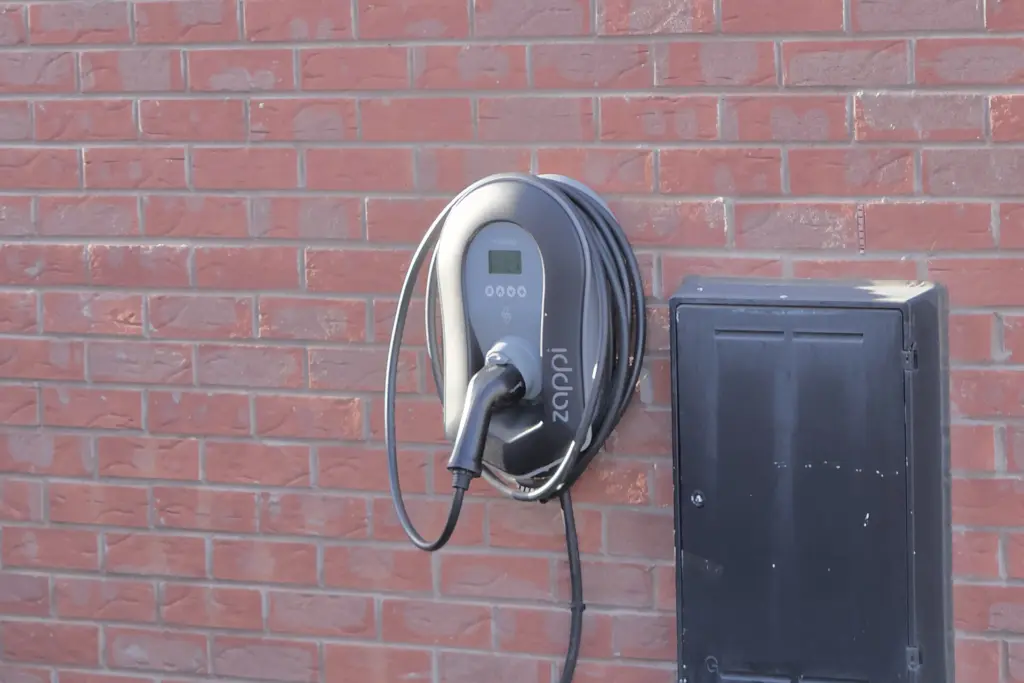
| myenergi zappi | Type 2 socket or cable, depending on variant | App, Eco and Eco+ modes for pure solar power | Solar power fans |
go-e Charger Gemini 2.0
According to the data sheet, this Austrian wallbox charges single-phase or three-phase from 1.4 to 11 kW. Besides Wi-Fi, it has an eSIM inside. So the app works even when the home network doesn’t reach the garage. Solar surplus charging, dynamic load management and automatic phase switching come with the separate go-e Controller. DC residual current detection is built in; the distribution board additionally needs a Type A RCD. The Gemini 2.0 is currently unavailable on Amazon (as of November 9, 2026).
Wallbox Pulsar Max
Small and light, 1.3 kg without cable according to the manufacturer. The 11 kW version has a Type 2 cable of 5 m, 7 m on request. It’s controlled via the myWallbox app over Wi-Fi or Bluetooth. The data sheet lists Eco-Smart for solar power and dynamic Power Sharing as add-on features. You’ll need to plan for an external Type A RCD.
Heidelberg Wallbox Energy Control Plus
Stainless steel front, protection class IP54 according to the data sheet, designated as Section 14a compliant. The box from Amperfied does without its own app. It’s controlled via Modbus RTU by an energy manager, including for solar surplus charging. Up to 16 boxes share the available power through load management. Tech enthusiasts find it boring. Next to an energy manager, it fits exactly.
KEBA KeContact P40
Also from Austria, available with either 7.4 or 11 kW. KEBA states a built-in Type A RCD with DC residual current detection and integrated switching between single-phase and three-phase charging for solar power. Practically no interface is missing: Wi-Fi, LAN, OCPP, Modbus TCP and REST API. An MID or MessEV meter is optional.
ABL eMH1
The eMH1 from Franconia wants nothing more than to charge. According to the data sheet, a Type A RCD and DC residual current detection are already built in, which saves space in the distribution board. The Type 2 cable measures around 6.35 m, and there’s also a version with a socket. App and Wi-Fi are missing. Via RS485, the box can still be integrated into load management.
myenergi zappi
The zappi is built for solar fans. According to the manufacturer, in Eco+ mode it charges exclusively with surplus; in Eco mode, it adds grid power when needed. An electricity meter is built in, and the charging power can be set to 11 or 22 kW. It’s available with a socket and with a cable.
Last stop: what’s already in the house?
The decision depends less on the box than on what’s already in the house. If an energy manager is already running there, the Heidelberg Energy Control Plus and the KEBA KeContact P40 are obvious choices. Without such a system, the go-e Charger Gemini 2.0 leaves the most room, and with the go-e Controller also for solar surplus.
Lots of solar power and as little grid as possible? Then the myenergi zappi in Eco+ mode. Simple charging without an app is what the ABL eMH1 does; compact with an app, the Wallbox Pulsar Max.
Whichever it turns out to be: coordinate the choice, circuit protection and registration with your licensed electrician before buying.
With a wallbox or heat pump, the grid fee can be reduced. How the three modules under Section 14a work is explained in the guide Electricity for heat pump and wallbox (in German).
No fixed station possible? Then the guides to the mobile wallbox (in German) and to charging in an apartment building (in German) will help.
A power station doesn’t replace a wallbox, as our calculation on charging an electric car from a power station (in German) shows.
Registration, tenancy law, Section 14a and funding are covered in the guide Retrofitting a wallbox (in German).
How wallbox, charging cable and battery are insured is explained in our guide Car insurance for electric cars (in German).
Frequently asked questions
Is an 11 kW wallbox enough?
Yes, 11 kW charges a typical electric car fully overnight. More rarely helps, especially since some cars can't take that much. If a car only charges on a single phase, at most 3.7 kW flows from an 11 kW wallbox. So before choosing, put the vehicle's data sheet on the table.
Do you have to register a wallbox?
In Germany, every private wallbox is reported to the local grid operator before installation. Up to 11 kW, registration is enough; from 12 kW, approval is required under Section 19(2) NAV. The electrician usually handles the registration, but according to the ADAC, the person using the power connection remains responsible.
What does Section 14a EnWG mean for the wallbox?
Since January 1, 2024, private wallboxes over 4.2 kW in Germany count as controllable consumption devices. The grid operator may throttle them if overload threatens, but not below 4.2 kW and not switch them off entirely. In return, there's a reduced grid fee in three modules. So ask about a control input or Modbus interface.
Is there funding for a wallbox at a single-family home?
There's currently no federal funding in Germany for that. A federal program targets multi-unit buildings with three or more apartments. Individual municipalities and municipal utilities pay their own grants, which usually have to be applied for before buying.
What should you look for when charging with solar power?
An electric car charges at a minimum of 1.4 kW; three-phase charging needs at least 4.2 kW of surplus. Automatic phase switching therefore also makes use of weak sunny hours. This usually requires a meter or energy management at the house connection. According to the manufacturer, the myenergi zappi charges exclusively with surplus in Eco+ mode.
Can tenants have a wallbox installed?
In Germany, tenants with a fixed parking space can demand that the landlord allow the installation of a charging station. They bear the costs themselves, as regulated in Section 554 BGB. The sources, the grid operator and the licensed electrician are authoritative; this overview is not legal advice.
Sources
- Bundesnetzagentur: Controllable consumption devices (Section 14a EnWG, German)
- ADAC: Registering a wallbox (German)
- ADAC: Section 14a EnWG and controllable wallboxes (German)
- ADAC: Wallbox funding 2026 (German)
- Federal funding for charging in multi-unit buildings: Application (German)
- Verbraucherzentrale: Charging solar power with your own charging station (German)
- go-e: Data sheet Gemini 2.0
- go-e: PV surplus charging
- Wallbox: Data sheet Pulsar Max
- Amperfied: Data sheet Heidelberg Energy Control Plus
- KEBA: KeContact P40
- ABL: Data sheet eMH1 11 kW
- myenergi: zappi
Where to buy
- go-e Charger Gemini 2.0 11 kWCheck price at Amazon.de
- Wallbox Pulsar Max 11 kWCheck price at Amazon.de
- Heidelberg Energy Control PlusCheck price at Amazon.de
- KEBA KeContact P40Check price at Amazon.de
- ABL eMH1 11 kWCheck price at Amazon.de
- myenergi zappiCheck price at Amazon.de