Contents13 sections
This guide was first published in German on handgetestet.de.
Whether a tea is high quality is rarely revealed by the name of the tea house; it is revealed by the back of the package. If you can read the region, harvest time, organic control body and type of flavoring, you buy more safely than by brand image. For fine Darjeeling, we recommend the Spring Darjeeling from Ronnefeldt (premium class); for a strong everyday tea, the Bio Ostfriesen Premium from Tee-Handels-Kontor Bremen (mid-range class); and as an affordable loose-leaf entry point, the Assam Finest Selection from Teekanne. Pyramid tea bags are convenient, but they cost several times as much per cup.
What a good tea package reveals
With black tea from the supermarket, the ingredient list often just says „black tea.“ That is permitted. It tells you nothing more. Specialist tea houses go further. In its own shop, Ronnefeldt lists the country of origin, growing region, leaf grade, harvest time and, for organic products, the control body for its loose teas. For the Spring Darjeeling, that is India, Darjeeling, FTGFOP, spring harvest and DE-ÖKO-003. On top of that comes the note „Non-EU Agriculture,“ meaning it was grown outside the EU. That is what traceability you can check looks like.
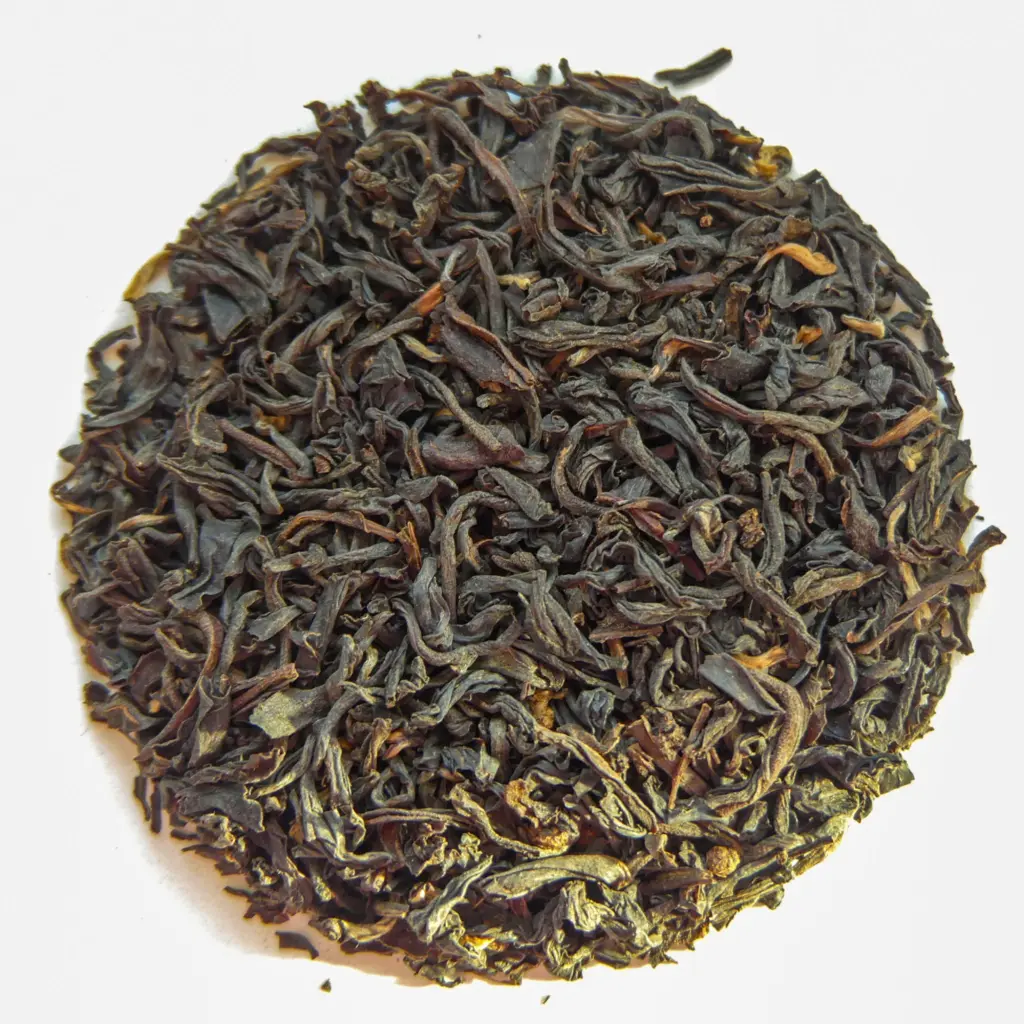
The leaf grade is more than folklore. On its brand site, Eilles describes the grading in four levels: leaf, broken, fannings and dust. The more finely the leaf is broken, the faster and stronger the tea steeps. In East Frisian blends, broken leaf (broken, such as FBOP) is intended. In a first flush Darjeeling, you would not expect it.
And contaminants? Tea is an agricultural product from countries with their own pesticide rules. Several houses therefore describe how they test. According to Ronnefeldt, all of its teas are tested for residues in accredited German laboratories. TeeGschwendner runs its own in-house food chemistry laboratory and tests harvest samples even before buying. Teekanne cites its own laboratory with more than 20,000 analyses a year. On its product pages, Samova cites the multi-residue method according to DIN EN 15662 for determining pesticide residues. None of this can be independently verified from the outside. But it shows that a house takes the issue seriously and provides information about it.
„Flavoring,“ „natural flavoring“ or orange oil?
Flavored tea is not bad tea. You just need to know what the ingredient list says. The Verbraucherzentrale, Germany’s consumer advice center, explains the levels like this: if it just says „flavoring,“ it is very likely chemically produced. „Natural flavoring“ comes from natural source materials, but it does not have to come from the fruit the tea tastes of. Only with „natural raspberry flavoring“ must at least 95 percent come from raspberries.
Two examples from the shops: according to the ingredient list, Samova’s Earl Grey Lazy Daze contains black tea, lemon peel and bergamot oil, all organically grown. Ronnefeldt’s Oriental Oolong lists currants and blossoms plus simply „flavoring.“ Both are legal and can taste good. But if naturalness matters to you, look for essential oils, peels and spices in the ingredient list. For organic tea, the rules are stricter: Samova refers to the EU organic regulation 2018/848, under which flavorings in organic foods must come at least 95 percent from the named source material.
Loose or bagged: calculate per cup
The price per 100 grams is deceptive. What matters is what a cup costs. Ronnefeldt calculates with one teaspoon, about 3 g, per 200 ml. At that rate, Teekanne’s loose Assam Finest Selection (€7.29 for 250 g in the manufacturer’s shop) costs around 9 cents per cup. Ronnefeldt’s Spring Darjeeling (€14.20 for 100 g) comes to a little over 40 cents. A Tea Diamond from Eilles with 2.5 g of tea costs around 50 cents in the shop, because 20 pyramid bags cost €9.99 to €10.99 there.
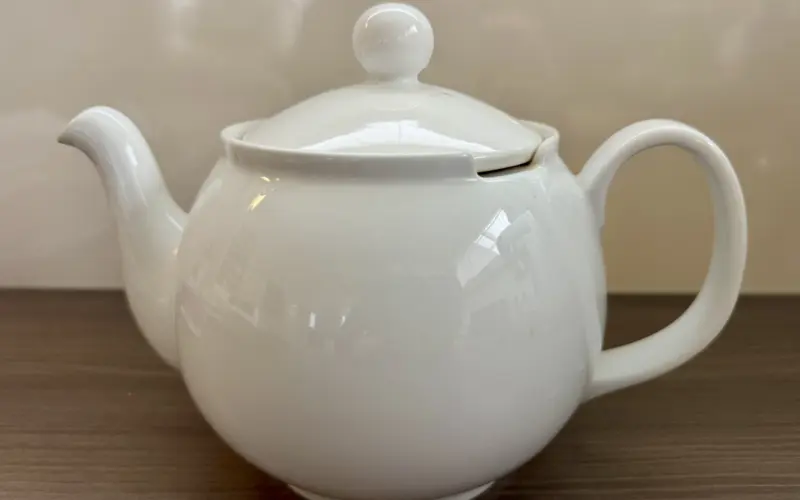
So are tea bags nonsense? No. Eilles justifies the pyramid shape by saying it gives the leaf plenty of room to unfold. And in the office or a hotel room, convenience counts. At home with a teapot and strainer, though, loose tea is almost always the cheaper choice for the same quality. Which teapot with which strainer is suitable is covered in our teapot guide.
Refill bags, paper, corn starch: what happens to the packaging
Samova sells its loose teas in tins and as a „refill.“ According to the manufacturer, the envelopes of its bagged teas are made of NatureFlex, a film made from wood pulp that also breaks down in a garden compost heap according to „OK compost HOME.“ Since mid-2025, Eilles has been switching the individual wrappers of its Tea Diamonds from plastic film to recyclable paper. The pyramid bags themselves are made of PLA, a plastic made from corn starch. Ronnefeldt states its goal of packaging half of its new products in compostable materials.
What goes into the organic waste bin? According to the Umweltbundesamt, Germany’s Federal Environment Agency, packaging made of biodegradable plastic does not belong there. The exception is biodegradable tea bags and coffee pads. From February 12, 2028, such brewing aids must be industrially compostable under the EU Packaging Regulation. Until then, the only help is a look at the package or an inquiry to the manufacturer.
Herbal tea: organic helps, and so does variety
With herbal tea, there is an issue that is not on any package. Pyrrolizidine alkaloids (PAs) are plant substances that can get into tea via weeds during the harvest. The German Federal Institute for Risk Assessment (BfR) names herbal tea, including rooibos, as well as black and green tea as the main sources. The BfR sees no acute risk, but it does see one with long-term intake. Since July 1, 2022, maximum levels under Regulation (EU) 2020/2040 have applied in the EU. The BfR recommends not offering children herbal tea exclusively. Pregnant and breastfeeding women should alternate herbal tea with other drinks.
At Sonnentor and Yogi Tea, organic is standard. Sonnentor, based in Sprögnitz, Austria, sells individual herbs such as peppermint, lemon balm or nettle loose in organic quality, usually in 50-gram packs. According to the company, Yogi Tea from Hamburg uses only certified organic ingredients and lists the countries of origin of its raw materials on its website, from lemongrass from Egypt to licorice from Uzbekistan. For herbs, fruits and spices, Yogi recommends water at a rolling boil and a steeping time of at least five to seven minutes, for microbiological reasons.
How hot, how long?
More often goes wrong when brewing than when buying. The manufacturer’s instructions on the package take precedence. As guidelines, the houses give:
- Black tea: boiling water, 3 to 4 minutes (Ronnefeldt, English Breakfast). Teekanne gives 2 to 3 minutes for Assam, and 4 to 5 for a stronger brew.
- Green tea: about 80 °C, 2 to 3 minutes (Ronnefeldt, Fancy Sencha). With boiling water, green tea turns bitter.
- Darjeeling from the spring harvest: according to Ronnefeldt, 100 °C and 3 to 4 minutes, with soft water.
- Herbal and fruit tea: at a rolling boil, at least 5 to 7 minutes (Yogi Tea).
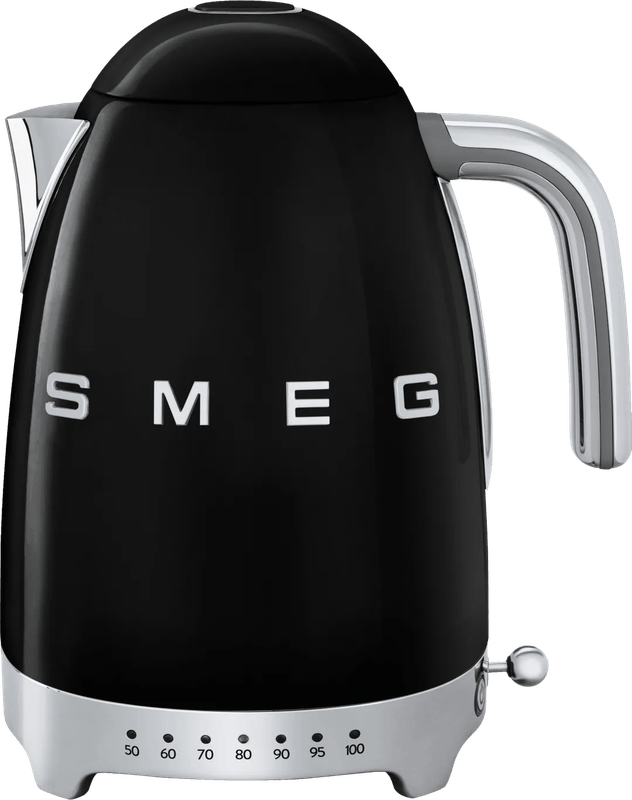
For green tea, a kettle with temperature control is worthwhile. Models are listed in the electric kettle guide.
Tea houses and varieties in three price classes
We classify by the price per 100 g in the manufacturer’s shop (as of November 16, 2026): entry-level class up to €6, mid-range class €6 to €11, premium class from €11. At 3 g per cup, that corresponds to up to about 18 cents, 18 to 33 cents and more than 33 cents per cup. Prices at retailers differ.
Premium class: origin you can look up
Our pick in the premium class is the Spring Darjeeling from Ronnefeldt. The Frankfurt tea house has existed since 1823 and, for this tea, discloses everything you need for a buying decision: spring harvest from Darjeeling, leaf grade FTGFOP, organic control body DE-ÖKO-003, preparation with 3 g per 200 ml at 100 °C. Darjeeling is a protected geographical indication. At a little over 40 cents per cup, it is not an everyday tea. If all you want is a strong morning pick-me-up with milk, you are paying here for nuances that disappear in the milk.
Samova from Hamburg has worked exclusively with organic ingredients since 2002. The Lazy Daze in a refill bag is an Earl Grey with bergamot oil instead of flavoring. According to the manufacturer, the tins for the loose teas carry the Cradle to Cradle certificate. Eilles, the tea brand of the Hamburg coffee house J.J. Darboven, stands for pyramid bags. Organic and Fairtrade depend on the variety there; the package states what applies. Paper & Tea from Berlin describes itself as a specialist in organic tea and carries pure oolongs and white teas as well as blends. Prices per 100 g across the range are mostly above €12.
Mid-range class: a lot of tea for the money
Our pick in the mid-range class is the Bio Ostfriesen Premium from Tee-Handels-Kontor Bremen. A strong broken tea from the autumn harvest, organic, unflavored according to the manufacturer, for €6.95 per 100 g. The house recommends around 2 g per cup and 3 to 5 minutes with boiling water. According to the shop, it is produced in northern Germany. Since 2013, the brand has been distributed by Holzapfel GmbH & Cie. KG in Worpswede. Ronnefeldt, whose owner is Jan-Berend Holzapfel, is based on the same street.
Ronnefeldt’s loose standard varieties fall into the same price class, such as the English Breakfast from the Uva region in Sri Lanka for €8.70 per 100 g. For herbal tea, Sonnentor is the obvious choice: organic peppermint, loose, with no additives. If you buy herbs individually, you can blend them yourself and know exactly what is in your cup.
Entry-level class: buy loose, not cheap
Our pick in the entry-level class is the Assam Finest Selection from Teekanne. 250 g of loose Assam with leaf grade FBOP costs €7.29 in the manufacturer’s shop, which works out to around 9 cents per cup. This variety has no organic seal, and Teekanne does not name the region or tea garden. For the big pot on the breakfast table, that is perfectly fine for many people. With its „Selected.“ line, Teekanne also carries loose organic teas, but at €85 to €137 per kilogram they fall into the mid-range and premium classes.
At the tea houses, the entry level starts just under €6. The Ostfriesen Blattmischung (East Frisian leaf blend) from Tee-Handels-Kontor Bremen costs €5.75 per 100 g, and Ronnefeldt’s Ostfriesen Blatt Mischung €5.80. Roberts Teehaus comes in below that: 250 g of Ostfriesentee Blattmischung costs €13 there, and a kilo €30. According to the retailer, it contains Assam teas from the Gingia, Koilamari, Raidang, Seajuli and Singlijan gardens. Roberts recommends eight to ten grams per liter, five minutes of steeping and soft water. A 20 g sample bag costs €3.50. If you want to taste before ordering a kilo, start with that.
TeeGschwendner and the other houses
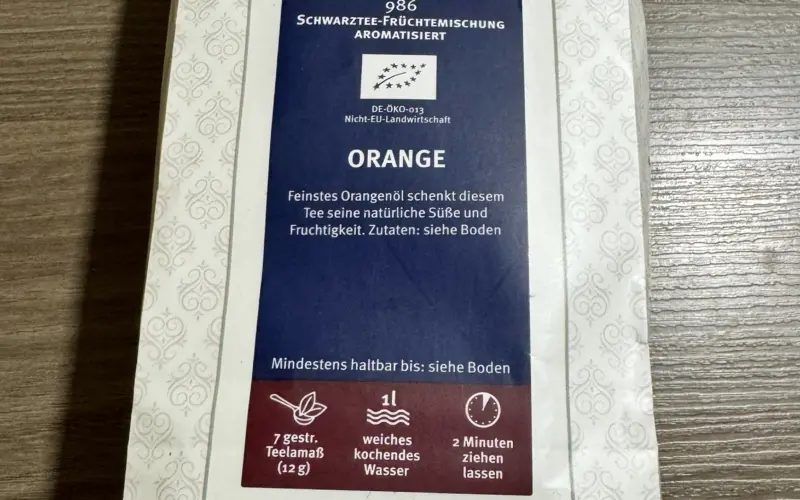
TeeGschwendner from Meckenheim sells through around 120 specialist stores and its own online shop. The house tests its teas in its own laboratory and, according to the company, prefers organic cultivation. Flavored organic varieties such as Orange cost about €6.60 per 100 g in the shop, putting them in the mid-range class. We described three varieties, Orange, Crème d’Orange and Arabische Nacht, in a separate hands-on report: TeeGschwendner tested. They are available in the specialist stores and in the company’s online shop.
Which tea suits which daily routine
- A big pot in the morning, often with milk: loose Assam or East Frisian tea from the entry-level or mid-range class. More money brings little here.
- Darjeeling, green tea or oolong without additions: premium class, loose, with the region and harvest stated.
- Flavored tea: read the ingredient list. Oils, peels and spices instead of „flavoring“ if naturalness matters to you.
- Herbal tea for every day: buy organic herbs individually, vary the varieties, brew at a rolling boil.
- Office and guests: pyramid bags, knowing that each cup costs considerably more.
Frequently asked questions
Where can you buy high-quality tea online?
From the tea houses‘ own online shops, such as Ronnefeldt, Tee-Handels-Kontor Bremen, Samova, TeeGschwendner, Paper & Tea, Roberts Teehaus or Sonnentor, and from large retailers. The manufacturers‘ shops usually provide more details on origin, harvest and preparation than the retailers‘ pages.
How can you tell good loose tea?
By verifiable information: country and region, harvest time, leaf grade, the control body for organic tea (for example DE-ÖKO-003), and an ingredient list that shows whether and with what it was flavored. A house that provides information on residue testing is a good sign.
How much does good tea cost per cup?
At 3 g per cup, loose everyday tea costs 9 to 18 cents, good organic varieties 18 to 33 cents, and fine Darjeeling or oolong 35 to 60 cents. Pyramid bags are often around 50 cents each (as of November 16, 2026, manufacturers‘ shops).
What temperature does green tea need?
Ronnefeldt gives 80 °C and 2 to 3 minutes for sencha. With boiling water, green tea quickly turns bitter. Black tea and herbal tea, by contrast, are brewed at a rolling boil.
Is herbal tea contaminated with pyrrolizidine alkaloids?
Contamination does occur, because weeds can be harvested along with the herbs. EU maximum levels have applied since July 2022. The BfR advises alternating herbal tea with other drinks. This applies especially to children and to pregnant and breastfeeding women.
Sources
- Ronnefeldt: Spring Darjeeling, product data and preparation
- Ronnefeldt: English Breakfast Tea
- Ronnefeldt: Fancy Sencha
- Ronnefeldt: Quality philosophy
- Tee-Handels-Kontor Bremen: Bio Ostfriesen Premium
- Tee-Handels-Kontor Bremen: About us
- Roberts Teehaus: Ostfriesentee Blattmischung (retailer information)
- Samova: Lazy Daze Refill
- Samova: Organic flavorings
- Samova: Packaging
- Eilles Tee: Origin and leaf grades
- J.J. Darboven: Eilles Tee switches to paper sachets
- Teekanne: Assam
- Teekanne: Quality promise
- TeeGschwendner: Quality
- Sonnentor: Pure herbs
- Yogi Tea: Frequently asked questions
- Yogi Tea: Ingredients and origin
- Paper & Tea: Press
- Verbraucherzentrale: Flavorings
- BfR: Questions and answers on pyrrolizidine alkaloids (Dec. 16, 2022)
- BfR: Press release 36/2016 on PAs in tea
- Umweltbundesamt (German Environment Agency): Questions and answers on packaging
Where to buy
- Ronnefeldt Spring DarjeelingCheck price at Amazon.deCheck price at Amazon.co.ukCheck price at Amazon.nlCheck price at Amazon.com.beCheck price at Amazon.frCheck price at Amazon.itCheck price at Amazon.esCheck price at Amazon.plCheck price at Amazon.seAvailable in Germany: Amazon.de
- Samova Lazy Daze RefillCheck price at Amazon.deCheck price at Amazon.co.ukCheck price at Amazon.nlCheck price at Amazon.com.beCheck price at Amazon.frCheck price at Amazon.itCheck price at Amazon.esCheck price at Amazon.plCheck price at Amazon.seAvailable in Germany: Amazon.de
- Eilles Tea Diamond Bio Darjeeling Imperial Second FlushCheck price at Amazon.deCheck price at Amazon.co.ukCheck price at Amazon.nlCheck price at Amazon.com.beCheck price at Amazon.frCheck price at Amazon.itCheck price at Amazon.esCheck price at Amazon.plCheck price at Amazon.seAvailable in Germany: Amazon.de
- Four Seasons of SpringCheck price at Amazon.deCheck price at Amazon.co.ukCheck price at Amazon.nlCheck price at Amazon.com.beCheck price at Amazon.frCheck price at Amazon.itCheck price at Amazon.esCheck price at Amazon.plCheck price at Amazon.seAvailable in Germany: Amazon.de
- Tee-Handels-Kontor Bremen Bio Ostfriesen Premium (organic East Frisian tea)Check price at Amazon.deCheck price at Amazon.co.ukCheck price at Amazon.nlCheck price at Amazon.com.beCheck price at Amazon.frCheck price at Amazon.itCheck price at Amazon.esCheck price at Amazon.plCheck price at Amazon.seAvailable in Germany: Amazon.de
- Sonnentor Pfefferminze (peppermint), looseCheck price at Amazon.deCheck price at Amazon.co.ukCheck price at Amazon.nlCheck price at Amazon.com.beCheck price at Amazon.frCheck price at Amazon.itCheck price at Amazon.esCheck price at Amazon.plCheck price at Amazon.seAvailable in Germany: Amazon.deView at Natur Kräuter ShopAvailable in Germany: Natur Kräuter Shop
- Teekanne Assam Finest SelectionCheck price at Amazon.deCheck price at Amazon.co.ukCheck price at Amazon.nlCheck price at Amazon.com.beCheck price at Amazon.frCheck price at Amazon.itCheck price at Amazon.esCheck price at Amazon.plCheck price at Amazon.seAvailable in Germany: Amazon.de
- Tee-Handels-Kontor Bremen Ostfriesen Blattmischung (East Frisian leaf blend)Check price at Amazon.deCheck price at Amazon.co.ukCheck price at Amazon.nlCheck price at Amazon.com.beCheck price at Amazon.frCheck price at Amazon.itCheck price at Amazon.esCheck price at Amazon.plCheck price at Amazon.seAvailable in Germany: Amazon.de
- Roberts Teehaus Ostfriesentee Blattmischung (East Frisian leaf blend, 250 g)View at Roberts TeehausAvailable in Germany: Roberts Teehaus
Still undecided?
Keep comparing at your own pace – every article in this category is checked monthly for new and discontinued models.