Contents11 sections
This guide was first published in German on handgetestet.de.
On the first afternoon, a child wants to take fifty pictures. With an instant camera and real film, that’s an expensive afternoon. After three packs, the film is gone, and the camera ends up in a drawer. For children between four and twelve, we therefore usually recommend a digital camera with a built-in thermal printer, for example the myFirst Camera Insta 20 or, for less money, the VTech KidiZoom Print Cam. Every photo is saved to the memory card. Only what the child really likes gets printed.
Real instant film still has its place. The colors are nicer, the picture appears as if by magic, and older children quickly learn that every press of the shutter counts. More something for birthdays and vacations than for every day.
Does it print, expose film or just save?
This one question determines the running costs, the battery and how long the child will enjoy the device. The details come after.
- Thermal printing: The camera prints without ink on thermal paper from a roll, usually in black and white, receipt-style. Manufacturers sell refills as roll sets; Bresser, for example, offers sets with 5 and with 10 rolls.
- Instant film: In color and longer-lasting, but every picture uses up a sheet of film. According to Fujifilm, an Instax Mini pack contains 10 shots; Polaroid sells Go film in a twin pack with 16 pictures. Every failed attempt costs film here.
- Storage: Many kids‘ cameras have hardly any internal storage and expect a microSD card, which often isn’t included. Check the maximum capacity in the data sheet. The myFirst Camera Insta 20 takes cards up to 32 GB, the myFirst Camera 50 up to 128 GB.
- Rechargeable or disposable batteries: A built-in rechargeable battery with a USB-C port is convenient but can’t be replaced. AA batteries are quick to swap but cost more in the long run.
- Age: The age ratings come from the manufacturer or the retailer listing and sometimes contradict each other. They tell you something about operation and small parts, not about talent.
If a child’s first device of their own is on the table anyway, kids‘ tablets (in German) and the kids‘ smartwatch are the obvious comparisons. A camera without internet access is often the more relaxed way in for elementary school kids.
Seven kids‘ cameras side by side
| Model | Image and printing | Storage and power | Age as stated | Best for |
|---|---|---|---|---|
| myFirst Camera Insta 20 | 16 MP, Full HD, thermal printing without ink | card up to 32 GB, 800 mAh battery, USB-C | 4–12 years (retailer information) | kids who shoot a lot and like to print |
| VTech KidiZoom Print Cam | 2 MP (upscaled to 5 MP), built-in thermal printer | 256 MB internal, microSD slot, built-in lithium-ion battery | 4–12 years | entry level in the lower price class |
| Freek Vonk x Bresser kids‘ instant camera | 12 MP, Full HD, black-and-white printing | SD card not included, built-in battery, Micro-USB | 8 years and up | school-age animal fans |
| myFirst Camera 50 | up to 20 MP, Full HD, no printing | 16 GB internal, card up to 128 GB, 2000 mAh battery | 4–15 years (retailer information) | older kids who film a lot |
| VTech KidiZoom Kid 4 | simple digital camera with games | microSD slot | 4–8 years (retailer information) | preschoolers |
| Polaroid Go Generation 2 | instant film in Go format | no storage, battery via USB-C | not stated | older kids, special occasions |
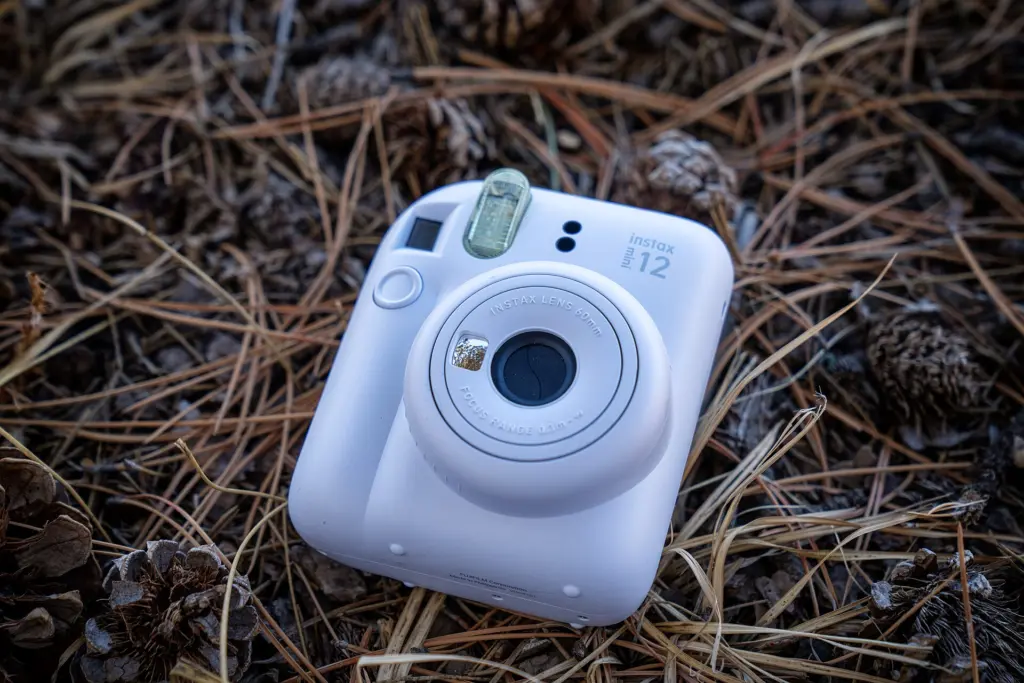
| Fujifilm Instax Mini 12 | Instax Mini film, 62 × 46 mm image area | no storage, 2 AA batteries | not stated | families already familiar with film |
myFirst Camera Insta 20: only the good ones get printed
According to myFirst, the camera takes photos with up to 16 MP and videos in 1080p and prints at 203 dpi on thermal paper; three rolls are included. The battery has 800 mAh and, according to the manufacturer, fully charges via USB-C in about two hours. Next to the 3-inch display sits a second small screen. The manufacturer itself doesn’t state a minimum age; the Amazon listing says 4 to 12 years.
VTech KidiZoom Print Cam: the more affordable printer
The Print Cam is designed for children aged 4 to 12. According to retailer information, it has 256 MB of internal storage and a slot for microSD cards, which aren’t included. The lithium-ion battery is built in. The sensor has a resolution of 2 MP, the camera upscales photos to 5 MP, and videos are recorded at a maximum of 640 × 360 pixels. Solid for the price. Don’t expect more image quality.
Freek Vonk x Bresser: instant prints with a tiger
Bresser recommends this camera from age 8, while the Amazon listing says 6 to 14. It prints in black and white on photo rolls that, according to the manufacturer, are free of BPA and BPS; three rolls are included, and refills come in sets of 5 and 10. Photos with 12 MP and Full HD videos are saved to an SD card that you have to buy separately. It still charges via Micro-USB, which seems a bit old-fashioned in 2026.
myFirst Camera 50: for kids who film more than they print
No printer, but a large 3.97-inch display, 16 GB of internal storage and cards up to 128 GB. According to myFirst, the battery has 2000 mAh and charges via USB-C. A protective case with a thick TPU frame is meant to cushion falls, plus there’s a wrist strap and a neck strap. The camera has Wi-Fi and a diary with a PIN. For seven-year-olds, that’s rather oversized.
VTech KidiZoom Kid 4: for the little ones
According to the listing, the Kid 4 is aimed at children aged 4 to 8, comes with small games and has parental controls. Photo storage can be expanded with a microSD card. Retailer information on resolution and power supply is contradictory; check the data sheet before buying. As a first device for a preschooler, it’s enough.
Polaroid Go Generation 2: small, real, but every picture counts
According to Polaroid, the Go weighs just 239 grams and has a selfie mirror, self-timer and double exposure. According to the manufacturer, one battery charge via USB-C lasts for up to 15 film packs. It only takes Go film, not Instax film. Polaroid doesn’t give an age rating. For a child who still presses the shutter at random, the ongoing film bill is the real problem.
Fujifilm Instax Mini 12: film you can get anywhere
According to Fujifilm, the Mini 12 sets exposure and flash automatically; for close-ups from 30 to 50 cm, you turn the lens further. According to the manufacturer, two AA batteries should last for about ten film packs. The pictures measure 62 × 46 mm. At 306 grams, it’s heavier than the Go, but the film is widely available. More models are in our comparison of instant cameras (in German).
Which camera suits which child
If an elementary school child takes a lot of photos and wants pictures to hold, the myFirst Camera Insta 20 is a good fit. Printing only costs thermal paper; everything else stays digital. Same goal, smaller budget? Then the VTech KidiZoom Print Cam, with less image quality but in a considerably cheaper price class.
For a preschooler who doesn’t need prints, the VTech KidiZoom Kid 4 is enough, as long as expectations for image quality stay modest. From about age ten, for videos and outings, the myFirst Camera 50 with its large storage and protective case fits. For teenagers who like the look of old point-and-shoot cameras, our retro digital camera (in German) guide compares models from the Rollei Mini to the Kodak PIXPRO C1.
The Instax Mini 12 and the Polaroid Go Generation 2 deliver color instant pictures for parties. Factor in the cost of film from the start.
Our advice for the birthday table: put refill rolls or film in the gift box right away, plus a memory card if none is included. A camera that stops producing anything on the second day is worse for a child than no camera at all.
Frequently asked questions
Thermal printing or instant film in kids' cameras?
Thermal printing works without ink and prints on paper from a roll, usually in black and white, receipt-style. Instant film is in color and lasts longer, but every picture uses up a sheet of film. According to Fujifilm, an Instax Mini pack contains 10 shots, and every failed attempt costs film.
Does a kids' camera need a memory card?
Usually, yes. Many kids' cameras have hardly any internal storage and expect a microSD card, which often isn't included. Check the maximum capacity in the data sheet: the myFirst Camera Insta 20 takes cards up to 32 GB, the myFirst Camera 50 up to 128 GB.
Rechargeable battery or disposable batteries in a kids' camera?
A built-in rechargeable battery with a USB-C port is convenient but can't be replaced. AA batteries are quick to swap but cost more in the long run. The Instax Mini 12 runs on two AA batteries; the myFirst models and the Polaroid Go charge via USB-C.
Which kids' camera suits preschoolers?
For a preschooler who doesn't need prints, the VTech KidiZoom Kid 4 is enough; according to the listing, it's for ages 4 to 8 and comes with small games and parental controls. Keep expectations for image quality modest. Retailer information on resolution and power supply is contradictory, so check the data sheet beforehand.
What's the difference between the myFirst Camera Insta 20 and the VTech KidiZoom Print Cam?
Both print on thermal paper. According to myFirst, the Insta 20 takes photos with up to 16 MP and has a battery with USB-C. The Print Cam has a 2 MP sensor that upscales to 5 MP, but in return it's in a considerably cheaper price class.
What should I give along with a kids' camera?
Put refill rolls or film in the gift box right away, plus a memory card if none is included. Bresser offers sets with 5 and with 10 rolls. A camera that stops producing anything on the second day disappoints a child more than no camera at all.
Sources
- myFirst: Camera Insta 20
- myFirst: Camera 50
- VTech: KidiZoom Print Cam
- Lidl: retailer information on the VTech KidiZoom Print Cam
- Bresser: Freek Vonk x Bresser kids‘ instant camera
- Polaroid: Go Generation 2
- Fujifilm: instax mini 12, specifications
Where to buy
- myFirst Camera Insta 20Check price at Amazon.deAvailable in Germany: Amazon.de
- VTech KidiZoom Print CamCheck price at Amazon.deAvailable in Germany: Amazon.de
- Freek Vonk x Bresser Kinder-SofortbildkameraCheck price at Amazon.deAvailable in Germany: Amazon.de
- myFirst Camera 50Check price at Amazon.deAvailable in Germany: Amazon.de
- VTech KidiZoom Kid 4Check price at Amazon.deAvailable in Germany: Amazon.de
- Polaroid Go Generation 2Check price at Amazon.deAvailable in Germany: Amazon.de
- Fujifilm Instax Mini 12Check price at Amazon.deAvailable in Germany: Amazon.de