Contents16 sections
This guide was first published in German on handgetestet.de.
Do you still need a dedicated camera for vlogs when your smartphone films so well? Honestly: not necessarily. But if you film alone on the go and want to carry little, a pocket gimbal camera like the DJI Osmo Pocket 4 is your best bet. Small, mechanically stabilized, vertical at the push of a button. The Osmo Pocket 4P and the Insta360 Luna Ultra add more focal length for interviews with a second camera. The Canon PowerShot V1 and the Sony ZV-E10 II mirrorless camera give you more control over picture and sound.
The technology behind them explains why. Three things determine the result of a vlog: how the camera steadies the picture, how wide its lens sees, and how it captures sound.
Mechanics versus processing: how the picture stays steady
Pocket cameras carry a built-in three-axis gimbal. Small motors keep the camera level and mechanically compensate for steps and shakes before they ever reach the image. Compact and mirrorless cameras usually take a different approach, electronically or with an optical stabilizer in the lens. You notice the difference when walking. Electronic stabilization needs a margin at the edges. It crops part of the image to calculate out the movement, and the frame becomes tighter. That is exactly what hurts in a vlog. If you hold the camera at arm’s length, you need roughly 16 to 20 mm full-frame equivalent focal length, otherwise your face fills the whole frame and little of the surroundings remains. Every crop therefore eats into the wide angle that is already in short supply.
Why native vertical video is sharper
For Reels, Shorts and TikTok you need 9:16. Some cameras record that directly. With others, you crop it from landscape footage later and throw away a large share of the pixels in the process. Native vertical delivers more resolution. And it shows. A screen that flips to the front shows whether you are in the frame and in focus. On the pocket cameras it has a second job: rotating it switches between landscape and portrait.
Audio matters more often than the picture
A built-in microphone sits on the body, so far from your mouth and close to wind and traffic noise. In quiet surroundings, it is enough. Outdoors and in conversations, a wireless microphone on your collar does far more than any image improvement. So check whether the camera has a 3.5 mm microphone input or can pair wirelessly directly. Our article on wireless microphone kits for video gives an overview. Then there is heat. Long 4K recordings heat up small bodies, and a built-in fan like the one in the Canon PowerShot V1 helps counter that. Manufacturer runtime figures usually apply to gentle settings. Expect less.
Our hands-on review of the Insta360 Ace Pro 2 action cam confirms this: the built-in audio is okay, nothing more. With its flip screen, it is still an option for vlogs where the camera may end up in the dirt now and then.
Isn’t a smartphone enough after all?
Often, yes. A current smartphone already films very well, and with a gimbal and a wireless microphone it becomes a usable vlog kit; our guide to buying a gimbal (in German) helps you choose. There are two reasons for a dedicated camera. You want to keep your phone free. Or you are after better image quality in low light.
Who you are allowed to film
Under Section 22 of the German Art Copyright Act (Kunsturhebergesetz), anyone publishing videos generally needs the consent of the people who are recognizably shown. Section 23 lists exceptions, for example when people only appear as incidental figures next to a landscape or location, or at public gatherings. If you deliberately film passersby, ask first. When in doubt, get legal advice.
Seven cameras from pocket-sized to interchangeable lens
| Model | Sensor and focal length | Stabilization | Audio and screen | Best for |
|---|---|---|---|---|
| DJI Osmo Pocket 4 | 1-inch, 20 mm, f/2.0 | 3-axis gimbal | DJI Mic transmitters can be paired; 2-inch rotating screen | Travel and everyday vlogs |
| DJI Osmo Pocket 4P | 1-inch, 20 mm, plus 1/1.28-inch, 60 mm | 3-axis gimbal | 3 microphones; 2-inch screen | Vlogs with interviews |
| Insta360 Luna Ultra | 1-inch main camera plus 1/1.3-inch telephoto camera | 3-axis gimbal plus electronic | Insta360 Mic; detachable 2-inch screen | Tech fans, remote control |
| Sony ZV-1 II | 1-inch, 18–50 mm, f/1.8–4 | electronic | 3.5 mm microphone; side-flipping screen | Compact camera for your bag |
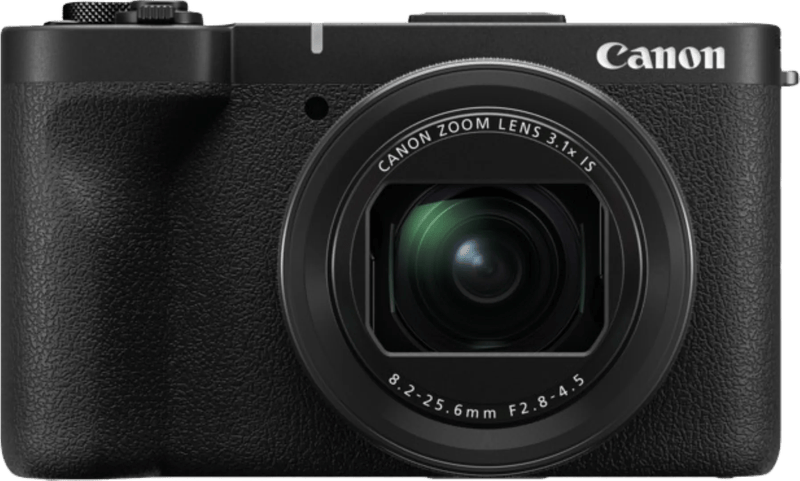
| Canon PowerShot V1 | 1.4-inch, 16–50 mm, f/2.8–4.5 | optical plus digital | Microphone and headphones; fan | Long recordings, low light |
| Sony ZV-E10 II | APS-C, interchangeable lenses | electronic, optical depending on lens | Microphone and headphones; vari-angle screen | Stepping up to interchangeable lenses |
| Panasonic Lumix G100D | Micro Four Thirds, interchangeable lenses | 5-axis hybrid (lens plus electronic) | 3.5 mm microphone; vari-angle screen; viewfinder | Affordable entry into a camera system |
DJI Osmo Pocket 4: small and mechanically stable
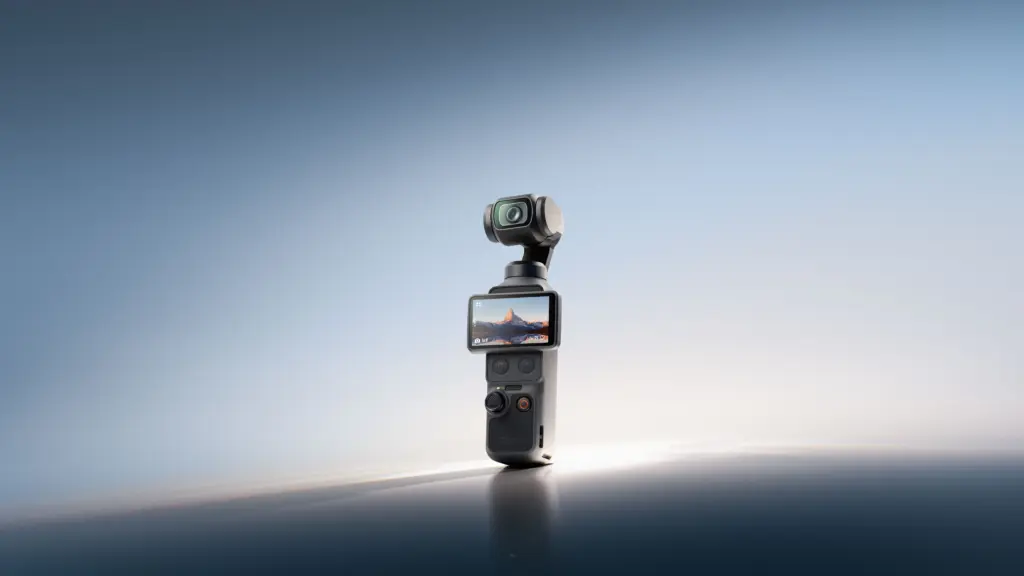
According to DJI, the Pocket 4 combines a 1-inch sensor with a three-axis gimbal and weighs around 190 g. It films 4K at up to 60 frames per second, up to 240 for slow motion, and offers 10-bit D-Log as well as ActiveTrack 7.0 for following people.
When the screen is rotated, it automatically switches to portrait. According to the manufacturer’s FAQ, two DJI Mic 3, Mic 2 or Mic Mini transmitters can be paired, and there is 107 GB of internal storage. For travel vlogs, that is usually all the camera you need.
DJI Osmo Pocket 4P: the second focal length
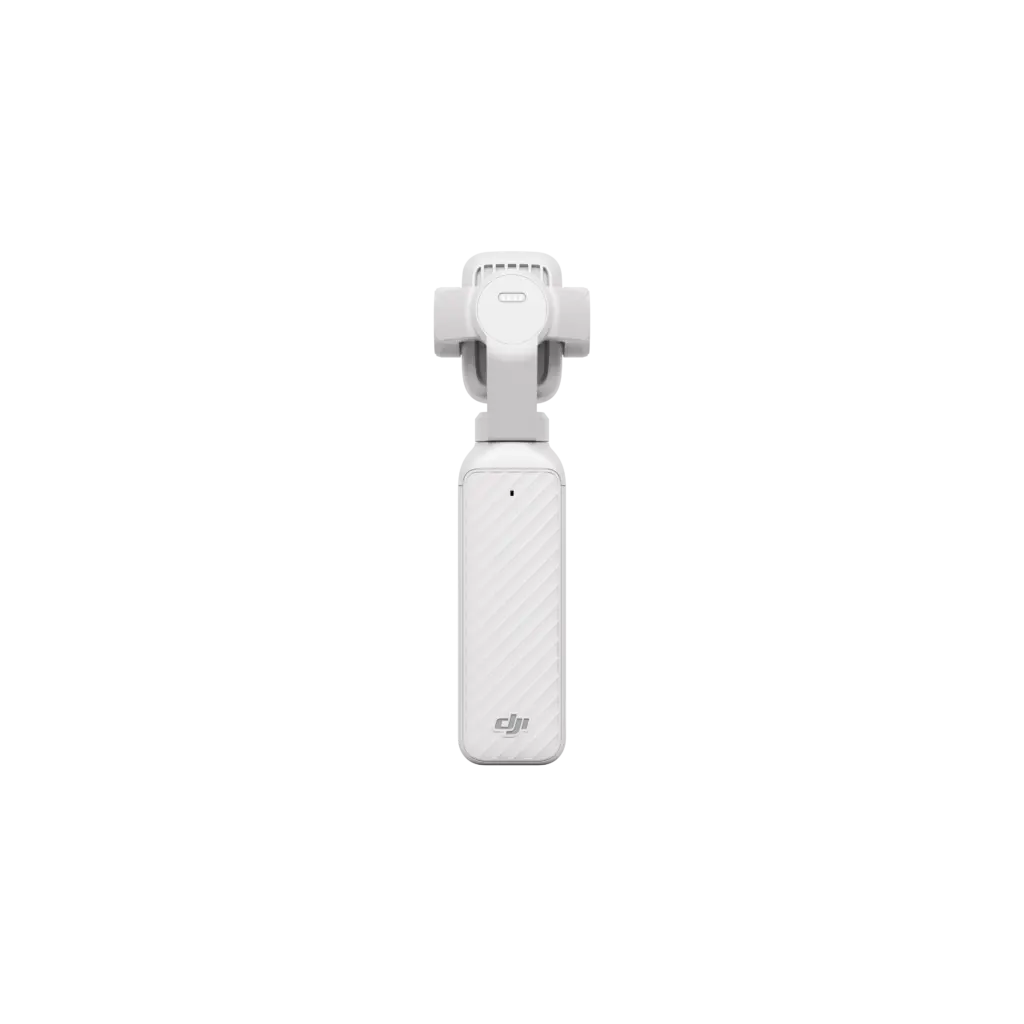
Next to the main camera, the 4P has a second one with a 60 mm focal length and f/1.8, intended for portraits and conversation scenes with a tighter frame. According to DJI, it films vertically in 3K at 60 frames per second, uses the new D-Log 2 and ActiveTrack 8.0. At 230 g, it is a little heavier and costs one price class more. If you never conduct interviews, you can save yourself the extra cost.
Insta360 Luna Ultra: the challenger
With the Luna Ultra, Insta360 is aiming squarely at DJI. According to the manufacturer, it has a 1-inch main camera with a Leica lens and a telephoto camera, films up to 8K at 30 frames per second, and vertical video in 3K. Unusual: the 2-inch screen can be detached and controls the camera from up to 20 m away. It weighs around 200 g, and according to the manufacturer one battery charge lasts up to about four hours.
Sony ZV-1 II: zoom for your jacket pocket
A classic compact camera with a 1-inch sensor and an 18–50 mm zoom, whose wide end is well suited to filming at arm’s length. It films 4K at 30 frames per second and stabilizes electronically. The screen flips out to the side, and there is a 3.5 mm microphone input. Headphones cannot be connected. At around 290 g, it disappears into any jacket pocket.
Canon PowerShot V1: larger sensor, built-in fan
At 1.4 inches, its sensor is larger than those of the other compacts. That helps in low light.
According to Canon, it films 4K at 30 frames without cropping, 4K60 with cropping, and offers 10-bit Canon Log 3. A fan, ND filter, and microphone and headphone jacks make it the camera for long shoots.
Sony ZV-E10 II: the entry into the E-mount system
According to Sony, the 26 MP APS-C sensor films 4K at up to 60 frames per second, plus S-Log3 and a vari-angle screen. What is missing is in-body image stabilization. Stabilization is electronic or via the lens, and in light of what was said above, that means: if you walk a lot, plan for a stabilized lens. A microphone and headphones can be connected.
Panasonic Lumix G100D: small, with a viewfinder
A small Micro Four Thirds camera with 20.3 MP, an electronic viewfinder and a vari-angle screen. It films 4K at 30 frames per second. Its hybrid stabilization combines the lens stabilizer with electronic correction. With the battery, it weighs around 346 g according to Panasonic, and it has a 3.5 mm microphone input too. It is often sold together with a 12–32 mm lens and a tripod grip.
Which camera suits which channel
For travel and everyday life, as small as possible, it is hard to get around the DJI Osmo Pocket 4. If you often talk to others and film portraits, go for the Pocket 4P or the Insta360 Luna Ultra. The Sony ZV-1 II is the compact with a zoom for your jacket pocket. For long recordings and low light, the Canon PowerShot V1 makes more sense.
With interchangeable lenses, start with the Sony ZV-E10 II or, more affordably, the Panasonic Lumix G100D. And if it has to be cheaper? Then there is the smartphone you already have, with a gimbal and wireless microphone. Not a bad solution.
A vlog camera as a gift: compare bundles, not percentages
Around Black Friday on November 27 and before Christmas, DJI and Insta360 sell their cameras in several bundles. At DJI they are called Standard, Creator or Vlog Combo; at Insta360, Standard, Creator or Endurance Bundle. Depending on the bundle, a wireless microphone, battery grip, light or tripod is included. A discount on the larger bundle is only worth it if you need those accessories anyway. If you already own a wireless microphone, you are often better off with the basic package.
As for crossed-out prices: anyone advertising a price reduction in Germany must state the lowest price of the last 30 days (Section 11 of the German Price Indication Ordinance). Mirrorless cameras like the ZV-E10 II are available body-only and as a kit with a lens, so only compare identical configurations. Price drops at our partner retailers and the Black Week edition of our newsletter are collected on the Black Friday 2026 (in German) page.
Frequently asked questions
What focal length does a vlog camera need?
If you hold the camera at arm's length, you need roughly 16 to 20 mm full-frame equivalent focal length, otherwise your face fills the whole frame. Electronic stabilization crops part of the image and eats into this wide angle. The mechanical gimbal of the pocket cameras smooths out shakes without narrowing the frame.
Why is native vertical video better for Reels?
For Reels, Shorts and TikTok you need 9:16. If you crop it from landscape later, you throw away a large share of the pixels. Native vertical delivers more resolution, and it shows. On the pocket cameras, rotating the screen switches between landscape and portrait.
How important is audio in a vlog?
Often more important than the picture. A built-in microphone sits far from your mouth and close to wind and traffic noise. Outdoors and in conversations, a wireless lavalier on your collar does more than any image improvement. Check whether the camera has a 3.5 mm input or can pair wirelessly.
Is a smartphone enough for vlogging?
Often, yes. With a gimbal and a wireless microphone, a current smartphone becomes a usable vlog kit. There are two reasons for a dedicated camera: you want to keep your phone free, or you are after better image quality in low light, for example with the 1.4-inch sensor of the Canon PowerShot V1.
Can I show passersby in my vlog?
Under Section 22 of the German Art Copyright Act (Kunsturhebergesetz), anyone publishing videos generally needs the consent of people who are recognizably shown. Section 23 lists exceptions, such as people appearing as incidental figures next to a location, or at public gatherings. If you deliberately film passersby, ask first; when in doubt, get legal advice.
Which interchangeable-lens vlog camera is best for beginners?
The Sony ZV-E10 II with an APS-C sensor, 4K at up to 60 frames per second, and microphone and headphone jacks. It lacks in-body stabilization, so if you walk a lot, plan for a stabilized lens. The Panasonic Lumix G100D, with a viewfinder and hybrid stabilization, is more affordable.
What is a vlog camera?
A camera designed for filming yourself: a screen that flips to the front, a wide lens for arm's-length shots, good stabilization, and a jack or wireless connection for a microphone. The range goes from pocket cameras with a gimbal like the DJI Osmo Pocket 4 to mirrorless cameras like the Sony ZV-E10 II.
Sources
- DJI: Osmo Pocket 4, technical specifications
- DJI: Osmo Pocket 4, product page
- DJI: Osmo Pocket 4, support and FAQ
- DJI: Osmo Pocket 4P, technical specifications
- Newsshooter: Insta360 Luna Ultra (manufacturer data)
- Newsshooter: Sony ZV-1 II (manufacturer data)
- DPReview: Sony ZV-1 II, technical specifications
- Canon: PowerShot V1 press release
- Newsshooter: Sony ZV-E10 II (manufacturer data)
- Panasonic: Lumix G100D, technical specifications
- German Art Copyright Act (Kunsturhebergesetz), Section 23
- German Price Indication Ordinance, Section 11: Price reductions
Where to buy
- DJI Osmo Pocket 4 (Standard-Paket)Check price at Amazon.deAvailable in Germany: Amazon.de
- DJI Osmo Pocket 4P (Standard-Paket)Check price at Amazon.deAvailable in Germany: Amazon.de
- Insta360 Luna UltraView at CoolblueAvailable in Germany: CoolblueCheck price at Amazon.deAvailable in Germany: Amazon.de
- Sony ZV-1 IIView at CoolblueAvailable in Germany: CoolblueCheck price at Amazon.deAvailable in Germany: Amazon.de
- Canon PowerShot V1View at CoolblueAvailable in Germany: CoolblueCheck price at Amazon.deAvailable in Germany: Amazon.de
- Sony ZV-E10 II (Gehäuse)Check price at Amazon.deAvailable in Germany: Amazon.de
- Panasonic Lumix G100D (mit Objektiv und Stativgriff)Check price at Amazon.deAvailable in Germany: Amazon.de