Contents12 sections
This guide was first published in German on handgetestet.de.
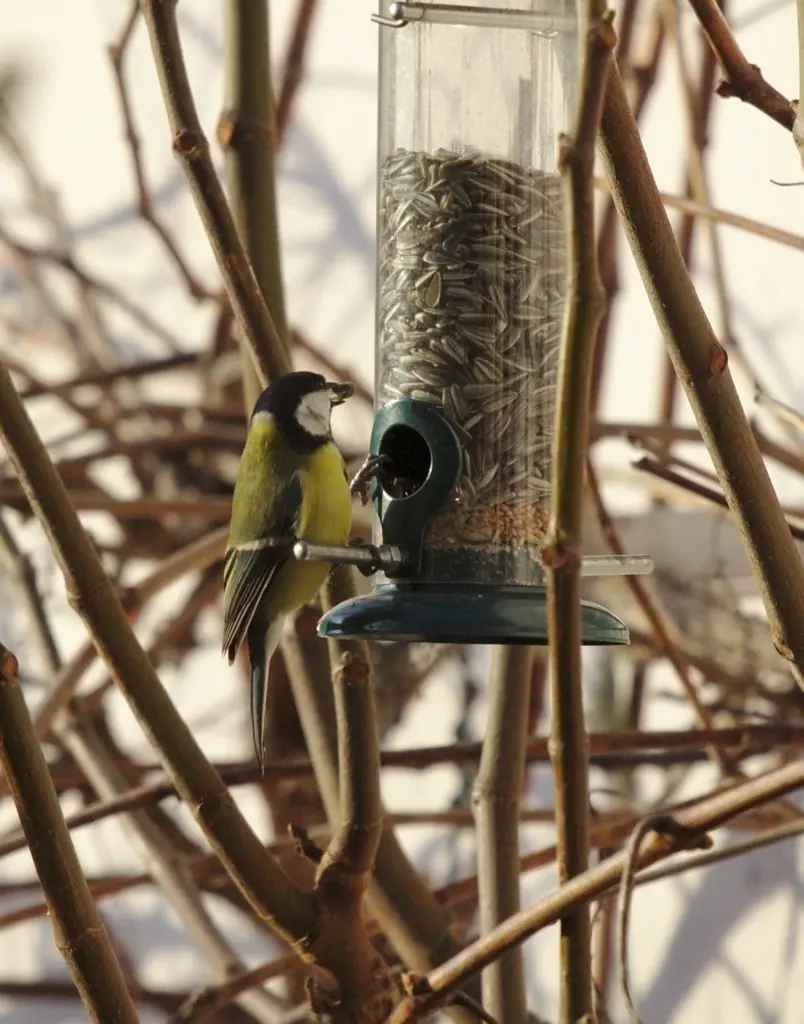
It is pretty, no doubt, the classic bird table with an open tray. Most of the time, though, it is the poorer choice. The birds stand right in the food, and whatever they leave behind ends up among the seeds. In the vast majority of gardens and on balconies, a hanging tube feeder such as the Vivara Apollo with five ports is therefore the more sensible purchase. If you get lots of visitors, the large silo from Schwegler is worth it.
Why the silo beats the open bird table
The Bavarian bird and nature conservation association (Landesbund für Vogel- und Naturschutz in Bayern, LBV) explicitly calls hygiene at the feeding station the most important aspect of feeding birds. In a classic bird table, the birds sit right in the food and can contaminate it with droppings, and if you set one up anyway, the LBV says you should sweep it out thoroughly at least once a day. The association considers tube feeders and silos particularly hygienic because the food stays dry and no droppings get into it. In its own shop, the LBV says it now only sells tubes and silo systems.
This is about disease. According to the LBV, salmonellosis and trichomonads spread especially quickly at classic bird tables, and more often at large feeding stations than at small ones. Dead birds under the feeding station are a warning sign, especially in mild winters and in late winter. Hence the rule: several small feeding stations are better than one large one.
What a good feeder should offer
- Enclosed supply: The food only trickles out at small ports. Tube or silo, not tray.
- Tool-free disassembly: If you first have to fetch a screwdriver to clean it, you will clean it less often. The base and lid should come off by hand.
- Roof or ventilation: Wet food spoils. Rain protection on top and drainage holes or ventilation help.
- Catch tray: Falling seeds attract mice and rats. The LBV advises catching them or regularly removing them from the ground.
- Size to match the number of visitors: A tube with one liter is enough for a balcony. A silo with nine or 13 liters only pays off where dozens of birds visit every day; otherwise the food sits too long.
And the large wooden house on a stand, as a showpiece in the front yard? A typical bad buy. It needs sweeping out every day, and in January that rarely happens as often as it should.
Location, cleaning and food according to the LBV
Set up or hang the feeding station in the open so the birds can spot a stalking cat in time. The LBV recommends about three to four meters of distance from shrubs and trees, and the clear view also helps against rodents, which would otherwise hide in nearby bushes. Ground feeding spots are better moved around more often.
Mice at the feeding station are annoying, but an open snap trap is no solution there: in our hands-on test of a plastic mousetrap, songbirds got caught in it in the garden too.
Clean without harsh chemicals: brush it off and rinse with hot water. If there are signs of disease, the LBV advises stopping feeding immediately, cleaning the feeding station and disinfecting it with heavily diluted vinegar essence. Only handle dead birds with rubber gloves, put them in a plastic bag in the household waste and disinfect your hands afterward. After such a case, the association recommends switching to a silo system.
For food, the LBV recommends mixes without grain, because birds leave it lying around and mice eat it. Store it in closed containers. Rats have shown up? Then pause for a while. The LBV considers feeding in spring and summer unproblematic. In its view, though, the most important help for garden birds remains a natural garden with native plants. If you are tidying up in the fall anyway, you will find tips on choosing equipment in our article on the leaf blower (in German). A few corners under the hedge can still stay messy.
Six feeding stations currently on the market
| Model | Type | Size and capacity according to manufacturer | Price range | Best for |
|---|---|---|---|---|
| Vivara Apollo tube feeder, 5 ports | Hanging tube, metal | 49 cm tall, 0.7 kg | mid-range | Garden and balcony, most households |
| Schwegler feeder silo No. 9 | Hanging round silo, 7 feeding spots | Ø 29 x 32 cm, 9 l | upscale | Gardens with many birds |
| Schwegler feeder silo No. 8 | Hanging round silo, 7 feeding spots | Ø 36 x 32 cm, 13 l | upscale | Large feeding sites, longer absences |
| Schwegler soft food silo | Ground silo made of wood concrete | 32 x 31 x 32 cm, 9 l, approx. 12 kg | upscale | Blackbirds, robins and other ground feeders |
| dobar 21277e bird house with feeder silo | Wooden house with acrylic glass silo | 38 x 38 x 30 cm | mid-range | If you want a house and sweep it daily |
| Gardigo bird food dispenser (90581) | Wooden log with wire mesh | approx. 20 cm, Ø 8 cm | budget | Tits on the balcony, a small start |
Vivara Apollo tube feeder
The tube comes from the CJ Wildlife range and has five ports with perch rings. According to Vivara, it can be completely taken apart without tools in about ten seconds, and a ventilation system in the lid is meant to prevent condensation. Vivara offers a five-year warranty, and catch trays are available as accessories. For a typical garden, this is our suggestion, because according to the manufacturer, cleaning takes hardly any effort, and that is exactly what everyday hygiene depends on.
Schwegler feeder silo No. 9
The round silo made of plastic and wood concrete holds nine liters. Seven feeding spots sit on one level. According to Schwegler, this means the birds hardly push each other away. To fill it, you remove the wire loop and lift off the entire roof; the weighted base is meant to keep the silo hanging steadily even when half empty. Schwegler recommends sunflower seed mixes exclusively.
Schwegler feeder silo No. 8
Same design. But 13 liters and around 3.5 kilograms. Schwegler calls it a device for professional feeding. It makes sense for club grounds, large properties at the edge of the woods or if you are often away for several days.
Schwegler soft food silo
Blackbirds, robins, dunnocks and yellowhammers prefer to eat on the ground rather than at a tube. For them, Schwegler built this ground silo made of wood concrete, with a nine-liter capacity and weighing around twelve kilograms. To refill it, you remove the roof; it is intended for rolled oats, berries, raisins or fat-based food, while sunflower seeds are less suitable according to the manufacturer. Schwegler suggests sheltered spots by hedges; for ground feeding spots, the LBV tends to recommend open areas. We would follow the LBV. And keep an eye out for cats.
dobar 21277e bird house with feeder silo
If you do not want to do without a little house, you will find a compromise here. The pine house measures 38 by 38 by 30 centimeters, and acrylic glass panes protect the food supply in the center from rain. dobar sells a matching stand separately. The feeding tray at the bottom remains open, however, so the rule of sweeping it out daily still applies. According to buyer reviews, the panes are thin and the roof is not completely watertight. On Amazon, the 21277e is currently unavailable (as of November 9, 2026). dobar does offer, for example, the larger hexagonal 98710e in solid wood with a feeder silo and bitumen shingles, 51 × 45 × 37 cm according to the listing.
Gardigo bird food dispenser
A hollowed-out wooden log, about 20 centimeters long, with wire mesh at the front and a sliding wooden disc at the back for filling. Tits cling to the mesh. They do not stand in the food. One buyer notes that the food is not well protected in the rain; so hang it under a roof overhang. Incidentally, the manufacturer advises feeding only in frost and snow and stopping in spring. The LBV takes a more relaxed view.
How we would decide
Garden or balcony with a normal number of birds: the Vivara Apollo tube feeder with five ports, plus a catch tray. For a balcony with a roof overhang and a tight budget, the Gardigo bird food dispenser is enough. It offers little weather protection, but it costs little.
Lots of birds or often away? Then the Schwegler feeder silo No. 9, or No. 8 for very large feeding sites. For blackbirds and robins on the ground, add the Schwegler soft food silo alongside the tube. And the house as an eye-catcher, the dobar 21277e? Only if you really plan for sweeping it out every day.
Our position is clear: two small tubes in different spots are better than one large house. That is what the LBV recommends too, and cleaning becomes easier.
If you want a closer look at the visitors to your feeder, the guide to binoculars (in German) explains why an 8×42 is usually a better fit for this than a 10×42.
Frequently asked questions
Tube feeder or bird table: which is more hygienic?
In a classic bird table, the birds sit right in the food and can contaminate it with droppings. The LBV considers tube feeders and silos particularly hygienic because the food stays dry. According to the LBV, salmonellosis and trichomonads spread especially quickly at classic bird tables.
What should you look for when buying a feeding station?
The supply should be enclosed and only trickle out at small ports. The base and lid should come off without tools so that cleaning does not get put off. A roof or ventilation keeps the food dry, and a catch tray collects seeds that would otherwise attract mice and rats.
Where should you put a bird feeder?
In the open, so the birds can spot a stalking cat in time. The LBV recommends about three to four meters of distance from shrubs and trees, which also helps against rodents. Ground feeding spots should be moved more often. Several small feeding stations are better than one large one.
How do you clean a bird feeding station?
Without harsh chemicals: brush it off and rinse with hot water. If there are signs of disease, the LBV advises stopping feeding immediately, cleaning the feeding station and disinfecting it with heavily diluted vinegar essence. Only handle dead birds with rubber gloves.
What food is right for wild birds?
The LBV recommends mixes without grain, because birds leave it lying around and mice eat it. Store the food in closed containers. For blackbirds and robins on the ground, a ground silo with rolled oats, berries, raisins or fat-based food works well, for example the Schwegler soft food silo.
How large should a feeder silo be?
A tube with one liter is enough for a balcony. A silo with nine or 13 liters only pays off where dozens of birds visit every day; otherwise the food sits too long. The 13-liter Schwegler No. 8 feeder silo suits large properties or if you are often away for several days.
Sources
- LBV: practical tips for feeding birds
- LBV: which feeding station is the right one?
- Vivara: Apollo tube feeder, 5 ports
- Vivara: Apollo tube feeder range
- Schwegler: feeding products catalog 84 (2026–2027)
- Gardigo: wooden bird food dispenser
- dobar: wild bird feeding
Where to buy
- Vivara Futtersäule Apollo 5 ÖffnungenCheck price at Amazon.deAvailable in Germany: Amazon.de
- Gardigo Vogel-Futterspender (90581)Check price at Amazon.deAvailable in Germany: Amazon.de
- Schwegler Futtersilo Nr. 9Check price at Amazon.deAvailable in Germany: Amazon.de
- Schwegler Futtersilo Nr. 8Check price at Amazon.deAvailable in Germany: Amazon.de
- Schwegler WeichfuttersiloCheck price at Amazon.deAvailable in Germany: Amazon.de
- dobar 98710e Vogelfutterhaus mit Futtersilo (sechseckig)Check price at Amazon.deAvailable in Germany: Amazon.de
- dobar 21277e Vogelhaus mit Futter-SiloCheck price at Amazon.deAvailable in Germany: Amazon.de