Contents13 sections
This guide was first published in German on handgetestet.de.
Too hard. That is where many first foam roller purchases go wrong. Newcomers like to pick the firmest roller with the most knobs and then leave it in the corner after two weeks, because every session just hurts. For most people, a sensible start is a smooth, medium-firm roller 30 centimeters long, such as the Blackroll Standard, plus a small ball for the soles of the feet, the glutes and the shoulder blade.
It is worth taking a sober look at what the roller can actually do before you buy. More on that further down. Technique first.
How firm should your first roller be?
Most manufacturers offer soft, medium and hard. Soft rollers are suitable for beginners, people who are sensitive to pain and lighter people. Medium covers most users. We only recommend a hard roller once the medium one barely feels like pressure even on the thigh.
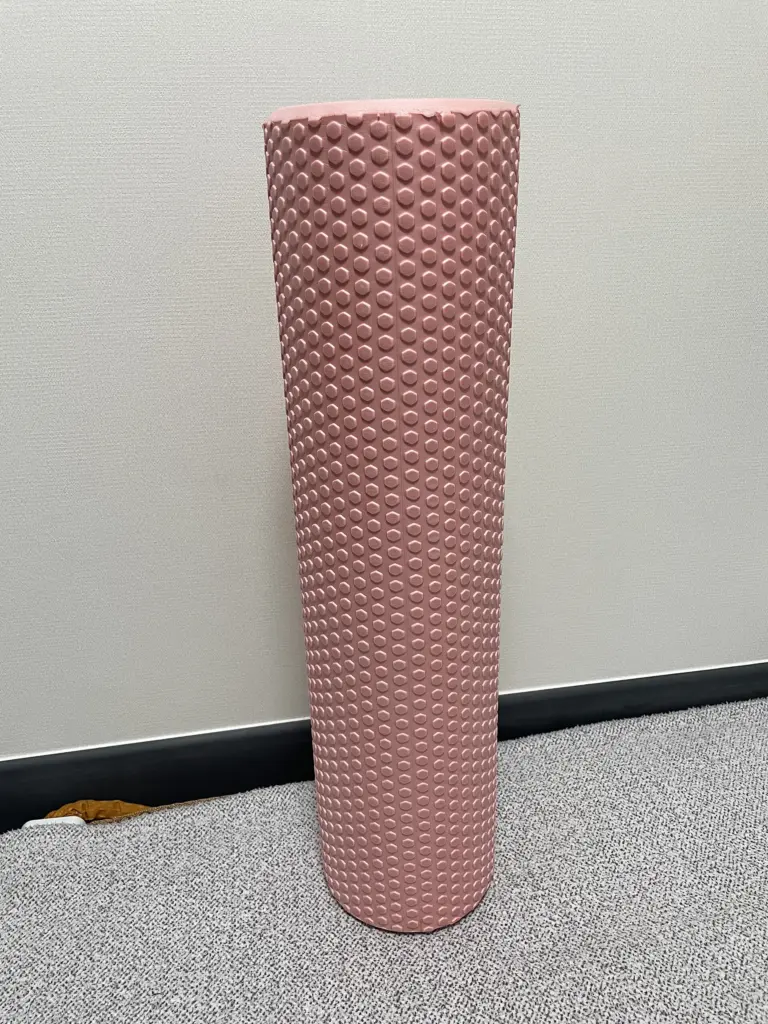
The surface shifts the picture. Smooth spreads the pressure evenly. Grooves, grids and knobs concentrate it on smaller areas and therefore feel harder than the material would suggest.
Short or long, roller or ball?
30 to 33 centimeters is enough for legs, glutes and back and fits in a gym bag. At 40 to 45 centimeters, the roller sits more steadily under the back, and there is room for both legs at once.
An 8-centimeter ball reaches where the roller cannot: the sole of the foot, the gluteal muscle, the area between the shoulder blade and the spine. With a double ball, the spine stays free in its middle.
On to materials. Expanded polypropylene (EPP) is light and washable. Rollers with a hollow core and EVA foam, like those from TriggerPoint, are heavier and keep their shape better. Battery-powered vibrating rollers cost many times as much and weigh over a kilogram; our view on them follows below.
What does the research say, and when should you not roll?
The advertising promises a lot. The evidence is more modest. A 2019 meta-analysis by Wiewelhove and colleagues evaluated 21 studies. According to the authors, rolling before training showed a small benefit for sprinting and a somewhat larger one for flexibility, with hardly any effect on jumping power and maximum strength. After training, there were indications of slightly less muscle soreness. The researchers rate the effects as rather small overall and see the roller more as part of the warm-up than as a recovery tool. If you are hoping it will treat back pain, your first stop should be a doctor or physical therapist.
Blackroll itself sets clear limits in an article of its own. Do not roll on reddened, swollen or acutely painful areas. With osteoporosis, blood-thinning medication, a herniated disc, fibromyalgia, rheumatic diseases, artificial joints, cancer, varicose veins and during pregnancy, the manufacturer advises checking with a doctor first. For varicose veins, it recommends soft rollers and little pressure. In its instructions for use, Sissel also lists thrombosis.
Seven rollers and balls with their key specs
| Model | Dimensions | Firmness and surface | Best for |
|---|---|---|---|
| Blackroll Standard | 30 × 15 cm, approx. 150 g | medium, smooth, EPP | most beginners and intermediate users |
| Blackroll MED | 30 × 15 cm | soft, smooth | people sensitive to pain, newcomers, lighter people |
| TriggerPoint GRID 1.0 | 33 × 14 cm, hollow core | firm, grid profile made of EVA | runners and strength athletes who want more targeted pressure |
| Sissel Myofascia Roller | 40 × 15 cm, approx. 510 g | smooth, side grip recesses | back and both legs at once |
| Blackroll Duoball 08 | 16 × 8 cm, approx. 33 g | two connected 8 cm balls | back alongside the spine, neck |
| Sissel Myofascia Ball | Ø 8 or 12 cm | single ball | sole of the foot, glutes, shoulder blade |
| Hyperice Vyper 3 | approx. 33 × 14 cm, approx. 1.2 kg | 3 vibration levels, battery approx. 2 hrs | ambitious athletes who want to save time before training |
All specifications come from the manufacturers. If you want a motor to help out, a massage gun is the alternative. More on that in our massage gun guide (in German).
Blackroll Standard: the benchmark others are measured against
In Germany, this black roller defined the category. According to the manufacturer, it is made entirely of EPP, measures 30 by 15 centimeters and is manufactured in Germany. Blackroll rates its firmness as medium. Light, low-odor, easy to wipe clean. If you only want to buy one roller, you will rarely go wrong here.
Blackroll MED: the softer sister
Same dimensions, softer foam. Blackroll explicitly aims the MED at beginners. If even the standard roller is too much for you on the calf or the outer thigh, this is the more honest purchase. Heavily built people, or anyone who tolerates pressure well, will soon find it too yielding.
TriggerPoint GRID 1.0: grid instead of smooth
A hollow core with an EVA shell on top that has three zones: flat areas, tube-like ridges and dense knobs. Depending on which part you rest on, you choose the pressure. According to TriggerPoint, the GRID measures 33 by 14 centimeters and repels sweat and water. For your very first contact with a roller, it is rather too firm.
Sissel Myofascia Roller: more length for the back
40 centimeters long, 15 centimeters in diameter. Under the upper back, the Sissel roller therefore sits more steadily than a short one. Sissel specifies a weight of around 510 grams and a load capacity of up to 120 kilograms. Side grip recesses help when repositioning it. It fits less easily into a gym bag.
Blackroll Duoball 08: for the groove next to the spine
Two 8-centimeter balls, firmly joined, together 16 by 8 centimeters and, according to Blackroll, weighing only 33 grams. The shape is reminiscent of a peanut. While the spine stays free, the muscles on the left and right get the pressure. Retailers classify the ball as firm.
Sissel Myofascia Ball: small, inexpensive, often underrated
Sissel offers the ball in 8 and 12 centimeter diameters and describes it as a tool for targeted self-massage on hard-to-reach spots. Pressed against the wall, it also works while standing. Short on space, or want to try out whether rolling suits you at all? Then start here.
Hyperice Vyper 3: vibration comes at a price
Roller plus a 34-watt motor. Hyperice specifies three vibration levels, around two hours of battery life, a weight of about 1.2 kilograms and a Bluetooth connection to its own app. According to retailers, it switches itself off after a set time. Whether vibration adds measurable value compared with a good foam roller is not well established.
So a lot of money for little proven extra benefit. It becomes interesting for athletes for whom every minute of their warm-up counts.
Which roller suits you?
For your first roller with normal pressure tolerance, take the Blackroll Standard and add an 8-centimeter ball. If you are sensitive to pain, have varicose veins or are lightly built, go for the Blackroll MED, after consulting a doctor where necessary.
- Runners with tight calves: TriggerPoint GRID 1.0, as soon as the smooth roller is no longer enough. Suitable shoes are covered in our running shoe guide.
- Focus on the upper back: Sissel Myofascia Roller for its length, complemented by the Duoball.
- Little space, small budget: the Sissel Myofascia Ball on its own. For stretching and rolling on the floor, a non-slip mat from our yoga mat guide helps.
- Vibration: the Vyper 3 only if money is no object and a foam roller is already in regular use.
One last note. Roll slowly, control the pressure with your own body weight, and avoid bones and joints. Pain is no proof that it is working.
Frequently asked questions
How firm should your first foam roller be?
Soft rollers are suitable for beginners, people who are sensitive to pain and lighter people; medium covers most users. We only recommend a hard roller once the medium one barely feels like pressure even on the thigh. Grooves, grids and knobs concentrate the pressure and feel harder than smooth rollers.
How long does a foam roller need to be?
30 to 33 centimeters is enough for legs, glutes and back and fits in a gym bag. At 40 to 45 centimeters, the roller sits more steadily under the back and there is room for both legs at once, as with the 40-centimeter Sissel Myofascia Roller.
What do studies say about foam rolling?
A 2019 meta-analysis of 21 studies found a small benefit for sprinting and a somewhat larger one for flexibility when rolling before training, and indications of slightly less muscle soreness after training. The researchers rate the effects as rather small overall. With back pain, the first step should be a visit to a doctor or physical therapist.
When should you not use a foam roller?
Blackroll advises against rolling on reddened, swollen or acutely painful areas. With osteoporosis, blood-thinning medication, a herniated disc, varicose veins, during pregnancy and with other conditions, check with a doctor first. Sissel also lists thrombosis.
What is a massage ball or duo ball for?
An 8-centimeter ball reaches spots the roller cannot: the sole of the foot, the gluteal muscle and the area between the shoulder blade and the spine. With a double ball such as the Blackroll Duoball 08, the spine stays free in the middle while the muscles on the left and right get the pressure.
Is a vibrating foam roller worth it?
Whether vibration adds measurable value compared with a good foam roller is not well established. The Hyperice Vyper 3 costs many times as much and weighs about 1.2 kilograms. It becomes interesting for athletes for whom every minute of their warm-up counts and who already use a foam roller regularly.
Sources
- Blackroll: Standard
- Blackroll: MED
- Blackroll: Duoball 08
- Blackroll: When fascia training should be avoided
- TriggerPoint: GRID 1.0
- Sissel: Myofascia Roller
- Sissel: Myofascia Ball
- Sissel: Myofascia Roller instructions for use (PDF)
- Hyperice: Vyper 3
- Wiewelhove et al. (2019): A Meta-Analysis of the Effects of Foam Rolling on Performance and Recovery, Frontiers in Physiology
Where to buy
- BLACKROLL StandardCheck price at Amazon.deCheck price at Amazon.co.ukCheck price at Amazon.nlCheck price at Amazon.com.beCheck price at Amazon.frCheck price at Amazon.itCheck price at Amazon.esCheck price at Amazon.plCheck price at Amazon.seAvailable in Germany: Amazon.de
- BLACKROLL MEDCheck price at Amazon.deCheck price at Amazon.co.ukCheck price at Amazon.nlCheck price at Amazon.com.beCheck price at Amazon.frCheck price at Amazon.itCheck price at Amazon.esCheck price at Amazon.plCheck price at Amazon.seAvailable in Germany: Amazon.de
- TriggerPoint GRID 1.0Check price at Amazon.deCheck price at Amazon.co.ukCheck price at Amazon.nlCheck price at Amazon.com.beCheck price at Amazon.frCheck price at Amazon.itCheck price at Amazon.esCheck price at Amazon.plCheck price at Amazon.seAvailable in Germany: Amazon.de
- SISSEL Myofascia RollerCheck price at Amazon.deCheck price at Amazon.co.ukCheck price at Amazon.nlCheck price at Amazon.com.beCheck price at Amazon.frCheck price at Amazon.itCheck price at Amazon.esCheck price at Amazon.plCheck price at Amazon.seAvailable in Germany: Amazon.de
- BLACKROLL DUOBALL 08Check price at Amazon.deCheck price at Amazon.co.ukCheck price at Amazon.nlCheck price at Amazon.com.beCheck price at Amazon.frCheck price at Amazon.itCheck price at Amazon.esCheck price at Amazon.plCheck price at Amazon.seAvailable in Germany: Amazon.de
- SISSEL Myofascia BallCheck price at Amazon.deCheck price at Amazon.co.ukCheck price at Amazon.nlCheck price at Amazon.com.beCheck price at Amazon.frCheck price at Amazon.itCheck price at Amazon.esCheck price at Amazon.plCheck price at Amazon.seAvailable in Germany: Amazon.de
- Hyperice Vyper 3Check price at Amazon.deCheck price at Amazon.co.ukCheck price at Amazon.nlCheck price at Amazon.com.beCheck price at Amazon.frCheck price at Amazon.itCheck price at Amazon.esCheck price at Amazon.plCheck price at Amazon.seAvailable in Germany: Amazon.de