Contents11 sections
This guide was first published in German on handgetestet.de.
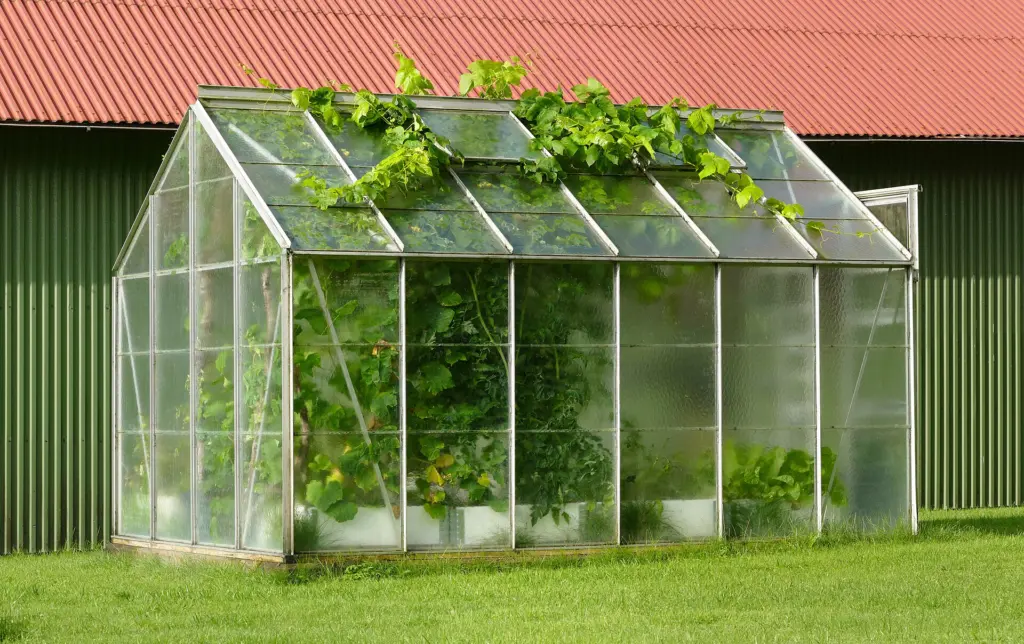
Greenhouses are usually bought too small. After the first summer, tomatoes, cucumbers and peppers are packed tightly together. The door barely opens anymore. In most gardens, an aluminum greenhouse of around five square meters with twin-wall panels, such as the Vitavia Venus 5000, is the right fit. If you choose glass or need more space, plan one size up right away, along with a solid foundation.
Glass or twin-wall: which suits my garden?
Twin-wall polycarbonate panels consist of two walls with air chambers in between. That retains heat a little longer, diffuses the light and prevents breakage from hail or a soccer ball. The view suffers, though. You look through a milky surface, not through a window. The warranty against weathering is ten years on the Vitavia panels and fifteen on the frame and structure.
Toughened safety glass (ESG), usually 3 mm thick, is clear and hardly ages. But it weighs considerably more. And it does not forgive an uneven base. If you want a showpiece in the garden, go with glass. For seedlings and tomatoes, twin-wall panels are enough. Hybrid designs such as Canopia’s (roof made of twin-wall sheets, clear sides) sit in between.
What do I need to sort out before ordering?
The base comes first. A greenhouse without a solid base warps, doors jam and panels come loose. Vitavia recommends a foundation frame made of galvanized sheet steel for a square, true assembly. Canopia requires anchoring on concrete, paving or pressure-treated wood; otherwise, according to Canopia, the warranty is void. Then the side height. Floor area is what gets advertised, but for working, the eave height matters more. 124 cm, as on the Venus, means you stand bent over at the edges. From a good 150 cm it becomes comfortable.
- Ventilation. In summer, it quickly gets too hot under glass. Count the roof vents and factor in an automatic vent opener from the start. Juliana and Canopia offer one as an accessory.
- Door. A 60 cm wide sliding door is enough for people, not for a wheelbarrow. Double doors are noticeably more practical on larger greenhouses.
- Snow load. Only Canopia states a value online. Vitavia and Juliana do not provide this information. In snowy regions, request the declaration of performance from the manufacturer and clear the roof after heavy snowfall.
Does a greenhouse need a building permit?
Each German state regulates this in its own building code, and the limits differ from one another. Let’s take Bavaria. Under Art. 57(1) No. 1(a) BayBO (Bavarian Building Code), buildings with a gross volume of up to 75 m³ are exempt from the permit procedure, except in undeveloped outlying areas. A greenhouse with 6.7 m² of floor area and an average height of around two meters comes to roughly 13 to 14 m³ and is therefore well below that.
Exempt from the procedure does not mean exempt from the rules, though. Art. 55(2) BayBO makes clear that all other public-law requirements still apply, such as setback areas and a local development plan. If you build close to the property line or in an allotment garden colony, ask the building authority or the association beforehand. It costs you an email. And if in doubt, it saves you from having to tear the structure down.
Five greenhouses compared
| Model | Size and height (manufacturer) | Glazing | For whom |
|---|---|---|---|
| Vitavia Venus 5000 | approx. 5 m², side height 124 cm | twin-wall panels (HKP) 4 or 6 mm, toughened safety glass (ESG) 3 mm | Home garden, first greenhouse |
| Vitavia Uranus 6700 | 6.7 m², 258 × 257 cm, side height 153.5 cm | HKP 4 or 6 mm, ESG 3 mm | Anyone who wants to work upright and get in with a wheelbarrow |
| Juliana Compact 6.6 | 296 × 224 cm, eave 155 cm, ridge 226 cm | ESG 3 mm or twin-wall sheets 10 mm | Glass lovers with a narrow plot |
| Canopia Hybrid 6 × 8 | 247 × 185 cm, height 208 cm | roof 4 mm twin-wall, sides clear polycarbonate | Entry level, windy locations with anchoring |
| Canopia Harmony 6 × 8 | 247 × 185 cm, height 208 cm | polycarbonate | Anyone looking for a simple greenhouse with a steel base |
Vitavia Venus 5000
A classic among small aluminum greenhouses. Vitavia offers the Venus in four sizes from 2.5 to 6.2 m², with either twin-wall panels or safety glass, plus a sliding door on ball bearings measuring 61 × 161 cm. The low side height is the compromise. It is enough for raising seedlings and growing tomatoes in the center aisle, but shelves along the long wall get cramped.
Vitavia Uranus 6700
The step up. Vitavia specifies 153.5 cm for the side wall and 248 cm for the ridge, and instead of a narrow door, the frame holds a double sliding door 122 cm wide. Two roof vents come as standard. If you already know today that a Venus will be too small, the Uranus saves you a second purchase.
Juliana Compact 6.6
According to the manufacturer, Juliana designs its aluminum profiles for Scandinavian weather. For the Compact 6.6, Juliana specifies a 30-degree roof pitch, two vents, a 63 cm wide lockable door and gutters with downpipes. Juliana provides a twelve-year warranty. A 12 cm high steel base is available as an accessory. Not every color and glazing variant is available on Amazon, so check the version you want before ordering.
Canopia Hybrid 6 × 8
The Hybrid is the only model here with a snow load stated online. Canopia specifies 75 kg/m² and wind up to 90 km/h, but only when firmly anchored. According to Canopia, the clear sides let through more than 90 percent of the light, while the roof diffuses it. At 56.5 cm, the door is narrow, and at five years, the warranty is shorter than with Vitavia and Juliana.
Canopia Harmony 6 × 8
Same floor area as the Hybrid, but polycarbonate all around and a galvanized steel base included. Instead of roof vents, Canopia lists roof ventilation, and the door closes with a magnet. For growing grapes or peppers under strong summer sun, that is little ventilation. For raising seedlings and as weather protection for potted plants, it is enough.
Which greenhouse should I choose?
For a first greenhouse in an ordinary home garden, the Vitavia Venus 5000 with twin-wall panels and a foundation frame. Lots of vegetables, working upright, a wheelbarrow? Then the Vitavia Uranus 6700. A greenhouse of this size will serve you for years. A clear view, glass, an elongated garden: here we end up with the Juliana Compact 6.6 with safety glass, on a solid base. In windy or snowy locations and on a smaller area, the Canopia Hybrid remains, but only with anchoring. As simple weather protection for raising seedlings, the Canopia Harmony is enough.
If you are planning the whole garden right now, we also have advice on a garden sauna, which raises similar building-law questions, and on the right cordless lawn mower for the area around it. Prefer growing vegetables outdoors? The right designs are in the raised bed guide.
Frequently asked questions
Which is better for a greenhouse, glass or twin-wall panels?
Twin-wall polycarbonate panels retain heat a little longer, diffuse the light and prevent breakage from hail, but the view through them is milky. Toughened safety glass is clear and hardly ages, but it weighs considerably more and does not forgive an uneven base. For seedlings and tomatoes, twin-wall panels are enough.
Does a greenhouse need a foundation?
Yes; without a solid base it warps, doors jam and panels come loose. Vitavia recommends a foundation frame made of galvanized sheet steel. Canopia requires anchoring on concrete, paving or pressure-treated wood; otherwise, according to the manufacturer, the warranty is void.
What should I look for when buying a greenhouse besides the floor area?
The side height: 124 cm, as on the Venus, means working bent over at the edges; from a good 150 cm it becomes comfortable. Also the number of roof vents, including an automatic vent opener, the door width for a wheelbarrow and, in snowy regions, the snow load.
Does a greenhouse need a building permit?
Each German state regulates this differently in its building code. In Bavaria, buildings with a gross volume of up to 75 m³ are exempt from the permit procedure, except in undeveloped outlying areas. Setback areas and the local development plan still apply. If you build close to the property line or in an allotment garden colony, ask the building authority or the association beforehand.
Which greenhouse can withstand snow and wind?
Of the models compared, only the Canopia Hybrid states a snow load online: 75 kg/m² and wind up to 90 km/h, but only when firmly anchored. Vitavia and Juliana do not provide this information. In snowy regions, request the declaration of performance from the manufacturer and clear the roof after heavy snowfall.
Sources
- Vitavia: Venus greenhouse
- Vitavia: Uranus greenhouse
- Juliana: Compact
- Canopia: Hybrid 185 × 247 cm
- Canopia: Harmony 185 × 247 cm
- Bayerische Bauordnung (Bavarian Building Code), Art. 57 (projects exempt from the permit procedure)
- Bayerische Bauordnung (Bavarian Building Code), Art. 55
Where to buy
- Vitavia Venus 5000Check price at Amazon.deCheck price at Amazon.co.ukCheck price at Amazon.nlCheck price at Amazon.com.beCheck price at Amazon.frCheck price at Amazon.itCheck price at Amazon.esCheck price at Amazon.plCheck price at Amazon.seAvailable in Germany: Amazon.de
- Vitavia Uranus 6700Check price at Amazon.deCheck price at Amazon.co.ukCheck price at Amazon.nlCheck price at Amazon.com.beCheck price at Amazon.frCheck price at Amazon.itCheck price at Amazon.esCheck price at Amazon.plCheck price at Amazon.seAvailable in Germany: Amazon.de
- Juliana CompactCheck price at Amazon.deCheck price at Amazon.co.ukCheck price at Amazon.nlCheck price at Amazon.com.beCheck price at Amazon.frCheck price at Amazon.itCheck price at Amazon.esCheck price at Amazon.plCheck price at Amazon.seAvailable in Germany: Amazon.de
- Canopia Hybrid 6 × 8Check price at Amazon.deCheck price at Amazon.co.ukCheck price at Amazon.nlCheck price at Amazon.com.beCheck price at Amazon.frCheck price at Amazon.itCheck price at Amazon.esCheck price at Amazon.plCheck price at Amazon.seAvailable in Germany: Amazon.de
- Canopia Harmony 6 × 8Check price at Amazon.deCheck price at Amazon.co.ukCheck price at Amazon.nlCheck price at Amazon.com.beCheck price at Amazon.frCheck price at Amazon.itCheck price at Amazon.esCheck price at Amazon.plCheck price at Amazon.seAvailable in Germany: Amazon.de