Contents12 sections
This guide was first published in German on handgetestet.de.
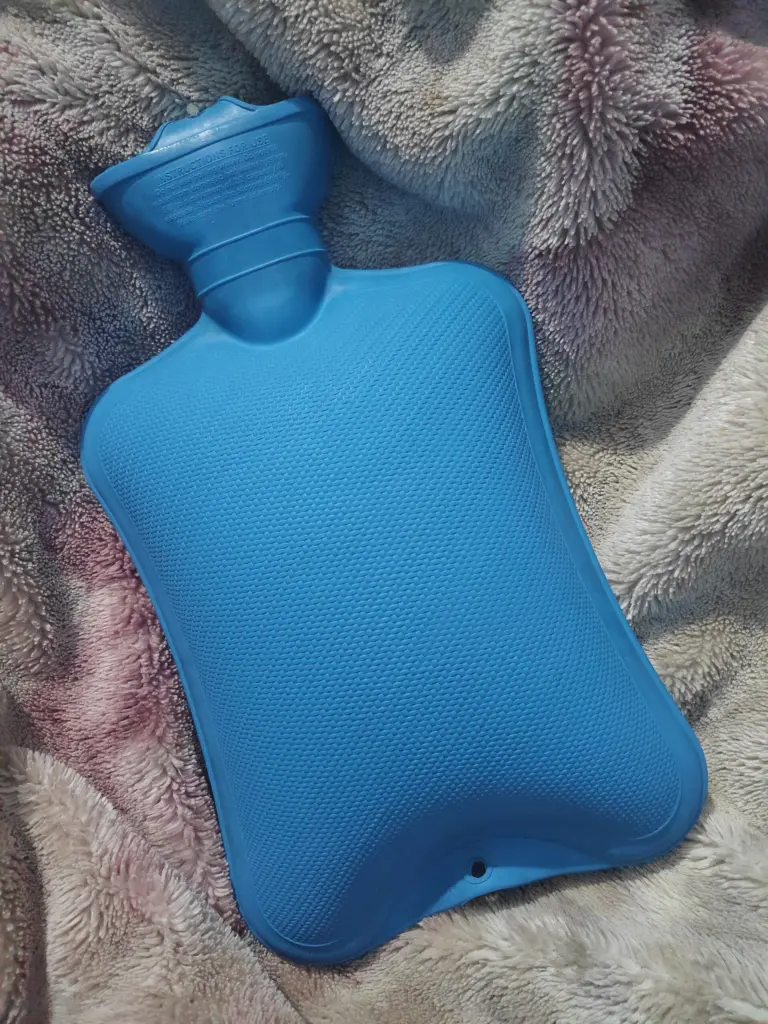
Evening, and the kettle clicks off. This is exactly where the most common mistake with a hot water bottle happens, not at the checkout. Pour in water at a rolling boil and you risk scalding yourself and put strain on the material. Buying one, on the other hand, is quick: a thermoplastic bottle of just under two liters, made to the British standard BS 1970, is enough for most households. One example is the Hugo Frosch Klassik. And if you prefer renewable raw materials? Then go for natural rubber and accept the rubber smell at the start.
Rubber or thermoplastic: the real difference
On the store shelf, the two types look almost identical. What differs is the raw material. Natural rubber, also called natural caoutchouc, is renewable and contains no plasticizers. The German sustainability site Utopia points out, however, that the rubber has to be imported over long transport routes. Thermoplastic is a plastic. Hugo Frosch calls its bottles phthalate-free, and Fashy describes the material as odor-neutral and recyclable.
In everyday use, the difference mostly comes down to your nose. Buyers of natural rubber bottles repeatedly report a distinct rubber smell after unpacking on Amazon. If you are sensitive to it, thermoplastic is the better choice. If you are allergic to latex, check with a doctor before buying a natural rubber bottle to find out whether it is an option for you.
- Standard: Look for the marking BS 1970:2012. Hugo Frosch, Fashy, Sänger and Grünspecht state that they manufacture to this British standard.
- Size: Two liters is the standard for bed. Small bottles of 0.6 to 1 liter cool down faster, but fit better in a jacket pocket or in children’s hands.
- Ribs: Half-ribbed means one side is smooth and the other is ribbed. According to Sänger, the smooth side releases heat faster and the ribbed side more slowly.
- Cover: Not decoration, but protection. Sänger advises always using the bottle with a cover or wrapped in a towel. A removable, washable cover saves trouble.
The little flower on the neck reveals its age
Rubber and plastic become porous over the years. That is why many bottles carry a date stamp, usually near the filler neck. It looks like a small flower. According to the German pharmacy portal apotheken.de, the year is in the center and the twelve segments around it show the month. That way you can tell right in the store whether a bottle has been sitting on the shelf for a long time.
When should a bottle go? The article on apotheken.de, written by physician Sonja Kempinski, gives around three years with regular use and five years with occasional use. According to Utopia, Hugo Frosch advises disposing of hot water bottles after five years. Regardless of age: cracks, brittle spots or a leaking stopper mean the end. A quick look before every use is worthwhile, not just once you are in bed.
Filling it safely, without scalding
Boiling water does not belong in the bottle. In its safety instructions, Sänger recommends a maximum of 50 degrees Celsius. The article on apotheken.de gives a maximum of 60 degrees for adults and 40 degrees for children. The figures differ, but the direction is clear: better to let the water stand for a few minutes after boiling.
Fill it only two-thirds full. Then hold the bottle upright and squeeze out the remaining air before you screw on the stopper. That prevents excess pressure, as Sänger and apotheken.de both describe. According to Sänger, the bottle does not belong in the microwave, in the oven or on a radiator. After use, empty it and let it dry upside down, not in the sun.
A hot water bottle is a source of warmth, not a remedy. If you have complaints that go beyond a cold bed, it is better to have them checked by a doctor. Caution is advised for people with reduced sensitivity to heat, as suppliers also point out in their instructions.
Five hot water bottles and a rechargeable alternative compared
| Model | Material | Size according to the manufacturer | Best for |
|---|---|---|---|
| Hugo Frosch Wärmflasche Klassik | Thermoplastic, phthalate-free, BS 1970:2012 | approx. 1.8 l | Everyday use, many covers to choose from |
| Hugo Frosch Öko-Wärmflasche | Over 90% renewable raw materials | Two sizes | If you want plastic that is not petroleum-based |
| Fashy Wärmflasche Halblamelle | Thermoplastic, BS 1970:2012 | 2.0 l | Plain bottle, cover sold separately |
| Sänger Wärmflasche Naturgummi | Natural rubber, plasticizer-free | 2.0 l | Classic rubber made in one piece |
| Grünspecht Naturkautschuk-Wärmflasche | Natural rubber, FSC-certified | 2 l or small | If you care about forest certification |
| Beurer HK 77 Heaty | Rechargeable heat pad, velour | 45 × 45 cm | Warmth without water or a cord |
Hugo Frosch Wärmflasche Klassik
According to the manufacturer, the Klassik (classic hot water bottle) holds about 1.8 liters and is made to BS 1970:2012 from phthalate-free thermoplastic. Hugo Frosch says it produces in Bavarian Swabia and has its manufacturing monitored by independent laboratories. The bottle is available with textured ribs, half ribs and many different covers. Why do we recommend it to most people? According to the suppliers, thermoplastic is odor-neutral. And for some of the models, the cover can be washed at 30 degrees.
Hugo Frosch Öko-Wärmflasche
According to Hugo Frosch, the Öko (eco) version consists of over 90 percent renewable raw materials, based on sugarcane according to Utopia. So this is not natural rubber but bioplastic, and if you shy away from the rubber smell but still want less petroleum in your bed, it gives you a compromise. According to Utopia, however, environmental groups view bioplastic critically because it is usually not biodegradable.
Fashy Wärmflasche 2,0 l Halblamelle
According to its own quality page, Fashy, based in Korntal-Münchingen, has its hot water bottles regularly tested by the German testing organization TÜV Süd and states the BS 1970:2012 standard. The Halblamelle (half-ribbed) itself is a plain two-liter thermoplastic bottle in many colors that usually comes without a cover, and if you already have a cover or use a towel, you don’t need anything more. Done.
Sänger Wärmflasche aus Naturgummi
According to the manufacturer, Sänger, based in Schrozberg, makes the two-liter bottle from plasticizer-free natural rubber in one piece, without a glued-in neck. It cites a TÜV type test and BS 1970. The safety instructions are exemplary in their precision: a maximum of 50 degrees, fill two-thirds full, squeeze out the air. Buyers report a rubber smell at first.
Grünspecht Naturkautschuk-Wärmflasche
Grünspecht advertises rubber from FSC-certified forestry and testing to BS 1970:2012. The bottle is offered with two liters without a cover and as a small version, optionally with a cover made of organic cotton, although the smell after unpacking comes up negatively in reviews fairly often. If you want natural rubber and care about where it comes from, look here first.
Beurer HK 77 Heaty: electric instead of water
Strictly speaking, this is not a hot water bottle. It is a rechargeable heat pad. Beurer states a maximum of four hours of warmth per charge, plus three settings, an automatic shut-off after 90 minutes and a cover that can go in the washing machine at 30 degrees. On the highest setting, according to the manufacturer, it can take 15 minutes until it feels noticeably warm. Several buyers find the battery life too short. According to Beurer, anyone with a pacemaker should consult their doctor and the pacemaker manufacturer beforehand. For the whole bed, an electric blanket with automatic shut-off (in German) is the more suitable solution.
Which hot water bottle for whom?
- For most people: Hugo Frosch Klassik with cover. Thermoplastic instead of rubber, made in Germany, to the standard.
- For natural rubber fans: Sänger if you want the classic, Grünspecht if you look for the FSC seal. Allow for the smell during the first few days.
- Little petroleum, no rubber smell: Hugo Frosch Öko.
- Just the bottle: Fashy Halblamelle, with a separate cover or a towel.
- Without water: Beurer HK 77 Heaty for the sofa and desk. For bed, an electric blanket is the better choice.
Your surroundings often help against cold feet, too. A thick throw blanket for the sofa (in German) or warm bed linen for winter (in German) take some of the work off the hot water bottle.
Frequently asked questions
Rubber or thermoplastic: which hot water bottle is better?
Natural rubber is a renewable material and contains no plasticizers, but it has to be imported. Buyers repeatedly report a rubber smell after unpacking. Thermoplastic is a plastic that manufacturers describe as phthalate-free and odor-neutral. If you have a latex allergy, check with a doctor before buying a natural rubber bottle.
How hot can the water in a hot water bottle be?
Boiling water does not belong in it. Sänger recommends a maximum of 50 degrees Celsius; apotheken.de gives a maximum of 60 degrees for adults and 40 degrees for children. The direction is clear: let the water stand for a few minutes after boiling.
How do you fill a hot water bottle correctly?
Fill it only two-thirds full, hold the bottle upright and squeeze out the remaining air before screwing on the stopper. That prevents excess pressure. According to Sänger, the bottle does not belong in the microwave, in the oven or on a radiator, and it should always be used with a cover or a towel.
How can I tell how old a hot water bottle is?
By the date stamp near the filler neck, which looks like a small flower. According to apotheken.de, the year is in the center and the twelve segments around it show the month. That way you can tell right in the store whether a bottle has been sitting on the shelf for a long time.
When should you replace a hot water bottle?
apotheken.de gives around three years with regular use and five years with occasional use; according to Utopia, Hugo Frosch advises disposing of it after five years. Regardless of age, cracks, brittle spots or a leaking stopper mean the end.
What should you look for when buying a hot water bottle?
The marking BS 1970:2012, which Hugo Frosch, Fashy, Sänger and Grünspecht, for example, state. Two liters is the standard for bed; small bottles cool down faster. With a half-ribbed bottle, according to Sänger, the smooth side releases heat faster and the ribbed side more slowly.
Sources
- Hugo Frosch: Thermoplastic hot water bottles
- Hugo Frosch: Product quality
- Fashy: Quality
- Sänger hot water bottle: manufacturer information and safety instructions (Shop Apotheke)
- Beurer: HK 77 Heaty
- apotheken.de: Using hot water bottles correctly (02/19/2026)
- Utopia: Sustainable hot water bottles
Where to buy
- Hugo Frosch Wärmflasche KlassikCheck price at Amazon.deCheck price at Amazon.co.ukCheck price at Amazon.nlCheck price at Amazon.com.beCheck price at Amazon.frCheck price at Amazon.itCheck price at Amazon.esCheck price at Amazon.plCheck price at Amazon.seAvailable in Germany: Amazon.de
- Hugo Frosch Öko-WärmflascheCheck price at Amazon.deCheck price at Amazon.co.ukCheck price at Amazon.nlCheck price at Amazon.com.beCheck price at Amazon.frCheck price at Amazon.itCheck price at Amazon.esCheck price at Amazon.plCheck price at Amazon.seAvailable in Germany: Amazon.de
- Fashy Wärmflasche HalblamelleCheck price at Amazon.deCheck price at Amazon.co.ukCheck price at Amazon.nlCheck price at Amazon.com.beCheck price at Amazon.frCheck price at Amazon.itCheck price at Amazon.esCheck price at Amazon.plCheck price at Amazon.seAvailable in Germany: Amazon.de
- Sänger Wärmflasche NaturgummiCheck price at Amazon.deCheck price at Amazon.co.ukCheck price at Amazon.nlCheck price at Amazon.com.beCheck price at Amazon.frCheck price at Amazon.itCheck price at Amazon.esCheck price at Amazon.plCheck price at Amazon.seAvailable in Germany: Amazon.de
- Grünspecht Naturkautschuk-WärmflascheCheck price at Amazon.deCheck price at Amazon.co.ukCheck price at Amazon.nlCheck price at Amazon.com.beCheck price at Amazon.frCheck price at Amazon.itCheck price at Amazon.esCheck price at Amazon.plCheck price at Amazon.seAvailable in Germany: Amazon.de
- Beurer HK 77 HeatyCheck price at Amazon.deCheck price at Amazon.co.ukCheck price at Amazon.nlCheck price at Amazon.com.beCheck price at Amazon.frCheck price at Amazon.itCheck price at Amazon.esCheck price at Amazon.plCheck price at Amazon.seAvailable in Germany: Amazon.de