Contents14 sections
This guide was first published in German on handgetestet.de.
A yellowish lawn in April usually gets too much attention all at once: fertilizer, lime and moss killer all end up on the same patch within a week. A plan for the whole year is better. For a typical home lawn, a slow-release fertilizer such as Compo Rasen-Langzeitdünger in spring and summer is enough, plus a potassium-rich fertilizer in the fall. Lime and iron only go on if a measurement or a clear finding calls for them.
What a lawn really needs in a year
For ornamental and utility lawns, the garden academy of the Saxony State Office for Environment, Agriculture and Geology in Germany cites about 20 grams of nitrogen, 7 grams of phosphate, 15 grams of potassium and 3 grams of magnesium per square meter and year. This is split into three applications: in March or April, in June and in August. In October, a potassium-rich fall feeding follows for winter hardiness.
With these figures, you can check the math on a package. The three numbers on the bag stand for nitrogen, phosphate and potassium in percent. A fertilizer with 14 percent nitrogen delivers just over 4 grams of nitrogen at 30 grams per square meter. Three such applications stay below the annual requirement. More is not better. If you overlap while spreading, you hit strips twice, and that is exactly what Compo and Substral explicitly warn against in their instructions. A spreader helps more here than any formula; what sets the devices apart is covered in our guide to spreaders (in German).
Slow-release, organic or fall: what’s behind the labels
Slow-release fertilizers spread the nutrients out over weeks. For its Premium fertilizer, Wolf-Garten describes a coating around the granule that releases more in warm weather and less in cold weather. Compo writes that the nutrients only become available at suitable temperature and moisture levels. Both are meant to curb growth spurts that have you mowing constantly.
Organic fertilizers such as Neudorff Azet consist of feather meal, bone meal and plant residues. Soil bacteria gradually convert them into nutrients. According to Neudorff, the effect lasts about three months under average conditions, two to six depending on the weather. You spread more of it: 50 grams per square meter instead of 25 to 30. Organic-mineral blends such as DCM Spezial sit in between.
Fall fertilizers contain less nitrogen and considerably more potassium. In October, then, the lawn should no longer get spring fertilizer, but the potassium-rich application that the garden academy also recommends.
Lime and moss: measure first, then spread
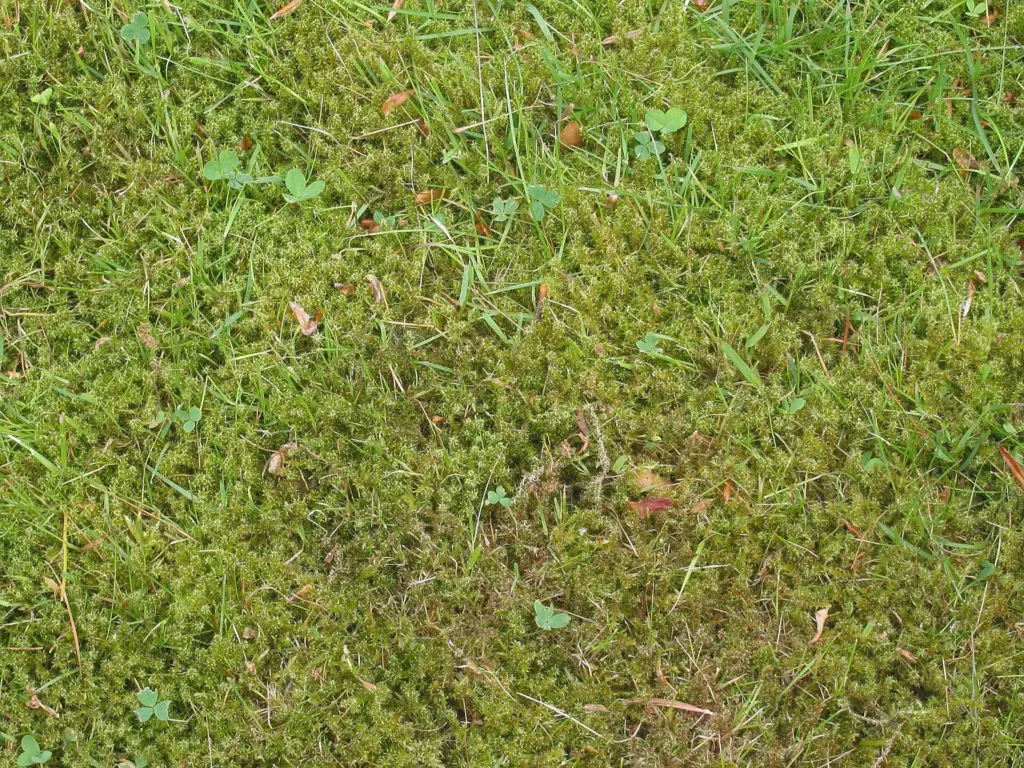
The reflex goes: moss, so lime. The Saxon garden academy thinks little of this. It points to studies showing that lawn mosses grow across a wide pH range of 4.3 to 7.2 and advises against blanket liming to fight moss. Moss tends to indicate wet, compacted and undernourished soil. For lawns, the academy gives a pH value between 5.5 and 6.5, depending on the soil type. So lime should only go on the lawn once a soil test shows a value that is too low.
According to the academy, moss killers mainly contain iron sulfate. It blackens the moss quickly, but in older trials it only worked well against about half of the moss species, and the effect lasts two to three weeks. The academy recommends no more than two applications a year, not in the year of sowing, followed by mowing, scarifying and overseeding. Without this second step, the moss comes back. Which device is suitable for this is shown in our guide to scarifiers (in German). Iron-containing moss fertilizers leave rust stains on stone slabs. For its moss fertilizer, Compo requires removing residue immediately from paving, shoes and paws.
A dog in the garden, a pond at the edge
With a dog, caution starts with storage. Neudorff writes that the fertilizer must be kept out of reach of children and pets. In 2015, the Cantonal Laboratory of Basel-Stadt in Switzerland reported fatal dog poisonings caused by organic fertilizers containing insufficiently detoxified castor press residues; the affected fertilizers also contained waste from meat production and were eaten for that reason. Switzerland has banned castor in fertilizer since 2014; according to the report, a limit of 50 milligrams of ricin per kilogram had applied in the EU since 2012. A look at the ingredient declaration is worthwhile. Castor is not listed for Azet RasenDünger.
Manufacturers give differing information on walking on the lawn. Compo says its slow-release fertilizer can be used immediately after thorough watering, as does Neudorff for Azet RasenDünger, while DCM recommends keeping animals off for four to five days with organic-mineral products. According to Compo, areas freshly treated with moss fertilizer should not be walked on. Sweep granules on paths back onto the lawn so they don’t get washed into a drain or pond.
Seven lawn fertilizers for 2026 compared
| Model | Type and nutrients | Amount and duration according to manufacturer | Best for |
|---|---|---|---|
| Compo Rasen-Langzeitdünger | organic-mineral, NPK 14-3-9 | 25 to 40 g/m², up to 3 months; 10 kg for around 400 m² | Home lawns from spring to summer, also with a robotic mower |
| Wolf-Garten Premium LE 250 | mineral, coated, NPK 30-5-9 plus magnesium | up to 120 days; package for 250 m² | Few fertilizing dates per year |
| Neudorff Azet RasenDünger | organic, NPK 8-3-4, with mycorrhiza | 50 g/m², around 3 months | Organic gardeners, mulching mowers |
| Cuxin DCM Rasendünger Spezial | organic-mineral, NPK 12-4-6, iron chelate | 40 to 60 g/m², at least 100 days; 18 kg for 450 m² | Middle ground with paving next to the lawn |
| Wolf-Garten Herbst LK-B 250 | mineral, 15 % N, 20 % K₂O, 3 % MgO | 6.25 kg for around 250 m², fall to spring | Fall application in mid-October |
| Substral Herbst Rasendünger | mineral, NPK 6-5-10 with iron | 25 to 35 g/m², once in late summer or fall | Fall application with a small amount |
| Compo Rasendünger Moos – Nein danke! | NK 12-6 with iron | 25 g/m², twice per season; 7.5 kg for 300 m² | Heavily mossy areas, by hand only |
Compo Rasen-Langzeitdünger
The standard for spring and summer. Compo specifies 14-3-9, plus bentonite, and a dosage of 25 to 40 grams per square meter, two to three times a year. The manufacturer’s page lists settings for common spreaders and approves use with robotic mowers. Spread it one to two days after mowing. If the granules land on damp grass, you need to water so they fall off the blades.
Wolf-Garten Rasen-Langzeitdünger Premium LE 250
At 30 percent nitrogen, it is highly concentrated; according to the manufacturer, the coating spreads the release over up to 120 days. One bucket is designed for 250 square meters. With this much nitrogen in the granule, an incorrectly set spreader takes its toll faster than with weaker blends, so check the setting against the package information beforehand. Convenient for two dates a year.
Neudorff Azet RasenDünger
Fully organic, suitable for organic farming, with mycorrhizal fungi and soil bacteria. Neudorff recommends 50 grams per square meter in March or April and again in May or June if the lawn looks pale; with a mulching mower, half is enough. As a result, more material goes onto each square meter than with mineral products; an 18-kilo bag works out to around 360 square meters.
Cuxin DCM Rasendünger Spezial
Organic-mineral with 12-4-6, magnesium and iron chelate in low-dust Minigran granules. DCM states an effect of at least 100 days and says that this iron does not leave stains on paving or clothing. It is applied twice a year at 40 to 60 grams, and at 70 grams after scarifying. For gardens where the patio and lawn directly adjoin, a well-considered choice.
Wolf-Garten Rasendünger Herbst LK-B 250
According to the label, phosphate-free, with 20 percent potassium and magnesium. Wolf-Garten recommends mid-October; according to the manufacturer, the effect then lasts into the new year. The 6.25 kilos for about 250 square meters work out to around 25 grams per square meter.
Substral Herbst Rasendünger
From Evergreen Garden Care, with 6-5-10 and iron. Substral calculates 25 grams, that is, one heaped tablespoon, per square meter, up to 35 grams for stronger color, once a year. The manufacturer warns of eye irritation and names nickel sulfate as a possible allergy trigger. Substral itself calls for safety glasses when spreading.
Compo Rasendünger Moos – Nein danke!
A nitrogen-potassium fertilizer with iron to combat moss. According to Compo, discolored plant parts are raked out later. Compo specifies 25 grams per square meter, two applications at least five to six weeks apart, spread on a damp lawn. Important for planning: according to the manufacturer, the product is not intended for use with a spreader. On large areas, that gets tedious.
Which fertilizer for which garden?
- Typical home lawn with a spreader: Compo Rasen-Langzeitdünger in spring and summer, and in October Wolf-Garten LK-B 250 or Substral Herbst.
- As few dates as possible: Wolf-Garten Premium, with a precisely set spreader.
- Organic garden or mulching mower: Neudorff Azet, and store the bag sealed in the garage.
- Patio and paved paths right next to the lawn: DCM Spezial because of its stain-free iron.
- More moss than grass: first find the cause and measure the pH, then one round of Compo Moos – Nein danke!, followed by scarifying and overseeding.
If you run a robotic mower, look for approval for use with robotic mowers; Compo and Neudorff state it for the fertilizers mentioned. Our guide to robotic mowers without a boundary wire (in German) compares suitable models.
Frequently asked questions
How often a year should you fertilize the lawn?
The garden academy of the Saxony State Office (Germany) recommends three applications: in March or April, in June and in August. In October, a potassium-rich fall feeding follows for winter hardiness. Per square meter and year, it cites about 20 grams of nitrogen, 7 grams of phosphate, 15 grams of potassium and 3 grams of magnesium.
What do the three numbers on lawn fertilizer mean?
They stand for nitrogen, phosphate and potassium in percent. With them, you can check the math on a package: a fertilizer with 14 percent nitrogen delivers just over 4 grams of nitrogen at 30 grams per square meter. More is not better; if you overlap while spreading, you hit strips twice. A spreader helps more here than any formula.
Does lime help against moss in the lawn?
According to the Saxon garden academy, blanket liming does little good, because lawn mosses grow across a wide pH range of 4.3 to 7.2. Moss tends to indicate wet, compacted and undernourished soil. Lime should only go on the lawn once a soil test shows a value below the range of 5.5 to 6.5 given for lawns.
What is the difference between organic and mineral lawn fertilizer?
Organic fertilizers such as Neudorff Azet consist of feather meal, bone meal and plant residues, which soil bacteria gradually convert. You spread more of them, 50 grams instead of 25 to 30 per square meter. Mineral slow-release fertilizers such as Wolf-Garten Premium spread out the release via a coating around the granule.
Is lawn fertilizer dangerous for dogs?
According to Neudorff, fertilizer should be stored out of reach of children and pets. In 2015, the Cantonal Laboratory of Basel-Stadt (Switzerland) reported fatal dog poisonings caused by organic fertilizers containing insufficiently detoxified castor press residues. Checking the ingredient declaration helps; castor is not listed for Azet RasenDünger. Manufacturers give differing information on walking on the lawn after fertilizing.
Does iron-containing fertilizer leave stains on paving?
Iron-containing moss fertilizers leave rust stains on stone slabs, which is why Compo requires removing residue immediately from paving, shoes and paws. DCM states that the iron chelate in its Rasendünger Spezial does not leave stains on paving or clothing. For gardens with a patio directly next to the lawn, that is a well-considered choice.
Sources
- LfULG Saxony, garden academy: Lawn care in the garden (PDF)
- LfULG Saxony, garden academy: Controlling moss in the lawn (PDF)
- Cantonal Laboratory of Basel-Stadt: Detection of ricin(e), 2015 (PDF)
- Compo: Rasen-Langzeitdünger
- Compo: Rasendünger Moos – Nein danke!
- Wolf-Garten: Rasen-Langzeitdünger Premium LE 250
- Wolf-Garten: Rasendünger Herbst LK-B 250
- Neudorff: Azet RasenDünger instructions for use (PDF, page of the German retailer toom)
- DCM: Rasendünger Spezial
- DCM: Fertilizing and pets
- Substral: Herbst Rasendünger
Where to buy
- Compo Rasen-LangzeitdüngerCheck price at Amazon.deAvailable in Germany: Amazon.de
- Wolf-Garten Premium LE 250Check price at Amazon.deAvailable in Germany: Amazon.de
- Neudorff Azet RasenDüngerCheck price at Amazon.deAvailable in Germany: Amazon.de
- Cuxin DCM Rasendünger SpezialCheck price at Amazon.deAvailable in Germany: Amazon.de
- Wolf-Garten Herbst LK-B 250Check price at Amazon.deAvailable in Germany: Amazon.de
- Substral Herbst RasendüngerCheck price at Amazon.deAvailable in Germany: Amazon.de
- Compo Rasendünger Moos – Nein danke!Check price at Amazon.deAvailable in Germany: Amazon.de