Contents13 sections
This guide was first published in German on handgetestet.de.
A deck is not a fence. If you coat both from the same can, after the first winter you will have worn patches on the boards and perhaps too little protection on the fence. For wood people walk on, decking oil belongs in the bucket; for fences and garden sheds, a pigmented stain; and if you want to skip recoating for many years, go with opaque paint. Our first choice for the deck is Osmo Decking Oil (Terrassen-Öl) in the shade of your own wood species.
What sun and rain do to wood
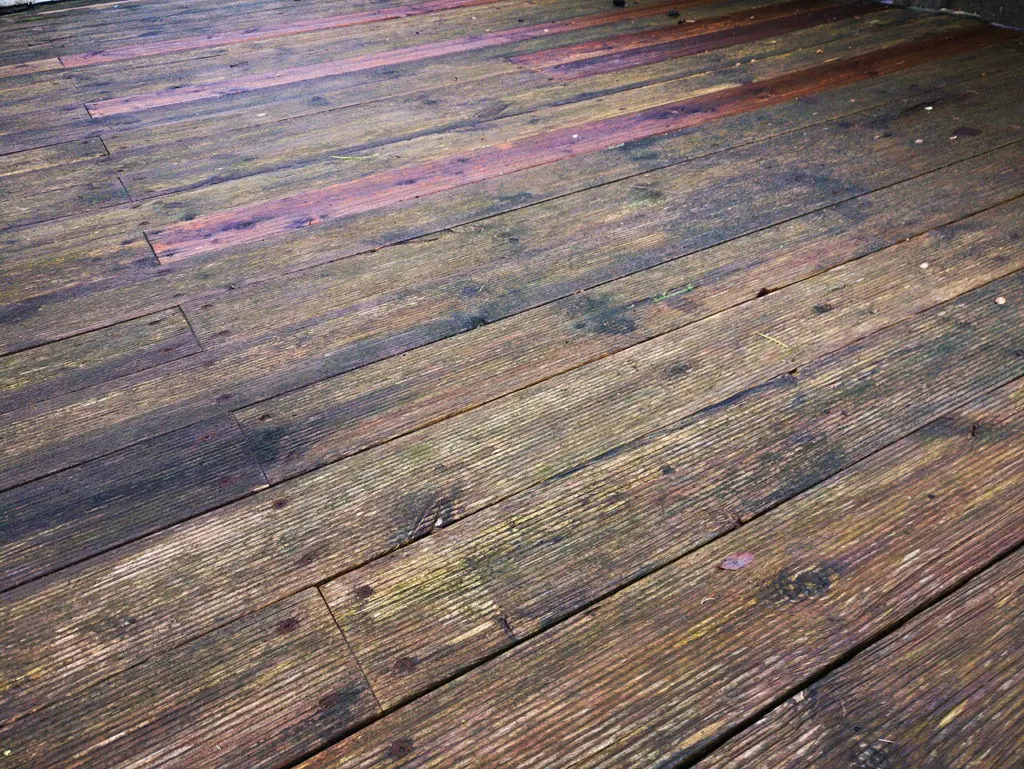
Untreated wood outdoors turns gray. At first, that is a cosmetic problem, not damage. Sun, rain and snow break down lignin, a component of wood, at the surface; the wood darkens and grays, while its substance remains unchanged, according to the German trade portal Baunetz Wissen. Weathering is accelerated by fungal attack, by cracks caused by strong swings in temperature and moisture, and by abrasion. On a deck, all three come together.
Standing moisture is more dangerous. Wood that stays wet for a long time gives fungi a habitat, and then it is no longer about the color but about the substance. The German Environment Agency (Umweltbundesamt) sets a clear order: structural wood protection before chemical. Wood cladding should be at least 20 cm above the ground, and wooden posts stand on steel post bases with about 20 to 30 cm of clearance. According to the agency, chemical wood protection is only mandatory in certain areas, such as load-bearing components. For fences, decks and garden benches, that means a coating is care and weather protection, not a substitute for good construction. A post standing in the lawn will rot even under the most expensive stain.
Oil, stain, opaque paint: three principles
An oil soaks into the wood and does not form a closed film. The surface stays open-pored, water beads off for a while, and the wood can still release moisture. The big advantage shows up in maintenance. Osmo writes that for renovating with its decking oil, one coat on the cleaned surface is usually enough, without sanding. In return, you have to do it more often. Saicos advises re-oiling as soon as the surface visibly weathers, and on a deck with a garden table and grill, that happens faster than on a sheltered house wall.
Stain sits in between. It contains pigments that block UV light but lets the grain show through. The more pigment, the better the protection. Clear stains therefore offer little protection against graying; for its wood stain, Saicos explicitly points out that only the tinted versions are UV-resistant. Stains are meant for wood that nobody walks on. Saicos rules out decks and wooden floors for its wood stain, and Xyladecor describes its 2in1 stain as a coating for non-dimensionally-stable parts under little mechanical stress, such as pergolas, fences and garden sheds.
Opaque paint covers the wood completely. Here manufacturers promise the longest intervals, Bondex for instance up to twelve years for its Dauerschutz-Farbe (long-lasting protective paint). You do commit yourself, though. Osmo requires old paint and varnish coats to be removed completely before oiling, and Saicos specifies sanding or stripping for painted surfaces. So the way back from opaque to a natural wood look leads through sandpaper.
A word on wood moisture, because this is where many coatings fail. Osmo, Saicos and Xyladecor all specify a maximum of 18 percent. If you start on a Saturday morning after three days of rain, you are painting wet wood. An inexpensive moisture meter from the hardware store answers the question in seconds.
Don’t coat new deck boards right away
Freshly laid wood needs to sit out in the weather for a while first. Osmo gives specific periods: larch and Douglas fir at least six weeks, massaranduba, bangkirai and garapa at least three months, freshly pressure-treated wood around six months. Otherwise, resin and wood extractives would interfere with adhesion. If you are planning a new deck right now, you will find the wood species and their quirks in our guide to deck boards (in German). And for pine or larch, which are prone to blue stain, Saicos recommends a primer before oil or stain.
What the eco-label actually says
„Natural,“ „plant oil based,“ „saliva-resistant“: claims like these appear on many cans and are not an eco-label. A reliable indicator is the Blue Angel, Germany’s official eco-label, for low-emission paints and varnishes under the award criteria DE-UZ 12a. In its product list of wood oils, the Blue Angel currently includes Saicos Terrassenöl H2O. Osmo, Bondex and Xyladecor are not listed there, and we did not find a Remmers product on that list either. That does not mean their products are questionable. Osmo, for example, documents resistance to saliva and sweat according to DIN 53160 for its dried decking oil, as well as suitability for children’s toys according to EN 71-3, and Bondex cites EN 71-3 for its Dauerschutz-Farbe. Those are test standards. They are not an eco-label.
The fine print on ingredients is also worth reading. Osmo lists dearomatized white spirit for its decking oil, Saicos states a VOC content of no more than 130 g/l for the water-based Terrassenöl H2O and no more than 400 g/l for its solvent-based wood stain. If you are working on a balcony below a bedroom window, your nose will notice the difference.
Six coatings for decks, furniture and fences
| Product | Type | Coverage according to the manufacturer | Best for |
|---|---|---|---|
| Osmo Terrassen-Öl (decking oil) | Oil, satin matte, 10 shades by wood species | approx. 24 m²/l per coat | Decks made of larch, Douglas fir, bangkirai, thermally modified wood |
| Saicos Terrassenöl H2O | Water-based oil, Blue Angel | approx. 8 m²/l with two coats on grooved boards | Decks and garden furniture, done in one day |
| Xyladecor Teak-Möbelöl (teak furniture oil) | Care oil, satin gloss | approx. 27 m²/l | Hardwood furniture made of teak, eucalyptus, black locust |
| Remmers HK-Lasur 3in1 [plus] | Stain, reduced solvent, matte | approx. 100 ml/m² per coat | Fences, carports, half-timbering, garden sheds |
| Xyladecor Holzschutz-Lasur 2in1 | Thin-film stain, matte | approx. 13 m²/l | Fences and pergolas on a small budget |
| Bondex Dauerschutz-Farbe | Water-based opaque paint | approx. 9 m²/l | Garden sheds, facades, fences in color |
Osmo Terrassen-Öl
Osmo offers the oil in ten satin-matte shades named after wood species: Douglas fir, bangkirai, larch, thermally modified wood, garapa, massaranduba, plus gray and bog oak. According to the manufacturer, the binder is based on sunflower and soybean oil. Two coats are intended on raw wood, with recoating after about twelve hours. For a 20 m² deck, a little under two liters is enough for the first application on paper; the 2.5-liter can sits in the upper middle of the price range.
Saicos Terrassenöl H2O
The only product in this selection with the Blue Angel. Saicos thins with water instead of white spirit, and according to the manufacturer, three to five hours pass between the two coats, so the deck is done in one day. Four shades are available: clear, larch, bangkirai, teak. Saicos rates the slip resistance at R9. Consumption is higher than with the Osmo oil, around 8 m² per liter for the complete build-up.
Xyladecor Teak-Möbelöl
For hardwood garden furniture that has turned gray after one summer. Besides teak, Xyladecor also lists eucalyptus, black locust, oak and larch. Two coats, with about six hours in between. The oil comes clear or in a teak shade, only in a 750 ml can. If you are setting up a new seating area, you will find materials and maintenance effort in our guide to garden dining sets (in German).
Remmers HK-Lasur 3in1 [plus]
Remmers combines impregnation, primer and stain in one product. According to the manufacturer, the film protects against blue stain, mold and algae and lets moisture escape from the wood. Two coats are mandatory; on planed or very dense wood, Remmers recommends a third. The stain is intended for wood without ground contact, that is, fences, carports and cladding; windows and doors only as a primer. Containers go up to 20 liters. For a long garden fence, that is an argument.
Xyladecor Holzschutz-Lasur 2in1
The classic from the hardware store shelf. Xyladecor promises up to four years of weather protection and does without a separate primer. 15 shades are available, and the second coat can follow after around twelve hours. Compared with the Remmers stain, the protection promise is shorter and the focus simpler. For a lattice fence that gets a fresh coat every few years anyway, that is enough.
Bondex Dauerschutz-Farbe
Water-based, highly opaque, satin or gloss, and with the longest promise: up to twelve years according to Bondex. Figures like that apply under favorable conditions, so more likely on a garden shed with a roof overhang than on a west-facing wall exposed to driving rain. According to the listing on Amazon, the range runs from snow white through granite gray to moss green. If you are planning a new garden shed, it is best to decide between a wood look and color before you build it.
How we would decide
- Deck made of softwood or hardwood: Osmo Terrassen-Öl in the matching wood shade; check it every spring and add a coat if needed.
- Deck where an eco-label or low odor matters: Saicos Terrassenöl H2O, but plan for a little more material.
- Garden furniture made of teak or eucalyptus: Xyladecor Teak-Möbelöl, once a year.
- Fence and carport with a wood look: Remmers HK-Lasur 3in1 [plus]; on a tight budget, the Xyladecor stain, then with a shorter maintenance cycle.
- Garden shed in color, painted as rarely as possible: Bondex Dauerschutz-Farbe.
We would advise against clear stain in full sun. It looks good when freshly applied and still lets the wood turn gray.
Frequently asked questions
What is the difference between wood oil, stain and opaque paint?
Oil soaks into the wood and does not form a closed film; the surface stays open-pored. A stain contains pigments against UV light but lets the grain show through. Opaque paint covers the wood completely and promises the longest intervals. The way back from opaque to a natural wood look, however, leads through sandpaper or paint stripper.
Can you coat a deck with wood stain?
Stains are meant for wood that nobody walks on. Saicos rules out decks and wooden floors for its wood stain, and Xyladecor describes its 2in1 stain as a coating for parts under little mechanical stress, such as pergolas, fences and garden sheds. For deck boards, decking oil is what belongs in the bucket.
Does a clear stain protect against graying?
Hardly. The more pigment a stain contains, the better it blocks UV light. Saicos explicitly points out that only the tinted versions are UV-resistant. In full sun, a clear stain looks good when freshly applied and still lets the wood turn gray.
When can you oil new deck boards?
Only after some time out in the weather, because otherwise resin and wood extractives interfere with adhesion. Osmo specifies at least six weeks for larch and Douglas fir, at least three months for massaranduba, bangkirai and garapa, and around six months for freshly pressure-treated wood. Wood moisture should be no more than 18 percent.
How can you tell an environmentally friendly wood stain or wood oil?
Claims such as "natural" or "plant oil based" are not an eco-label. A reliable indicator is the Blue Angel (Germany's official eco-label) under DE-UZ 12a; its list of wood oils currently includes Saicos Terrassenöl H2O. Test standards such as EN 71-3 or DIN 53160 prove resistance to saliva and sweat, but they are not an eco-label either.
Does a coating replace structural wood protection?
No. The German Environment Agency (Umweltbundesamt) puts structural wood protection ahead of chemical protection. Wood cladding should be at least 20 cm above the ground, and posts should stand on steel post bases with about 20 to 30 cm of clearance. A post standing in the lawn will rot even under an expensive stain, because standing moisture gives fungi a habitat.
Sources
- Osmo: Terrassen-Öl (decking oil)
- Saicos: Terrassenöl H2O (decking oil)
- Saicos: Holzlasur (wood stain)
- Xyladecor: Teak-Möbelöl (teak furniture oil)
- Xyladecor: Holzschutz-Lasur 2in1 (wood protection stain)
- Remmers: HK-Lasur 3in1 [plus]
- Bondex: Dauerschutz-Farbe (long-lasting protective paint)
- Blue Angel: Wood oils under DE-UZ 12a
- Baunetz Wissen: Weathering
- German Environment Agency: Wood preservatives
Where to buy
- Osmo Terrassen-ÖlCheck price at Amazon.deAvailable in Germany: Amazon.de
- Saicos Terrassenöl H2OCheck price at Amazon.deAvailable in Germany: Amazon.de
- Xyladecor Teak-MöbelölCheck price at Amazon.deAvailable in Germany: Amazon.de
- Remmers HK-Lasur 3in1 plusCheck price at Amazon.deAvailable in Germany: Amazon.de
- Xyladecor Holzschutz-Lasur 2in1Check price at Amazon.deAvailable in Germany: Amazon.de
- Bondex Dauerschutz-FarbeCheck price at Amazon.deAvailable in Germany: Amazon.de