Contents13 sections
This guide was first published in German on handgetestet.de.
Large square meter figures on the box of an air purifier should be taken with a grain of salt. They often apply to only one or two air changes per hour. What matters instead can be stated fairly precisely in physical terms: a true HEPA filter of class H13, a CADR that suits your room, and a quiet lowest setting for the night.
Replacement filters belong in the calculation from the start. And a device like this does not replace opening the windows. Even if some advertising suggests otherwise.
What the CADR measures and how to calculate with it
The Clean Air Delivery Rate (CADR) indicates how many cubic meters of purified air the device delivers per hour. No other value is as well suited for comparison, provided it is clear whether it applies to particles and which standard it was measured by. Divide the CADR by the volume of your room, that is floor area times ceiling height. The result is the number of air changes per hour. Several manufacturers base their recommendations on about four to five air changes. An example: 20 m² floor area, 2.5 m height, makes 50 m³. For five air changes, this room needs around 250 m³/h. With this simple calculation, many promises shrink to a realistic size.
Filter class, noise and running costs
When it comes to the filter class, what counts is HEPA H13 or H14 according to the EN 1822 standard. Terms such as „HEPA-type“ or brand names for the filter are not a filter class. If the information is missing, ask.
For noise, look at the value for the setting the device will actually run on, which in the bedroom means the night setting. At the top setting, almost all devices are clearly audible.
And then the follow-up costs. Replacement filters can be expensive depending on the brand and usually last six to twelve months, so the original filter should be readily available. Electricity costs stay within limits: if you run 30 watts continuously at full power, you use around 0.7 kWh per day, and considerably less at low settings.
An activated carbon layer helps against odors, but it is usually thin and combined with the HEPA filter. A particle sensor with auto mode adjusts the setting on its own. An app? Convenient, nothing more. We are cautious about extra technology. On some devices, ionizers can be switched off, and the German Environment Agency advises against devices that release ozone into the room.
Why the window still gets opened
The German Environment Agency (Umweltbundesamt, UBA) sees portable air purifiers only as a supplement to ventilation. The devices filter particles from the air but remove neither carbon dioxide nor moisture. So you still need to air out the room, even in winter. The UBA also mentions changing the filter roughly every six to twelve months and recommends paying attention to the noise level information when choosing a device.
These statements date from the COVID-19 pandemic and refer primarily to schools, but the principles also apply at home (source: German Environment Agency). Read health claims with caution. If you have allergies or asthma, talk to your doctor before using one.
Seven devices, by CADR and noise level
| Model | CADR according to the manufacturer | Room size and noise level | Filter and controls | Best for |
|---|---|---|---|---|
| Philips 1000 Series AC1711/10 | 300 m³/h | up to 78 m², 15–50 dB(A) | 3-in-1 filter with HEPA and activated carbon, no Wi-Fi | anyone looking for a simple device without an app |
| Levoit Vital 200S Pro | 416 m³/h | 35 m² with five air changes, 24–54 dB | H13 HEPA with activated carbon, app | households with pets |
| Coway Airmega Mighty | 421 m³/h | up to 109 m², 24.4–53.8 dB | HEPA, odor filter, ionizer that can be switched off | large living rooms and bedrooms |
| Blueair Blue Pure 311i Max | no figure on the German site | recommended 36 m², 23–50 dB | HEPASilent, app, filter up to 1 year | anyone who wants a quiet device with an app |
| Xiaomi Smart Air Purifier 4 | 400 m³/h | 28–48 m², night mode 32.1 dB(A) | 3-in-1 filter, app | budget-conscious smart home users |
| Rowenta Pure Air Essential PU2530 | 230 m³/h | up to 90 m² according to the manufacturer | Pre-filter, activated carbon, Allergy+ | small rooms, small budget |
| Dyson Purifier Cool PC1 | not specified | Airflow over 290 liters per second | HEPA H13 with activated carbon, app, fan | anyone who wants an air purifier and fan in one |
Philips 1000 Series AC1711/10: simple and economical
According to the manufacturer, the Philips delivers 300 m³/h at a maximum of 27 watts, and Philips states the noise level as 15 to 50 dB(A). A sensor for PM2.5 and allergens controls the auto mode. The FY1700 3-in-1 filter is said to last about a year. Wi-Fi and an app are missing, which some people will see more as an advantage.
Levoit Vital 200S Pro: powerful for the living room
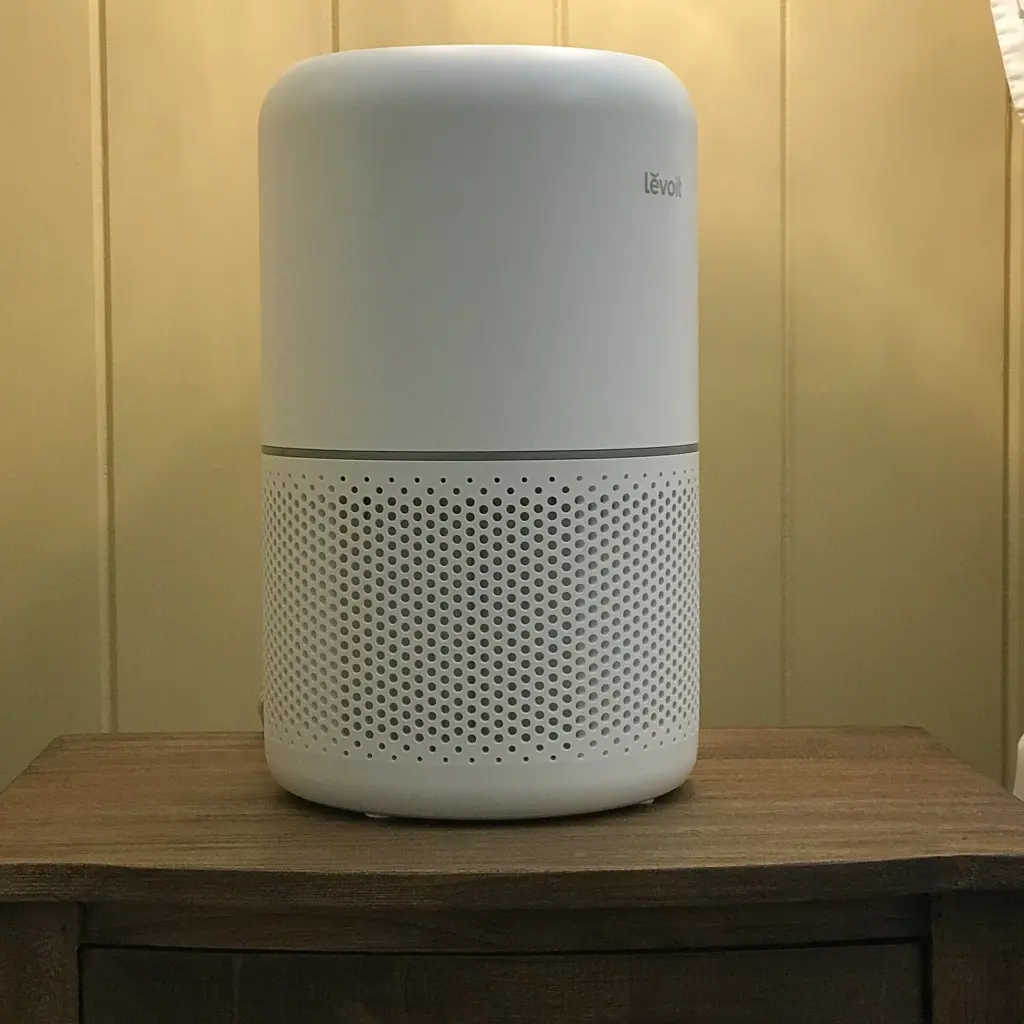
Levoit specifies a CADR of 416 m³/h at a maximum of 50 watts and promises to circulate the air in a 35 m² room five times per hour. That is the stricter calculation. Good. The data sheet lists a noise level between 24 and 54 dB. In addition to H13 HEPA and activated carbon, there is a washable pre-filter and a dedicated pet mode.
Coway Airmega Mighty: the long-running favorite
On the market for years, 421 m³/h according to the manufacturer. Coway specifies 24.4 to 53.8 dB and 4.9 to 82 watts. The HEPA filter is said to last a year, the odor filter six months. An eco mode stops the fan when the air stays clean for 30 minutes, and the ionizer can be switched off.
Blueair Blue Pure 311i Max: two names, two room sizes
Blueair combines electrical charging and mechanical filtration and specifies 23 to 50 dB at 32 watts. On room size, the information becomes inconsistent. Blueair recommends 36 m², and elsewhere 41 m² at four air changes per hour. Blueair also lists the same device as the Blue Pure 3350i Max. The filter is said to last up to a year.
Xiaomi Smart Air Purifier 4: lots of power, app included
Xiaomi specifies a particle CADR of 400 m³/h and an area of 28 to 48 m², with 32.1 dB(A) in night mode. The filter is due after six to twelve months. It is controlled via a touch display or the app.
Rowenta Pure Air Essential PU2530: better for small rooms
At 230 m³/h, Rowenta states the lowest CADR of all seven devices. It is said to clean a 12 m² room in eight minutes. The claim „up to 90 m²“ corresponds to only about one air change per hour at a ceiling height of 2.5 m, and that is too little. The Rowenta is a better fit for a bedroom or home office.
Dyson Purifier Cool PC1: a fan with a filter, hard to compare
The PC1 is an air purifier and tower fan in one. Dyson specifies a sealed HEPA H13 filter with activated carbon and an airflow of over 290 liters per second. A CADR is missing on the German site, and without it the comparison with the other devices remains vague. In terms of price, it plays at the top end and offers an app and voice control in return.
Not in the table, but also available: for the Winix T800 WiFi, the manufacturer states an H13 HEPA filter, a CADR of 500 m³/h and 23.2 to 56.2 dB; whether the PlasmaWave stage can be switched off is not stated there.
Which device for which room
In a bedroom of up to about 20 m², the Rowenta Pure Air Essential or Philips 1000 Series is enough, running on a low setting at night. For living rooms up to about 40 m², the Levoit Vital 200S Pro, Coway Airmega Mighty or Xiaomi Smart Air Purifier 4 are worth considering.
- With pets: Levoit Vital 200S Pro with pet mode and washable pre-filter.
- Quiet and with an app: Blueair Blue Pure 311i Max.
- Without an app and Wi-Fi: Philips 1000 Series AC1711/10.
If you also want cooling in summer, you end up with the Dyson Purifier Cool PC1 and pay for the fan as well.
What auto mode, sensors and filter costs mean in connected operation is calculated in our guide connecting a smart air purifier (in German).
Frequently asked questions
How high does the CADR need to be for my room?
Divide the CADR by the room volume, that is floor area times ceiling height, and you get the air changes per hour. Several manufacturers work on the basis of four to five air changes. A room with 20 m² and a height of 2.5 m has 50 m³ and needs around 250 m³/h for five air changes.
Why are the square meter figures on the box often too high?
They often apply to only one or two air changes per hour. With the Rowenta Pure Air Essential PU2530, for example, the claim of up to 90 m² at a ceiling height of 2.5 m corresponds to only about one air change, which is too little. For the Vital 200S Pro, by contrast, Levoit calculates with five air changes for 35 m².
Which filter class should an air purifier have?
HEPA H13 or H14 according to the EN 1822 standard. Terms such as "HEPA-type" or brand names for the filter are not a filter class; if the information is missing, ask. An activated carbon layer also helps against odors but is usually thin.
Does an air purifier replace airing out the room?
No. The German Environment Agency (Umweltbundesamt) sees portable air purifiers only as a supplement to ventilation. The devices filter particles from the air but remove neither carbon dioxide nor moisture. So you still need to open the windows, even in winter.
What are the running costs of an air purifier?
Mainly replacement filters, which can be expensive depending on the brand and usually last six to twelve months. Make sure the original filter is readily available. Electricity costs stay within limits: 30 watts in continuous operation at full power add up to around 0.7 kWh per day, and considerably less at low settings.
Are ionizers in air purifiers useful?
With extra technology, restraint is advisable. On some devices, such as the Coway Airmega Mighty, ionizers can be switched off. The German Environment Agency advises against devices that release ozone into the room. If you have allergies or asthma, talk to your doctor before using one.
Sources
- German Environment Agency: Portable air purifiers only as a supplement to ventilation
- Philips: 1000 Series AC1711/10
- Levoit: Vital 200S Pro
- Levoit: Vital 200S Pro data sheet
- Coway: Airmega Mighty
- Blueair: Blue Pure 311i Max
- Xiaomi: Smart Air Purifier 4
- Rowenta: Pure Air Essential PU2530
- Dyson: Purifier Cool PC1
- Winix T800 WIFI: product information
Where to buy
- Philips 1000 Series AC1711/10Check price at Amazon.deAvailable in Germany: Amazon.de
- Levoit Vital 200S ProCheck price at Amazon.deAvailable in Germany: Amazon.de
- Coway Airmega Mighty (weiß)Check price at Amazon.deAvailable in Germany: Amazon.de
- Blueair Blue Pure 311i MaxCheck price at Amazon.deAvailable in Germany: Amazon.de
- Xiaomi Smart Air Purifier 4Check price at Amazon.deAvailable in Germany: Amazon.de
- Rowenta Pure Air Essential PU2530Check price at Amazon.deAvailable in Germany: Amazon.de
- Dyson Purifier Cool PC1Check price at Amazon.deAvailable in Germany: Amazon.de
- Winix T800 WIFIView at CoolblueAvailable in Germany: Coolblue