Contents9 sections
This guide was first published in German on handgetestet.de.
DSL, cable, fiber or a router with a SIM card: today there are several ways to get internet at home. Which one is right depends on what is available at your address and how you use the connection. The Verbraucherzentrale (the German consumer advice center) has compared the technologies (as of January 2026). Our short version: if fiber is available, take fiber. Otherwise, availability decides between cable and VDSL, and mobile data is mainly useful as a supplement.
The technologies at a glance
| Technology | Speed according to the Verbraucherzentrale | Availability |
|---|---|---|
| DSL plan (VDSL) | up to 250 Mbit/s download, up to 40 upload | in about 95 percent of areas |
| Cable plan | up to 1,000 Mbit/s download, up to 240 upload | mainly in cities |
| Recommendation: fiber plan | up to 1,000 Mbit/s download and upload | about 8.1 percent of connections |
One example shows why upload matters. A 2-gigabyte video is around 16,000 megabits. At 40 Mbit/s upload, uploading it takes just under seven minutes in theory; at 1,000 Mbit/s, about 16 seconds. A factor of 25. If the connection delivers less than the maximum values, the numbers shift, but the ratio stays the same.
DSL: widely available, but dependent on the line
VDSL runs over the old copper telephone line, a technology that has been around for more than 20 years. It is available almost everywhere. A big advantage. How fast it really is depends on the distance to the nearest street cabinet and the condition of the line. According to the Verbraucherzentrale, it is enough for private households with average use.
Cable: fast in download
Internet over the TV connection reaches high speeds and, according to the Verbraucherzentrale, is often cheaper than the alternatives. It suits working from home, lots of streaming and large downloads. Only availability holds it back; cable is well developed mainly in cities. Before signing a contract, ask the provider whether your address is served. Asking costs nothing.
Fiber: fast in both directions
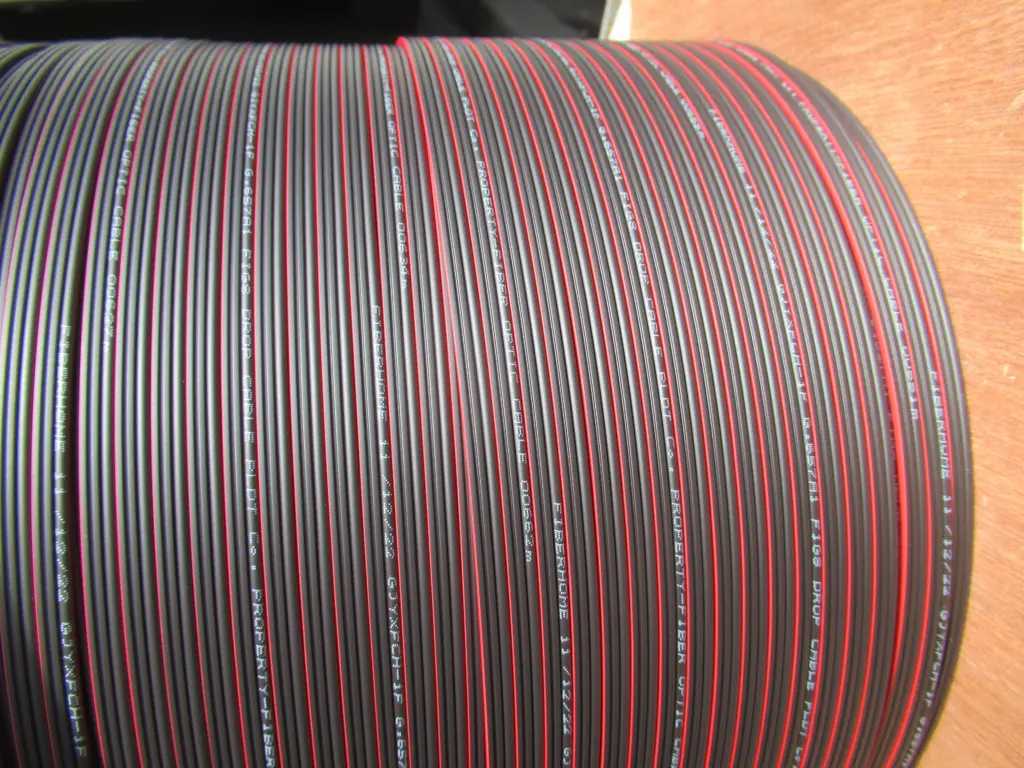
Fiber transmits data with light. The Verbraucherzentrale describes it as very fast and reliable, with short response times, and technically even higher speeds than 1 Gbit/s are possible. It is also fast when uploading, for example for video calls, large cloud backups or families in which several people work, stream and game at the same time. If it is available at your address, it is the most future-proof choice. What matters during the rollout is covered in the guide Fiber connection.
LTE and 5G: flexible, but with restrictions
According to the Verbraucherzentrale, a router with a SIM card reaches values similar to VDSL without any house connection. Contract terms are often more flexible, and moving is easier. But be careful. With purely mobile connections, rights such as a price reduction or compensation cannot yet be enforced, and not every provider allows use at different locations. Poorer reception after a move does not automatically give you a special right to cancel. Test the reception beforehand, for example with a prepaid or trial SIM, and look at the operator’s coverage map. There are dedicated devices for use on the go, presented in the guide Mobile 5G router.
Hybrid plans are available as a supplement. A router with a SIM card supplements the VDSL or cable connection, and mobile data only steps in when the line is not enough. According to the Verbraucherzentrale, customer rights are more likely to be enforceable here than with purely mobile service. For very remote locations, there is satellite, with considerable effort and cost for installation.
Your rights, whatever the technology
In Germany, this applies to every technology. A new contract may run for no more than 24 months; after that, you can cancel with one month’s notice. Before signing, you are entitled to a contract summary in text form. If landline internet is regularly or very clearly too slow, you may reduce your payment or cancel early. You provide the evidence with the broadband measurement of the Bundesnetzagentur (the German Federal Network Agency).
- Complete outage, 3rd and 4th day after reporting the fault: 10 percent of the monthly fee, at least 5 euros per day
- from the 5th day: 20 percent, at least 10 euros per day
- missed installation appointment: 20 percent, at least 10 euros
When switching providers, the connection may be down for no more than one working day. And if nothing usable is available at your address at all, the minimum service of 15 Mbit/s download and 5 upload applies. You enforce it through the Bundesnetzagentur, not with the provider, which usually takes at least a year. More on this in the guide The right to fast internet (in German).
Four steps to the right connection
- Check availability at your exact address; for cable and fiber, also ask the provider.
- Clarify your needs: how many people use the connection at the same time, and how important is upload?
- Compare offers over the full contract term and read the contract summary.
- Measure after activation. If you get too little, the points above apply.
Frequently asked questions
Is cable always cheaper?
Not always. The Verbraucherzentrale says it is often cheaper, but still compare the price over the full contract term.
Can I use my own router with mobile internet?
Yes. According to the Verbraucherzentrale, the Bundesgerichtshof (Germany’s Federal Court of Justice) has ruled that providers may not restrict the choice of end device. More in the guide Using your own router (in German).
What is the difference between DSL and VDSL?
Both run over the copper line. VDSL is the faster variant, which the Verbraucherzentrale lists at up to 250 Mbit/s.
What should I do if it is too slow?
Measure, document, reduce your payment. If you get too little, the guide Internet too slow helps.
Frequently asked questions
What is the difference between DSL, cable and fiber?
VDSL runs over the copper line and, according to the Verbraucherzentrale, reaches up to 250 Mbit/s in download, but is available in about 95 percent of areas. Cable comes through the TV connection and reaches up to 1,000 in download and 240 in upload. Fiber reaches up to 1,000 in both directions, but so far only about 8.1 percent of connections have it.
Why does upload speed matter for an internet connection?
For video calls, large cloud backups and families in which several people work and stream at the same time. A 2-gigabyte video takes just under seven minutes in theory at 40 Mbit/s upload, and about 16 seconds at 1,000 Mbit/s. If the connection delivers less, the numbers shift, but the ratio stays the same.
Is internet over LTE or 5G enough instead of a landline?
According to the Verbraucherzentrale, a router with a SIM card reaches values similar to VDSL without any house connection, and contract terms are often more flexible. Rights such as a price reduction or compensation, however, cannot yet be enforced for purely mobile connections. Test the reception beforehand with a prepaid or trial SIM.
Who is cable internet suitable for?
For working from home, lots of streaming and large downloads. Cable reaches high speeds and, according to the Verbraucherzentrale, is often cheaper than the alternatives; still compare the price over the full contract term. It is well developed mainly in cities, so ask the provider about your address.
What are hybrid plans?
A router with a SIM card supplements the VDSL or cable connection, and mobile data only steps in when the line is not enough. According to the Verbraucherzentrale, customer rights are more likely to be enforceable here than with purely mobile service. For very remote locations, the only other option is satellite, with considerable installation effort.
What rights do I have if my internet is too slow?
If landline internet is regularly or very clearly too slow, you may reduce your payment or cancel early. You provide the evidence with the broadband measurement of the Bundesnetzagentur. If nothing usable is available at your address at all, the minimum service of 15 Mbit/s download and 5 upload applies.
Sources
- Verbraucherzentrale: Internet connection at home, what are the options?
- Verbraucherzentrale: Important customer rights for telephone, mobile and internet contracts
Where to buy
- DSL-Tarif (VDSL)View at CHECK24Available in Germany: CHECK24
- Kabel-TarifView at CHECK24Available in Germany: CHECK24
- Glasfaser-TarifView at CHECK24Available in Germany: CHECK24