
Contents13 sections
This guide was first published in German on handgetestet.de.
Does a phone for gaming really need a fan? Usually not. If you play long sessions every day and still want a normal everyday device in your pocket, our pick is the OnePlus 15: up to 165 Hz, a 7,300 mAh battery and cooling that stayed noticeably cooler than RedMagic’s fan-equipped model in Android Authority’s sustained test. Shoulder triggers and built-in fans are only found on the specialists. Those demand trade-offs in weight, camera or future-proofing.
What do 144, 165 or 185 Hz bring to gaming?
A high refresh rate only helps if the game actually delivers that many frames. If a title caps at 60 or 120 frames per second, a 185 Hz display simply shows the same frames more often. You notice the difference when scrolling, in fast shooters with an unlocked frame rate and in racing games.
The conditions matter. For the ROG Phone 9 Pro, ASUS specifies 165 Hz system-wide and 185 Hz, which, according to a footnote, can only be enabled in the Game Genie gaming hub and only while playing. For the OnePlus 15, OnePlus speaks of a dynamic rate of up to 165 Hz and itself advertises 120 frames per second in Mobile Legends for at least 60 minutes. Samsung and Apple stick with 120 Hz. For casual gamers that is enough, and frankly for ambitious ones too.
You should read the touch sampling rate with similar caution. ASUS states 720 Hz, OnePlus 3,200 Hz with its own chip for touch input. The manufacturers do not disclose how they measure. The values are therefore not directly comparable.
Fan, vapor chamber, liquid: what actually cools?
Every current flagship throttles as soon as the chip gets too warm. The question is how early and how much. The RedMagic 11S Pro takes the most radical approach: liquid cooling, a vapor chamber and a built-in fan spinning at up to 24,000 revolutions per minute, as Notebookcheck describes it. Android Authority ran the device through the Wild Life Extreme sustained graphics test. Result: at the end, it held 77 percent of its peak performance, while the competition managed only 49 to 60 percent. At the same time, the testers measured peaks of 59 °C and called the phone too hot to hold comfortably. In real games, they said, the heat was more manageable, but they saw no clear advantage from the cooling there. The OnePlus 15 reached no more than 46 °C in the same test.
The German tech site Netzwelt comes to a milder verdict. During long sessions of Genshin Impact and Call of Duty Mobile, the 11S Pro did not get excessively warm, it reports, and the fan hums quietly and is drowned out by the game audio.
A word on benchmarks. In April 2026, UL Solutions removed the RedMagic 11 Pro series from the 3DMark rankings because the devices automatically switched into performance mode when they detected the test. With a renamed test version, the first run came in about 24 percent lower, Notebookcheck reports. Whether the successor model 11S Pro is affected does not emerge from this. Leaderboards say little about behavior after an hour of gameplay anyway.
For the ROG Phone 9 Pro, ASUS relies on the GameCool 9 cooling system with a vapor chamber and more graphite area, plus the clip-on AeroActive Cooler X Pro fan, which according to ASUS is included with the Pro Edition. Samsung builds a larger vapor chamber into the Galaxy S26 Ultra than into its predecessor. Apple also lists a vapor chamber for the iPhone 18 Pro but gives no cooling figures.
Shoulder triggers: gimmick or real advantage?
In shooters, a real advantage. With two fingers on the frame you aim and shoot while your thumbs move and look around. ASUS calls its buttons AirTrigger and describes gestures such as dual assignment, press and release, and gyroscope aiming. On the RedMagic 11S Pro, there are two touch-sensitive zones on the frame which, according to Netzwelt, can be mapped per game in the Game Space app.
OnePlus, Samsung and Apple lack such buttons. If you want real buttons there, you put the phone in a controller. And if what you really want is to play PC games on the go, a handheld gaming PC often serves you better than the fastest phone.
How long does the battery last while gaming?
Milliamp-hours are only half the story. The European version of the RedMagic 11S Pro has 7,500 mAh, but in Netzwelt’s test it managed just under 16 hours of video streaming at full brightness, putting it behind other flagship models. A large, bright display at 144 Hz and a high-clocked chip eat up the advantage.
ASUS specifies at least 4.5 hours of intensive gaming for the ROG Phone 9 Pro with 5,800 mAh, measured in its own lab, and promises more than 80 percent capacity after 1,000 charge cycles. OnePlus specifies 7,300 mAh, Samsung 5,000 mAh, Apple 4,056 mAh. When recharging, they are worlds apart: according to the manufacturer, OnePlus charges fully at 120 watts in about 39 minutes, ASUS in 46 minutes with the matching power adapter. Apple needs about 15 minutes for 50 percent on a power adapter rated 60 watts or more.
Five gaming smartphones compared
| Model | Display | Cooling and buttons | Battery and charging | Best for |
|---|---|---|---|---|
| OnePlus 15 | 6.78 inches, LTPO, up to 165 Hz | Vapor chamber with 5,731 mm², no shoulder triggers | 7,300 mAh, 120 W (wired), 50 W (magnetic) | Daily gaming, one device for everything |
| ASUS ROG Phone 9 Pro | 6.78 inches, 165 Hz, 185 Hz in games | GameCool 9, AirTrigger shoulder triggers | 5,800 mAh, 65 W, 15 W wireless | Shooter fans who want buttons |
| RedMagic 11S Pro | 6.85 inches, 144 Hz, no camera cutout | Fan, liquid, vapor chamber, touch shoulder triggers | 7,500 mAh, 80 W wired and wireless | Long sessions, camera secondary |
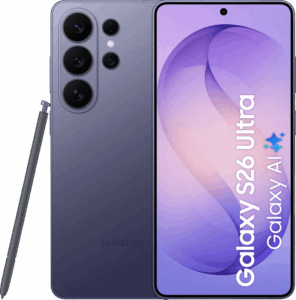
| Samsung Galaxy S26 Ultra | 6.9 inches, up to 120 Hz | Larger vapor chamber, S Pen | 5,000 mAh, 60 W, 25 W wireless | Gaming on the side, camera important |
| Apple iPhone 18 Pro | 6.3 inches, up to 120 Hz | Vapor chamber, no shoulder triggers | 4,056 mAh, 50 % in about 15 min. | iOS games, compact format |
OnePlus 15
Not a gaming phone in the strict sense, and that is exactly why it is our favorite. The Snapdragon 8 Elite Gen 5, up to 165 Hz and the largest battery among the three everyday models here make it a gaming device with staying power. According to the manufacturer, it is water- and dust-resistant. In the sustained test, it did not hold its peak performance as long as the RedMagic, but it stayed cool enough to hold comfortably.
ASUS ROG Phone 9 Pro
For gamers, it offers the most here: AirTrigger, 185 Hz in games, a headphone jack and IP68. However, ASUS has confirmed that it will not release any new smartphones in 2026. According to Notebookcheck, updates and warranty for existing ROG Phones continue. So if you buy the 9 Pro, you are buying a device with no successor in sight.
RedMagic 11S Pro
Built entirely for games. A fan, a large battery cell, a headphone jack and an under-display front camera, plus, according to Notebookcheck, IPX8 protection despite the fan opening. Netzwelt criticizes the weak camera and the heavy weight of 240 grams. Only recommended if gaming clearly comes first.
Samsung Galaxy S26 Ultra
The chip is the same Snapdragon 8 Elite Gen 5, in a version for Galaxy, and Netzwelt sees the RedMagic at its level in Geekbench. The large 6.9-inch display at 120 Hz is well suited to gaming. But people buy the Ultra for the camera and the S Pen. More on the differences between Android models can be found in our guide to Android smartphones (in German).
Apple iPhone 18 Pro
It belongs here as a point of comparison. According to Apple, the A20 Pro supports hardware ray tracing; the body weighs 211 grams and is rated IP68. For gamers, what counts most is access to iOS titles that are not available on Android. Which iPhone suits you is covered in our iPhone comparison (in German).
What about Lenovo Legion?
Lenovo discontinued its Legion phones in 2023; the last model presented in Europe was the Legion Phone Duel 2 from 2021. In May 2026, a new Legion Y70 with 144 Hz and 8,000 mAh came out in China. Lenovo has not yet announced a market launch in Germany. Imported devices are therefore left out.
How we would decide
- You play every day but also need a camera, water resistance and an inconspicuous phone: OnePlus 15.
- Shooters with shoulder triggers and high frame rates matter most to you: ASUS ROG Phone 9 Pro, knowing that no successor is coming for now.
- Hours-long sessions, camera irrelevant, weight irrelevant: RedMagic 11S Pro.
- Gaming on the side, photos matter more: Samsung Galaxy S26 Ultra.
- You are staying with iOS or want a compact device: iPhone 18 Pro.
Frequently asked questions
What do 144 or 165 Hz bring to gaming?
A high refresh rate only helps if the game actually delivers that many frames. If a title caps at 60 or 120 frames per second, a faster display just shows the same frames more often. You notice the difference when scrolling, in fast shooters with an unlocked frame rate and in racing games.
Does a gaming smartphone need a fan?
In Android Authority's sustained graphics test, the RedMagic 11S Pro held 77 percent of its peak performance but got uncomfortably hot at 59 °C. In real games, the testers saw no clear advantage from the cooling. The OnePlus 15 reached no more than 46 °C without a fan.
Are shoulder triggers on a phone worth it?
In shooters, yes: with two fingers on the frame you aim and shoot while your thumbs move and look around. ASUS calls its buttons AirTrigger, and the RedMagic 11S Pro has touch-sensitive zones. OnePlus, Samsung and Apple have none; there, only a controller helps.
How long does the battery of a gaming smartphone last?
Milliamp-hours are only half the story. The RedMagic 11S Pro has 7,500 mAh but fell behind other flagship models in video streaming, because the bright display and high clock speed eat up the advantage. ASUS specifies at least 4.5 hours of intensive gaming for the ROG Phone 9 Pro.
Are there still new ROG Phones from ASUS?
ASUS has confirmed that it will not release any new smartphones in 2026. According to Notebookcheck, updates and warranty for existing ROG Phones continue. So if you buy the ROG Phone 9 Pro, you are buying a device with no successor in sight, but you get AirTrigger, a headphone jack and IP68.
Are benchmark results meaningful for gaming phones?
Only to a limited extent. In April 2026, UL Solutions removed the RedMagic 11 Pro series from the 3DMark rankings because the devices switched into performance mode when they detected the test. Leaderboards say little about behavior after an hour of gameplay anyway.
Sources
- OnePlus: OnePlus 15
- ASUS: ROG Phone 9 Pro and spec sheet
- Apple: iPhone 18 Pro, technical specifications
- Samsung: Galaxy S26 Ultra compared, differences between the S26 models and comparison of the S26 series
- Notebookcheck: RedMagic 11S Pro comes to Germany
- Netzwelt: RedMagic 11S Pro review
- Android Authority: RedMagic 11S Pro sustained test
- Notebookcheck: UL Solutions and the RedMagic 11 Pro series
- Notebookcheck: ASUS pauses new smartphones in 2026
- Notebookcheck: Lenovo discontinues Legion smartphones
- Mezha: Lenovo Legion Y70 (2026)
Where to buy
- OnePlus 15Check price at Amazon.deCheck price at Amazon.co.ukCheck price at Amazon.nlCheck price at Amazon.com.beCheck price at Amazon.frCheck price at Amazon.itCheck price at Amazon.esCheck price at Amazon.plCheck price at Amazon.seAvailable in Germany: Amazon.de
- ASUS ROG Phone 9 ProCheck price at Amazon.deCheck price at Amazon.co.ukCheck price at Amazon.nlCheck price at Amazon.com.beCheck price at Amazon.frCheck price at Amazon.itCheck price at Amazon.esCheck price at Amazon.plCheck price at Amazon.seAvailable in Germany: Amazon.de
- RedMagic 11S ProCheck price at Amazon.deCheck price at Amazon.co.ukCheck price at Amazon.nlCheck price at Amazon.com.beCheck price at Amazon.frCheck price at Amazon.itCheck price at Amazon.esCheck price at Amazon.plCheck price at Amazon.seAvailable in Germany: Amazon.de
- Samsung Galaxy S26 UltraView at CoolblueAvailable in Germany: CoolblueCheck price at Amazon.deCheck price at Amazon.co.ukCheck price at Amazon.nlCheck price at Amazon.com.beCheck price at Amazon.frCheck price at Amazon.itCheck price at Amazon.esCheck price at Amazon.plCheck price at Amazon.seAvailable in Germany: Amazon.de
- Apple iPhone 18 ProCheck price at Amazon.deCheck price at Amazon.co.ukCheck price at Amazon.nlCheck price at Amazon.com.beCheck price at Amazon.frCheck price at Amazon.itCheck price at Amazon.esCheck price at Amazon.plCheck price at Amazon.seAvailable in Germany: Amazon.deView at CoolblueAvailable in Germany: Coolblue