Contents12 sections
This guide was first published in German on handgetestet.de.
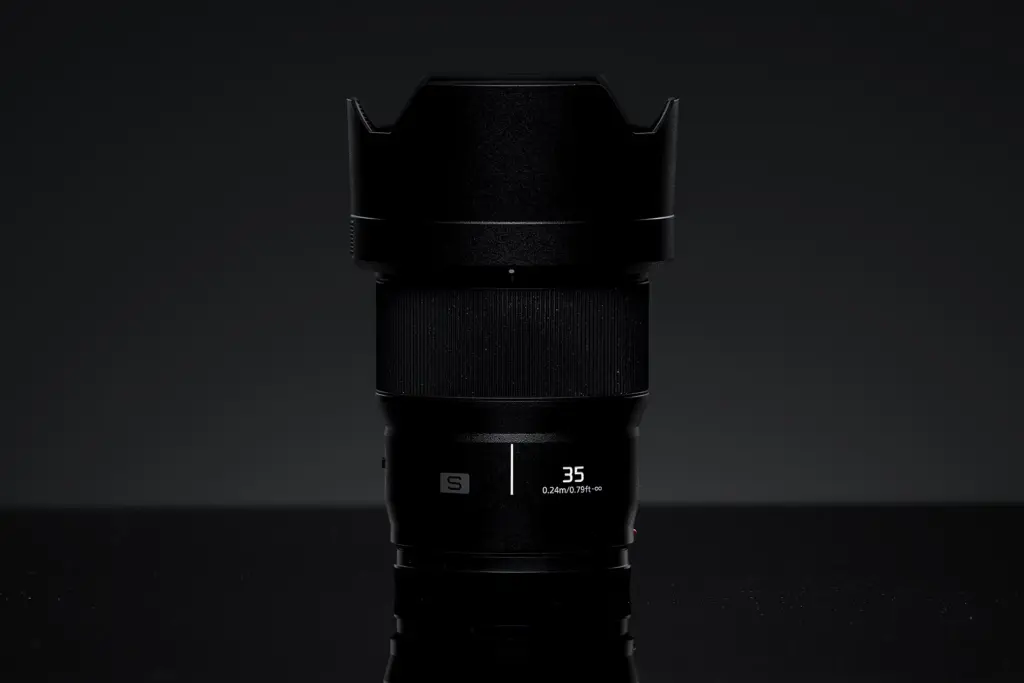
F1.4 or F1.8? In the L-Mount system, almost everything hinges on this question, and for filmmakers the answer is often the more modest one. If you shoot a lot of video on a Lumix S, a Sigma fp or a Leica SL, Panasonic’s F1.8 prime lenses will serve you well. They are light, share a 67 mm filter thread, and according to Panasonic they were designed to suppress focus breathing.
More light and subject separation come from the F1.4 models in Sigma’s Art line. For the 35 mm, that should then be the new DG II version, which Sigma explicitly developed for video as well.
One mount, three brands, many compromises
Panasonic, Sigma and Leica share the L-Mount. A lens with this mount therefore fits, in principle, on cameras from all three manufacturers. That is a real advantage of the system, because the selection is larger than its market share would suggest.
How the system feels on a current body is shown in our review of the Lumix S5IIX: full frame for photo and video, with recording to an external SSD.
On maximum aperture: compared with F1.8, F1.4 lets in about two-thirds of a stop more light and separates subjects more strongly from the background. In return, it is larger, heavier and more expensive. The range across the models here runs from around 300 to around 670 grams, and on a gimbal or after a long day of shooting, every one of them counts.
What counts differently when filming than when taking photos
- Autofocus noise: The camera microphone picks up every motor noise. If the spec sheet lists a quiet drive such as a linear or stepping motor, that is a good sign. Older designs from the DSLR era can be considerably louder.
- Focus breathing: Many lenses slightly change the framing when focusing; in video, that looks like a small zoom. Manufacturers that suppress it usually say so explicitly.
- Aperture ring: If the click stops can be switched off, you change the aperture steplessly and without a clicking sound.
And then there are filters. If you work with ND or polarizing filters, you save money when several lenses share the same thread. Panasonic has solved this consistently; Sigma has not.
Six prime lenses for the L-Mount
| Model | Maximum aperture | Weight (manufacturer) | Filter thread | Best for |
|---|---|---|---|---|
| Sigma 35mm F1.4 DG II Art | F1.4 | approx. 530 g | 67 mm | All-round, photo and video |
| Sigma 50mm F1.4 DG DN Art | F1.4 | approx. 670 g | 72 mm | Portrait, detail, subject separation |
| Sigma 24mm F1.4 DG DN Art | F1.4 | approx. 520 g | 72 mm | Landscape, interiors, night |
| Panasonic Lumix S 35mm F1.8 | F1.8 | approx. 295 g | 67 mm | Reportage, vlog, gimbal |
| Panasonic Lumix S 50mm F1.8 | F1.8 | approx. 300 g | 67 mm | Getting started, lightweight standard lens |
| Panasonic Lumix S 85mm F1.8 | F1.8 | approx. 355 g | 67 mm | Portrait, interview |
Sigma 35mm F1.4 DG II Art
The second generation of the 35 mm Art came onto the market in spring 2026. According to the manufacturer, the L-Mount version weighs around 530 grams and uses a 67 mm filter thread. Two linear motors (Dual HLA) are designed to focus quickly and quietly, and according to Sigma, focus breathing was deliberately kept low. There is also an aperture ring with a de-click switch and a focus ring that can respond linearly if desired.
For filming in particular, the generational leap matters. We have results from our own test of the predecessor from the DSLR era, which you can read in our hands-on check of the Sigma 35mm F1.4 DG HSM. On the Lumix S1, it focused quickly, but was clearly audible when filming – the motor „rattles.“ During fast pans, focus did not always land. With manual focus, it was convincing for video, and the bokeh was very beautiful. If you choose the still available first mirrorless version (DG DN) instead, you get, according to the manufacturer, a stepping motor at around 645 grams.
Sigma 50mm F1.4 DG DN Art
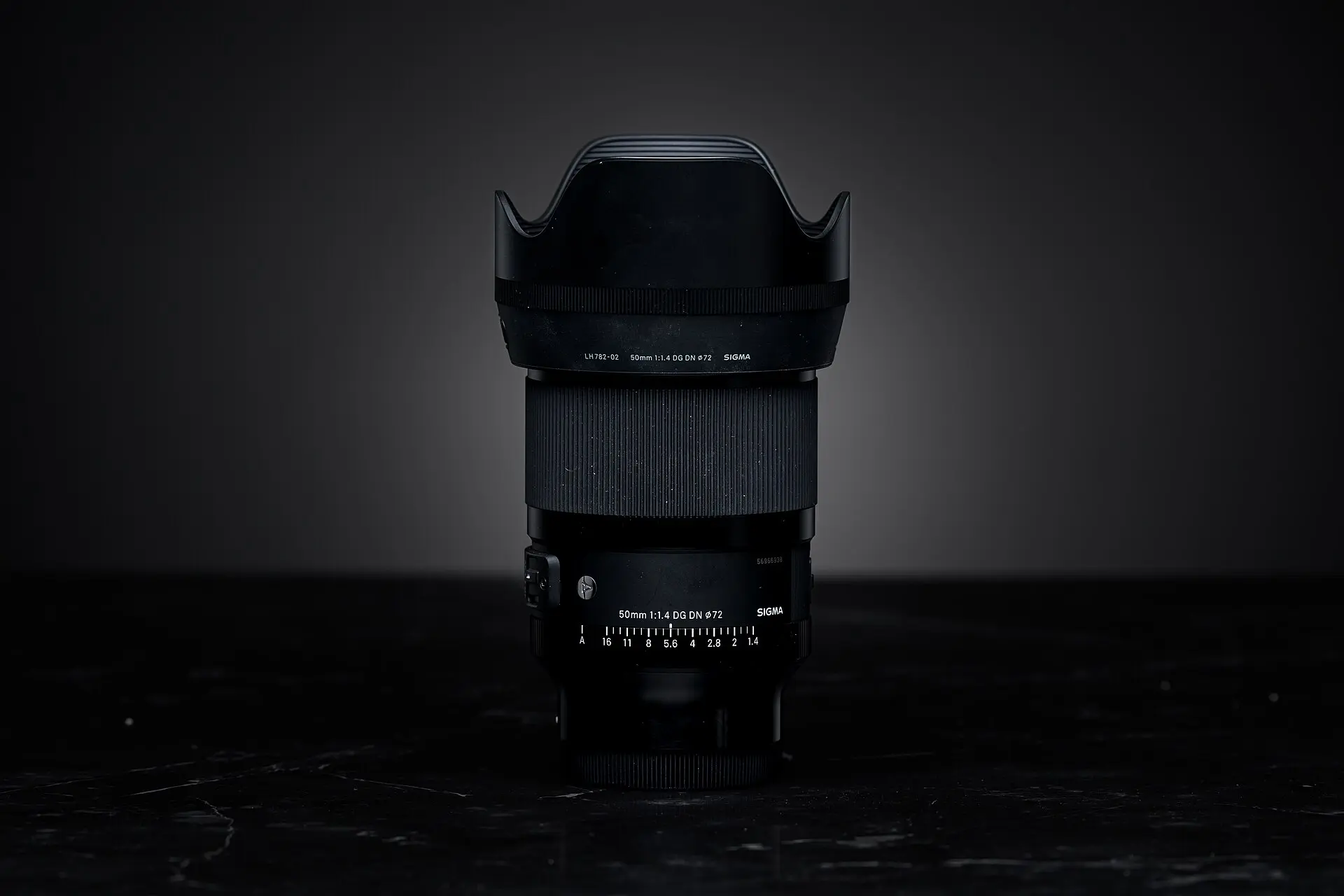
The heaviest lens in the selection. Sigma specifies around 670 grams and a 72 mm filter thread; it is driven by an HLA linear motor that the manufacturer describes as fast and quiet. The aperture ring can be de-clicked and locked. Sigma says nothing about focus breathing, and for filmmakers that is a gap worth knowing about.
Sigma 24mm F1.4 DG DN Art
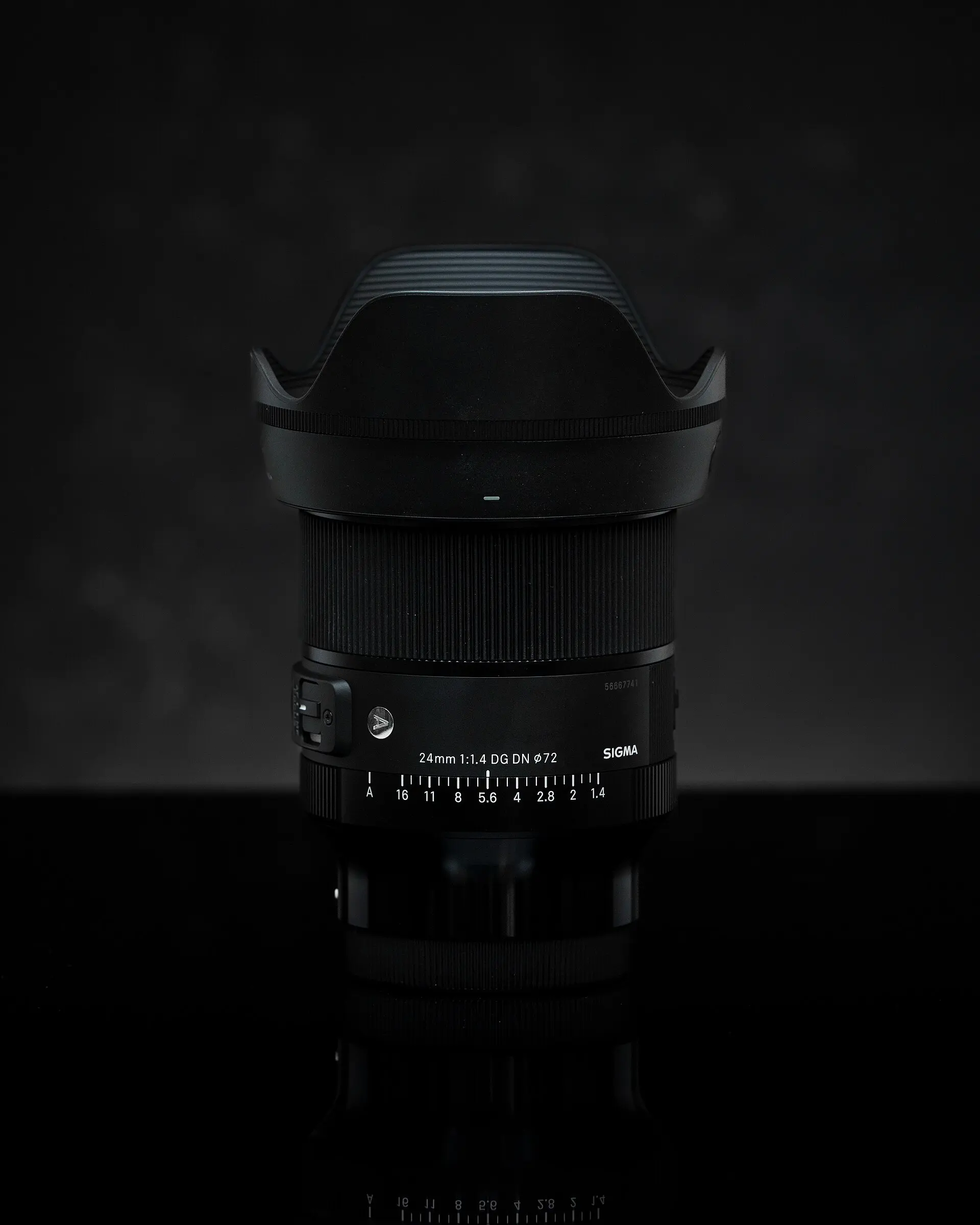
Built for landscape, architecture and night. According to the manufacturer, the 24 mm Art weighs around 520 grams, uses a 72 mm thread and also has a filter holder at the mount. A stepping motor is designed to focus quickly and quietly, and Sigma gives the minimum focusing distance as 25 centimeters.
Panasonic Lumix S 35mm F1.8
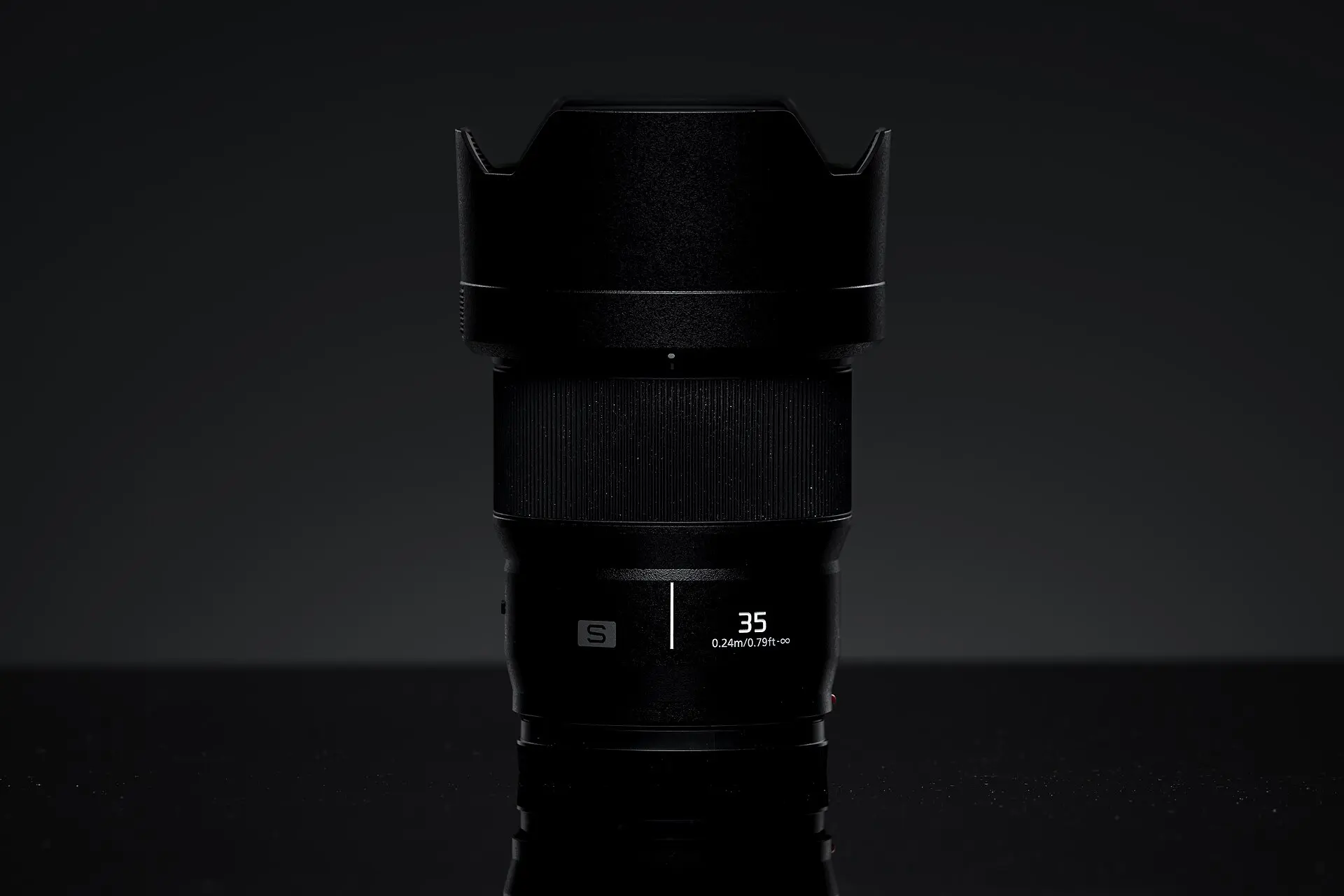
Around 295 grams; it does not get any lighter in this comparison. For the S-S35, Panasonic advertises quiet autofocus, a mechanism to suppress focus breathing and finely graduated aperture control so that exposure changes in video run smoothly. According to Panasonic, it focuses from 24 centimeters. The lens is dust- and splash-resistant. It has no aperture ring.
Panasonic Lumix S 50mm F1.8
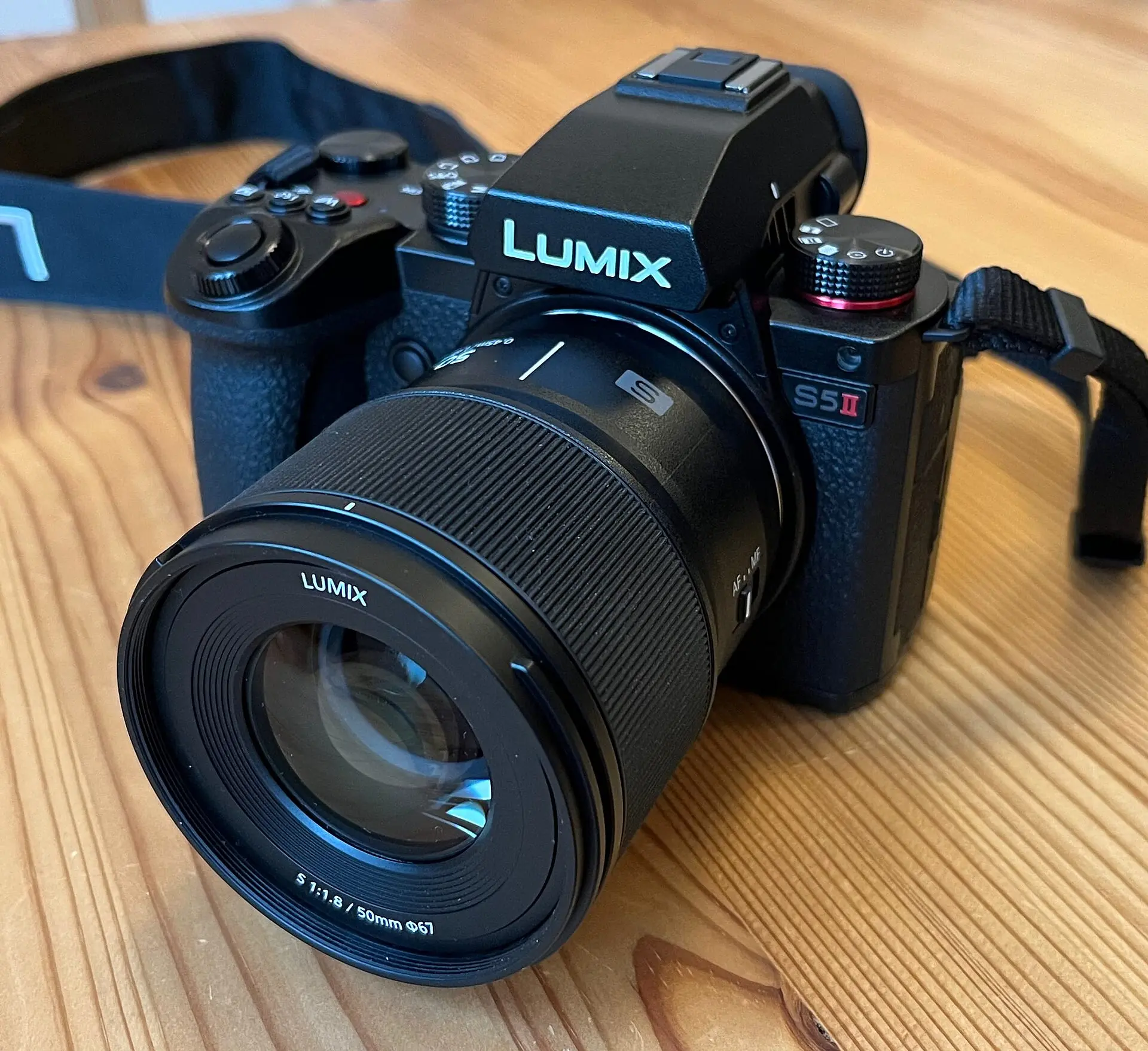
A lightweight standard lens at around 300 grams. It belongs to the F1.8 family, whose members, according to Panasonic, are the same size and have their controls in the same place. In everyday use, that means one set of 67 mm filters fits all of them, and your handling stays the same when you change lenses. On a gimbal, the length does not change, which should make balancing easier.
Panasonic Lumix S 85mm F1.8
For portraits and interviews, the S-S85 is the obvious choice. Panasonic specifies around 355 grams, a 67 mm thread and a minimum focusing distance of 80 centimeters. Here, too, a dedicated mechanism is designed to suppress focus breathing. Panasonic therefore explicitly recommends it for video recording.
Watch out for video crop
Some cameras crop the frame in certain video modes. In our hands-on check on the Lumix S1, this crop was around 1.5 in 4K mode at 50p/60p. A 35 mm then looks, in terms of angle of view, like roughly 52 mm. So check in advance which modes your camera handles without crop. If you still need a wide view, plan for a shorter focal length such as the 24 mm.
How we would put together the lens kit
If video is the priority, with a gimbal and light luggage, the Panasonic Lumix S 35mm F1.8 is the obvious first lens, later supplemented by the 85mm F1.8. Same size, same filters. If you are looking for a single lens for photo and video, take the Sigma 35mm F1.4 DG II Art.
For portraits with strong subject separation, the Sigma 50mm F1.4 DG DN Art leads the way; lighter and less expensive is the Panasonic 85mm F1.8. Landscapes, interiors and starry skies are the territory of the Sigma 24mm F1.4 DG DN Art. For an affordable start, there is the Panasonic Lumix S 50mm F1.8: light, fast, lower price bracket.
To put the prices in context: the Panasonic models range between the lower and middle price brackets, and the Sigma Art lenses sit in the upper mid-range. Leica’s own SL primes cost noticeably more.
Frequently asked questions
F1.4 or F1.8: what is the difference?
Compared with F1.8, F1.4 lets in about two-thirds of a stop more light and separates subjects more strongly from the background. In return, the lens is larger, heavier and more expensive. The range in the comparison runs from around 300 to around 670 grams, and on a gimbal or after a long day of shooting, every one of them counts.
Do Sigma lenses fit a Lumix camera?
Yes, in principle. Panasonic, Sigma and Leica share the L-Mount, so a lens with this mount fits cameras from all three manufacturers. That is a real advantage of the system, because the selection is larger than its market share would suggest.
What should I look for in lenses for filming?
A quiet autofocus drive such as a linear or stepping motor is important, because the camera microphone picks up every motor noise. Add to that little focus breathing, meaning hardly any change in framing when focusing, and an aperture ring with a de-click option for stepless aperture changes without clicking.
Why is a uniform filter thread practical?
If you work with ND or polarizing filters, you save money when several lenses share the same thread. Panasonic has solved this consistently: according to the manufacturer, all F1.8 models use 67 mm, are the same size and have their controls in the same place. With Sigma, the thread varies between 67 and 72 mm.
What does video crop mean for the focal length?
Some cameras crop the frame in certain video modes. On the Lumix S1, this crop was around 1.5 in 4K mode at 50p/60p, so a 35 mm then looks roughly like 52 mm. Check in advance which modes run without crop, or plan for a shorter focal length such as the 24 mm.
Which L-Mount prime lens is right for portraits?
For strong subject separation, the Sigma 50mm F1.4 DG DN Art at around 670 grams leads the way, although Sigma says nothing about focus breathing. Lighter and less expensive is the Panasonic Lumix S 85mm F1.8 at around 355 grams, which Panasonic explicitly recommends for video recording as well, for example for interviews.
Sources
- Sigma: 35mm F1.4 DG II | Art
- Sigma: market launch of the 35mm F1.4 DG II | Art
- Sigma: 35mm F1.4 DG DN | Art, specifications
- Sigma: 50mm F1.4 DG DN | Art
- Sigma: 24mm F1.4 DG DN | Art, specifications
- Panasonic: S-S35 specifications
- Panasonic: S-S50 specifications
- Panasonic: S-S85 specifications
- Newsshooter: Panasonic introduces the S-S35 (manufacturer information)
- Photography Blog: Panasonic introduces the S-S85 (manufacturer information)
Where to buy
- Sigma 35mm F1.4 DG II Art L-MountCheck price at Amazon.deAvailable in Germany: Amazon.de
- Sigma 50mm F1.4 DG DN Art L-MountCheck price at Amazon.deAvailable in Germany: Amazon.de
- Sigma 24mm F1.4 DG DN Art L-MountCheck price at Amazon.deAvailable in Germany: Amazon.de
- Panasonic Lumix S 35mm F1.8Check price at Amazon.deAvailable in Germany: Amazon.de
- Panasonic Lumix S 50mm F1.8Check price at Amazon.deAvailable in Germany: Amazon.de
- Panasonic Lumix S 85mm F1.8Check price at Amazon.deAvailable in Germany: Amazon.de