Contents13 sections
This guide was first published in German on handgetestet.de.
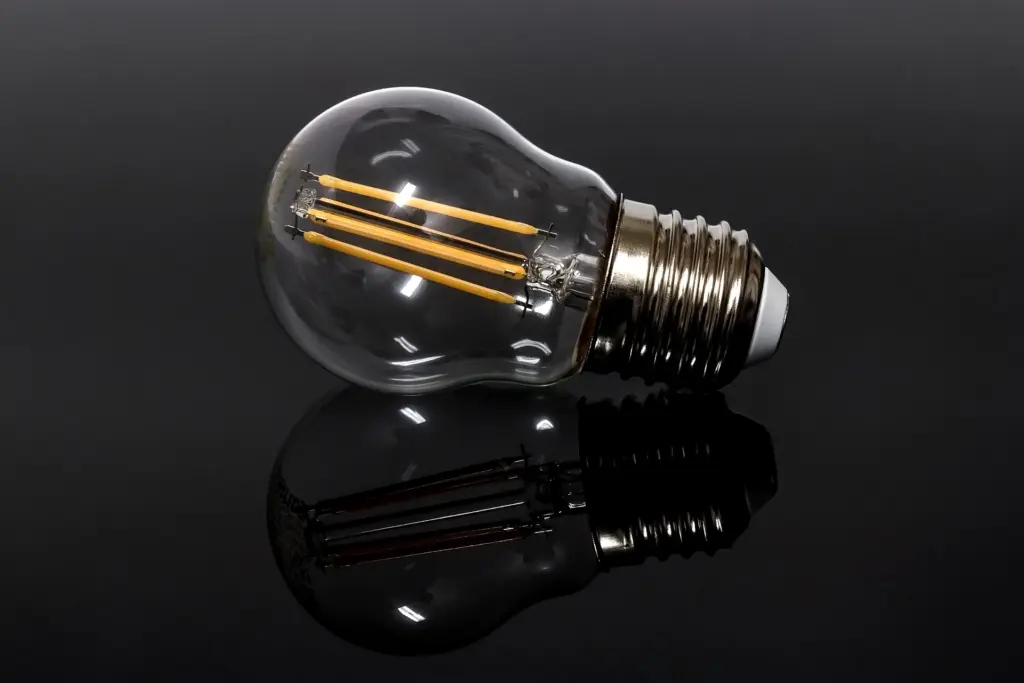
Anyone buying an LED bulb today usually looks at the wattage printed on it. That is exactly what leads people astray. What matters is lumens, kelvin and color rendering, and for a standard socket in the hallway or above the dining table, we consider a non-dimmable class A filament bulb the most sensible choice, such as the OSRAM LED Classic A60 Filament with 3.8 watts. Where there is a dimmer, you need a different model.
What the numbers on the package really mean
Brightness is stated in lumens. According to the Verbraucherzentrale (German consumer advice center), an old 60-watt incandescent bulb delivered about 700 lumens. Manufacturers calculate more generously and usually print „replaces 60 W“ on bulbs with 806 lumens. In everyday terms, that means with 806 lumens things tend to get a little brighter than before, not darker.
The three-digit number after the wattage is a code. In „827“, the 8 stands for a color rendering index (Ra) of at least 80, the 27 for 2,700 kelvin. A „927“ has the same warm light color but renders colors at Ra 90. That is also how it appears in the data sheets of Ledvance, the manufacturer of OSRAM bulbs. The difference shows wherever colors matter. Skin tones at the bathroom mirror look more natural at Ra 90, and so do tomatoes and bell peppers on the cutting board.
The Verbraucherzentrale advises never going below Ra 80. For the kitchen and dining table it recommends more than 90, for the bathroom and bedroom at least 90. For light color, it suggests 2,500 to 2,700 kelvin for the living room and 4,000 to 6,500 kelvin for the workspace. Cool white light above the sofa? It quickly feels like a waiting room.
E27, E14 or GU10: socket first, everything else second
E27 is the large screw thread of the classic ceiling light and floor lamp. E14 is the narrow version, typical for chandeliers, wall lights and small table lamps. GU10 is a plug-in base with two pins that you push in, twist and lock; it sits in many recessed spotlights in kitchens and bathrooms and runs directly on 230 volts. Do not confuse it with GU5.3. Those spots run off a transformer, and according to the Verbraucherzentrale, LED bulbs often fall short of its minimum load. Then they flicker, or stay dark.
There is almost always more choice of shape and glass for E27. Clear glass shows the filaments and causes more glare in open fixtures; frosted glass diffuses more softly. In a pendant light without a shade directly above the table, we would go for frosted.
Energy label: why class F is not a power hog
The label runs from A to G and is strict for lamps. The Verbraucherzentrale explicitly points out that even bulbs in the lower, red classes are very economical. Two bulbs from our table show the range. According to the manufacturer, the Paulmann filament bulb with 806 lumens is in class F and needs 7.5 watts. The class A OSRAM Classic A60 achieves the same brightness with 3.8 watts.
If we use the Verbraucherzentrale’s assumption of around 1,000 hours of use per year, that is 7.5 versus 3.8 kilowatt-hours. So per socket, a difference of just under 4 kWh. For a single bedside lamp, that hardly matters; for ten bulbs in the house that burn for a long time in the evening, it does more so. Service life is at least as important: Ledvance states 50,000 hours and 500,000 switching cycles for its class A bulbs, and 15,000 hours for the dimmable Superstar Plus.
Dimming is the real stumbling block
The class A OSRAM bulbs in our table are not dimmable. If you screw them in behind a dimmer, you risk humming, flickering or early failure. Conversely, not every room needs a dimmer. In the hallway, basement or storage room, full light is enough.
For dimmable bulbs, the rule is: dimmer and bulb have to match. Ledvance refers to its own compatibility list for this, and Paulmann specifies dimmers for resistive and capacitive loads (R+C) for its filament bulb, in other words trailing-edge dimmers. Many older rotary dimmers were built for incandescent bulbs and have a minimum load that a single LED bulb does not reach. With WarmGlow, Philips offers a version whose light gets warmer as it dims down, similar to an incandescent bulb. If you like subdued light in the evening, this feature is worth a look.
If the bulb is supposed to switch via an app or voice command, a regular bulb is the wrong place to look. For that, see our guide to smart lights for indoors, and for the patio and entrance, the overview of smart outdoor lighting.
Six LED bulbs and their key specs
| Model | Base, power, light | Ra, dimmable, class | Best for |
|---|---|---|---|
| OSRAM LED Classic A60 Filament Energieeffizienzklasse A 3,8W 827 E27 | E27, 3.8 W, 806 lm, 2,700 K, clear | Ra 80, not dimmable, class A | Ceiling lights without a dimmer, long hours of use |
| Philips UltraEfficient Filament 60W A60 E27 klar | E27, 840 lm, 2,700 K, clear | Class A according to the manufacturer | Anyone who wants to stay with Philips |
| OSRAM LED Superstar Plus Classic A60 Filament DIM 927 E27 | E27, 5.9 W, 806 lm, 2,700 K, clear | Ra 90, dimmable, class D | Dining table and living room with a dimmer |
| Paulmann 28698 Filament LED Birne E27 7,5W 2700K dimmbar klar | E27, 7.5 W, 806 lm, 2,700 K, clear | Ra above 80, dimmable (R+C), class F | Dimmable alternative with standard color rendering |
| OSRAM LED Classic B40 Filament Energieeffizienzklasse A 2,2W 827 E14 | E14, 2.2 W, 470 lm, 2,700 K, clear | Ra 80, not dimmable, class A | Chandeliers, wall lights with E14 |
| OSRAM LED Superstar PAR16 DIM 6,1W 927 GU10 36° | GU10, 6.1 W, 575 lm, 2,700 K, 36° | Ra 90, dimmable, class E | Recessed spotlights in kitchen and bathroom |
OSRAM LED Classic A60 Filament, class A
With 806 lumens at 3.8 watts, it reaches 212 lumens per watt, according to Ledvance. The manufacturer states a service life of 50,000 hours and switching endurance of 500,000 cycles. The Verbraucherzentrale already considers 50,000 switching cycles a good figure. What you give up: no dimmer, and color rendering of only Ra 80. For the hallway, stairwell and the ceiling light in a child’s room, that hardly matters.
Philips UltraEfficient Filament 60W
Philips assigns its UltraEfficient line to class A and states up to 210 lumens per watt and a service life of 50,000 hours. According to the manufacturer, the clear 60-watt version delivers 840 lumens at 2,700 kelvin. In substance, it is the counterpart to the OSRAM bulb. Several versions are sold under this name that differ in light color and dimmability. A look at the code and the dimmer symbol on the package saves trouble.
OSRAM LED Superstar Plus Classic A60 Filament DIM
For rooms with a dimmer, it is our favorite. Ra 90, 806 lumens and 2,700 kelvin, plus 100,000 switching cycles according to the manufacturer. At 5.9 watts, it ends up in class D, and Ledvance states a service life of only 15,000 hours, significantly less than for the class A models. If you turn the light down at the dining table in the evening, that is a trade-off you will gladly accept.
Paulmann filament bulb 28698
Paulmann states 806 lumens at 7.5 watts, Ra above 80, 15,000 hours and 50,000 switching cycles. It is dimmed with a trailing-edge dimmer. That makes it an option if a dimmer is already installed and you do not need the better color rendering of the Superstar Plus. In class F, however, it uses almost twice as much as the economical models.
OSRAM LED Classic B40 Filament for E14
According to Ledvance, the candle shape for E14 delivers 470 lumens with 2.2 watts, the equivalent of a 40-watt candle bulb. Class A, 50,000 hours, not dimmable. On a chandelier with six or eight sockets, the savings add up faster than with a single lamp.
OSRAM LED Superstar PAR16 DIM for GU10
For recessed spotlights above the countertop, Ledvance states 575 lumens, Ra 90, a beam angle of 36 degrees and 25,000 hours. The narrow angle focuses the light on the surface below. For an evenly lit ceiling, the same line is available with 120 degrees. Which fixture suits it is described in our guide to the ceiling light.
How we would fill the sockets around the house
- Hallway, basement, child’s room without a dimmer: OSRAM LED Classic A60 Filament in class A or the Philips UltraEfficient.
- Dining table and living room with a dimmer: OSRAM Superstar Plus with Ra 90. Check the dimmer’s compatibility list first.
- Dimmer installed, color accuracy not important: Paulmann 28698.
- Chandeliers and wall lights with E14: OSRAM Classic B40 in class A.
- Kitchen and bathroom with GU10 spots: OSRAM Superstar PAR16 with 36 degrees.
One last piece of advice. Buy all the bulbs for a room from the same series. Two 2,700-kelvin bulbs from different manufacturers often do not look equally warm side by side.
Fixtures with T8 tubes follow their own rules. What matters when switching from a fluorescent tube is explained in the guide LED tube instead of a fluorescent tube.
For the hallway or carport, there are also bulbs with a built-in camera. When that makes sense is explained in the guide to the light bulb camera for E27.
Frequently asked questions
How many lumens replace a 60-watt incandescent bulb?
According to the Verbraucherzentrale (German consumer advice center), an old 60-watt incandescent bulb delivered about 700 lumens. Manufacturers usually print "replaces 60 W" on bulbs with 806 lumens. So with an LED like that, things tend to get a little brighter than before, not darker.
What does 827 or 927 on an LED package mean?
The first digit stands for the color rendering index: an eight means at least Ra 80, a nine Ra 90. The 27 stands for 2,700 kelvin warm white light. A 927 reproduces colors more naturally, which you notice at the bathroom mirror and on the cutting board.
Which light color suits which room?
The Verbraucherzentrale recommends 2,500 to 2,700 kelvin for the living room and 4,000 to 6,500 kelvin for the workspace. For color rendering, it advises never going below Ra 80, and Ra 90 or more for the kitchen, dining table, bathroom and bedroom.
Does a class F LED use a lot of power?
No, the label is strict for lamps; even the red classes are very economical. The class F Paulmann bulb needs 7.5 watts for 806 lumens, the class A OSRAM Classic A60 3.8 watts. At around 1,000 hours of use per year, that is a difference of just under 4 kWh per socket.
Can any LED bulb be dimmed?
No. Non-dimmable bulbs behind a dimmer can hum, flicker or fail early. Dimmer and bulb have to match; many older rotary dimmers have a minimum load that a single LED does not reach. Ledvance refers to its own compatibility list.
What is the difference between GU10 and GU5.3?
GU10 is a plug-in base that runs directly on 230 volts and sits in many recessed spotlights in kitchens and bathrooms. GU5.3 spots run off a transformer whose minimum load LED bulbs often fall short of, according to the Verbraucherzentrale. Then they flicker, or stay dark.
Sources
- Verbraucherzentrale: LED bulbs, what to look for when buying
- Ledvance: LED Classic A 60 Filament Energieeffizienzklasse A 3,8W 827 E27
- Ledvance: LED Superstar Plus Classic A 60 Filament DIM 5,9W 927 E27
- Ledvance: LED Classic B 40 Filament Energieeffizienzklasse A 2,2W 827 E14
- Ledvance: LED Superstar PAR16 DIM 6,1W 927 GU10
- Philips: UltraEfficient LED bulbs
- Philips: UltraEfficient filament bulb, clear, 60 W A60 E27
- Philips: WarmGlow
- Paulmann: Filament 230V LED Birne E27 806lm 7,5W 2700K dimmbar klar
Where to buy
- OSRAM LED Classic A60 Filament Energieeffizienzklasse A 3,8W 827 E27Check price at Amazon.deCheck price at Amazon.co.ukCheck price at Amazon.nlCheck price at Amazon.com.beCheck price at Amazon.frCheck price at Amazon.itCheck price at Amazon.esCheck price at Amazon.plCheck price at Amazon.seAvailable in Germany: Amazon.de
- Philips UltraEfficient Filament 60W A60 E27 klarCheck price at Amazon.deCheck price at Amazon.co.ukCheck price at Amazon.nlCheck price at Amazon.com.beCheck price at Amazon.frCheck price at Amazon.itCheck price at Amazon.esCheck price at Amazon.plCheck price at Amazon.seAvailable in Germany: Amazon.de
- OSRAM LED Superstar Plus Classic A60 Filament DIM 927 E27Check price at Amazon.deCheck price at Amazon.co.ukCheck price at Amazon.nlCheck price at Amazon.com.beCheck price at Amazon.frCheck price at Amazon.itCheck price at Amazon.esCheck price at Amazon.plCheck price at Amazon.seAvailable in Germany: Amazon.de
- Paulmann 28698 Filament LED Birne E27 7,5W 2700K dimmbar klarCheck price at Amazon.deCheck price at Amazon.co.ukCheck price at Amazon.nlCheck price at Amazon.com.beCheck price at Amazon.frCheck price at Amazon.itCheck price at Amazon.esCheck price at Amazon.plCheck price at Amazon.seAvailable in Germany: Amazon.de
- OSRAM LED Classic B40 Filament Energieeffizienzklasse A 2,2W 827 E14Check price at Amazon.deCheck price at Amazon.co.ukCheck price at Amazon.nlCheck price at Amazon.com.beCheck price at Amazon.frCheck price at Amazon.itCheck price at Amazon.esCheck price at Amazon.plCheck price at Amazon.seAvailable in Germany: Amazon.de
- OSRAM LED Superstar PAR16 DIM 6,1W 927 GU10 36°Check price at Amazon.deCheck price at Amazon.co.ukCheck price at Amazon.nlCheck price at Amazon.com.beCheck price at Amazon.frCheck price at Amazon.itCheck price at Amazon.esCheck price at Amazon.plCheck price at Amazon.seAvailable in Germany: Amazon.de