Contents12 sections
This guide was first published in German on handgetestet.de.
The classic aluminum pot goes onto the new induction zone, and nothing happens. That is how many a purchase ends, not in the store but at the stove. For induction, then, stainless steel or a pot with a magnetic base is the way to go, such as the Cilio Aida. On gas or ceramic glass cooktops, the Bialetti Moka Express still serves you well.
Step one: which stove is in your kitchen?
A moka pot is a simple device. Water at the bottom, a funnel of ground coffee above it, the pot on top. Steam pressure pushes the water up through the coffee. Precisely because there is so little to it, a few points decide whether you end up satisfied or annoyed.
The first is the material. Aluminum is not magnetic and only works on induction with an adapter plate; Bialetti states this explicitly for the Moka Express. Stainless steel pots or models with a steel base work directly on induction. Then the base matters. Small pots are too narrow for some induction zones and are not detected. For the Aida, Cilio refers to the cooktop’s minimum pan detection, and for the Alessi 9090, retailers state around 90 millimeters. The manual for your own cooktop clears this up beforehand.
Step two: how much coffee do you want?
Be careful with the cup numbers. They mean espresso cups, not mugs. For the four-cup Brikka, Bialetti speaks of just over 160 milliliters of coffee, or about 40 milliliters per cup. If you drink two large cups in the morning, you need six „cups“ rather than two. As for care: for the Moka Express and Brikka, Bialetti advises rinsing only with water, without detergent and not in the dishwasher. Cilio also specifies hand washing for the Aida.
That leaves taste. Aluminum or stainless steel? Reliable differences in the cup have not been demonstrated, so here the material mainly matters for the stove, care and durability. The coffee itself makes the bigger difference anyway. Freshly ground coffee can be matched to the pot in grind size, an opened pack from the cupboard cannot. Which grinder suits it is shown in the coffee grinder guide.
Seven moka pots side by side
| Model | Material and stove | Sizes according to the manufacturer | Best for |
|---|---|---|---|
| Bialetti Moka Express | Aluminum, induction only with adapter plate | several, from 1 to 9 cups in stores | Gas, ceramic glass, fans of the classic |
| Bialetti Brikka Induction | Boiler of aluminum and steel, all stoves | 4 cups (about 160 to 170 ml) | if you want more foam |
| Alessi Pulcina Induction | Cast aluminum with magnetic steel base | 3 cups | Design lovers, small amounts |
| Alessi 9090 | 18/10 stainless steel, magnetic base | from 1 to 10 cups | Lovers of design classics |
| Cilio Aida | Polished stainless steel, all stoves including induction | 2, 4, 6 and 10 cups | most induction kitchens |
| Ilsa Slancio | Satin-finish 18/10 stainless steel, induction base | including 4, 6 and 10 cups, with reducer filter | if you need small amounts flexibly |
| Rommelsbacher EKO 366/E | Stainless steel, electric with 365 watts | 3 or 6 cups, 350 ml | Office, vacation rental, no stove |
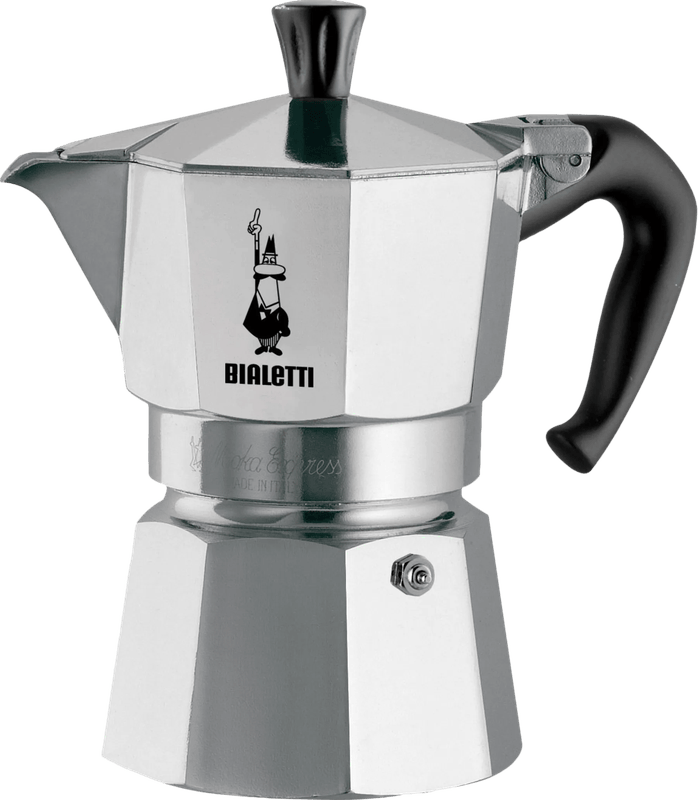
Bialetti Moka Express: the original, not for every stove
The octagonal aluminum pot is the benchmark against which all others are measured. According to Bialetti, it is intended for gas and electric stoves, and for induction only with the separately available induction plate. The manufacturer recommends filling the water only to just below the safety valve. If you have an induction cooktop, you should not plan on the plate as a permanent solution. Better to get a suitable pot right away.
Bialetti Brikka Induction: more foam thanks to the valve
In the Brikka’s riser tube sits a silicone membrane that, according to Bialetti, is meant to produce creamier coffee. The Induction version gets a two-layer boiler of aluminum and steel and, according to the manufacturer, therefore works on all types of stove. Bialetti advises against using the highest setting. Do not expect real espresso crema like from a portafilter machine. More a dense foam.
Alessi Pulcina Induction: form with function
Michele De Lucchi developed the Pulcina together with illycaffè. According to Alessi, the spout is shaped so that the flow of coffee stops before it turns bitter. The induction version combines cast aluminum with a magnetic steel base. The „Induction“ in the name is what counts, because the regular Pulcina does not work there. With three cups, it is more for singles and couples.
Alessi 9090: a stainless steel classic
Richard Sapper designed the 9090 as Alessi’s first espresso maker, and the model won the Compasso d’Oro. The pot is made of 18/10 stainless steel, and the versions with a magnetic base are suitable for induction. Frankly, you pay a lot here for a pot that essentially does the same thing as cheaper stainless steel models. If you appreciate the design, you are buying a classic that Alessi itself presents as the origin of its coffee makers.
Cilio Aida: the sensible stainless steel route
Four sizes from 2 to 10 cups, polished stainless steel. According to Cilio, the Aida works on gas, ceramic glass, electric hot plates and induction, provided the cooktop detects the base. For the four-cup pot, retailer information gives a base of 9.5 centimeters. With no design premium and a wide choice of sizes, it is the pot we would assign to most induction kitchens.
Ilsa Slancio: Italian stainless steel with a reducer filter
The Slancio, made of satin-finish 18/10 stainless steel, has an induction base. According to the seller, a reducer filter is included, so fewer cups are possible too. Handy if one person drinks coffee during the week and four on the weekend.
Rommelsbacher EKO 366/E: no stove required
No stove needed. This electric espresso maker sits on a 365-watt base. According to Rommelsbacher, two filter inserts allow 3 or 6 cups with a capacity of 350 milliliters. The pot can be lifted off cordlessly, and the device switches off automatically after brewing. Good for the office or a vacation rental. The manufacturer makes no mention of a keep-warm function.
Step three: matching the pot to the stove
- Induction cooktop, everyday use: Cilio Aida in the size that matches how much you drink.
- Gas or ceramic glass: Bialetti Moka Express. No plate, no detour.
- Want more foam: Bialetti Brikka Induction, though only in one size.
- Design counts too: Alessi 9090 or Pulcina Induction, keeping the cooktop’s minimum diameter in mind.
- No stove available: Rommelsbacher EKO 366/E.
If a new stove is on the cards anyway, an induction hot plate is an easy addition for the pot. And if in the end you would rather brew at the push of a button, you will end up with capsule machines (in German). For coffee with milk foam, there are dedicated devices, presented in our milk frother guide (in German).
Frequently asked questions
Does an aluminum moka pot work on induction?
Only with an adapter plate, because aluminum is not magnetic; Bialetti states this explicitly for the Moka Express. As a permanent solution, the plate is of little use. Stainless steel pots or models with a steel base such as the Alessi Pulcina Induction work directly on the induction zone.
Why does my induction cooktop not detect the moka pot?
Small pots are too narrow for some induction zones. For the Aida, Cilio refers to the cooktop's minimum pan detection, and for the Alessi 9090, retailers state a base of around 90 millimeters. Check the minimum diameter in the manual for your own cooktop beforehand.
How much coffee does a four-cup moka pot make?
The cups in question are espresso cups, not mugs. For the four-cup Brikka, Bialetti states just over 160 milliliters of coffee, or about 40 milliliters per cup. For two large cups in the morning, you need six cups rather than two. A reducer filter such as the one on the Ilsa Slancio also allows smaller amounts.
Can a moka pot go in the dishwasher?
For the Moka Express and Brikka, Bialetti advises rinsing only with water, without detergent and not in the dishwasher. Cilio also specifies hand washing for the stainless steel Aida.
Does coffee from stainless steel taste different from aluminum?
Reliable differences in the cup have not been demonstrated. The material mainly determines the stove, care and durability. The coffee itself makes the bigger difference: freshly ground coffee can be matched to the pot in grind size, an opened pack from the cupboard cannot.
What is the difference between the Moka Express and the Brikka?
The Brikka has a silicone membrane that, according to Bialetti, is meant to produce creamier coffee; thanks to its aluminum and steel boiler, the Induction version works on all stoves. Do not expect real crema like from a portafilter machine, more a dense foam. The Moka Express needs a plate on induction.
Sources
- Bialetti: Moka Express
- Bialetti: Brikka Induction
- Bialetti: Brikka Induction, 4 cups
- Alessi: Pulcina Induction
- Alessi: 9090
- Cilio: Aida moka pot
- Rommelsbacher: EKO 366/E espresso maker
- Seattle Coffee Gear: Ilsa Slancio (retailer information)
Where to buy
- Cilio Aida Espressokocher EdelstahlCheck price at Amazon.deCheck price at Amazon.co.ukCheck price at Amazon.nlCheck price at Amazon.com.beCheck price at Amazon.frCheck price at Amazon.itCheck price at Amazon.esCheck price at Amazon.plCheck price at Amazon.seAvailable in Germany: Amazon.de
- Bialetti Moka ExpressCheck price at Amazon.deCheck price at Amazon.co.ukCheck price at Amazon.nlCheck price at Amazon.com.beCheck price at Amazon.frCheck price at Amazon.itCheck price at Amazon.esCheck price at Amazon.plCheck price at Amazon.seAvailable in Germany: Amazon.deView at CoolblueAvailable in Germany: Coolblue
- Bialetti Brikka InductionCheck price at Amazon.deCheck price at Amazon.co.ukCheck price at Amazon.nlCheck price at Amazon.com.beCheck price at Amazon.frCheck price at Amazon.itCheck price at Amazon.esCheck price at Amazon.plCheck price at Amazon.seAvailable in Germany: Amazon.de
- Alessi Pulcina InduktionCheck price at Amazon.deCheck price at Amazon.co.ukCheck price at Amazon.nlCheck price at Amazon.com.beCheck price at Amazon.frCheck price at Amazon.itCheck price at Amazon.esCheck price at Amazon.plCheck price at Amazon.seAvailable in Germany: Amazon.de
- Alessi 9090 EspressomaschineCheck price at Amazon.deCheck price at Amazon.co.ukCheck price at Amazon.nlCheck price at Amazon.com.beCheck price at Amazon.frCheck price at Amazon.itCheck price at Amazon.esCheck price at Amazon.plCheck price at Amazon.seAvailable in Germany: Amazon.de
- Ilsa Slancio EspressokocherCheck price at Amazon.deCheck price at Amazon.co.ukCheck price at Amazon.nlCheck price at Amazon.com.beCheck price at Amazon.frCheck price at Amazon.itCheck price at Amazon.esCheck price at Amazon.plCheck price at Amazon.seAvailable in Germany: Amazon.de
- Rommelsbacher EKO 366/ECheck price at Amazon.deCheck price at Amazon.co.ukCheck price at Amazon.nlCheck price at Amazon.com.beCheck price at Amazon.frCheck price at Amazon.itCheck price at Amazon.esCheck price at Amazon.plCheck price at Amazon.seAvailable in Germany: Amazon.de