Contents11 sections
This guide was first published in German on handgetestet.de.
A wireless doorbell rarely fails because of its sound. It fails because of the concrete ceiling between the front door and the apartment. If you live on the third floor or want to hear the chime in the basement, look at range and expandability first, and only then at melodies. For most homes, we consider the Grothe Mistral 300M the most solid choice, because it combines wireless with a flashing light and two connections for existing push buttons. If you are hard of hearing, you are more likely to end up with Heidemann; if you already run a smart home, with Homematic IP or Aqara.
Nobody needs a camera for this. If you do want to see who is ringing, our guide to video doorbells will help.
What the distance on the package means
All manufacturers measure in open field, meaning without a single obstacle. In the instructions for the Mistral 300M, Grothe calculates how much of that remains inside a house: wood and glass let about 80 percent through, a stone wall 50 to 70, a concrete wall 30 to 50, and a concrete ceiling only around 20 percent. One after another, the values multiply. Two walls at 50 and 80 percent give you 40 percent of the rated range. That quickly turns 500 meters into 100, and 100 meters into twenty.
Metal is even worse. According to Grothe, wire mesh, for example in drywall or plaster lath, lets less than ten percent through. In its instructions, Heidemann warns that a transmitter mounted on metal or on plasticizer-free plastic frames noticeably loses range. So before you drill, hold the push button at the planned spot as a test and have someone listen inside.
Apartment building: who owns the doorbell?
The doorbell panel at the front door serves all units. Under Section 5(2) of the German Condominium Act (WEG), systems and facilities that serve common use are not separate property. Structural changes to common property are decided by the owners or permitted by resolution (Section 20(1) WEG). An owner who needs a visual signaling system for a resident with a hearing impairment can, under Section 20(2) WEG, demand reasonable changes that serve use by people with disabilities. Tenants ask their landlord first.
In practice, this means: leave the push button downstairs where it is, and pick up the signal in the apartment. Heidemann and Grothe allow exactly that. With the HX Flashlight, you connect the wireless transmitter to the existing chime; with the Mistral 300M, two wired push buttons can be connected. For this purpose, Homematic IP offers a doorbell signal detection module that, according to ELV (German electronics retailer), sits on the existing chime without modifying the system. More on smart home without touching the building fabric is in our guide smart home for tenants; if you are allowed to replace the whole system, you are better off looking at door intercoms.
Flashing instead of ringing
For people who are hard of hearing, what counts is not the volume but a second channel. In 2010, Germany’s Federal Social Court (BSG) ruled (B 3 KR 5/09 R) that insured persons with hearing loss bordering on deafness are in principle entitled to a visual signaling system as an aid from their German statutory health insurer. What was meant was a system with flashing lamps in every room. A wireless doorbell with a single flashing receiver does not replace that. So talk to your ENT practice and health insurer first, before buying anything yourself.
For mild impairment or as a second device in the home office, a chime with a flash is enough. Heidemann can even be set so that there is only light and no sound. That spares the nerves of housemates and neighbors.
Five doorbells without a camera compared
| Model | Range (open field) | Signal | Power at the push button | Best for |
|---|---|---|---|---|
| Grothe Mistral 300M | 500 m | max. 83 dB(A), 16 melodies, LED flash | 2 × AAA, approx. 5 years typ. | single-family home, older building, multiple doors |
| Heidemann HX Flashlight | approx. 200 m | approx. 70–90 dB(A), 8 melodies, 5 flashing LEDs | CR2032 | people who are hard of hearing, connection to an old chime |
| Byron DBY-23415 | 100 m | 80 dB, 16 melodies, 2 plug-in chimes | no battery (kinetic) | apartment, push button in the cold |
| Homematic IP HmIP-DBB + HmIP-MP3P | 210 m / 380 m | your own MP3 sounds, LED ring in 7 colors | 1 × AAA, approx. 1 year typ. | existing Homematic IP system |
| Aqara Mini Switch + Hub M2 | not specified | speaker in the hub, sound via app | battery, approx. 2 years | Aqara or HomeKit household |
Grothe Mistral 300M
The set with the SE03 push button states 500 meters in open field at 868.35 MHz. According to the manufacturer, up to twelve wireless transmitters and two wired push buttons can be paired, with 14 distinguishable call signals. In a house with a front and back door, each door then sounds different. The receiver runs on four C cells or on 8 to 12 volts from the doorbell transformer, and the transmitter on two AAA cells, which according to the instructions last about five years with normal use. Batteries are not included.
Heidemann HX Flashlight
Five LEDs on the receiver, three operating modes: sound only, light only or both. According to the instructions, you adjust the volume continuously from about 70 to 90 dB(A). The push button holds a CR2032 lithium coin cell, and the receiver needs two C cells. One limitation is in the small print of the technical specifications: the transmitter is designed for minus ten to plus 40 degrees Celsius. On nights with hard frost, that can be cutting it close. It cannot be connected to illuminated doorbell buttons or battery-powered chimes.
Byron DBY-23415
Here, pressing the button generates the energy for the wireless signal itself. No battery, so no battery changes and no total failure in frost. According to the data sheet, the set includes two plug-in chimes, 16 melodies, four volume levels and 80 dB. At 100 meters in open field and 433 MHz, its range is the shortest in the lineup. For an apartment with the push button directly at the apartment door, that is enough. For a house with a garden, probably not.
Homematic IP doorbell button and combination signaling device
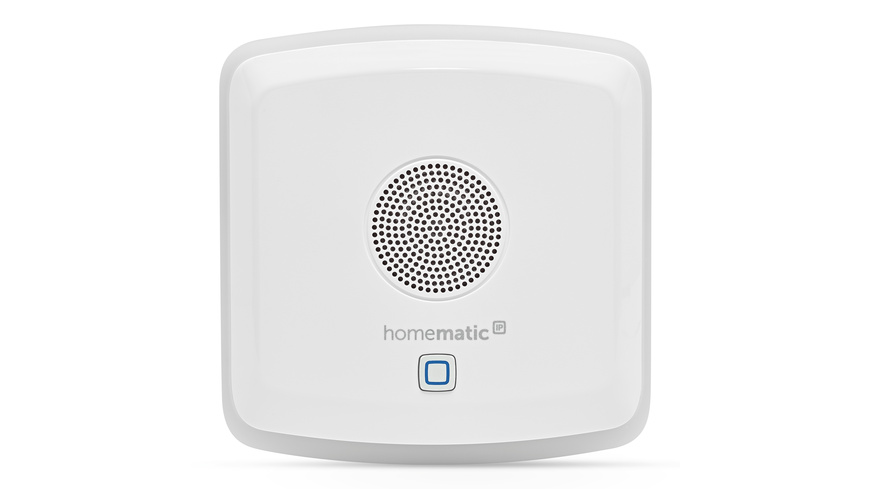
The HmIP-DBB push button does not ring anything on its own. It needs a Homematic IP Access Point or the CCU3 control unit and sends its signal to the Kombisignalgeber HmIP-MP3P (combination signaling device), to switch actuators or to Alexa and Google Assistant. It is protected to IP43, works from minus 20 to plus 50 degrees and, according to the data sheet, runs for one year on an AAA cell. According to the instructions, the signaling device belongs indoors; it plays your own MP3 files from a microSD card and lights up in seven colors. If you already have Homematic IP in the house, this gets you a doorbell that also switches on the hallway light at night. If you are starting from scratch, you buy three devices for one doorbell.
Aqara Wireless Mini Switch with Hub M2
Without a camera, Aqara’s option is the small wireless button, which the manufacturer explicitly describes as a doorbell button in combination with an Aqara hub. The Hub M2 has a built-in speaker and, according to the manufacturer, can be used as a doorbell or alarm via an automation; you choose the sound in the app. Power comes via Micro-USB at 5 volts. Aqara does not state an outdoor protection rating for the button; it suits the apartment door in a stairwell, but not the garden gate.
Which doorbell for which home?
- Single-family home or older building with thick walls: Grothe Mistral 300M, if needed with the repeater Grothe offers for it.
- Hearing impairment in everyday life: Heidemann HX Flashlight in light-plus-sound mode. With severe hearing loss, ask your health insurer first.
- Apartment, push button outside in the wind: Byron with a kinetic button.
- Homematic IP already installed: doorbell button and combination signaling device; in an apartment building, the doorbell signal detection on the old chime is the better option.
- Aqara hub with speaker already on the wall: add the Mini Switch, done.
Our advice for buying: open the package first, hold the push button at the door, and listen in the most distant room. If that does not work, a repeater helps more than a louder chime.
If the old system is to stay, our guide retrofitting a doorbell system helps with the transformer, chime and door phone.
Frequently asked questions
How far does a wireless doorbell really reach inside a house?
The distance stated applies in open field without obstacles. According to Grothe, a stone wall lets 50 to 70 percent through, a concrete ceiling only around 20 percent, and the values multiply. That quickly turns 500 meters into 100. Before drilling, hold the push button at the door as a test and have someone listen inside.
Which wireless doorbell is suitable for people who are hard of hearing?
For mild impairment, a chime with a flash is enough. The Heidemann HX Flashlight flashes with five LEDs and can be set to light only, without sound. For hearing loss bordering on deafness, according to Germany's Federal Social Court, there is in principle an entitlement to a visual signaling system from the German statutory health insurer, so talk to your ENT practice and health insurer first.
Am I allowed to replace the doorbell in an apartment building?
The doorbell panel serves all units and, under the German Condominium Act (WEG), is not separate property; changes are decided by the owners. Tenants ask their landlord first. In practice, the push button stays downstairs and the signal is picked up in the apartment, for example with a wireless transmitter on the old chime or with the doorbell signal detection from Homematic IP.
Is there a wireless doorbell without a battery in the push button?
Yes, with the Byron DBY-23415, pressing the button generates the energy itself. That means no battery changes and no failure in frost. At 100 meters in open field, its range is the shortest in the comparison, but it is enough for an apartment.
What does a Homematic IP smart home doorbell need?
The HmIP-DBB push button does not ring anything on its own. It needs a Homematic IP Access Point or the CCU3 and sends the signal to, for example, the HmIP-MP3P combination signaling device. That works well with an existing system; if you are starting from scratch, you buy three devices for one doorbell.
What can you do if the doorbell signal does not get through?
A repeater helps more than a louder chime. Grothe offers one for the Mistral 300M. Metal makes reception even worse: according to Grothe, wire mesh in drywall or plaster lath lets less than ten percent through, and according to Heidemann, a transmitter mounted on metal noticeably loses range.
Sources
- Grothe (Urmet): Funkgong-Set MISTRAL 300M
- Grothe: MISTRAL 300M instructions (PDF)
- Heidemann: HX Flashlight 70824/70825 instructions (PDF)
- Byron: DBY-23415 data sheet (PDF)
- Homematic IP: HmIP-DBB doorbell button data sheet (PDF)
- Homematic IP: HmIP-MP3P combination signaling device instructions (PDF)
- ELVjournal 1/2025: Converting doorbells with Homematic IP (PDF)
- Aqara: Wireless Mini Switch
- Aqara: Hub M2
- Section 5 WEG and Section 20 WEG
- BSG, ruling of 04/29/2010, B 3 KR 5/09 R (Rechtslupe)
Where to buy
- Grothe Mistral 300MCheck price at Amazon.deCheck price at Amazon.co.ukCheck price at Amazon.nlCheck price at Amazon.com.beCheck price at Amazon.frCheck price at Amazon.itCheck price at Amazon.esCheck price at Amazon.plCheck price at Amazon.seAvailable in Germany: Amazon.de
- Heidemann HX FlashlightCheck price at Amazon.deCheck price at Amazon.co.ukCheck price at Amazon.nlCheck price at Amazon.com.beCheck price at Amazon.frCheck price at Amazon.itCheck price at Amazon.esCheck price at Amazon.plCheck price at Amazon.seAvailable in Germany: Amazon.de
- Byron DBY-23415Check price at Amazon.deCheck price at Amazon.co.ukCheck price at Amazon.nlCheck price at Amazon.com.beCheck price at Amazon.frCheck price at Amazon.itCheck price at Amazon.esCheck price at Amazon.plCheck price at Amazon.seAvailable in Germany: Amazon.de
- Homematic IP Klingeltaster HmIP-DBBCheck price at Amazon.deCheck price at Amazon.co.ukCheck price at Amazon.nlCheck price at Amazon.com.beCheck price at Amazon.frCheck price at Amazon.itCheck price at Amazon.esCheck price at Amazon.plCheck price at Amazon.seAvailable in Germany: Amazon.de
- Homematic IP Kombisignalgeber HmIP-MP3PView at ELVAvailable in Germany: ELV
- Aqara Wireless Mini SwitchCheck price at Amazon.deCheck price at Amazon.co.ukCheck price at Amazon.nlCheck price at Amazon.com.beCheck price at Amazon.frCheck price at Amazon.itCheck price at Amazon.esCheck price at Amazon.plCheck price at Amazon.seAvailable in Germany: Amazon.de
- Aqara Hub M2Check price at Amazon.deCheck price at Amazon.co.ukCheck price at Amazon.nlCheck price at Amazon.com.beCheck price at Amazon.frCheck price at Amazon.itCheck price at Amazon.esCheck price at Amazon.plCheck price at Amazon.seAvailable in Germany: Amazon.de