Contents14 sections
This guide was first published in German on handgetestet.de.
The deer leaps out of the woods on the left while the camera points forward down the trail. With a regular action cam, that moment is lost. A 360-degree camera, by contrast, films everything around it, and you only choose the frame later on your phone or computer. If you want the latest in 2026, you are choosing between the Insta360 X6 and the DJI Osmo 360 II. According to the manufacturers, both film in 8K with large sensors, and both have replaceable lenses.
If you already have GoPro accessories in the cupboard, the GoPro MAX2 is the more affordable way in. If weight matters most, the Insta360 X4 Air belongs on the shortlist. And if you do not actually need an all-around view, our guide Buying an action cam shows the right alternatives.
Film first, frame later
The camera records a full sphere. In the app, you then decide where the finished video looks, so you never miss a moment. The price is time spent editing and a phone or computer with enough processing power. Do you like to share videos right after the ride? Then plan for that honestly.
Many people buy these cameras for a single effect: the invisible selfie stick. The stick sits exactly in the gap between the two lenses, the software removes it from the image, and the footage looks as if it were shot by a drone or a camera crew. This only works with a thin stick mounted straight below the camera. It is often only included in the larger bundles.
Why 8K is not overkill here
The 8K is spread across the entire sphere. When you crop a normal frame out of it, considerably less resolution remains. With 360-degree cameras, 8K is therefore more justified than with conventional cameras. The frame rate matters just as much. 50 or 60 frames per second look smoother than 30 during fast movement.
Larger sensors help at dusk, in the forest and indoors. Everything from 1/2 inch to the 1-inch class is represented. And because the domed lenses protrude far and scratch easily, a user-replaceable lens is no minor detail. According to the manufacturers, many current models allow it. It saves you from having to send the camera in when it is damaged.
On the motorcycle, on the slopes, in the water
On a motorcycle, a secure mount, voice or gesture control and good stabilization with horizon leveling are a must. Some manufacturers put together dedicated motorcycle bundles with mounts for this. On the slopes, the cold eats into battery life. What matters then is the specified operating range, a replaceable battery and buttons that can be operated with gloves. In the water, the specifications without a housing range from 5 to 20 meters. Underwater, however, domed lenses distort the image, which is why several manufacturers recommend a dedicated dive housing.
That leaves storage. 8K files are large, so internal storage or fast microSD cards are a must. And with 360-degree cameras, the app is half the product. Take a look at it before you buy.
An all-around view from the air
The DJI Avata 360 drone also films in every direction, according to DJI in 8K at up to 60 frames per second, with a takeoff weight of around 455 grams and EU class C1. Drones are subject to their own rules.
Operators must register, and for the open category A1/A3 the German Federal Ministry of Transport lists the EU proof of competency. Clarify the details with the German Federal Aviation Office (Luftfahrt-Bundesamt) before you take off.
Seven cameras with an all-around view
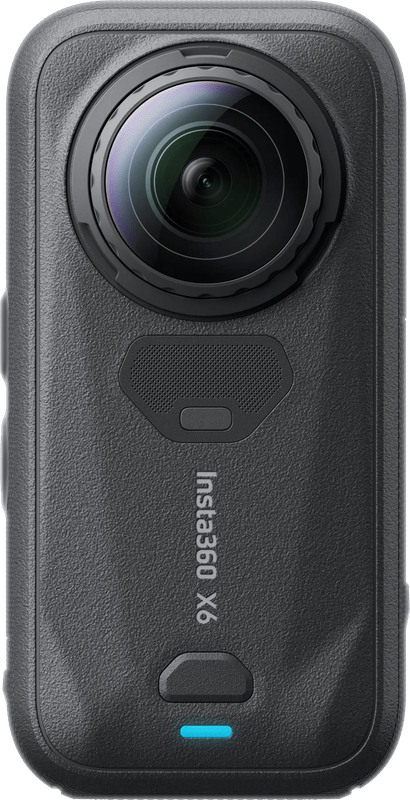
Insta360 X6
Insta360’s flagship since August 2026. According to the manufacturer, the X6 films with two 1/1.1-inch sensors in 8K at 50 frames per second and takes 360-degree photos with up to 120 megapixels. You can replace the lenses yourself, and 64 GB of storage is built in. Motorcyclists get a dedicated bundle. One detail is annoying. Insta360 only includes the invisible selfie stick with the larger Essentials bundle.
DJI Osmo 360 II
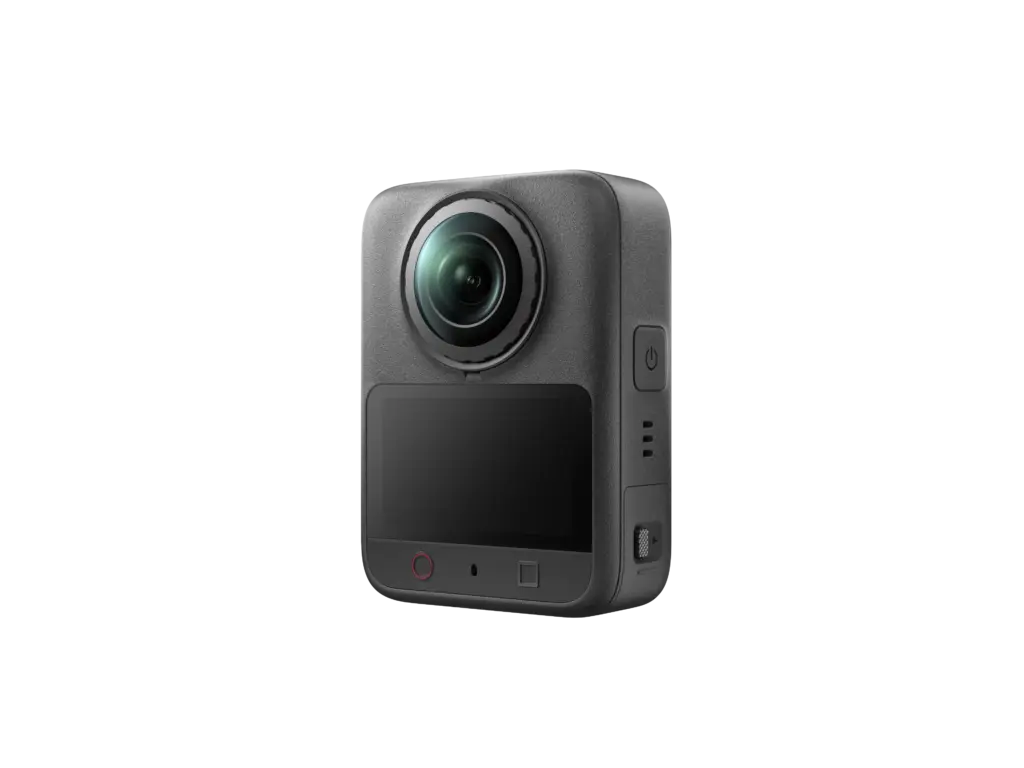
DJI presented the second generation in September 2026. The specs list a square 1-inch sensor, 8K at 60 frames per second and 14.5 stops of dynamic range. The replaceable lenses are new. According to DJI, the camera works down to −20 °C, can be controlled by gesture and voice on a motorcycle and has 105 GB of storage on board.
On paper, that makes it the strongest combination in the field for winter sports and low light. The predecessor, the Osmo 360, remains on sale and is cheaper.
Insta360 X5
Until the X6, the X5 from 2025 was the flagship. According to Insta360, it films with two 1/1.28-inch sensors in 8K at 30 frames per second and is waterproof to 15 meters, and here too the lenses can be replaced. If you do not need the very latest generation, you get proven technology.
Insta360 X4 Air
165 grams. That makes the X4 Air lighter than the X5 and X6, and on a helmet you notice every gram. It films in 8K at 30 frames per second, and its sensors are smaller at 1/1.8 inch. It still has replaceable lenses and the invisible selfie stick effect.
GoPro MAX2
According to GoPro, the MAX2 films in true 8K and, in single-lens mode, in 4K60 like a classic action cam. Six microphones capture the sound, you can swap the lenses without tools, and the Enduro battery is designed for the cold.
Its weak point is water. At 5 meters, it is waterproof to a shallower depth than the competition, and GoPro itself advises against underwater recording.
Kandao QooCam 3 Ultra
Two 1/1.7-inch sensors with a bright f/1.6 aperture, 8K at 30 frames per second and 96-megapixel photos. On top of that comes a built-in GPS module, which the competition lacks. At 336 grams, however, it is heavier than the others, and according to Kandao a battery charge lasts about 50 minutes in 8K.
Ricoh Theta X
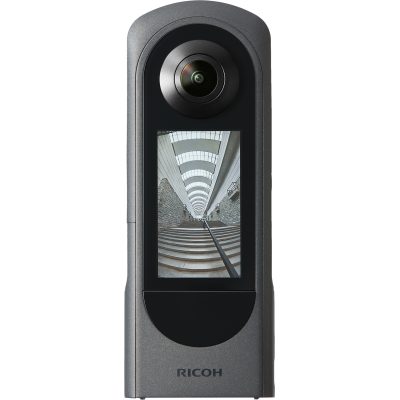
Not a sports camera. Ricoh aims the Theta X at real estate professionals and anyone who creates virtual tours. Its strengths are photos with around 60 megapixels and a touchscreen that lets you work without a phone. The battery and microSD card are replaceable. Ricoh limits 5.7K video to about ten minutes because of heat.
Which camera gets to come along on the trail
As much Insta360 as possible in one device means the X6, with 8K50, large sensors and waterproofing to 20 meters. If you ski or ride a motorcycle a lot, or often film in low light, the DJI Osmo 360 II has the edge with 8K60, operation down to −20 °C and gesture and voice control.
The Insta360 X5 with 8K30 and replaceable lenses is proven and solid. For travel and helmet use, the Insta360 X4 Air at just 165 grams is a natural choice. If you already own GoPro accessories, the GoPro MAX2 with 8K, a cold-weather battery and six microphones is a good fit. The Kandao QooCam 3 Ultra delivers photos with GPS data at 96 megapixels. For real estate and virtual tours, the Ricoh Theta X with high-resolution photos and a touchscreen belongs on the list. And 360 degrees from the air is possible with the DJI Avata 360, though only after registration and with proof of competency.
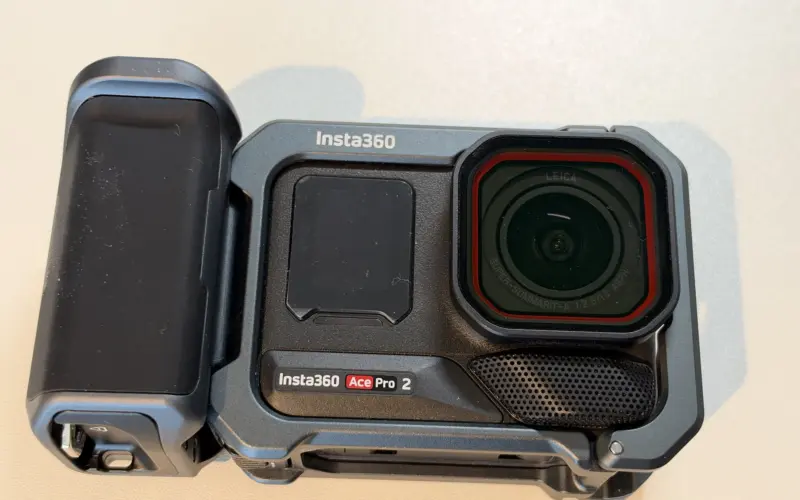
We have Insta360’s classic action cam in hands-on use: review of the Insta360 Ace Pro 2.
Frequently asked questions
What is the advantage of a 360-degree camera over an action cam?
It films a full sphere, and you only choose the frame later in the app on your phone or computer. That way, no moment that happens outside your line of sight is lost. The price is time spent editing and a phone or computer with enough processing power.
Why does a 360-degree camera need 8K?
The 8K is spread across the entire sphere. When you crop a normal frame out of it, considerably less resolution remains. That is why 8K is more justified here than on conventional cameras. The frame rate matters too: 50 or 60 frames per second look smoother than 30 during fast movement.
How does the invisible selfie stick work?
The stick sits exactly in the gap between the two lenses, the software removes it from the image, and the footage looks as if it were shot by a drone. This only works with a thin stick mounted straight below the camera. It is often only included in the larger bundles, for the Insta360 X6 for example in the Essentials bundle.
Which 360-degree camera is suitable for winter sports?
According to DJI, the DJI Osmo 360 II works down to −20 °C, films in 8K at 60 frames per second and has a square 1-inch sensor for low light. On the slopes, a replaceable battery and buttons that can be operated with gloves also matter. The GoPro MAX2 has an Enduro battery designed for the cold.
Can you film underwater with a 360-degree camera?
Without a housing, the specifications range from 5 to 20 meters; according to the manufacturer, the Insta360 X6 is waterproof to 20 meters. Domed lenses distort the image underwater, however, and several manufacturers recommend a dedicated dive housing. GoPro itself advises against underwater recording with the MAX2.
Why do replaceable lenses matter?
The domed lenses protrude far and scratch easily. If the user can replace the lens, there is no need to send the camera in when it is damaged. According to the manufacturers, many current models allow this, including the Insta360 X6, X5 and X4 Air, the DJI Osmo 360 II and the GoPro MAX2.
Sources
- Insta360: Press release on the X6
- DJI: Launch of the Osmo 360 II
- DJI Store: Osmo 360
- Insta360: X5 technical specifications
- Engadget: Insta360 X4 Air (manufacturer data)
- GoPro: MAX2 product page
- Kandao: QooCam 3 Ultra technical specifications
- Ricoh: THETA X technical specifications
- Ricoh: THETA models
- DJI: Avata 360 technical specifications
- German Federal Ministry of Transport: Getting started with flying drones
Where to buy
- Insta360 X6Check price at Amazon.deCheck price at Amazon.co.ukCheck price at Amazon.nlCheck price at Amazon.com.beCheck price at Amazon.frCheck price at Amazon.itCheck price at Amazon.esCheck price at Amazon.plCheck price at Amazon.seAvailable in Germany: Amazon.deView at CoolblueAvailable in Germany: Coolblue
- DJI Osmo 360 IICheck price at Amazon.deCheck price at Amazon.co.ukCheck price at Amazon.nlCheck price at Amazon.com.beCheck price at Amazon.frCheck price at Amazon.itCheck price at Amazon.esCheck price at Amazon.plCheck price at Amazon.seAvailable in Germany: Amazon.de
- Insta360 X5Check price at Amazon.deCheck price at Amazon.co.ukCheck price at Amazon.nlCheck price at Amazon.com.beCheck price at Amazon.frCheck price at Amazon.itCheck price at Amazon.esCheck price at Amazon.plCheck price at Amazon.seCheck price at Amazon.comCheck price at Amazon.ca
- Insta360 X4 AirCheck price at Amazon.deCheck price at Amazon.co.ukCheck price at Amazon.nlCheck price at Amazon.com.beCheck price at Amazon.frCheck price at Amazon.itCheck price at Amazon.esCheck price at Amazon.plCheck price at Amazon.seAvailable in Germany: Amazon.de
- GoPro MAX2Check price at Amazon.deCheck price at Amazon.co.ukCheck price at Amazon.nlCheck price at Amazon.com.beCheck price at Amazon.frCheck price at Amazon.itCheck price at Amazon.esCheck price at Amazon.plCheck price at Amazon.seAvailable in Germany: Amazon.de
- Kandao QooCam 3 UltraCheck price at Amazon.deCheck price at Amazon.co.ukCheck price at Amazon.nlCheck price at Amazon.com.beCheck price at Amazon.frCheck price at Amazon.itCheck price at Amazon.esCheck price at Amazon.plCheck price at Amazon.seAvailable in Germany: Amazon.de
 Ricoh Theta X€699.00≈ £582.20≈ CHF 646.09≈ PLN 3,083.85≈ SEK 7,788.96≈ DKK 5,224.61≈ NOK 7,412.55≈ CZK 17,045.81≈ HUF 257,512≈ RON 3,737.34≈ ISK 95,763≈ $766.66≈ CA$1,096.73 at Coolblue · As of 18.11.View at CoolblueAvailable in Germany: CoolblueCheck price at Amazon.deCheck price at Amazon.co.ukCheck price at Amazon.nlCheck price at Amazon.com.beCheck price at Amazon.frCheck price at Amazon.itCheck price at Amazon.esCheck price at Amazon.plCheck price at Amazon.seAvailable in Germany: Amazon.de
- DJI Avata 360Check price at Amazon.deCheck price at Amazon.co.ukCheck price at Amazon.nlCheck price at Amazon.com.beCheck price at Amazon.frCheck price at Amazon.itCheck price at Amazon.esCheck price at Amazon.plCheck price at Amazon.seAvailable in Germany: Amazon.de
Still undecided?
Keep comparing at your own pace – every article in this category is checked monthly for new and discontinued models.