Contents10 sections
This guide was first published in German on handgetestet.de.
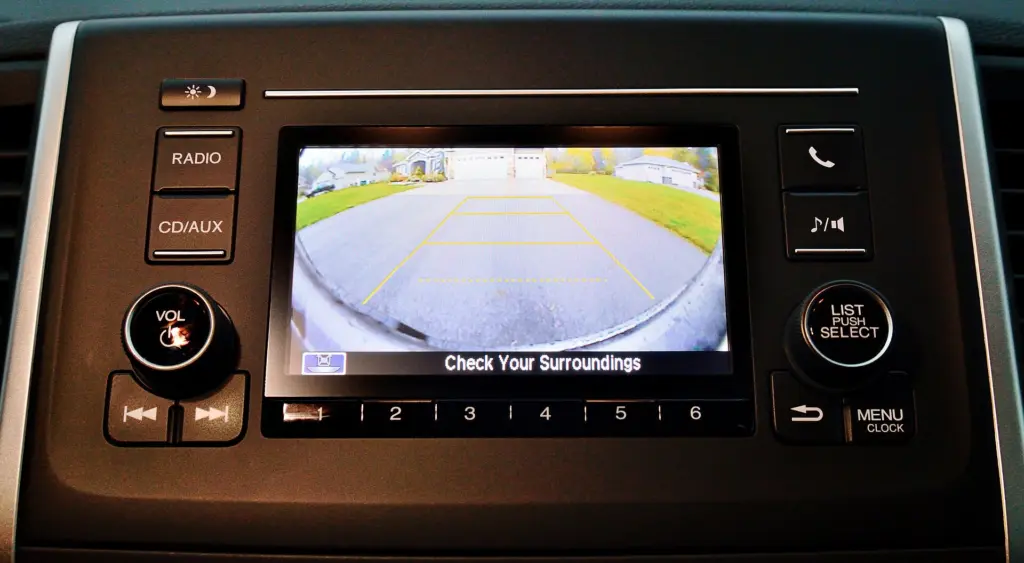
When retrofitting, many people buy the camera first and only then realize that the picture has to appear somewhere. That is why the decision starts in the cockpit, not at the rear. If your car stereo has a camera input, a small wired camera such as the Kenwood CMOS-230 is the cleanest and usually the most affordable solution. Wireless is mainly worth the extra cost for motorhomes, car-and-trailer combinations and company cars.
Check the cockpit first, then the rear
There are three ways. The picture goes to the existing stereo, to a navigator or to a separate monitor. Which one fits is revealed by a look at the back of your car stereo or in its manual: if it lists a video input for a backup camera, usually a yellow RCA socket, you are all set. If you still have an older stereo without a screen, you should first consider a new unit. Our guide to car stereos with a display shows which moniceivers (head units with a built-in screen) come with such an input.
Wired or wireless? The camera cable has to run from the rear all the way to the front, through the trunk lid or tailgate and under trim panels. In a station wagon, that is an afternoon of work. In return, the picture appears instantly and without dropouts. Wireless solutions save the long cable run but still need power at the rear unless they run on a battery. And wireless does not like sheet metal. In the installation instructions for the BC 50, Garmin itself points out that dense metal between the transmitter and the navigator severely limits the range. In a panel van with a bulkhead, that is no side issue.
When it comes to night vision, data sheets only help so much. A low value for minimum illumination in lux means that the sensor gets by with little light; Kenwood specifies about 0.9 lux for the CMOS-230, Alpine about 1.5 lux for the HCE-C1100. Without the reversing light, though, none of these cameras sees much. Only models such as the Garmin BC 50 with Night Vision have their own infrared or LED illumination.
And sensors? An ultrasonic parking aid beeps but does not see. A camera shows but judges distances poorly. Together, the two complement each other well. If you only want to retrofit one and mainly bump into bollards or garage walls, sensors are often the better choice.
What is allowed on the license plate
A great many retrofit cameras sit on the license plate holder or right next to the license plate light. The German Vehicle Registration Ordinance (Fahrzeug-Zulassungsverordnung, FZV) sets clear limits here. Under Section 12(2) FZV, the license plate must not be covered, and additional covers made of glass or film are not permitted. Subsection 8 requires that it remain legible from at least 20 meters, and under subsection 7 the lighting of the rear license plate must comply with UNECE Regulation No. 4 and likewise make it legible at 20 meters. A camera that covers digits or shades the license plate light is therefore no trifle. With combination units in which the camera and license plate light share one housing, you should therefore ask about the light’s approval mark. Whether a particular installation has to be entered in the vehicle registration documents is best clarified in advance with a testing organization.
When it comes to power, manufacturers agree on recommending the reversing light. For the BC 50, Garmin explicitly recommends this connection and warns that a permanent power connection can drain the battery. Some vehicles do not supply continuous voltage at the reversing light; according to Garmin, a relay is then needed. If you are not familiar with vehicle electrics, have a workshop do it.
Five retrofit solutions
| Model | Type and display | Key data according to manufacturer | Best for |
|---|---|---|---|
| Kenwood CMOS-230 | Wired, RCA, to the car stereo | approx. 330,000 pixels, 128° horizontal, 9 m cable, 9–16 V | cars with a moniceiver, small budget |
| Alpine HCE-C1100 | Wired, RCA, to the car stereo | HDR, 640 × 480 pixels, 131° horizontal, 7.5 m cable | backlight, Alpine stereo with guide lines |
| Garmin BC 50 | Wireless, to the Garmin navigator | 160° field of view, IP67, wireless range up to approx. 15 m, 12–24 V | motorhomes and car-and-trailer combinations with a Garmin navigator |
| Auto-Vox Solar 5B | Wireless, separate 7.2-inch monitor | solar panel with battery, magnetic mount, IP69K (according to the listing) | trailers, rental cars, no drilling |
| Dometic MagicWatch MWE 860 | 4 ultrasonic sensors, LED display | paintable sensors, sound and display, 12/24 V | addition to a camera or alternative |
Kenwood CMOS-230: small, discreet, widespread
According to retailer information, the camera measures less than two and a half centimeters per side. Above the license plate, it is barely noticeable. Kenwood specifies a wide angle of 128 degrees horizontal, a waterproof housing and a 9-meter cable that reaches all the way to the front even in station wagons and vans. It connects via RCA, so not only to Kenwood stereos. At around 330,000 pixels, the resolution is modest, but it is enough for maneuvering. The camera is in the lower price range of this selection and is also offered on Amazon as a set with moniceivers.
Alpine HCE-C1100: when low sun gets in the way
Alpine relies on HDR, meaning a wider dynamic range. That helps with backlight and with the mix of a dark garage and a bright driveway. According to the manufacturer, the field of view is 131 degrees horizontal, and the picture switches on automatically when reverse gear is engaged. The adjustable guide lines, however, are only available with compatible Alpine units. On a third-party stereo, you get a good RCA camera without this extra. The suffix matters when ordering: the HCE-C1100D variant is intended for Alpine’s direct connection, not for RCA.
Garmin BC 50: wireless for navigator owners
The BC 50 transmits its picture wirelessly to compatible Garmin navigators; Garmin names, for example, the DriveSmart series, Tread and dēzl. Without a compatible navigator, it is useless. According to the manufacturer, it delivers an HD picture with a 160-degree field of view and a housing rated IP67; according to the installation instructions, the transmitter covers about 15 meters. According to Garmin, the Night Vision version illuminates up to about six meters behind the vehicle, and it costs noticeably more.
Auto-Vox Solar 5B: no cable, no drilling
Here the camera attaches magnetically to the rear, power comes from a battery and solar panel, and the picture goes to a separate 7.2-inch monitor. These details come from the listing on Amazon; we have not found a manufacturer page with complete data. The magnet needs steel sheet metal. On plastic or aluminum rear ends, only a metal plate helps. For a trailer you only tow a few times a year, this is a pragmatic solution. It never looks permanently installed, though.
Dometic MagicWatch MWE 860: sensors instead of a picture
Many people still know the MagicWatch series by the name Waeco, and retailers often list both in the title. The MWE 860 comes with four paintable ultrasonic sensors for the rear bumper, plus an LED display for the distance and a warning tone. It switches on with reverse gear. For installation, holes are drilled into the bumper. That is permanent, so an experienced workshop is money well spent here.
Which approach suits which vehicle
- Car with a moniceiver and camera input: Kenwood CMOS-230. Route the cable and you are done, no battery, no wireless interference.
- Lots of backlight, Alpine stereo in the car: Alpine HCE-C1100, for HDR and guide lines.
- Motorhome or car-and-trailer combination with a Garmin navigator: Garmin BC 50, preferably with Night Vision right away if you drive at night.
- Trailers or vehicles that must not be drilled: Auto-Vox Solar 5B, with compromises in appearance.
- You tend to bump into things rather than overlook them: Dometic MWE 860, alone or in addition to a camera.
We would advise against wireless in an enclosed panel van. And against a cheap set with a camera in the license plate frame if nobody checks whether the plate is still fully legible afterward. If you are working on the car anyway, you can plan a front camera at the same time; our dashcam guide explains which devices offer a second camera for the rear.
What is allowed with LED bulbs in halogen headlights is covered in the guide retrofitting H7 LED bulbs.
Frequently asked questions
Backup camera: wired or wireless?
The cable has to run from the rear all the way to the front, which takes an afternoon of work in a station wagon. In return, the picture comes without dropouts. Wireless saves the cable run but still needs power at the rear and does not like sheet metal: according to Garmin, dense metal severely limits the range.
How do I know whether my car stereo supports a backup camera?
A look at the back of the stereo or in its manual is enough. If it lists a video input for a backup camera, usually a yellow RCA socket, a wired camera can be connected directly. With an older stereo without a screen, a new unit is the first thing to consider.
Can the backup camera be mounted on the license plate?
Only if the license plate stays unobstructed. Under Section 12 of the German Vehicle Registration Ordinance (FZV), it must not be covered and must remain legible from at least 20 meters, and the license plate light must also meet requirements. With combination units that include a light, ask about the approval mark and clarify any required registration entry with a testing organization in advance.
Where do you connect a backup camera to power?
Manufacturers agree on recommending the reversing light. Garmin warns that a permanent power connection can drain the battery and mentions a relay if the reversing light does not supply continuous voltage. Without knowledge of vehicle electrics, this is a job for a workshop.
Retrofit a camera or parking sensors?
Sensors beep but do not see; a camera shows but judges distances poorly. The two complement each other well. If you mainly bump into bollards or garage walls, sensors such as the Dometic MagicWatch MWE 860 are often the better choice.
How well do backup cameras see at night?
A low lux value means the sensor gets by with little light; Kenwood specifies about 0.9 lux for the CMOS-230. Without the reversing light, though, none of the cameras sees much. Only the Garmin BC 50 in the Night Vision version has its own illumination.
Sources
- Section 12 FZV (German Vehicle Registration Ordinance), design and mounting of license plates
- Kenwood: CMOS-230, specifications
- Alpine: HCE-C1100 HDR backup camera
- Garmin: BC 50 installation instructions
- Garmin: announcement of the BC 50 series
- Garmin: BC 50 Night Vision manual, pairing
- Dometic: MagicWatch MWE 860
Where to buy
- Kenwood CMOS-230Check price at Amazon.deAvailable in Germany: Amazon.de
- Alpine HCE-C1100Check price at Amazon.deAvailable in Germany: Amazon.de
- Garmin BC 50Check price at Amazon.deAvailable in Germany: Amazon.de
- Auto-Vox Solar 5BCheck price at Amazon.deAvailable in Germany: Amazon.de
- Dometic MagicWatch MWE 860Check price at Amazon.deAvailable in Germany: Amazon.de