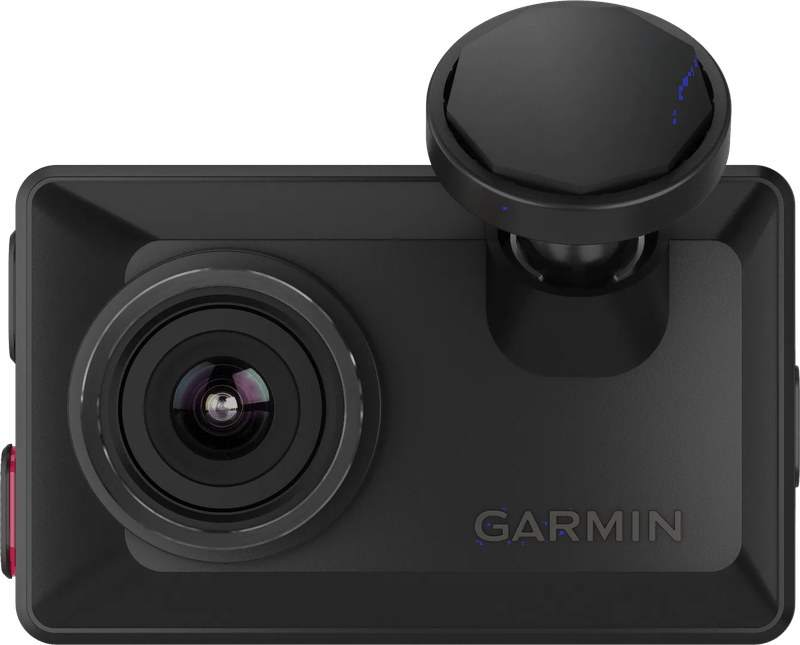
Contents25 sections
This guide was first published in German on handgetestet.de.
A dash cam only proves what it captures sharply at the decisive moment. Usually that is not the accident itself, but a license plate that flits through the picture for two seconds. If you are buying today, choose a camera with a large Sony STARVIS 2 sensor at the front, a real rear camera and event recording, such as the VIOFO A329S 2CH with 4K at 60 frames per second. And set it up so that, in Germany, it does not save more than is allowed.
The two go together. The best optics are no help if the recording comes from an hours-long continuous loop and results in a fine. And the most correct setting is of little use if the license plate of the hit-and-run driver appears as a gray smudge in the video.
The camera is legal, not every setting
On May 15, 2018, Germany’s Federal Court of Justice (BGH) ruled (case no. VI ZR 233/17) that dash cam recordings may be used as evidence in civil proceedings over an accident. It is weighed case by case. But the same ruling also states that permanent recording of the entire journey without cause violates data protection law. Technically possible, the court said, is a short recording that is continuously overwritten and only saved permanently in the event of a collision or sharp deceleration. The BGH explicitly points out possible fines.
The ruling is often misread. The BGH did not say that dash cams are allowed. It said that a court may still look at a video that was created unlawfully. So anyone who films can win in court and receive a fine from the data protection authority at the same time.
The clearest description of the line comes from the data protection commissioner of the German state of Lower Saxony, in an FAQ from June 2024. The commissioner considers the usual loop recording, in which the camera films from engine start and only overwrites when the card is full, to be impermissible. On the other hand, the authority does not pursue pre-event recording without cause of up to 30 seconds, as long as only an incident triggers saving, such as the impact sensor or pressing a button. Mere motion in the picture does not count as an incident. License plates are also considered personal data there, as confirmed by the Hanover Local Court and the Celle Higher Regional Court.
Many buyers overlook two points in the FAQ. Saved clips that later turn out to be irrelevant, for example after emergency braking without an accident, must be deleted without delay; anyone who keeps them for longer than a few days risks a sanction. In addition, the GDPR’s information obligations also apply to incident-based recording. Name, contact details, purpose, legal basis and retention period should be kept in writing in the car so that they can be handed to those involved after an accident. For private individuals, the fines imposed so far in Lower Saxony are in the mid three-digit euro range, and in the four-digit range for intent, repeat offenses or long recordings. The authority itself stresses that its practice does not automatically apply to other German states.
In the menu, this means: continuous recording set to the shortest loop, event sensor on, clips regularly reviewed and deleted. A side note: if your own recordings reveal violations by the driver, such as running a red light, the authority reports serious cases.
Uploading is almost always off-limits
Posting the video of the tailgater online? As a rule, no, writes the Lower Saxony authority. With recognizable people or license plates, publication is an additional violation. Pixelating only helps with further distribution; the recording itself usually should not have been made at all. The ADAC sees it the same way. The recording belongs with the police, the insurer or in court proceedings, not in a messenger group.
Speed camera warnings: this function stays off in Germany
Several dash cams warn of fixed speed cameras using a GPS database; at Thinkware, this is called Safety Camera Alert. Section 23 (1c) of the German Road Traffic Regulations (StVO) prohibits drivers from operating devices that indicate traffic enforcement. On devices with multiple purposes, the corresponding functions must not be used. The camera itself remains legal; the warning must be switched off. How a dedicated speed camera warner performs in practice is shown in our review of the OOONO CO-Driver NO2; that device has nothing to do with a dash cam.
Crossing the border with a dash cam
On vacation, the law of the country you are driving through applies. The German automobile club ADAC maintains a country overview (as of February 2026) and explicitly advises against using a dash cam in Belgium, Luxembourg, Portugal and Switzerland. For Austria, the club only mentions private use.
There is no general ban in Austria, but there are tight limits. The Austrian automobile club ÖAMTC describes them as follows: at most, incident-based documentation of an accident is permitted, the camera should capture only the immediate surroundings as far as possible, continuous recording and saving entire journeys are not permitted, and storage media must be encrypted. According to the ÖAMTC, anyone who publishes recordings with recognizable people or license plates commits a criminal offense. A high-resolution wide-angle camera that makes license plates readable at a distance is therefore precisely what does not fit the Austrian rules.
Switzerland is tricky mainly because of the evidence question. In 2019 (BGE 146 IV 226), the Federal Supreme Court classified a private individual’s dash cam recordings as covert and therefore unlawful. In criminal proceedings, they can only be used if they are indispensable for solving a serious crime. According to this case law, even gross violations of traffic rules do not count. In the case decided, the video incriminated the driver herself. Luxembourg’s data protection authority CNPD considers dash cams on public roads to be practically incompatible with the GDPR. At most, very short recordings of a few minutes based on legitimate interest could be considered, and other road users would then have to be informed. A video kept as evidence of an accident may not be posted online there either.
It is relaxed nowhere. Even in countries where the ADAC lists dash cams as permitted, such as Spain, Hungary or the Czech Republic, it mentions conditions such as low resolution or deletion after five days. For the vacation drive south, this means: unplug or remove the camera before the border if a country on the route advises against it.
Why the license plate so often stays unreadable
The box says 4K. Yet in the video of the parking lot fender bender, the other car’s license plate is just a bright bar. That is not a defect, but geometry.
A German license plate is 52 centimeters wide and 11 centimeters high. A dash cam, however, is supposed to see the entire road including the sidewalk, so its wide angle spreads the pixels across a very broad scene. Let us estimate it with the field of view of the BlackVue Elite 10, 125 degrees horizontally according to the data sheet, and ignore lens distortion: at a distance of 10 meters, the image covers about 38 meters in width. With 3,840 pixels across, the license plate gets about 52 pixels in width and about 11 in height. At 20 meters, that halves. A Full HD rear camera in the same situation has only half of that even at 10 meters. With five or six pixels of height, no digit can be distinguished anymore.
Then there is motion. If a car passes at a relative speed of 100 km/h (two times 50 in oncoming traffic is enough), it covers almost 28 meters per second. At 30 frames per second, that is a good 90 centimeters from frame to frame; at 60 frames, about 46. Double the frame rate means twice as many chances of getting the one frame in which the plate is head-on and close enough. Within a single frame, the exposure time also causes blur. Let us assume the sensor needs 1/60 of a second at dusk: at a relative speed of 50 km/h, the plate moves 23 centimeters in that time, almost half its width. The digits smear.
At night, everything gets worse. Because there is not enough light, the camera exposes longer or amplifies the signal, which adds noise. A license plate also has a reflective coating and shines brightly back in headlight beams, so it blows out in the image while the surroundings stay black. That is exactly what HDR is for, the combination of differently exposed shots. In rain, drops and wiper streaks on the windshield are added; with a low sun, backlight and reflections of the dashboard.
The last filter is compression. The camera does not save individual images, but a heavily compressed video. Fine, rapidly changing details such as digits on a moving plate are the first to go. Many manufacturers do not even state how many megabits per second a camera writes; where there is a quality setting, it belongs on the highest level.
What follows from this? A dash cam reliably reads license plates at short distances, in daylight and when both cars are moving at similar speeds, i.e., in traffic jams, at traffic lights, in rear-end collisions. An oncoming car at night on a country road is a stroke of luck for any wide-angle dash cam. That is why VIOFO offers variants with an additional telephoto lens which, according to the manufacturer, are supposed to capture license plates from 20 meters away even in motion. The lesson for buying: a large sensor and 60 frames per second at the front rather than an extra tick for resolution, and a rear camera with at least 2K if you want to make out anything at the back as well.
Sensor, HDR, frame rate: what counts on the data sheet
Most cameras on this list use a STARVIS 2 sensor at the front; VIOFO, 70mai and Thinkware explicitly name the Sony IMX678 with 8 megapixels and a 1/1.8-inch diagonal. STARVIS is Sony’s line for surveillance cameras. For the second generation, Sony mainly highlights the significantly higher sensitivity in the near infrared. At the rear, VIOFO and Thinkware often use the smaller IMX675 with 5 megapixels, i.e., 2K.
Same sensor, different images? Yes, because frame rate, image processing, optics and data rate differ. With HDR, the fine print is worth reading. The VIOFO A329 series films at 60 frames per second at the front, but according to the manufacturer switches down to 30 for HDR. So you have to choose, depending on whether you are more worried about motion or difficult light. The 70mai 4K Omni only manages 4K at 60 frames as long as no rear camera is connected; with two channels, it is 30.
A polarizing filter, usually called CPL among accessories, reduces reflections in the windshield. Garmin builds it right into the X310. It absorbs some light. If you drive a lot at night, you can unscrew it toward evening on some models.
One, two or three cameras?
Two. In a rear-end collision, a front-only camera sees nothing, and that is the classic accident in city traffic. Many manufacturers consider Full HD sufficient at the rear; VIOFO and Thinkware use 2K, and BlackVue even uses 4K on the Elite 10. The rear camera looks through a window that is often tinted, which matters more on station wagons and SUVs than on sedans.
A third channel usually films the interior, often with infrared light for night. This is intended for taxis and ride services. For private use, it rarely makes sense, especially since passengers are then in the picture and should know about it.
Parking surveillance: cable, battery pack or LTE
Legally, this is the trickiest part. If the camera films public space while parked, the Lower Saxony authority considers this recording without cause, and motion in front of the lens explicitly does not count as an incident. If you use parking surveillance, set it to impact, not motion, and preferably switch the camera on when parked on private property rather than at the roadside.
Technically, there are three ways. The most common is a hardwire kit connected to the fuse box, for example the HK4 set from VIOFO or the UP03 from 70mai. A voltage monitor switches off before the car battery is drained too far. If you want to spare the car battery, choose a separate battery pack such as the BlackVue B-130A, which, however, costs as much as a second dash cam. On the U3000 Pro, Thinkware additionally relies on radar that only wakes the camera when something approaches. The third way is LTE: the camera reports a bump to your phone and uploads clips to a cloud. The BlackVue DR970X-2CH LTE Plus II has the modem built in, but needs its own nano SIM. For 70mai, Thinkware and the Elite 10, a module is added, and with Garmin, notifications require a Vault subscription. The follow-up costs for a data plan or subscription belong in the calculation.
Summer heat: supercapacitor instead of battery
Behind the windshield, it gets hotter in July than in any sauna. Lithium batteries do not like that. Many dash cams therefore work with a supercapacitor that only stores enough energy to close the last file properly. BlackVue states an operating range up to 70 degrees Celsius for the DR970X series and up to 65 degrees for the Elite 10, and VIOFO also 65 degrees for the A229 Pro and A329S. Garmin builds a battery into the X310 and specifies minus 20 to plus 60 degrees; 70mai uses a 500 mAh battery in the A810. If you leave your car in the sun for hours in summer, look for the capacitor and put the sunshade in front of the windshield.
Memory card, mount, app
A dash cam writes to the card continuously on every drive. Normal photo cards wear out faster than you might think. Cards that the manufacturer explicitly designates for continuous operation are better, often labeled High Endurance or for video surveillance. For the X310, Garmin requires a microSD card with 8 to 512 GB, at least Class 10 and exFAT. Bigger is not automatically better. With the short loop that data protection law suggests, you do not need a huge card, and more storage only tempts you to keep more. The VIOFO A329S also accepts an external SSD of up to 4 TB. For private individuals in Germany, that is more an argument against than for using it.
It is mounted behind the rearview mirror, where the camera does not protrude into the field of view and sits within the wiper area. Adhesive is more secure than a suction cup: in the ADAC crash test from 2018, cameras with suction cups flipped upward and only filmed the sky. The cable disappears under the headliner and along the A-pillar; in cars with curtain airbags there, it is better to let a workshop do it. Cameras without a display, such as the BlackVue models, are operated via an app over Wi-Fi. With 5 GHz or Wi-Fi 6, an accident clip reaches your phone faster than in the 2.4 GHz band, and at the roadside, that is exactly what counts.
Cloud and data protection in the other direction
Where do your own journeys, GPS locations and videos actually end up? BlackVue, Thinkware, 70mai and Garmin operate cloud services with accounts. If you use them, set the retention period and automatic uploads deliberately and protect the account with a password of its own. Without an LTE module, everything stays on the card in the car. That is more data-efficient.
Ten dash cams compared by the numbers
All information according to the manufacturers, as of November 14, 2026. Fps stands for frames per second.
| Model | Front | Rear | Front sensor | Who it suits |
|---|---|---|---|---|
| VIOFO A329S 2CH | 4K, 60 fps (HDR 30 fps) | 2K, 30 fps | Sony IMX678 | Anyone who wants to read license plates |
| VIOFO A229 Pro 2CH | 4K, 30 fps | 2K, 30 fps | Sony IMX678 | Solid midrange with a good rear image |
| 70mai Dash Cam 4K Omni | 4K, 60 fps (30 fps with rear), rotating | 1080p | Sony IMX678 | Anyone who wants to look all around via app |
| 70mai A810 | 4K, up to 60 fps | 1080p | Sony IMX678 | Budget-conscious buyers who want a display |
| Thinkware U3000 Pro | 4K, 30 fps | 2K | STARVIS 2 | Lots of parking, radar instead of constant power |
| BlackVue Elite 10-2CH | 4K, 30 fps | 4K, 30 fps | STARVIS 2 | Anyone who wants the rear just as sharp |
| BlackVue DR970X-2CH LTE Plus II | 4K, 30 fps | Full HD, 30 fps | STARVIS 2 | LTE built in, hardwired installation |
| Garmin Dash Cam X310 | 4K, 30 fps, HDR | none | n/a | Operation by touch and voice |
| Garmin Dash Cam Mini 3 | 1080p | none | n/a | Second camera, very small |
| Nextbase 622GW | 4K, 30 fps | optional 1080p | n/a | Anyone who wants image stabilization |
| Model | Energy storage | Operation up to | Parking | LTE |
|---|---|---|---|---|
| VIOFO A329S 2CH | Supercapacitor | 65 °C | with hardwire kit | no |
| VIOFO A229 Pro 2CH | Supercapacitor | 65 °C | with HK4 cable kit | no |
| 70mai Dash Cam 4K Omni | n/a | n/a | with UP03, UP04 or UP05 cable kit | with UP04 module |
| 70mai A810 | Battery 500 mAh | n/a | with UP03 cable kit | with UP04 module |
| Thinkware U3000 Pro | Supercapacitor | n/a | Radar, hardwired | with module |
| BlackVue Elite 10-2CH | Supercapacitor | 65 °C | Hardwired | with module |
| BlackVue DR970X-2CH LTE Plus II | Supercapacitor | 70 °C | Hardwired | built in, nano SIM |
| Garmin Dash Cam X310 | Battery | 60 °C | Notifications with Vault subscription | no |
| Garmin Dash Cam Mini 3 | n/a | n/a | Notifications with Vault subscription | no |
| Nextbase 622GW | n/a | n/a | Cable kit as accessory | no |
VIOFO A329S 2CH: the most frames per second
VIOFO calls the A329 series the first dash cam with 4K at 60 frames per second. At the front, the IMX678 with 1/1.8 inch works; at the rear, the IMX675 in 2K, connected via a thin coaxial cable. The manufacturer adds Wi-Fi 6, GPS and the option of connecting an external SSD. For HDR, the front drops to 30 frames. Of all the models here, the combination of a large sensor and a high frame rate makes the clearest case for readable license plates, especially in motion. Parking surveillance requires a hardwire kit. According to the Amazon listing, VIOFO sells there directly; the set with the HK6 cable is a separate variant.
VIOFO A229 Pro 2CH: the mature predecessor pair
Same sensors as the A329S, but 4K at 30 frames per second at the front. Plus a front field of view of 140 degrees and 160 degrees at the rear, both with HDR, GPS, 5 GHz Wi-Fi and voice control. For buffered parking surveillance, you need the HK4 cable kit. If you mostly drive during the day, you lose little compared with the A329S. A 3-channel version is also available.
70mai Dash Cam 4K Omni: the camera that rotates
The Omni’s head can be rotated 360 degrees via the app, so you can also look to the side or into the interior from your phone. The front uses the IMX678; 4K at 60 frames is only available with one camera, and with a rear camera it is 4K at 30. According to the Amazon listing, the set includes a 1080p rear camera and a 128 GB card. LTE, parking mode and motion detection require a cable kit; LTE requires the UP04, which 70mai offers for Germany. According to the manufacturer, voice control understands English, Mandarin, Japanese and Italian, but not German. With parking surveillance via motion detection, what was said above about data protection applies in particular.
70mai A810: lots of technology, watch the set
4K at the front with the Sony IMX678 and, according to the manufacturer, up to 60 frames per second, 1080p with HDR at the rear: that is how 70mai describes the A810. Add a 3-inch display, GPS and warning functions such as lane departure and collision warnings. Parking surveillance only works with the UP03 cable kit, 4G only with the UP04 set and not in every country. Instead of a capacitor, it has a small battery.
Be careful when ordering. On Amazon, the A810 and A810S are sometimes listed under one offer. If you want to film the rear, check whether the rear camera is really included.
Thinkware U3000 Pro: for people who park a lot
4K at the front with STARVIS 2, 2K at the rear with the IMX675. Its strength lies in parking: a radar only wakes the camera when something approaches; according to Thinkware, this uses 10 percent less power than its predecessor, the U3000. A 64 GB card is included, and up to 512 GB is possible. LTE comes via a module that cannot be used together with an interior camera. The speed camera warning in its feature set must remain switched off in Germany. Thinkware sells the package with rear camera in its own EU shop.
BlackVue Elite 10-2CH: just as sharp at the rear as at the front
According to the data sheet, the Elite 10 is the only camera on this list that also films in 4K at the rear, both channels with a STARVIS 2 sensor and 30 frames per second, saved in H.265. The horizontal field of view is 125 degrees. There is no display; it is operated via app over Wi-Fi at 2.4 and 5 GHz; GPS is built in, and LTE comes via a module. In parking mode, BlackVue states a current draw of 380 mA for two channels. Memory cards of up to 1 TB fit.
BlackVue DR970X-2CH LTE Plus II: LTE built in
4K at the front with STARVIS 2, Full HD at the rear with an older STARVIS sensor, both at 30 frames per second. The LTE modem is built in; you have to get the nano SIM yourself. Instead of a battery, it has a supercapacitor that, according to the manufacturer, works from minus 20 to plus 70 degrees Celsius. For cars that stand in the blazing sun for a long time in summer, that weighs more than any extra feature in the menu. The rear image, however, is the weakest point when it comes to license plates.
Garmin Dash Cam X310: operated by voice
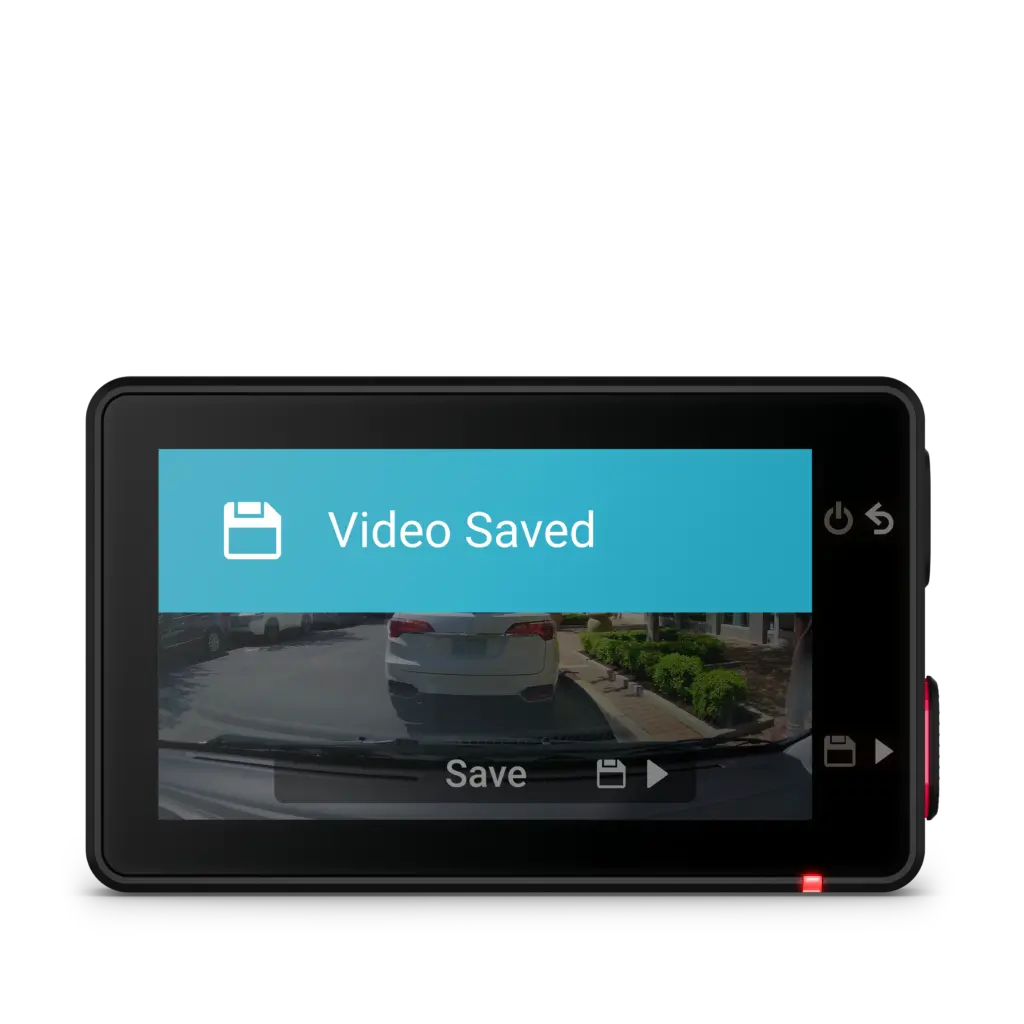
Garmin’s 4K model films at 30 frames per second with HDR, saves in H.265 and has a 140-degree field of view. A 2.4-inch touchscreen and a built-in polarizing filter against reflections are included. Saving clips and switching audio recording on or off can be done by voice command, also in German. According to Garmin, parking guard notifications and live view require a Vault subscription, constant power and Wi-Fi. There is no rear camera in the package. However, several Garmin cameras can be paired in the Garmin app. That way, you can get a view to the rear without switching brands.
Garmin Dash Cam Mini 3: as small as a car key
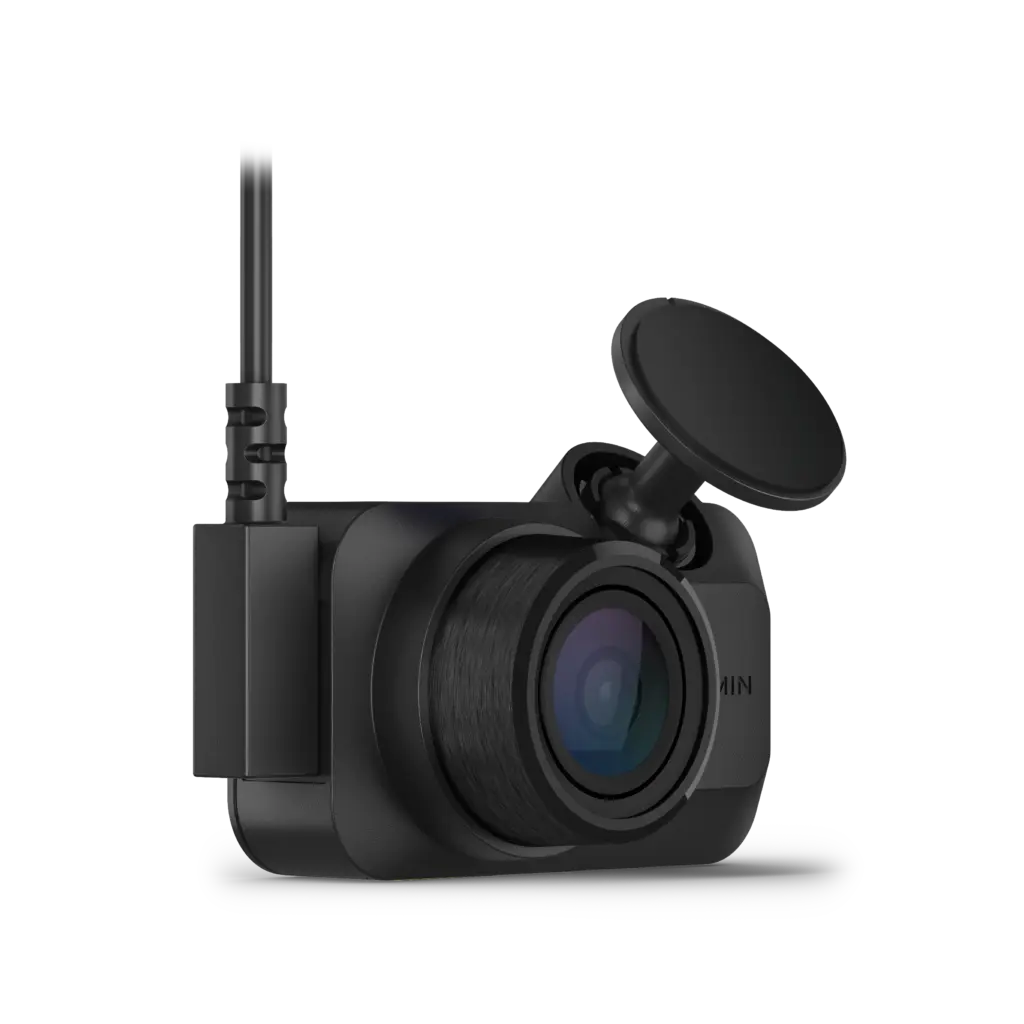
The Mini 3 almost disappears behind the rearview mirror. It films in 1080p, without a display and without GPS, and saves incidents with date and time. As a main camera, that is limited. As a second camera alongside the X310, integrated in the Garmin app, it makes sense, however.
Nextbase 622GW: stabilized, but no longer new
Nextbase states 4K at 30 frames per second, a 3-inch touch display, GPS and Bluetooth. With image stabilization switched on, the resolution drops to 2.7K according to the manual. A 1080p rear camera is available as an accessory or in a set. The model is no longer new, but is still on sale.
What will later hang in front of the rear window
When installing, it is worth thinking about the summer vacation. With a loaded hitch-mounted bike rack (in German), a rear camera behind the window mainly sees bikes. A roof box (in German), on the other hand, does not get in the way. Beautiful driving videos, in turn, are better made with an action cam (in German). A dash cam is a tool for evidence. Not a film camera.
How we would decide
If readable license plates are your main concern, front and rear, choose the VIOFO A329S 2CH. It combines 60 frames per second at the front with a 2K rear camera and the large front sensor. If you drive more at night than during the day, switch on HDR and accept the 30 frames.
A cheaper pair with a display is the 70mai A810, as long as it is the set with the rear camera. If the car is often parked in the city and should keep watch while parked, the Thinkware U3000 Pro with radar or the BlackVue DR970X-2CH LTE Plus II with built-in LTE are the obvious candidates. The Elite 10 is only worth it if you really need 4K at the rear. If you just want to switch on and forget, the Garmin X310 serves you well, supplemented if necessary with a Mini 3 for the rear.
Whichever model it ends up being: short loop, event sensor on, speed camera warning off, delete clips without an accident promptly. And before driving to Austria, Switzerland or Luxembourg, think briefly about whether the camera needs to come along.
What a reported claim means for your no-claims discount and when paying yourself is cheaper is covered in our guide to the no-claims class (in German) (German car insurance).
Frequently asked questions
Are dash cams legal in Germany?
Buying one, yes; continuous recording, no. In 2018, Germany's Federal Court of Justice (BGH) ruled that recordings may be used as evidence in civil proceedings over an accident, but permanent recording without cause violates data protection law. What is permitted is a short loop that is only saved permanently in the event of an incident such as an impact.
How do you set up a dash cam in compliance with data protection law?
Loop as short as possible, event sensor on, parking surveillance set to impact rather than motion. The data protection commissioner of Lower Saxony does not pursue pre-event recording of up to 30 seconds if only an incident triggers saving. Clips without an accident must be deleted without delay, and the information required under the GDPR should be kept ready in the car.
Why are license plates often unreadable on dash cam videos?
Because the wide angle spreads the pixels across a broad scene. Roughly speaking, a 52-centimeter-wide license plate at a distance of 10 meters is only about 52 pixels wide and 11 pixels high in 4K, and half that at 20 meters. Add motion blur, night, rain, backlight and video compression. License plates are reliably readable mainly at short distances and low relative speeds.
Is a 2K dash cam enough or do you need 4K?
At the front, 4K offers more reserves for license plates at a distance, but only with a good sensor such as the Sony IMX678. Frame rate is just as important: 60 instead of 30 frames per second halves the distance a passing car travels from frame to frame. At the rear, 2K is a clear step up from the common 1080p.
Can you publish dash cam videos?
As a rule, no. If people or license plates are recognizable, publication is an additional violation according to the data protection authority, even if the recording itself was made for a specific incident. The video belongs with the police, the insurer or the court.
Can I drive to Austria or Switzerland with a dash cam?
The German automobile club ADAC advises against using one in Switzerland, Belgium, Luxembourg and Portugal, and for Austria only mentions private use. According to the Austrian automobile club ÖAMTC, continuous recording is not permitted there and publication is a criminal offense. In Switzerland, the Federal Supreme Court classified dash cam recordings as covert and unlawful in 2019; they can only be used for serious crimes.
Are speed camera warnings in a dash cam allowed?
Not in Germany. Section 23 (1c) of the German Road Traffic Regulations (StVO) prohibits drivers from operating devices that indicate traffic enforcement; on multi-function devices, this function must not be used. The camera remains legal, the speed camera warning must be off.
What do you need for parking surveillance?
Almost always a hardwire kit with constant power and a voltage monitor, such as the HK4 from VIOFO or the UP03 from 70mai, or alternatively a separate battery pack. Notifications on your phone require LTE via a module or built in, and with Garmin a Vault subscription. Legally, filming public space while parked is considered recording without cause.
Which dash cam can withstand summer heat?
Models with a supercapacitor instead of a battery. BlackVue states operation up to 70 degrees Celsius for the DR970X series and up to 65 degrees for the Elite 10, and VIOFO also states 65 degrees for the A229 Pro and A329S. Garmin specifies up to 60 degrees for the X310 with its battery.
Is the iTracker mini0906 still recommended?
The ADAC tested it in 2018 and gave it a 3.1 (on the German school-grade scale, where 1 is best). In the crash test, it did not detect the impact, but the data was recorded. For a purchase in 2026, that is an old generation. Current models with STARVIS 2 sensors and rear cameras are technically much further along.
Sources
- Federal Court of Justice (BGH): Press release no. 88/2018 on VI ZR 233/17
- LfD Lower Saxony: FAQ on dash cams in road traffic (June 2024)
- German Road Traffic Regulations (StVO), Section 23
- ADAC: Dash cams in Germany and abroad (February 2026)
- ADAC: Dash cam test 2018
- ÖAMTC: Legality of dash cams in Austria
- Swiss Federal Supreme Court: BGE 146 IV 226
- CNPD Luxembourg: Dash cams and the GDPR
- Sony Semiconductor: STARVIS technology
- VIOFO: A329 series
- VIOFO: A329S 2CH
- VIOFO: A229 Pro 2CH
- VIOFO: Dash cams with telephoto lens
- 70mai: Dash Cam 4K Omni
- 70mai: Dash Cam 4K A810
- Thinkware EU shop: U3000 Pro front and rear
- BlackVue: Elite 10 data sheet
- BlackVue: DR970X-2CH LTE Plus II data sheet
- BlackVue: DR970X Plus data sheet
- Garmin: Press release on the Dash Cam X series and Mini 3
- Garmin: Dash Cam X310 manual, technical specifications
- Garmin: Dash Cam X310 manual, memory card
- Garmin: Dash Cam X310 manual, Parking Guard
- Nextbase: 622GW
Where to buy
- VIOFO A329S 2CHCheck price at Amazon.deCheck price at Amazon.co.ukCheck price at Amazon.nlCheck price at Amazon.com.beCheck price at Amazon.frCheck price at Amazon.itCheck price at Amazon.esCheck price at Amazon.plCheck price at Amazon.seCheck price at Amazon.comCheck price at Amazon.ca
- 70mai A810Check price at Amazon.deCheck price at Amazon.co.ukCheck price at Amazon.nlCheck price at Amazon.com.beCheck price at Amazon.frCheck price at Amazon.itCheck price at Amazon.esAvailable in Germany: Amazon.deCheck price at Amazon.seCheck price at Amazon.com
- VIOFO A229 Pro 2CHCheck price at Amazon.deCheck price at Amazon.co.ukCheck price at Amazon.nlCheck price at Amazon.com.beCheck price at Amazon.frCheck price at Amazon.itCheck price at Amazon.esCheck price at Amazon.plCheck price at Amazon.seCheck price at Amazon.comCheck price at Amazon.ca
- 70mai Dash Cam 4K OmniCheck price at Amazon.deCheck price at Amazon.co.ukCheck price at Amazon.nlAvailable in Germany: Amazon.deCheck price at Amazon.frCheck price at Amazon.itCheck price at Amazon.esCheck price at Amazon.seCheck price at Amazon.comCheck price at Amazon.ca
- Thinkware U3000 ProCheck price at Amazon.deCheck price at Amazon.co.ukCheck price at Amazon.nlCheck price at Amazon.com.beCheck price at Amazon.frAvailable in Germany: Amazon.deCheck price at Amazon.esCheck price at Amazon.plCheck price at Amazon.seCheck price at Amazon.comCheck price at Amazon.ca
- BlackVue Elite 10-2CHView at CoolblueAvailable in Germany: Coolblue
- BlackVue DR970X-2CH LTE Plus IIView at CoolblueAvailable in Germany: Coolblue
- Garmin Dash Cam X310View at CoolblueAvailable in Germany: Coolblue
- Garmin Dash Cam Mini 3View at CoolblueAvailable in Germany: Coolblue
- Nextbase 622GWView at CoolblueAvailable in Germany: Coolblue