Contents9 sections
This guide was first published in German on handgetestet.de.
People with very dry, sensitive skin often reach for the wrong bottle: a light, scented lotion that absorbs pleasantly and stops doing anything after two hours. Cracked hands, tight shins and rough elbows need more fat, no fragrance and, above all, enough product for every day. That is why the price per 100 milliliters matters for basic skincare too. A simple, fragrance-free pharmacy cream in a large pack, like Mediderm Creme, which we tested ourselves, is enough for many people. If you are looking for a lighter lotion or specific ingredients such as ceramides and urea, you will find suitable alternatives from Eucerin, La Roche-Posay, CeraVe, Dermasence and Balneum.
Ointment, cream or lotion: how much fat does your skin need?
More than most people think. The health portal of IQWiG, the German Institute for Quality and Efficiency in Health Care, distinguishes three basic forms. Ointments contain a lot of fat and are suitable for very dry skin. Creams contain more water, are easier to spread and leave fewer marks. Lotions have the highest water content and feel cooling, but they can also dry out the skin; according to IQWiG, they are less suitable for very dry skin.
The season plays a part. In winter, with dry heated air and cold weather, the richer option fits; in summer, it can be lighter. The area of the body matters too: on the hands, feet, arms and legs, the skin tolerates richer products well, while on the face a cream or lotion is usually more comfortable. That is why some households keep two products in the bathroom. That is not a luxury, it is sensible.
What the label says and what it means
Fragrance first. For sensitive skin, the rule of thumb is: no “parfum” in the ingredient list. IQWiG points out, however, that claims such as “fragrance-free” or “dermatologically tested” are not always reliable, because there are no fixed standards for them. If you are allergic to certain substances, read the full list.
Urea binds additional water in the skin. For adults with very rough skin, that is often pleasant. In babies and children, however, urea can irritate the skin and cause a slight burning sensation, according to IQWiG, so products containing urea are generally not suitable for them.
Petrolatum and paraffin divide opinion. Mineral oil is an old, proven base in skincare that forms a dense protective film. Öko-Test, a German consumer magazine, takes a critical view of mineral oil ingredients in cosmetics and downgrades them in its tests. If you want to avoid them, look for creams based on plant oils, shea butter or ceramides.
And some packs say “medical device”. This means the manufacturer places the cream on the market with a medical intended purpose, for example for very dry skin associated with certain skin diseases. That does not make it a medicinal product with an active ingredient, and it is not automatically better than a good cosmetic cream either.
Why pack size matters
Basic skincare only works if you do it regularly. According to IQWiG, experts recommend applying a generous amount at least twice a day to very dry skin prone to atopic dermatitis, ideally also soon after showering or bathing, before the absorbed moisture evaporates. If you moisturize your whole body like that, you will empty a 200-milliliter bottle in a few days.
That is why it pays to look at the unit price. The range is wide: large pharmacy packs cost a few euros per 100 milliliters, while small bottles from well-known brands cost two to three times as much. We used this unit price to divide the products into three classes, as of November 2026: entry-level class up to about 4.50 euros per 100 milliliters or grams, mid-range class about 4.50 to 7 euros, premium class above that.
Six creams and lotions for very dry skin
Entry-level class: plenty of care for little money
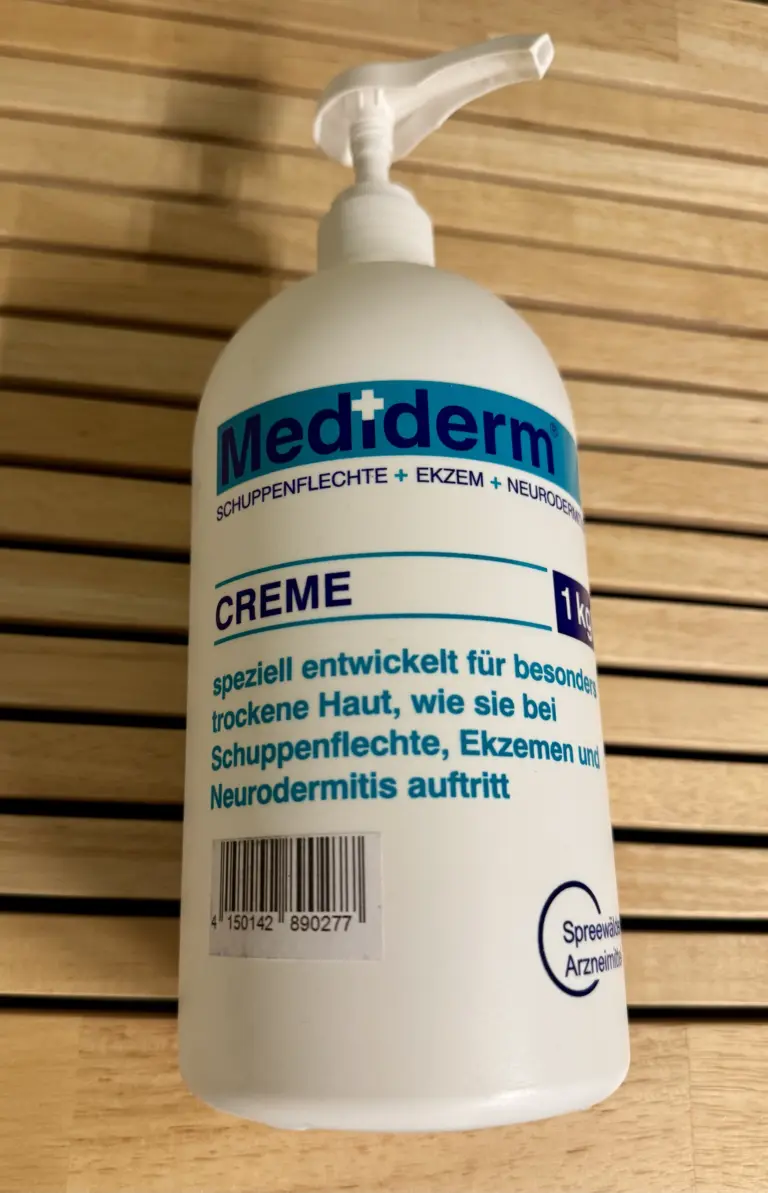
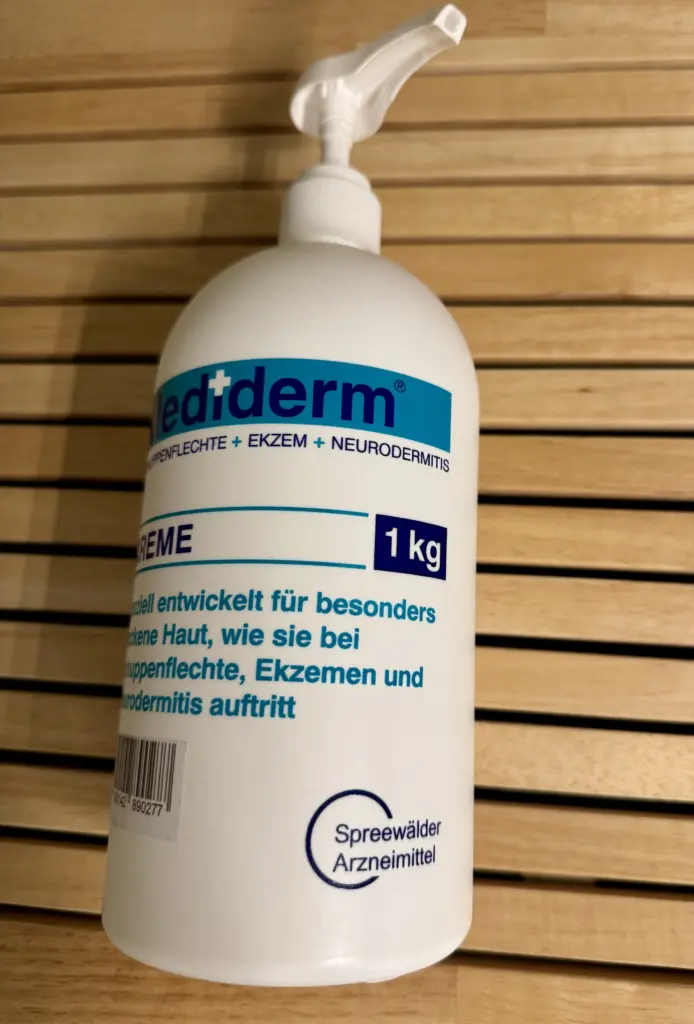
Our pick in the entry-level class is Mediderm Creme 1 kg. Spreewälder Arzneimittel places it on the market as a medical device for particularly dry skin, the formula makes do with six ingredients, and according to the manufacturer it contains no fragrances or colorants. We tested the cream in long-term use on very dry, sensitive skin, mainly on the hands and fingers, and award it five out of five stars; the details are in our Mediderm Creme review. You have to be fine with the petrolatum and paraffin base.
CeraVe Moisturising Cream in the 454-gram tub does without mineral oil. According to the manufacturer, it contains three ceramides and hyaluronic acid, is fragrance-free, suits both face and body and has been rated allergy-friendly by the ECARF Institute (European Centre for Allergy Research Foundation). A tub is less hygienic to use than a pump dispenser, but you can get at every last bit.
Mid-range class: easier to apply, targeted ingredients
Our pick in the mid-range class is Eucerin AtopiControl Lotion 400 ml. Eucerin lists omega oils, ceramide 3 and licochalcone A from licorice root; according to the manufacturer, the lotion contains no fragrances and is intended for babies from four weeks, children and adults. As a lotion, it spreads over large areas faster than a thick cream. For badly cracked patches, it is rather too light.
The alternative is Lipikar Balsam AP+MAX from La Roche-Posay, the successor to the well-known Lipikar Baume AP+M. The manufacturer lists shea butter, niacinamide and an ingredient called Neurobioma, recommends one pump per body area in the morning and/or evening and approves it from the first day of life. Both names are still on sale; compare the details on the pack before you buy.
Premium class: small bottles, special formulas
Premium does not mean better care here. You pay more for a specific formula in a smaller pack. Our pick in the premium class is Dermasence Adtop Creme 250 ml. According to the manufacturer, it is fragrance-free, contains glycerin and bisabolol and is suitable as basic care for dry, rough and flaky skin, including for children from three years. Dermasence recommends applying it after showering to skin that is still slightly damp.
If you want urea, take a look at Balneum Intensiv Lotion from Almirall. According to retailer information, it is an oil-in-water emulsion with around 30 percent lipids, urea and ceramide 3, intended for moisturizing large areas all over the body. Because of the urea, it is better suited to adults than to small children.
Physiogel, Excipial, Linola and Bepanthen also offer products for dry skin. Some products from these brands, however, are medicinal products with an active ingredient and do not belong in a comparison of moisturizing creams. If you buy from these brands, check what the pack says.
How we would decide
- You moisturize large areas every day, or mainly your hands, and want to spend little: Mediderm Creme in the 1-kg bottle. For cracked hands, overnight with cotton gloves, as in our test.
- You do not want mineral oil on your skin: CeraVe Moisturising Cream or Dermasence Adtop Creme.
- You prefer something lighter and moisturize your whole body after showering: Eucerin AtopiControl Lotion or Lipikar Balsam AP+MAX.
- For babies and toddlers: a product without urea with a suitable age recommendation from the manufacturer, and talk to your pediatrician first.
- Very rough shins in adults: a urea product such as Balneum Intensiv Lotion.
A moisturizing cream is not a treatment. With atopic dermatitis, eczema or psoriasis, with red, weeping, inflamed or severely itchy skin, and if the skin does not improve despite regular care, it needs to be seen by a dermatologist. That is also the place to clarify which basic skincare suits the treatment in question. If it is just about your hands, our hand cream guide will help, and for lighter everyday care, our guide to body lotion.
Frequently asked questions
Ointment, cream or lotion: what helps with very dry skin?
According to IQWiG (German Institute for Quality and Efficiency in Health Care), rich ointments and creams are better suited to very dry skin than lotions, which contain a lot of water and tend to cool. In winter and on the hands, arms and legs, the richer form fits; on the face and in summer, a lighter one often does.
How often should you moisturize very dry skin?
According to IQWiG, experts recommend applying a generous amount at least twice a day to skin prone to atopic dermatitis, plus soon after showering or bathing.
Is urea suitable for children?
Generally not. According to IQWiG, products containing urea can irritate the skin of babies and children and cause a slight burning sensation.
What does “medical device” mean on a cream?
The manufacturer places it on the market with a medical intended purpose, for example for very dry skin. That does not make it a medicinal product with an active ingredient.
Does a moisturizing cream replace treatment for atopic dermatitis?
No. Skin diseases, as well as red, weeping or severely itchy skin, need to be treated by a dermatologist.
Sources
- IQWiG, gesundheitsinformation.de: skin care for atopic dermatitis (in German)
- IQWiG, gesundheitsinformation.de: atopic dermatitis (in German)
- Öko-Test: body lotions tested (magazine issue 12/2024, in German)
- Spreewälder Arzneimittel: Mediderm Creme product information (in German)
- CeraVe: Moisturising Cream (in German)
- Eucerin: AtopiControl Lotion (in German)
- La Roche-Posay: Lipikar Balsam AP+MAX (in German)
- Dermasence: Adtop Creme (in German)
- Aponeo (German online pharmacy): Balneum Intensiv Lotion (retailer information, in German)
Where to buy
- Mediderm Creme 1 kgCheck price at Amazon.deCheck price at Amazon.co.ukCheck price at Amazon.nlCheck price at Amazon.com.beCheck price at Amazon.frCheck price at Amazon.itCheck price at Amazon.esCheck price at Amazon.plCheck price at Amazon.seAvailable in Germany: Amazon.de
- CeraVe Feuchtigkeitscreme 454 gCheck price at Amazon.deCheck price at Amazon.co.ukCheck price at Amazon.nlCheck price at Amazon.com.beCheck price at Amazon.frCheck price at Amazon.itCheck price at Amazon.esCheck price at Amazon.plCheck price at Amazon.seAvailable in Germany: Amazon.de
- Eucerin AtopiControl Lotion 400 mlCheck price at Amazon.deCheck price at Amazon.co.ukCheck price at Amazon.nlCheck price at Amazon.com.beCheck price at Amazon.frCheck price at Amazon.itCheck price at Amazon.esCheck price at Amazon.plCheck price at Amazon.seAvailable in Germany: Amazon.de
- La Roche-Posay Lipikar Balsam AP+MAX 400 mlCheck price at Amazon.deCheck price at Amazon.co.ukCheck price at Amazon.nlCheck price at Amazon.com.beCheck price at Amazon.frCheck price at Amazon.itCheck price at Amazon.esCheck price at Amazon.plCheck price at Amazon.seAvailable in Germany: Amazon.de
- Dermasence Adtop Creme 250 mlCheck price at Amazon.deCheck price at Amazon.co.ukCheck price at Amazon.nlCheck price at Amazon.com.beCheck price at Amazon.frCheck price at Amazon.itCheck price at Amazon.esCheck price at Amazon.plCheck price at Amazon.seAvailable in Germany: Amazon.de
- Balneum Intensiv Lotion 200 mlCheck price at Amazon.deCheck price at Amazon.co.ukCheck price at Amazon.nlCheck price at Amazon.com.beCheck price at Amazon.frCheck price at Amazon.itCheck price at Amazon.esCheck price at Amazon.plCheck price at Amazon.seAvailable in Germany: Amazon.de
Still undecided?
Keep comparing at your own pace – every article in this category is checked monthly for new and discontinued models.