Contents15 sections
This guide was first published in German on handgetestet.de.
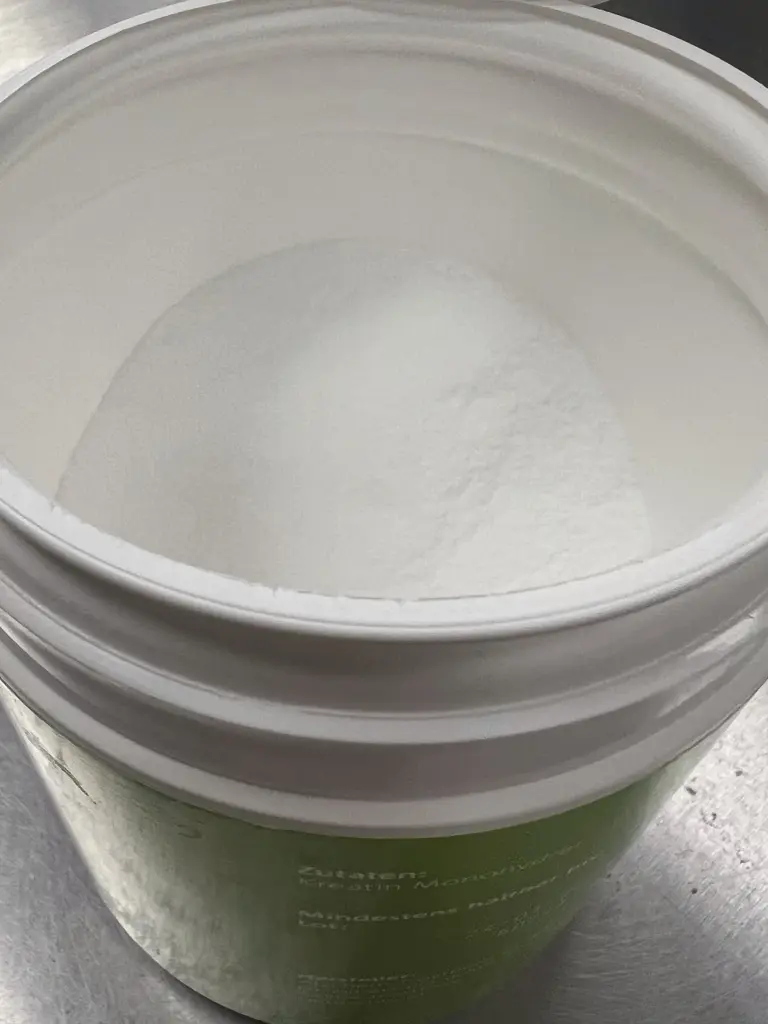
With creatine, people most often overpay, and they do it for special forms with big promises on the tub. Recreational athletes are well served by plain unflavored creatine monohydrate, ideally made from the raw material Creapure produced in Germany, in a daily serving of 3 g of creatine. That is all there is to it. Anything beyond that mainly costs more money.
A substance the body makes itself
The liver, kidneys and pancreas produce creatine themselves. On top of that comes what reaches the plate with meat and fish, about 0.5 g per 100 g according to the German consumer advice center Verbraucherzentrale. So there is no strict need to supplement creatine. If you eat a balanced diet and do not do strength training, you do not need a tub.
For advertising, exactly one claim for athletes is authorized in the European Union, in the wording quoted by the Verbraucherzentrale: „Creatine increases physical performance in successive bursts of short-term, high-intensity exercise.“ It applies to adults who train intensively, and only with a daily intake of 3 g of creatine. Any further promises on the label are not authorized. That also covers claims about concentration or energy for the muscles.
Some users barely benefit. The Verbraucherzentrale puts so-called non-responders at 20 to 30 percent. Endurance training on a treadmill at home or long sessions on a rowing machine are not covered by the authorized claim anyway.
Why monohydrate remains the benchmark
The research is rarely this clear-cut. Most studies were done with creatine monohydrate. According to the Verbraucherzentrale, hydrochloride (HCl), malate, esters, citrate and pyruvate are not more effective, in some cases even less effective, usually more expensive and less thoroughly studied for safety. Creatine malate and creatine alpha-ketoglutarate are not yet authorized in the European Union at all.
Our position? If you pay considerably more for HCl or a „buffered“ form, you are mainly buying a marketing promise.
Dosage, conversion and the unnecessary loading phase
The Verbraucherzentrale gives 3 g of creatine per day as the maximum amount for food supplements for healthy adults. The sports nutrition working group of the German Nutrition Society (DGE) considers up to 5 g of creatine monohydrate safe for people who do sports. More does not do more. The consumer protection authority of the German state of Saxony-Anhalt stresses that the authorized claim must not be understood to mean that higher daily doses work better.
One detail often causes confusion. 3 g of creatine corresponds to about 3.4 g of creatine monohydrate, which is why many labels state a serving of 3.4 g.
A loading phase with high amounts in the first few days used to be considered standard. According to the Verbraucherzentrale, it is not necessary: it only fills the stores faster and can irritate the stomach and bowels. At 3 to 5 g a day, the stores are full after three to four weeks. Some weight gain is to be expected. Creatine stores water in the muscle cells; it does not create body fat.
Where the raw material comes from and why it matters
According to the Verbraucherzentrale, most creatine comes from Asia. Creapure is the branded raw material of the Alzchem Group from Trostberg in Upper Bavaria, which in a statement from December 2025 describes itself as the only creatine producer outside Asia. Alzchem only makes the raw material there. It is packaged and sold by many brands.
Origin is not a side issue. In offers from unknown retailers abroad, the Verbraucherzentrale found contaminated or diluted products, some with only a third of the stated amount. Independent laboratory analyses provide more certainty. Competitive athletes also check the Kölner Liste (the German Cologne List) to see whether the specific product has been tested for substances relevant to doping. And purity figures such as 99.95 percent? Manufacturer specifications, not independent test results.
Powder or capsules?
Powder can be dosed precisely, one scoop in water is enough, and there is no capsule shell. Capsules are more convenient on the go but mean several a day. With Weider, according to the data sheet, it takes three capsules for 3 g of creatine, with a gelatin shell. Vegans therefore take powder.
When you should check with a doctor first
Check with a doctor before taking it, especially if you have medical conditions, take medication or are pregnant. For creatine, the Verbraucherzentrale explicitly names pre-existing kidney conditions as well as pregnancy, breastfeeding, children and adolescents.
Creatine can raise the creatinine level in the blood. According to the Verbraucherzentrale, this is not a sign of impaired kidney function, but your doctor should know about it before blood values are interpreted. If you take medication regularly, bring up the supplement with your doctor beforehand. Gastrointestinal complaints are also possible, especially with high amounts.
Six creatine powders and capsules compared
ESN Creapure Creatine Monohydrate
ESN states 3 g of creatine per serving and the raw material Creapure „Made in Germany“. Unflavored. That means the powder delivers exactly what the authorized claim requires and, in our view, is the most straightforward option.
Myprotein Creapure Kreatin
Myprotein states 3 g of Creapure per serving; according to the ingredient list, the unflavored version consists only of Creapure. According to the manufacturer, the flavored versions are made in a facility that also processes milk. People with allergies are better off with the unflavored tub. Price-wise, Myprotein is usually at the lower end.
Bulk Creapure Kreatin Monohydrat
Bulk sells packages from 100 g to 1 kg, unflavored or in Waldbeere (wild berry). According to the manufacturer, one unflavored scoop (about 3.4 g) delivers 3 g of creatine. It cites 99.95 percent purity and an HPLC analysis, although the results are missing from Bulk’s product page.
Weider Pure Creatine
Weider offers Creapure as a powder in a 600 g tub and as capsules. According to the data sheet, three capsules deliver 3 g of creatine; they contain gelatin, an anti-caking agent and coloring. The recommendation to take creatine for six weeks and then pause comes from Weider itself.
PEAK Creatin Creapure
PEAK states 3,000 mg of creatine per serving in a 225 g tub, around 75 servings, pure monohydrate from Creapure with no flavoring. The small tub is a good fit if you first want to see whether you tolerate creatine.
foodspring Creatine
foodspring recommends 5 g of powder a day, which according to the label is 4.4 g of creatine. That puts the dose above the 3 g that the Verbraucherzentrale names as the maximum amount for food supplements, and above what the authorized claim requires. The 150 g tub therefore lasts 30 days. If you like the brand, you can take it. We do not see an advantage over the others.
Which tub suits which kind of training
- To get started without getting anything wrong: ESN Creapure Creatine Monohydrate, unflavored, 3 g a day.
- If you look at the price per serving: Myprotein Creapure Kreatin in the unflavored version.
- Training for years and buying in bulk: Bulk in the 1 kg bag.
- Capsules rather than powder, animal products not a problem: Weider Pure Creatine capsules.
- Mainly endurance training, kidney disease or regular medication: check with a doctor first or skip it entirely.
Frequently asked questions
How much creatine per day?
The authorized claim applies to a daily intake of 3 g of creatine, and the German consumer advice center Verbraucherzentrale names this as the maximum amount for food supplements. 3 g of creatine corresponds to about 3.4 g of creatine monohydrate, which is why many labels state a serving of 3.4 g. Higher daily doses do not work better.
Is a loading phase necessary with creatine?
According to the Verbraucherzentrale, no. A loading phase only fills the stores faster and can irritate the stomach and bowels. At 3 to 5 g a day, the stores are full after three to four weeks.
Is creatine HCl better than monohydrate?
Most studies were done with creatine monohydrate. According to the Verbraucherzentrale, hydrochloride, malate, esters, citrate and pyruvate are not more effective, in some cases even less effective, usually more expensive and less thoroughly studied for safety. Creatine malate is not yet authorized in the EU at all.
Does creatine make you fat?
Some weight gain is to be expected, because creatine stores water in the muscle cells. It does not create body fat. If you see the scale go up in the first few weeks, you are seeing stored water, not extra fat.
Why look for Creapure?
According to the Verbraucherzentrale, most creatine comes from Asia. Creapure is the branded raw material of the Alzchem Group from Trostberg in Upper Bavaria, Germany. In offers from unknown retailers abroad, the Verbraucherzentrale found contaminated or diluted products, some with only a third of the stated amount.
Is creatine bad for the kidneys?
Creatine can raise the creatinine level in the blood. According to the Verbraucherzentrale, this is not a sign of impaired kidney function, but your doctor should know about it. With pre-existing kidney conditions, during pregnancy and breastfeeding, and for children and adolescents, check with a doctor first.
Sources
- Verbraucherzentrale: Creatine, effects, risks and what matters when buying
- Saxony-Anhalt State Office for Consumer Protection: focus report on creatine (2019)
- Alzchem Group: statement on creatine production, December 2025
- ESN: Creatine with Creapure
- Myprotein: Creapure Creatin
- Bulk: Creatine Monohydrate (Creapure)
- Weider: Pure Creatine Capsules data sheet
- PEAK: Creatin Creapure
- foodspring: Creatine Powder 150 g label
Where to buy
- ESN Creapure Creatine Monohydrate (500 g)Check price at Amazon.deCheck price at Amazon.co.ukCheck price at Amazon.nlCheck price at Amazon.com.beCheck price at Amazon.frCheck price at Amazon.itCheck price at Amazon.esCheck price at Amazon.plCheck price at Amazon.seAvailable in Germany: Amazon.de
- Myprotein Creapure Kreatin (500 g, neutral)Check price at Amazon.deCheck price at Amazon.co.ukCheck price at Amazon.nlCheck price at Amazon.com.beCheck price at Amazon.frCheck price at Amazon.itCheck price at Amazon.esCheck price at Amazon.plCheck price at Amazon.seAvailable in Germany: Amazon.de
- Bulk Creapure Kreatin MonohydratCheck price at Amazon.deCheck price at Amazon.co.ukCheck price at Amazon.nlCheck price at Amazon.com.beCheck price at Amazon.frCheck price at Amazon.itCheck price at Amazon.esCheck price at Amazon.plCheck price at Amazon.seAvailable in Germany: Amazon.de
- Weider Pure CreatineCheck price at Amazon.deCheck price at Amazon.co.ukCheck price at Amazon.nlCheck price at Amazon.com.beCheck price at Amazon.frCheck price at Amazon.itCheck price at Amazon.esCheck price at Amazon.plCheck price at Amazon.seAvailable in Germany: Amazon.de
- PEAK Creatin CreapureCheck price at Amazon.deCheck price at Amazon.co.ukCheck price at Amazon.nlCheck price at Amazon.com.beCheck price at Amazon.frCheck price at Amazon.itCheck price at Amazon.esCheck price at Amazon.plCheck price at Amazon.seAvailable in Germany: Amazon.de
- foodspring CreatineCheck price at Amazon.deCheck price at Amazon.co.ukCheck price at Amazon.nlCheck price at Amazon.com.beCheck price at Amazon.frCheck price at Amazon.itCheck price at Amazon.esCheck price at Amazon.plCheck price at Amazon.seAvailable in Germany: Amazon.de
Still undecided?
Keep comparing at your own pace – every article in this category is checked monthly for new and discontinued models.