Contents10 sections
This guide was first published in German on handgetestet.de.
An expensive slow juicer that disappears into the cupboard after three weeks. That is how buying a juicer often goes wrong, and not because the appliance presses badly. Taking it apart, rinsing and drying eat up ten minutes every morning. If you juice apples, carrots and oranges on the weekend, you are usually better off with a good centrifugal juicer such as the Braun MultiJuice 7. The extra cost of a slow juicer is only justified by regular leafy greens, herbs or soft fruit in the chute.
Two things are missing here on purpose. First, claims about vitamins and health: the manufacturer specifications do not prove whether juice is „more valuable“ when it has been pressed slowly. Second, our own measurements of juice yield. The figures below are manufacturer specifications.
Five juicers, two designs
How to read the table
In a centrifugal juicer, a grating disc spins at high speed and a strainer basket spins the juice out. It is fast, and it is loud, too. The appliances work with 500 to 1,000 watts and usually cost considerably less. Leafy greens such as spinach or kale do not suit this design as well; they tend to be torn rather than pressed.
In a slow juicer, an auger does the work, slowly, usually at between 40 and 90 revolutions per minute, pressing the produce against a strainer or a chamber wall. Quieter, slower, better with leafy greens. In return, more expensive and with more individual parts.
The feed column tells you how much you have to cut beforehand. On the Braun, it is 75 millimeters, and a whole apple fits in. Older slow juicers have narrow tubes where you cut up almost everything. Newer models from Kuvings and Hurom rely on a hopper that feeds the fruit in by itself.
What is not in the table
- Cleaning: The better question before buying is not „how well does it press?“ but „how many parts do I have to wash?“. Strainers with a fine mesh need a brush. Hurom and Philips advertise chambers without a classic fine strainer. The manual tells you whether parts are dishwasher-safe, and for some slow juicers the answer is no.
- Juice yield: Figures such as „up to 90 percent“ come from manufacturer tests with selected fruit. Philips, for example, cites portions of 1,000 grams of grapes, apples and oranges for one of its slow juicers. Such values cannot be compared between brands.
- Warranty: Long motor warranties are common with slow juicers, while the remaining parts often have only two years. First read what exactly is covered, then use the term as an argument.
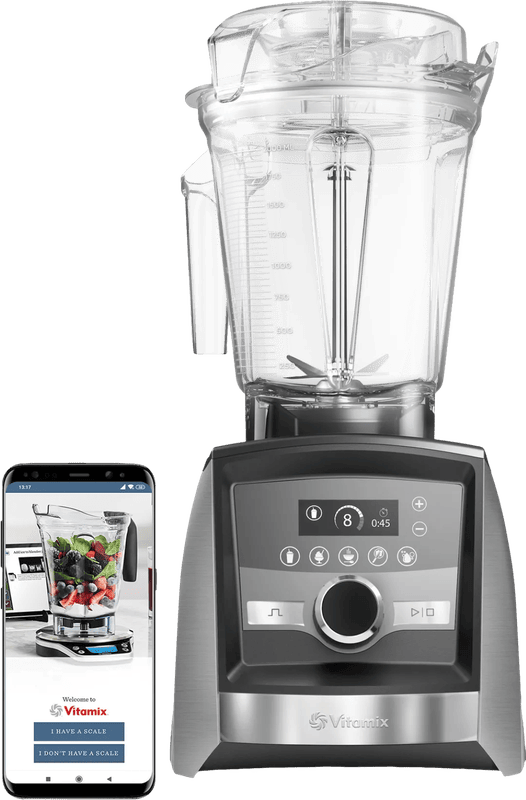
If you are mainly after smoothies with fiber, by the way, you do not need a juicer at all. A countertop blender is a better fit for that.
Braun MultiJuice 7 SJ7000
1,000 watts, two speeds and a 75-millimeter-wide chute that whole apples fit into, according to Braun’s specifications. According to the manufacturer, the pulp container holds two liters and the jug 800 milliliters, with a froth separator inside. A drip stop prevents puddles, and the removable parts are dishwasher-safe. In most households, this is the smarter purchase than a slow juicer at three times the price.
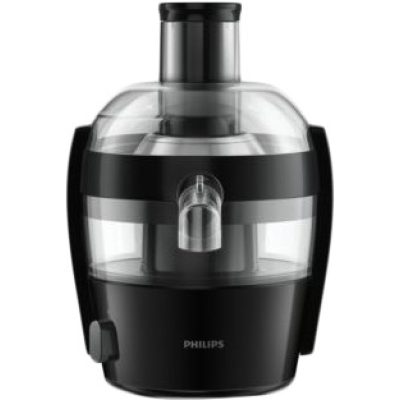
Philips Viva Collection HR1832/00
Compact and simple. Philips specifies 500 watts and up to 1.5 liters of juice in one go without emptying the pulp container. According to the manufacturer, all removable parts are dishwasher-safe, and the strainer is said to clean with an ordinary sponge. Glasses up to twelve centimeters tall fit under the spout. If you juice rarely and have little counter space, you lose little here.
Kuvings REVO830
Kuvings‘ top model pre-cuts whole fruit with an automatic cutting system. Retailers cite a large 88-millimeter opening and a second narrow one for carrots or celery, plus around 50 revolutions per minute. The warranty terms provide 15 years on the motor and two years on the remaining parts. It is built for truly daily pressing. For everyone else, the high price gives little back.
Kuvings AUTO6
Instead of adding piece after piece, you fill a 1.7-liter hopper and let the appliance do the work. According to retailer information, the power is 200 watts. You save time when pressing, not when washing up, because the large hopper is one more part in the sink.
Hurom H400
The H400 uses a chamber with a two-part auger that is said to work without a classic fine strainer. Instead of several strainer inserts, there is only this one pressing technique, so juice and smoothies run through the same chamber. According to retailer information, whole fruits and large pieces slide in by themselves from an XXL feed hopper. In return, the juice contains a little more pulp than with an appliance with a fine strainer. If brushing the strainers is what you hate most about slow juicers, look at this concept first.
Which juicer for which kitchen?
Apples, carrots, oranges once or twice a week: Braun MultiJuice 7, fast, with a large chute and dishwasher-safe parts. For occasional juice in little space, the Philips HR1832/00 is enough. Daily juice with lots of leafy greens points to the Kuvings REVO830, if the budget allows, otherwise to the Kuvings AUTO6. If you are looking for a slow juicer with as little washing up as possible, you will end up with the Hurom H400.
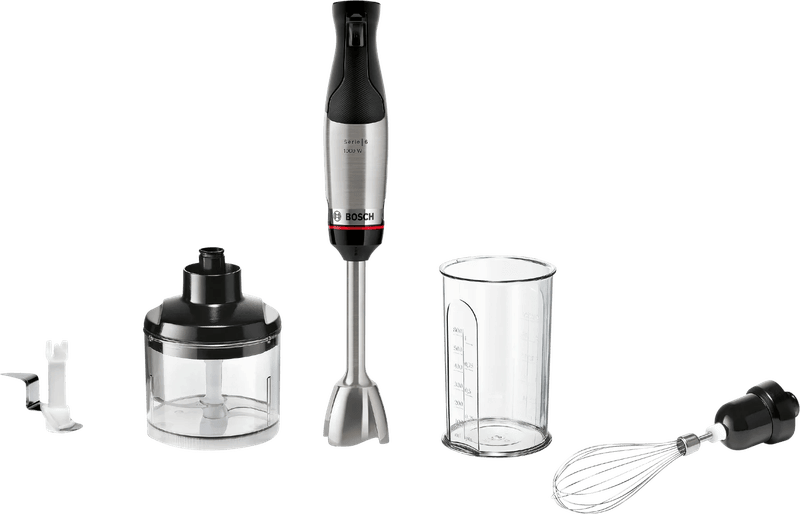
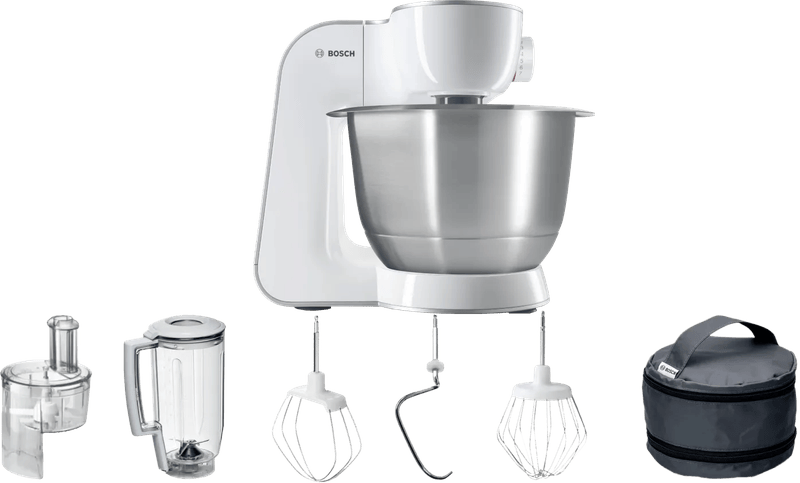
If you actually want to puree soups, knead dough and only occasionally make juice, a stand mixer or an immersion blender is the better fit. A juicer does only one thing. But it does it much better.
Frequently asked questions
What is the difference between a slow juicer and a centrifugal juicer?
In a centrifugal juicer, a grating disc spins at high speed and a strainer basket spins the juice out. That is fast but loud, and leafy greens tend to be torn rather than pressed. In a slow juicer, an auger, usually turning at 40 to 90 revolutions per minute, presses the produce against a strainer.
Is a slow juicer worth it for leafy greens?
For spinach, kale or herbs, the slow juicer is the better design, because it works more quietly and slowly and presses leafy greens instead of tearing them. In return, it is more expensive and has more individual parts. For daily juice with lots of leafy greens, the guide points to the Kuvings REVO830 or the Kuvings AUTO6.
How much work is it to clean a juicer?
Before buying, it is worth asking how many parts have to be washed. Strainers with a fine mesh need a brush. Hurom and Philips advertise chambers without a classic fine strainer. The manual tells you whether parts are dishwasher-safe; for some slow juicers, the answer is no.
How much do you have to cut before juicing?
The feed tells you. On the Braun MultiJuice 7, the chute is 75 millimeters wide, and a whole apple fits in. Older slow juicers have narrow tubes where almost everything has to be cut up. Newer models from Kuvings and Hurom rely on a hopper that feeds the fruit in by itself.
How meaningful are juice yield figures?
Not very. Figures such as up to 90 percent come from manufacturer tests with selected fruit and cannot be compared between brands. The manufacturer specifications also do not prove whether slowly pressed juice is more valuable. For smoothies with fiber, a countertop blender is a better fit than a juicer anyway.
Sources
- Braun Household: MultiJuice 7 juicer SJ7000
- Philips: Viva Collection juicer HR1832/00
- Philips: Avance Collection Masticating Juicer HR1949/20 (juice yield figure)
- Grüne Perlen: Hurom H400 and H320/H330 compared (retailer information)
- Kuvings warranty terms 2025 (via Keimling)
- Grüne Perlen: Kuvings REVO830 (retailer information)
- Saturn: Kuvings AUTO6 (retailer information)
Where to buy
- Braun MultiJuice 7 SJ7000Check price at Amazon.deCheck price at Amazon.co.ukCheck price at Amazon.nlCheck price at Amazon.com.beCheck price at Amazon.frCheck price at Amazon.itCheck price at Amazon.esCheck price at Amazon.plCheck price at Amazon.seAvailable in Germany: Amazon.de
 Philips Viva Collection HR1832/00Check price at Amazon.deCheck price at Amazon.co.ukCheck price at Amazon.nlCheck price at Amazon.com.beCheck price at Amazon.frCheck price at Amazon.itCheck price at Amazon.esCheck price at Amazon.plCheck price at Amazon.seAvailable in Germany: Amazon.deView at CoolblueAvailable in Germany: CoolblueView at Media Markt AT
- Kuvings REVO830Check price at Amazon.deCheck price at Amazon.co.ukCheck price at Amazon.nlCheck price at Amazon.com.beCheck price at Amazon.frCheck price at Amazon.itCheck price at Amazon.esCheck price at Amazon.plCheck price at Amazon.seAvailable in Germany: Amazon.de
- Kuvings AUTO6Check price at Amazon.deCheck price at Amazon.co.ukCheck price at Amazon.nlCheck price at Amazon.com.beCheck price at Amazon.frCheck price at Amazon.itCheck price at Amazon.esCheck price at Amazon.plCheck price at Amazon.seAvailable in Germany: Amazon.de
- Hurom H400Check price at Amazon.deCheck price at Amazon.co.ukCheck price at Amazon.nlCheck price at Amazon.com.beCheck price at Amazon.frCheck price at Amazon.itCheck price at Amazon.esCheck price at Amazon.plCheck price at Amazon.seAvailable in Germany: Amazon.de
Still undecided?
Keep comparing at your own pace – every article in this category is checked monthly for new and discontinued models.