Contents10 sections
This guide was first published in German on handgetestet.de.
In the fall, it still stands intact on the patio; the following March, a crack runs from the rim to the base. The frost struck, you might think. At least as much to blame is the water that could not get out of the pot over the winter, because water expands as it freezes. If you are buying an outdoor planter, you should therefore look at the drainage path first and only then at color and shape. For a sunny balcony or patio, we recommend a plastic container with a removable insert and a water reservoir, such as the Lechuza Cube Cottage 40.
Why plastic of all things? It comes down to weight, winter and watering rhythm.
Clay, plastic, fiberglass: what the material can take in winter
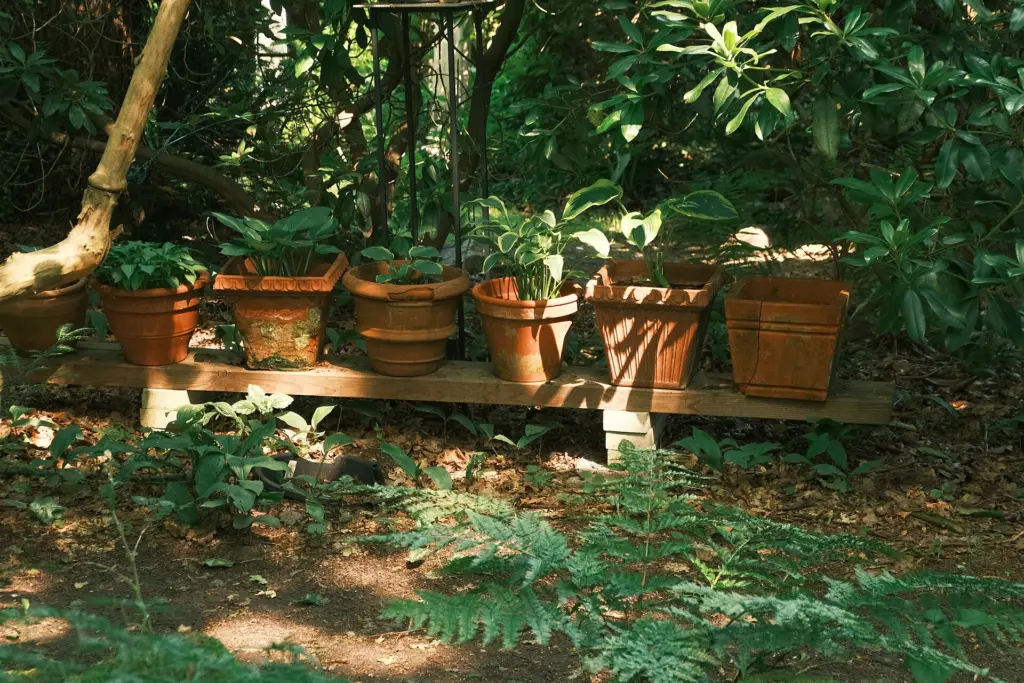
The Bavarian State Institute for Viticulture and Horticulture (LWG) puts it bluntly in its fact sheet on hardy container planting: only absolutely frost-proof ceramic planters should stay outdoors, and that applies to terracotta as much as to stoneware. Quality, it says, varies widely. The LWG, on the other hand, describes polypropylene and polyethylene as particularly durable. Terracotta is porous. In summer that helps, because moisture evaporates through the wall. In winter, exactly this property becomes a risk when the fired clay soaks up water.
Fiberglass sits somewhere in between. Containers made of fiberglass and mineral composite look like stone or concrete but weigh a fraction as much. Without a clear statement on frost resistance from the manufacturer, we would not leave such a planter outdoors over the winter.
What happens inside the pot matters more than the „frost-proof“ label anyway. In the usage notes for its GARDURO plastic, Scheurich writes that the containers withstand temperatures down to minus 40 degrees Celsius, but in the same paragraph warns against waterlogging and against empty planters in which water freezes. Lechuza advises not filling the water reservoir from fall onward, because the water can freeze and damage roots. In winter, water only from above, on frost-free days and in small amounts.
Before you buy: shape, drainage, weight
- No planter should be taller than it is wide, the LWG recommends. Cylinders and cubes stand more securely than slender columns, especially in wind and with woody plants.
- The drainage hole must stay clear. With Lechuza, outdoors that means: remove the bottom screw so rainwater can drain.
- According to the LWG, a 1 to 2 centimeter thick polystyrene sheet on the inside of the wall gives even hardy plants better protection, because in a planter the frost attacks from all sides.
- Casters are only worth it if the floor is level. On gravel or lawn, they get stuck.
On a balcony, weight comes into play. In an article on raised beds on balconies, Öko-Test, a German consumer magazine, points out that moist soil quickly makes a container very heavy, especially after rain. The editors advise placing heavy containers as close to the building wall as possible and, as a tenant, clarifying beforehand how much additional load is permitted. Do the math yourself: a full 7.5-liter reservoir alone adds 7.5 kilograms of water, plus the soil above it. If you are planning several large planters, it is better to ask the property management one time too many.
Five planters compared
Lechuza Cube Cottage 40
The wicker-look cube has a removable planting insert with handles and a 7.5-liter reservoir beneath 31 liters of planting volume. Lechuza specifies it for indoor and outdoor use. Outdoors, the red bottom screw has to come out, or rainwater will stand in the container. We like that the insert, plant and all, can be lifted out in the fall if the plant needs to move to sheltered winter quarters. For the larger Cube sizes, the manufacturer offers a rolling saucer.
Lechuza Canto Stone 40 high
A column in a natural stone look, 76 centimeters tall, with a 7-liter reservoir. Keep the LWG’s rule of thumb in mind, though: the column is almost twice as tall as it is wide. For grasses, lavender or a hosta at the entrance, that works. We would not plant a small tree with a large crown in it, as the planter tips over more easily in wind. The low version, the Canto Stone 40 low, measures 40 × 40 × 40 centimeters and stands correspondingly steadier.
elho Loft Urban rund Rollen 40
This round pot on casters really is light. Elho states an empty weight of around 1.2 kilograms with 24 liters of volume, plus concealed casters, a water reservoir and a drainage system. According to the manufacturer, the plastic comes 100 percent from recycled household waste. Elho lists it as frost- and UV-resistant and offers a two-year warranty. On tiles and wooden decking, the casters are a relief if the pot is to follow the sun in summer.
Scheurich C-Cone
Slightly conical, in a concrete look, made in Germany. Scheurich describes the container as frost- and UV-resistant and offers a ten-year warranty. The integrated drain has a plug. Indoors, it stays closed; outdoors, it should be open. In size 30, the C-Cone holds 10 liters, enough for herbs or a small perennial. For a shrub, it is too small.
elho green basics Anzuchttisch Super XXL
Not a planter in the strict sense, but a planting trough on legs, a growing table. With 92 liters of volume and a height of 73 centimeters, it is the obvious alternative if there is no room for a proper raised bed. Elho states an empty weight of about 3.6 kilograms, UV resistance and suitability down to minus 40 degrees. Excess water drains through the hollow legs; to keep soil from being washed out, the manufacturer recommends filling the legs with expanded clay, for example. On a balcony, what we said above about load applies here in particular.
More depth for root vegetables and potatoes is offered by a classic bed, which we compare in our raised bed guide.
How we would decide
- South-facing balcony, working full time, little time for watering: Lechuza Cube Cottage 40. The reservoir bridges hot days and stays empty in winter.
- Large patio, plants that follow the sun: elho Loft Urban rund with casters, on a level floor.
- Herbs outside the kitchen door, the longest possible warranty: Scheurich C-Cone.
- Tomatoes, lettuce and radishes without bending down: elho green basics Anzuchttisch Super XXL.
- Terracotta only if the manufacturer explicitly lists it as frost-proof, and then with a clear drainage hole and winter protection.
And what about the plants themselves? How to wrap planters in winter and which fleece or coir mats are any good is covered in our guide to winter protection for plants (in German). If you want to place the planter between table and chairs on a small balcony, you will find the right dimensions in our balcony furniture guide.
Frequently asked questions
Which planter is frost-proof?
The LWG, the Bavarian State Institute for Viticulture and Horticulture, advises leaving only absolutely frost-proof ceramic planters outdoors, noting that quality varies widely even among terracotta and stoneware. It describes polypropylene and polyethylene as particularly durable. With fiberglass, we would not leave a planter outdoors over the winter without a clear statement on frost resistance from the manufacturer.
Why do planters crack in winter?
Often it is water that cannot drain from the pot, because it expands as it freezes. Scheurich therefore warns against waterlogging and against empty planters with water standing in them. The drainage hole must stay clear; with Lechuza, that means outdoors: remove the bottom screw.
Should you fill the water reservoir in winter?
No. Lechuza advises not filling the reservoir from fall onward, because the water can freeze and damage roots. In winter, water only from above, on frost-free days and in small amounts.
What shape should an outdoor planter have?
The LWG recommends that no planter be taller than it is wide. Cylinders and cubes stand more securely in wind than slender columns. The Lechuza Canto Stone 40 high is almost twice as tall as it is wide; it suits grasses, but not a small tree with a large crown.
How heavy can a planter on a balcony be?
Öko-Test, a German consumer magazine, points out that moist soil quickly makes a container very heavy. A full 7.5-liter reservoir alone adds 7.5 kilograms of water. Heavy containers belong close to the building wall, and tenants should clarify beforehand how much additional load is permitted.
How do you protect container plants from frost?
According to the LWG, a 1 to 2 centimeter thick polystyrene sheet on the inside of the wall gives even hardy plants better protection, because frost attacks a planter from all sides. In addition, keep the drainage hole clear and leave the water reservoir empty in winter.
Sources
- LWG Bavaria: Fact sheet on hardy trough and container planting
- Öko-Test: Raised beds on the balcony (06/15/2026)
- Lechuza: Frequently asked questions
- Lechuza: CUBE Cottage
- Lechuza: CANTO Stone high
- Lechuza: CANTO Stone low
- elho: loft urban rund rollen 40 cm
- elho: green basics Anzuchttisch Super XXL
- elho: Holes in the legs of the growing tables
- Scheurich: C-Cone planter
- Scheurich: GARDURO usage notes
Where to buy
- Lechuza Cube Cottage 40 (Graphitschwarz)Check price at Amazon.deCheck price at Amazon.co.ukCheck price at Amazon.nlCheck price at Amazon.com.beCheck price at Amazon.frCheck price at Amazon.itCheck price at Amazon.esCheck price at Amazon.plCheck price at Amazon.seAvailable in Germany: Amazon.de
- Lechuza Canto Stone 40 highCheck price at Amazon.deCheck price at Amazon.co.ukCheck price at Amazon.nlCheck price at Amazon.com.beCheck price at Amazon.frCheck price at Amazon.itCheck price at Amazon.esCheck price at Amazon.plCheck price at Amazon.seAvailable in Germany: Amazon.de
- elho Loft Urban rund Rollen 40Check price at Amazon.deCheck price at Amazon.co.ukCheck price at Amazon.nlCheck price at Amazon.com.beCheck price at Amazon.frCheck price at Amazon.itCheck price at Amazon.esCheck price at Amazon.plCheck price at Amazon.seAvailable in Germany: Amazon.de
- Scheurich C-Cone PflanzgefäßCheck price at Amazon.deCheck price at Amazon.co.ukCheck price at Amazon.nlCheck price at Amazon.com.beCheck price at Amazon.frCheck price at Amazon.itCheck price at Amazon.esCheck price at Amazon.plCheck price at Amazon.seAvailable in Germany: Amazon.de
- elho green basics Anzuchttisch Super XXLCheck price at Amazon.deCheck price at Amazon.co.ukCheck price at Amazon.nlCheck price at Amazon.com.beCheck price at Amazon.frCheck price at Amazon.itCheck price at Amazon.esCheck price at Amazon.plCheck price at Amazon.seAvailable in Germany: Amazon.de
Still undecided?
Keep comparing at your own pace – every article in this category is checked monthly for new and discontinued models.