Contents10 sections
This guide was first published in German on handgetestet.de.
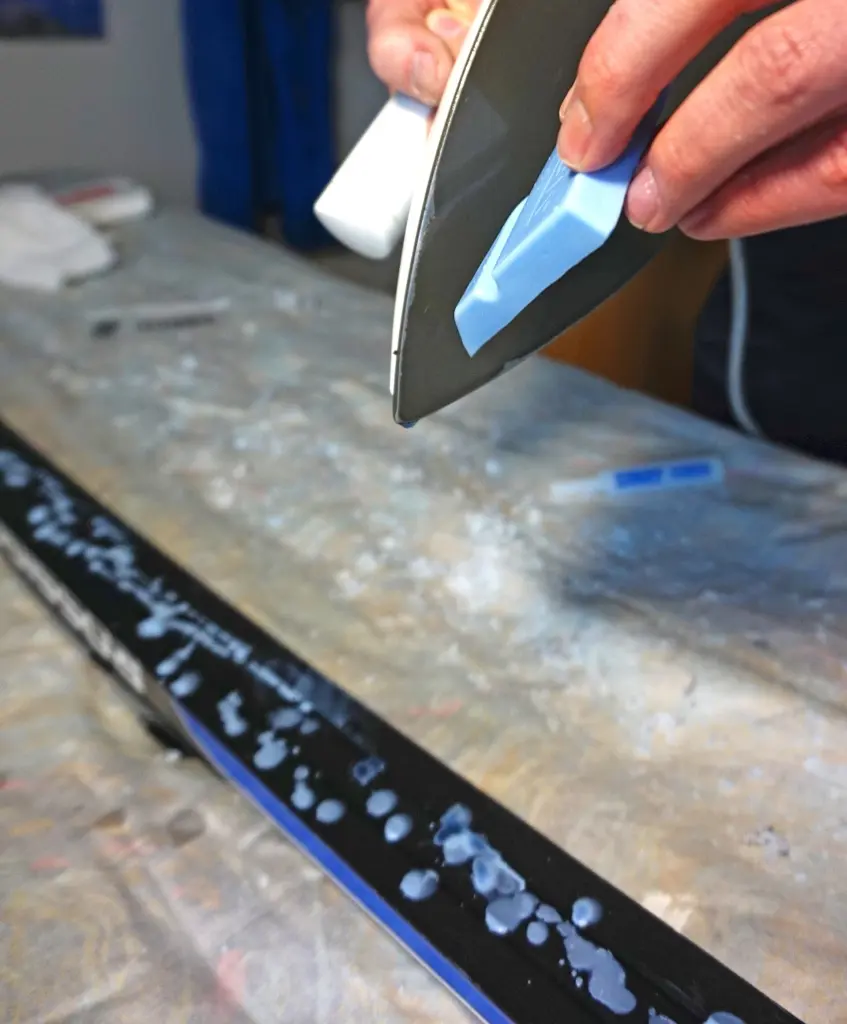
If you ski one week a year, you do not need a big complete kit. A fluorine-free hot wax for the mid temperature range is usually enough, plus a simple waxing iron, a plexi scraper and a brush. And if you would rather not iron at all? Then use liquid wax and accept that it wears off faster.
First, count your ski days
Toko states quite openly in its own Wax & Tuning Guide 2026/27 that hot waxing remains the most effective way to saturate the base. Liquid and wipe-on waxes are presented there as quick care in between, without an iron and without a workbench. That leads to a simple calculation.
For one or two weeks of ski vacation, liquid wax before you leave and once at the halfway point is enough. No tools, no wax smell in the apartment. It is a different story if you ski regularly on weekends. Then hot wax with an iron pays off: getting started costs more up front, but the wax itself lasts a long time afterward.
The temperature range deserves a second look. Manufacturers state it for the snow temperature, not the air. A wax for roughly minus 4 to minus 14 degrees Celsius covers a broad middle range. With the iron, a thick plate and an adjustable temperature are what count. The wax dictates the ironing temperature, not the other way around.
A little patience is part of it too. Toko recommends letting ironed-in wax cool at room temperature for at least one hour before you scrape and brush it out. For the drive, the skis need a secure spot anyway; more on that in our overview of car ski racks (in German).
Fluorine is out. What the FIS and the EU actually regulate
In racing, the situation is clear. The International Ski Federation (FIS) has completely banned fluorinated waxes since the 2023/24 season and checks bases with infrared spectroscopy. Testing started in the World Cup and at World Championships, and since 2024/25 it has also covered the European Cup. One detail from the FIS report stands out. Several positive tests were traced back to contaminated tools, not to the wax. The FIS therefore advises replacing softer brushes and rotary fleece rather than cleaning them.
For retail, EU Regulation (EU) 2024/2462 has applied across the EU since October 10, 2026. It bans PFHxA, its salts and related substances above 25 ppb (or 1,000 ppb for related substances), among other things in mixtures for the general public. The text does not explicitly mention ski wax. It also covers only this one group of substances, not all PFAS. Goods placed on the market before the deadline are exempt. Whether a particular older tin on the shelf falls under it could not be reliably determined. The major brands have made the switch anyway: Swix says it has not sold PFAS waxes on the mass market since the 2021/22 winter, and Toko labels its hot, liquid and express waxes as 100 percent fluorine-free.
Our advice: buy current products. Unlabeled old stock from the basement stays where it is.
Seven fluorine-free waxes and irons compared
| Model | Type | Use according to the manufacturer | Best for |
|---|---|---|---|
| Holmenkol Beta Mix Red | Hot wax, 150 g | Snow −4 to −14 °C, iron at 125–135 °C | Weekend skiers, Alpine winter |
| Toko Base Performance Red | Hot wax, 120 g | Snow approx. −4 to −12 °C | Skiers who want to wax by temperature |
| Swix U180 Universal Wax | Hot wax, 180 g | Universal wax for all conditions | Families, several pairs of skis |
| Toko All-in-One Wipe & Brush | Wipe-on liquid wax | All conditions, no iron | Vacation skiers without a workbench |
| Holmenkol Natural Wax Fluid | Liquid wax | All snow types and temperatures, biodegradable | Quick care on the go |
| Swix T77 Waxing Iron | Waxing iron | 100–160 °C, plate 100 × 160 mm | Getting started with hot waxing |
| Toko T8 Iron | Waxing iron | 100–160 °C, 15 mm aluminum plate, 800 W | Getting started, also for boards |
The route for weekend skiers: hot wax and an iron
Holmenkol Beta Mix Red is a hydrocarbon-based base and training wax that Holmenkol has sold with an unchanged formula for years. Minus 4 to minus 14 degrees Celsius snow temperature is a broad range, and Holmenkol also lists it as a transport wax. If you want just one hot wax, this is the right choice. Only spring snow around zero degrees falls outside its range.
An entry-level iron is enough for waxing. Swix offers the T77 as an affordable iron for non-professionals. The temperature is set with a dial between 100 and 160 degrees Celsius, and the wide metal plate measures 100 by 160 millimeters with one beveled side. Swix advises setting a timer so the iron is not accidentally left on. The iron is also included in the Swix Base Hot Wax Kit.
According to the current guide, Toko’s T8 Iron has a 15-millimeter aluminum plate, stepless control from 100 to 160 degrees Celsius and 800 watts. The beveled edges help you glide evenly over the base. The larger digital models, the T15 and T25? More for people who wax a lot.
The route for families with several pairs of skis
Swix offers the U180 Universal Wax as a universal hydrocarbon wax for skis and snowboards in all conditions. The large 180-gram bar is enough for several pairs of skis. The compromise is right there in the name: a universal wax glides decently everywhere, but nowhere as well as one matched to the right temperature range.
The route for vacationers without a workbench
According to Toko, All-in-One Wipe & Brush is applied, dries for around 25 minutes and is then brushed out. No iron is needed. Toko itself presents it as a supplement to hot waxing, not a replacement. Perfectly adequate for a ski week. For a whole season with many days on the slopes, not so much.
Holmenkol describes its Natural Wax Fluid as biodegradable and suitable for all snow types and temperatures. If durability matters to you, expect to apply it more often than an ironed-in wax.
The route for the ambitious: waxing by temperature
Toko Base Performance Red is the brand’s classic hot wax for medium conditions, according to the manufacturer for snow at roughly minus 4 to minus 12 degrees Celsius. The line comes in several hardnesses, so you can later add one wax each for warmer and colder days. That is more effort than many people need. If you want to fine-tune, this is the logical next step.
Edges: do the side edge yourself, take the base edge to the shop
Sharp side edges give you grip on hard-packed slopes. Toko describes the sequence like this: remove protruding sidewall material, work the edge with an edge sharpener or file guide, remove the burr with a diamond file, and slightly round off the tips and tails. For on the go, there are pocket tuners such as the ones from Swix that sharpen to 87 or 88 degrees.
The base edge is trickier. Holmenkol does offer guides for 0.5, 0.7 and 1.0 degrees, but the wrong angle noticeably changes how the ski handles. The base grind is better left to a ski service shop, which can also set up the right ski from our ski buying guide.
Two brands are deliberately missing. For Dakine, retailer information on fluorine in the Indy wax is contradictory, and we did not have confirmation from the manufacturer. According to retailers, Vola offers fluorine-free universal waxes, but we did not have the manufacturer’s own information on them.
Quick decision
- The basic kit for most people: Holmenkol Beta Mix Red plus a simple iron such as the Swix T77 or Toko T8. Add a plexi scraper and brush if you do not have them.
- Just one ski week a year: Toko All-in-One Wipe & Brush or Holmenkol Natural Wax Fluid, no iron needed.
- Several pairs of skis in the family: Swix U180 as a large universal bar.
- Fine-tuning: Toko Base Performance in red, later adding the warmer and colder hardness.
After waxing, the gear belongs in the closet dry, boots included. How to manage that without a radiator is covered in our guide to boot dryers.
Frequently asked questions
Hot wax or liquid wax: which is better?
According to Toko, hot waxing remains the most effective way to saturate the base. Liquid and wipe-on waxes are meant as quick care in between. For one or two weeks of ski vacation, liquid wax before you leave and once at the halfway point is enough. If you ski regularly on weekends, you are better off with hot wax and an iron.
Does the temperature range refer to the air or the snow?
Manufacturers state it for the snow temperature, not the air. A wax for roughly minus 4 to minus 14 degrees Celsius, such as Holmenkol Beta Mix Red, covers a broad middle range. Only spring snow around zero degrees falls outside its range.
Is ski wax containing fluorine still allowed?
In racing, the FIS has completely banned fluorinated waxes since the 2023/24 season. For retail, EU Regulation (EU) 2024/2462 has applied across the EU since October 10, 2026; it restricts PFHxA and related substances but does not explicitly mention ski wax. The major brands are fluorine-free anyway. Unlabeled old stock is best left on the shelf.
What should I look for in a waxing iron?
A thick plate and an adjustable temperature matter, because the wax dictates the ironing temperature. According to the manufacturers, the Swix T77 and Toko T8 regulate between 100 and 160 degrees Celsius, and the T8 has a 15-millimeter aluminum plate. Swix advises setting a timer so the iron is not accidentally left on.
How long does hot wax need to cool?
Toko recommends letting ironed-in wax cool at room temperature for at least one hour before you scrape and brush it out. According to the manufacturer, liquid wax such as Toko All-in-One Wipe & Brush dries for around 25 minutes and is then brushed out.
Can you sharpen ski edges yourself?
The side edge, yes: remove protruding sidewall material, work the edge with an edge sharpener or file guide, and remove the burr with a diamond file. Pocket tuners sharpen to 87 or 88 degrees. The base edge is trickier, since the wrong angle noticeably changes how the ski handles. The base grind is better left to a ski service shop.
Sources
- FIS: Fluorine testing widened after the first season
- Regulation (EU) 2024/2462, Annex XVII entry 79 (PFHxA)
- Swix: Leaving PFAS behind
- Toko Wax & Tuning Guide 2026/27 (PDF)
- Holmenkol Beta Mix Red
- Holmenkol snow range (Natural Wax Fluid)
- Holmenkol tools (edge guides)
- Swix U180 Universal Wax
- Swix T77 Waxing Iron
- Swix P21 Glide & Edge Kit (edge angles)
Where to buy
- Holmenkol Beta Mix RedCheck price at Amazon.deCheck price at Amazon.co.ukCheck price at Amazon.nlCheck price at Amazon.com.beCheck price at Amazon.frCheck price at Amazon.itCheck price at Amazon.esCheck price at Amazon.plCheck price at Amazon.seAvailable in Germany: Amazon.de
- Toko Base Performance RedCheck price at Amazon.deCheck price at Amazon.co.ukCheck price at Amazon.nlCheck price at Amazon.com.beCheck price at Amazon.frCheck price at Amazon.itCheck price at Amazon.esCheck price at Amazon.plCheck price at Amazon.seAvailable in Germany: Amazon.de
- Swix U180 Universal WaxCheck price at Amazon.deCheck price at Amazon.co.ukCheck price at Amazon.nlCheck price at Amazon.com.beCheck price at Amazon.frCheck price at Amazon.itCheck price at Amazon.esCheck price at Amazon.plCheck price at Amazon.seAvailable in Germany: Amazon.de
- Toko All-in-One Wipe & BrushCheck price at Amazon.deCheck price at Amazon.co.ukCheck price at Amazon.nlCheck price at Amazon.com.beCheck price at Amazon.frCheck price at Amazon.itCheck price at Amazon.esCheck price at Amazon.plCheck price at Amazon.seAvailable in Germany: Amazon.de
- Holmenkol Natural Wax FluidCheck price at Amazon.deCheck price at Amazon.co.ukCheck price at Amazon.nlCheck price at Amazon.com.beCheck price at Amazon.frCheck price at Amazon.itCheck price at Amazon.esCheck price at Amazon.plCheck price at Amazon.seAvailable in Germany: Amazon.de
- Swix T77 Waxing IronCheck price at Amazon.deCheck price at Amazon.co.ukCheck price at Amazon.nlCheck price at Amazon.com.beCheck price at Amazon.frCheck price at Amazon.itCheck price at Amazon.esCheck price at Amazon.plCheck price at Amazon.seAvailable in Germany: Amazon.de
- Toko T8 IronCheck price at Amazon.deCheck price at Amazon.co.ukCheck price at Amazon.nlCheck price at Amazon.com.beCheck price at Amazon.frCheck price at Amazon.itCheck price at Amazon.esCheck price at Amazon.plCheck price at Amazon.seAvailable in Germany: Amazon.de