Contents10 sections
This guide was first published in German on handgetestet.de.
Half past one, and next to you someone is sawing logs. That exact night is when many people buy their first sleep headphones. Against a snoring partner, we recommend in-ear sleep headphones with active noise cancellation and snore masking, currently above all the Soundcore Sleep A30. If all you want is quiet audiobooks to fall asleep to, a soft headband for little money will do.
It often starts with a mistake. You take your regular true wireless earbuds out of your jacket pocket, lie down on your side and wake up an hour later with a sore ear. Conventional earbuds stick far out of the outer ear. On the pillow, they become a lever. That’s why sleep headphones are built flat, weigh only a few grams and skip much of what commuters value in regular in-ear headphones.
Three nights, three different problems
Snoring is low, rhythmic and comes from a meter away. Active noise cancellation (ANC) works best on steady, low humming. Soundcore itself states, however, that with the Sleep A30 the snoring is covered not by ANC but by a masking sound layered on top. That’s honest, and it matches the physics. No earbud reliably cancels irregular noises.
The night shift is a different story. If you have to sleep at ten in the morning, you’re up against garbage trucks, delivery drivers and children playing in the courtyard. What helps most here is a good seal of the ear canal plus steady background noise. Expensive electronics aren’t strictly necessary for that.
And in a hotel? Air conditioning, elevator, guests in the hallway. What counts here is that the earbuds run all night without a phone and without Wi-Fi, meaning the sounds are stored directly on the earbuds. All three in-ear pairs below can do that.
What really counts on the spec sheet
- Battery per night: Plan for eight hours of sleep plus the time it takes to fall asleep. Under nine hours in your chosen mode gets tight. Streamed music with ANC uses considerably more power than stored sounds without ANC.
- Design: In-ear seals, a headband doesn’t. In return, a band rests without pressure on the ear canal and moves with you when you turn over.
- Alarm in your ear: wakes only you, not your partner. If an earbud falls out at night, you may not hear it. So before an early flight, set an alarm on your phone as well.
- Sleep data: Movement, position and snoring sounds are recorded. That’s a gimmick with curiosity value, not a medical measuring device.
A word on volume, because here it plays for eight hours straight. The World Health Organization names 80 dB as a level considered safe for up to 40 hours a week. At 60 dB and below, it sees no time limit, and it advises setting devices to no more than 60 percent of maximum volume. Seven nights of eight hours each add up to 56 hours. So the noise should be set considerably quieter than the music on your commuter train. Quiet is enough if the earbuds seal well.
Five sleep headphones compared
| Model | Noise | Battery according to manufacturer | Best for |
|---|---|---|---|
| Soundcore Sleep A30 | ANC, seal, snore masking | 7 h streaming with ANC, 9 h stored sounds with ANC, up to 16 h without ANC | snoring partner, city noise |
| Soundcore Sleep A20 | seal, masking, no ANC | 14 h sleep mode, 10 h Bluetooth | side sleepers with a mid-range budget |
| Ozlo Sleepbuds 2 | seal, masking, no ANC | up to 14 h | very small ears, sleep data |
| Perytong sleep headphones headband | no seal | around 10 h (retailer information) | audiobook to fall asleep to, back sleepers |
| Musicozy sleep headphones headband | no seal | 14 to 16 h depending on version (retailer information) | people who can’t tolerate anything in the ear |
Soundcore Sleep A30
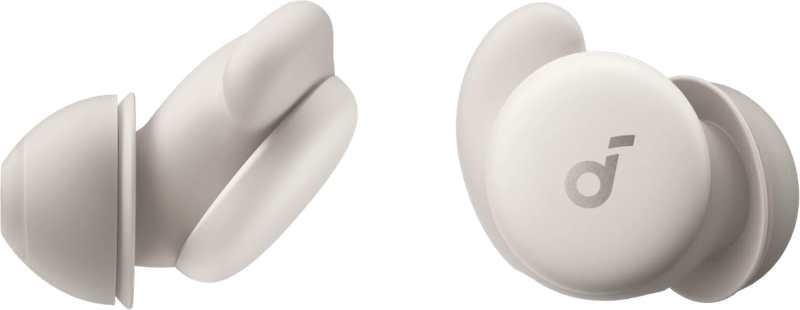
The Sleep A30 combines three things that Soundcore describes as a three-stage system. Active noise cancellation takes care of low tones, the silicone or foam tips dampen high ones, and the charging case on the nightstand listens for snoring. If it detects any, the earbuds play a matched masking sound. According to the manufacturer, each earbud weighs around 3 g, and the box includes five silicone and three foam tips. Battery figures vary widely by mode, between 7 and 16 hours. If you let Spotify run with ANC all night, you’ll end up at the low end.
Soundcore Sleep A20
The older model deliberately does without ANC. That buys runtime. In sleep mode, Anker states up to 14 hours, and up to 80 with the case. Noise isolation comes solely from double-sealed tips, and everything depends on them. In its answers to frequently asked questions, the manufacturer even admits that a firm pillow can affect fit and connection. A solid choice against noise from outside; against snoring from close by, weaker than the A30.
Ozlo Sleepbuds 2
Ozlo was founded by former Bose employees after Bose discontinued its Sleepbuds. The second generation is very small; according to the manufacturer, each earbud weighs 1.6 g. There’s no ANC here either. Instead, the earbuds track movement and breathing and switch from music to noise as soon as they detect sleep. The charging case measures noise level, light and temperature in the room. Phone calls aren’t possible. That’s intentional. Price-wise, Ozlo plays in the premium class. It makes sense for people for whom other earbuds are simply too big.
Perytong sleep headphones headband
Two flat speakers sit in an elastic fabric band that’s pulled over the ears. According to the Amazon listing, the battery lasts around ten hours, and the electronics can be removed for washing. A band like this barely blocks noise. For an audiobook to fall asleep to, it’s enough, and nothing presses into the ear canal.
Musicozy sleep headphones headband
A very similar principle, with 14 or 16 hours of runtime depending on the version, according to retailer information. Musicozy offers several variants with different Bluetooth versions. Before buying, check exactly which one is in your cart.
How we would decide
- Snoring partner, apartment on a main road: Soundcore Sleep A30, with stored sounds instead of streaming so the battery lasts.
- Daytime sleep after a night shift: Soundcore Sleep A20. Long runtime, good seal, and ANC isn’t needed here.
- Small ear canals or pressure pain with everything else: Ozlo Sleepbuds 2, if the budget allows.
- Just a podcast or meditation to drift off to: a headband from Perytong or Musicozy.
One last thought. Sleep headphones cover up noise; they don’t treat a sleep disorder. If you keep sleeping badly despite quiet, or wake up feeling wrecked, have it checked by a doctor. And if you want to block out noise during the day, our guide to noise-canceling headphones (in German) has the right devices for the office and travel.
Frequently asked questions
Can you sleep with regular in-ear headphones?
Not very well. Conventional true wireless earbuds stick far out of the outer ear; on the pillow they become a lever, and your ear starts to hurt after an hour. That's why sleep headphones are built flat, weigh only a few grams and skip much of what commuters value in regular earbuds.
Do sleep headphones help against snoring?
Partly. ANC works mainly on steady, low humming; no earbud reliably cancels irregular noises. With the Soundcore Sleep A30, according to Soundcore, a masking sound covers the snoring, triggered by the charging case on the nightstand, which listens for snoring.
How long does the battery of sleep headphones need to last?
Plan for eight hours of sleep plus the time it takes to fall asleep; under nine hours in your chosen mode gets tight. Streamed music with ANC uses considerably more power than stored sounds without ANC. That's why the figures for the Sleep A30 range from 7 to 16 hours.
How loud can you listen with sleep headphones at night?
Quietly. The WHO names 80 dB as a level considered safe for up to 40 hours a week and advises setting devices to no more than 60 percent of maximum volume. Seven nights of eight hours each add up to 56 hours. So the noise should be set considerably quieter than music on the go.
What's the difference between a sleep headphone headband and in-ear?
In-ear seals the ear canal and keeps noise out better. A headband with flat speakers barely blocks noise, but it doesn't press into the ear canal and moves with you when you turn over. For an audiobook or a meditation to fall asleep to, it's enough.
Do sleep headphones replace treatment for sleep problems?
No. Sleep headphones cover up noise; they don't treat a sleep disorder. The sleep data they record is a gimmick with curiosity value, not a medical measuring device. If you keep sleeping badly despite quiet, have it checked by a doctor.
Sources
- Soundcore: Sleep A30, product page and spec sheet
- Anker/Soundcore: Sleep A20, product page with questions and answers
- audioXpress: Ozlo Sleepbuds 2, announcement with manufacturer information
- World Health Organization (WHO): safe listening and safe listening times
- Ozlo: Sleepbuds, manufacturer page
Where to buy
- Soundcore Sleep A30Check price at Amazon.deCheck price at Amazon.co.ukCheck price at Amazon.nlCheck price at Amazon.com.beCheck price at Amazon.frCheck price at Amazon.itCheck price at Amazon.esCheck price at Amazon.plCheck price at Amazon.seAvailable in Germany: Amazon.deView at CoolblueAvailable in Germany: Coolblue
- Soundcore Sleep A20View at CoolblueAvailable in Germany: CoolblueCheck price at Amazon.deCheck price at Amazon.co.ukCheck price at Amazon.nlCheck price at Amazon.com.beCheck price at Amazon.frCheck price at Amazon.itCheck price at Amazon.esCheck price at Amazon.plCheck price at Amazon.seAvailable in Germany: Amazon.de
- Ozlo Sleepbuds 2Check price at Amazon.deCheck price at Amazon.co.ukCheck price at Amazon.nlCheck price at Amazon.com.beCheck price at Amazon.frCheck price at Amazon.itCheck price at Amazon.esCheck price at Amazon.plCheck price at Amazon.seAvailable in Germany: Amazon.de
- Perytong Schlafkopfhörer StirnbandCheck price at Amazon.deCheck price at Amazon.co.ukCheck price at Amazon.nlCheck price at Amazon.com.beCheck price at Amazon.frCheck price at Amazon.itCheck price at Amazon.esCheck price at Amazon.plCheck price at Amazon.seAvailable in Germany: Amazon.de
- Musicozy Schlafkopfhörer StirnbandCheck price at Amazon.deCheck price at Amazon.co.ukCheck price at Amazon.nlCheck price at Amazon.com.beCheck price at Amazon.frCheck price at Amazon.itCheck price at Amazon.esCheck price at Amazon.plCheck price at Amazon.seAvailable in Germany: Amazon.de