Contents11 sections
This guide was first published in German on handgetestet.de.
Open-back headphones for recording vocals sound airy. The problem: they leak the playback outward, and the microphone picks it up. If you only want to buy one pair of studio headphones, start with a closed-back model such as the Beyerdynamic DT 770 Pro in the 80-ohm version. Open-back headphones such as the Sennheiser HD 600 or HD 490 Pro only make sense as a second pair for mixing.
Recording or mixing?
Closed-back headphones seal off the ear, keep ambient noise out and let little sound escape. That is exactly what you need as soon as a microphone is open in the same room, whether you are tracking vocals, recording a podcast or listening to a click track while playing acoustic guitar.
Open-back models have permeable rear housings. Their sound feels less „inside your head,“ and many sound engineers prefer them for judging room and stereo image. You can hear that from outside, though. Roommates hear what you are mixing, and street noise comes through unfiltered. They are only suitable for recording if the headphones and the microphone are in separate rooms.
So buy them one after the other. First the closed-back pair, later the open-back one. There is no compromise model that handles both jobs equally well.
Ohms, cables, ear pads
When it comes to impedance, the rule is: the higher the value in ohms, the more voltage the headphones need for the same volume. Beyerdynamic itself classifies the three versions of the DT 770 Pro this way: 32 ohms for mobile devices, 80 ohms for the typical studio, 250 ohms for professional equipment. On a laptop or smartphone, 250 or 300 ohms may not get loud enough. So check how powerful the headphone output of your audio interface is.
In the studio, a detachable cable is more than a convenience. Cables usually break at the plug, and then you replace only the cable instead of the whole pair of headphones. Coiled cables give you freedom of movement at the instrument; straight cables lie more neatly on the desk.
Over several hours, fit matters more than the frequency curve. Velour gets less warm than faux leather but isolates slightly less, and replaceable ear pads extend the life of a pair of headphones by years. Closed-back models often clamp more firmly because they have to seal tightly. If you wear glasses, you will feel that at the temples after an hour.
In a home studio, the headphones are usually driven by the interface. Which devices deliver enough power at the headphone output is shown in our audio interface guide for the home studio (in German). If you are looking for something for commuting and travel, you are better off with noise-canceling headphones (in German). Studio headphones have neither noise cancellation nor a battery.
Six studio headphones and their key specs
| Model | Design | Impedance | Cable | Best for |
|---|---|---|---|---|
| Beyerdynamic DT 770 Pro | Closed-back | 32, 80 or 250 ohms | Fixed | Recording, getting started with a home studio |
| Beyerdynamic DT 990 Pro | Open-back | 80 or 250 ohms | Fixed | Mixing in a quiet room |
| Sennheiser HD 600 | Open-back | 300 ohms | Detachable, 3 m | Mixing with a powerful amplifier |
| Sennheiser HD 490 Pro | Open-back | 130 ohms | Detachable, left or right | Producing and mixing |
| Audio-Technica ATH-M50x | Closed-back | 38 ohms | Detachable, three cables | Recording, DJing, mobile work |
| Sony MDR-7506 | Closed-back | Low impedance | Fixed, coiled cable | Voice, video, field use |
Beyerdynamic DT 770 Pro
According to Beyerdynamic, this closed-back classic is made by hand in Heilbronn. The velour ear pads are replaceable, and a faux leather version is also available as a spare part. The cable is permanently attached, a clear disadvantage compared with the Audio-Technica. In most home studios, the 80-ohm version is the right one. With a detachable cable, Beyerdynamic offers the DT 770 Pro X with 48 ohms as a separate model.
Beyerdynamic DT 990 Pro
The open-back counterpart to the DT 770 Pro. Beyerdynamic specifies 80 and 250 ohms and a weight of 250 grams without the cable, and here too the cable is permanently attached. Beyerdynamic intends it for mixing and mastering. Because of its design, it is unsuitable for recording with an open microphone.
Sennheiser HD 600
For many, the HD 600 is the reference point for neutral monitoring. With 300 ohms, it places the highest demands on the output, and on a weak one it sounds pale. Sennheiser includes a detachable 3-meter cable with a large jack plug and an adapter to 3.5 mm; without the cable, it weighs 260 grams, according to Sennheiser. Without a headphone amplifier or a powerful interface, the HD 490 Pro is the better choice.
Sennheiser HD 490 Pro
Sennheiser’s newer studio model is open-back and, at 130 ohms, easier to drive than the HD 600. Two sets of ear pads are included, according to the manufacturer velour for producing and fabric for mixing, both washable. The cable plugs in on either the left or the right. Practical if your computer sits on one side of the desk. The Plus version adds a 3-meter cable and a case. For purely hobby projects, it offers little over the DT 990 Pro that would justify the higher price.
Audio-Technica ATH-M50x
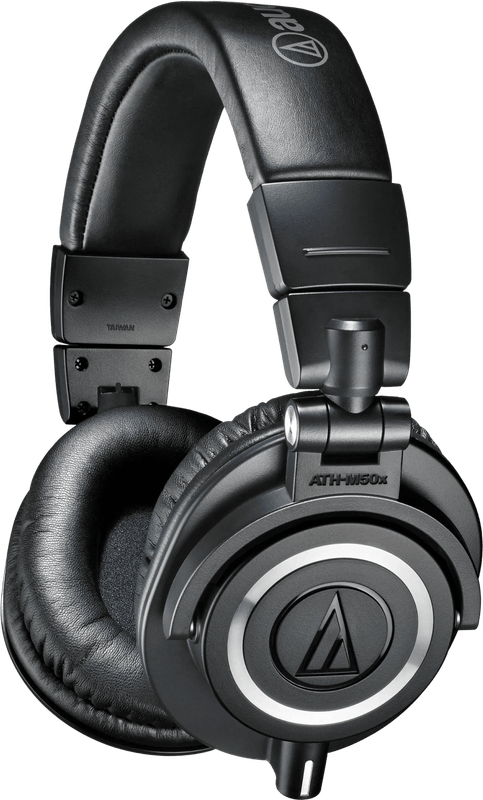
Closed-back, 38 ohms. That means a laptop is enough. Audio-Technica includes three detachable cables: a coiled cable from 1.2 to 3 meters and straight cables of 3 and 1.2 meters. Swiveling ear cups help with one-ear monitoring. Without the cable, it weighs 285 grams according to the manufacturer. According to buyer reports, the bass is on the strong side; if you want to mix strictly neutral, you should know that.
Sony MDR-7506
According to Sony, professionals have been using this model for more than 30 years. Light, closed-back, low-impedance, with a permanently attached coiled cable and, according to Sony, 40-millimeter drivers. The faux leather ear pads get warmer than velour during long sessions. Replacement pads are available from accessory makers.
How we would decide
- One pair of headphones for everything in the home studio: Beyerdynamic DT 770 Pro with 80 ohms. Closed-back for recording, with velour for long evenings.
- Detachable cable and a laptop without an interface: Audio-Technica ATH-M50x.
- Voice, video and on the go: Sony MDR-7506, light and, thanks to its low impedance, loud enough even on a camera or recorder.
- A second pair for mixing: Beyerdynamic DT 990 Pro if the room is quiet. The Sennheiser HD 490 Pro brings more features.
- Mixing with a powerful headphone amplifier: Sennheiser HD 600.
If you record guitar at home, closed-back headphones also let you hear your own playing cleanly. Suitable instruments can be found among our electric guitar sets.
With these headphones, you can also follow our listening comparison of the Shure SM7B and the Neumann TLM 103 well.
Frequently asked questions
Open-back or closed-back studio headphones?
Closed-back headphones seal off the ear and let little sound escape, which you need as soon as a microphone is open in the same room. Open-back models sound less "inside your head" and are popular for judging room and stereo image, but they leak sound outward. There is no model that handles both equally well.
Which impedance is the right one?
The higher the value in ohms, the more voltage the headphones need for the same volume. For the DT 770 Pro, Beyerdynamic assigns 32 ohms to mobile devices, 80 ohms to the typical studio and 250 ohms to professional equipment. On a laptop or smartphone, 250 or 300 ohms may not get loud enough.
Why is a detachable cable important?
Cables usually break at the plug; with a detachable cable, you then replace only the cable instead of the whole pair of headphones. On the DT 770 Pro, the cable is fixed. The Audio-Technica ATH-M50x comes with three detachable cables, and Beyerdynamic also offers the DT 770 Pro X with a detachable cable as a separate model.
Velour or faux leather ear pads?
Velour gets less warm than faux leather but isolates slightly less. Replaceable pads extend the life of a pair of headphones by years. Over several hours, fit matters more than the frequency curve; if you wear glasses, you will feel a firm headband after an hour.
Can I use studio headphones on a laptop without an interface?
With low impedance, yes. The Audio-Technica ATH-M50x has 38 ohms, so a laptop is enough. The Sennheiser HD 600, with 300 ohms, on the other hand places high demands on the output and sounds pale on a weak one.
Are studio headphones suitable for on the go?
Studio headphones have neither noise cancellation nor a battery. For commuting and travel, noise-canceling headphones are the better choice. The light, low-impedance Sony MDR-7506 is designed for voice, video and field use and is loud enough even on a camera or recorder.
Sources
- Beyerdynamic: DT 770 Pro
- Beyerdynamic: DT 990 Pro
- Sennheiser: HD 600
- Sennheiser: HD 490 Pro
- Sennheiser: HD 490 Pro and HD 490 Pro Plus data sheet
- Audio-Technica: ATH-M50x
- Sony Professional: MDR-7506
Where to buy
- Beyerdynamic DT 770 ProCheck price at Amazon.deAvailable in Germany: Amazon.de
- Beyerdynamic DT 990 ProCheck price at Amazon.deAvailable in Germany: Amazon.de
- Sennheiser HD 600Check price at Amazon.deAvailable in Germany: Amazon.de
- Sennheiser HD 490 ProCheck price at Amazon.deAvailable in Germany: Amazon.de
- Audio-Technica ATH-M50xView at CoolblueAvailable in Germany: CoolblueCheck price at Amazon.deAvailable in Germany: Amazon.de
- Sony MDR-7506Check price at Amazon.deAvailable in Germany: Amazon.de