Contents15 sections
This guide was first published in German on handgetestet.de.
Streaks on the pane are rarely the robot’s fault. Usually the pad is too wet, the glass too dusty or the sun too strong, and a more expensive device will not help with that. If you still make maintenance and running costs your reason for buying, the Kärcher RCW 4 gives you the fewest worries among the devices compared here: the cloths can go in the washing machine, and you replace the backup battery yourself. The WINBOT W3 OMNI, whose station washes the pads, seems more convenient but creates work of its own.
Whether a robot should come into the house at all is covered in the guide to window cleaning robots (in German).
Why do streaks stay on the glass?
Ecovacs names two causes. A poorly wrung-out pad releases too much water, which evaporates unevenly. And on glass that is rarely cleaned, dust mixes with the solution into a thin sludge that leaves trails as it dries. Kärcher adds a third: in direct sunlight or on hot days, the pane dries too quickly.
So the right cleaning day is overcast, dry and not hot. Rainy days are out; Ecovacs warns of water spots and slipping.
Very dirty exterior panes need two runs. The Hobot 2S manual has you clean dry first and then damp with a fresh pad; Ecovacs recommends deep cleaning mode on the outside and, with a lot of dust, two or three runs with a rinsed pad. Remove bird droppings and grease spots by hand beforehand. If a mark remains after you take the robot off, the pad was already full by the end of the run.
Particles in the cloth are more serious. Ecovacs requires small particles to be removed from the pad completely, because they can scratch the glass, and rules out coated surfaces entirely for the W2.
How often to wash, when to replace?
You have to wash after every use. No manufacturer gives a fixed replacement interval, however: Ecovacs replaces the pad when it is worn or no longer holds properly on the hook-and-loop fastener, Kärcher when it is damaged.
When it comes to washing, the instructions differ. For the RCW 4 and RCW 2, Kärcher allows the washing machine up to 40 °C without fabric softener. The Hobot manual calls for hand washing up to 40 °C and prohibits bleach, tumble dryer and iron. Ecovacs only mentions rinsing with tap water, wringing out and air drying; a washing machine does not appear in its documentation.
If results are poor, Kärcher recommends changing after every window, the Hobot manual after every damp pass. Three cloths are then not enough for any house. According to Kärcher, the RCW 4 Extra+ comes with six, the Winbots with only two pads.
There is a trap in flipping them. The Winbot pads have microfiber on both sides, but Ecovacs advises against turning them over, because the dirt then gets into the hook-and-loop fastener. Kärcher lists flipping as an option for the RCW 4. Remove dust from the robot’s hook-and-loop strip dry with a brush; according to Ecovacs, water must not get there.
Can supermarket glass cleaner go in the tank?
No. Ecovacs prohibits third-party products, citing damage, slipping and even falls. Kärcher requires its original cleaner only and names methylated spirits as an example of the wrong choice, even though the same manufacturer’s advice page recommends methylated spirits for cleaning by hand. So household remedies belong in the bucket, not in the robot.
Of course the manufacturer earns money from this, and we know of no independent testing. Still, we advise against experimenting, because the Ecovacs warranty excludes damage caused by consumables that the manufacturer neither offers nor recommends.
If you run out of solution, tap water may temporarily go into the Winbot’s tank, with weaker results. Filtered, purified or distilled water is off-limits, because the fill level sensor then measures incorrectly. Ecovacs does not say whether softened water from a water softener (in German) falls under this; we would not fill it in. If a spray nozzle clogs on a Kärcher, the manual says a drop of descaling liquid helps.
What does it cost over a year?
Let’s calculate with Ecovacs: depending on the source, an 80 ml tank covers 50 to 55 m², so one liter of solution covers about 600 m². A single-family home with 30 m² of glass, cleaned on both sides four times a year, comes to 240 m². That is our example calculation. The included 230 ml bottle is then empty after a little over half a year, and the liter lasts about two and a half years.
You should not stock more. Ecovacs states a shelf life of two years for the solution and gives 0 to 30 °C as the storage temperature, so the garage in January is out. In the Ecovacs shop, the liter and a two-pack of pads are each in the low double-digit euro range. For the W3 OMNI, the shop carries a quarterly accessory kit in the low triple-digit range. The manual does not require this interval. For Kärcher, the product pages give no prices for replacements; check them for cloths and the RM 503 cleaner before buying.
When the backup battery ages, the RCW 4 manual says you replace it yourself. With the Winbot, customer service is responsible.
Seven devices, sorted by effort
| Model | Tank and area according to the manufacturer | Cloths in the box | Washing according to the documentation | Best for |
|---|---|---|---|---|
| Kärcher RCW 4 | 150 ml, 100 m²; fill only to 80 % | 3 | Hand or machine up to 40 °C | lots of glass, little appetite for hand washing |
| Kärcher RCW 2 | 70 ml, 50 m² | 3 pairs of covers | Hand or machine up to 40 °C | framed panes, small house |
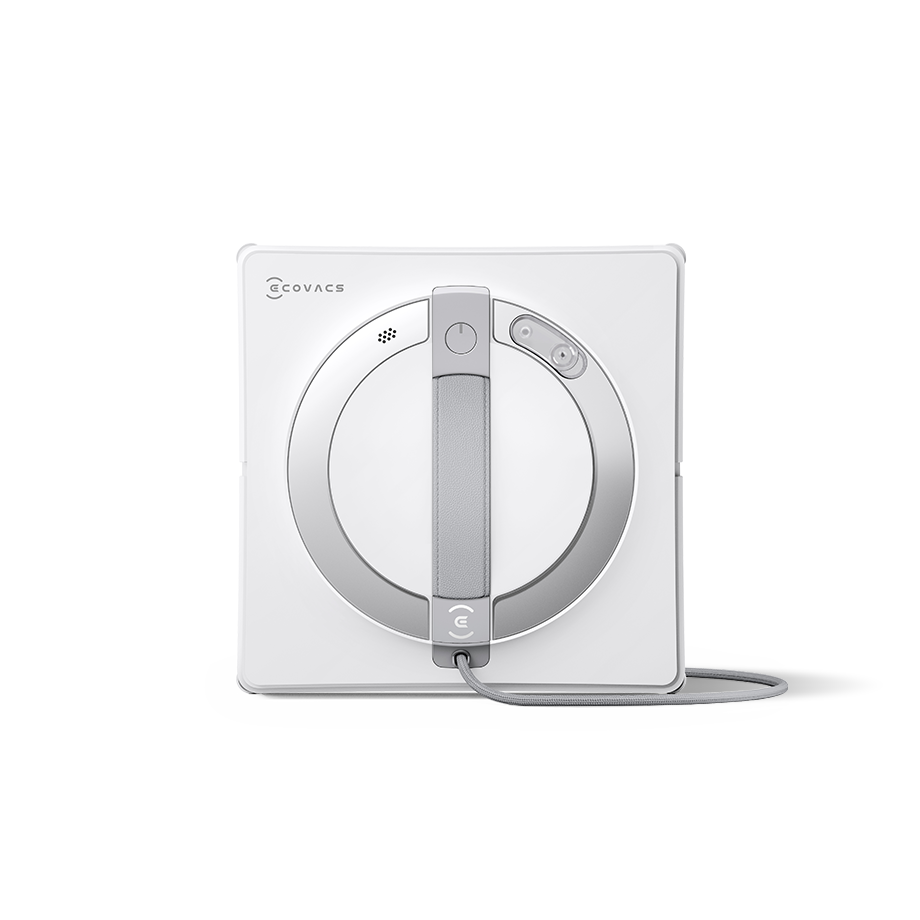
| Ecovacs WINBOT W2S PRO | 120 ml, about 75 m² | 2 | rinse, air dry | infrequent refilling |
| Ecovacs WINBOT W2 PRO | 60 ml, 30 to 40 m² | 2 | rinse, air dry | apartment, a few large panes |
| Ecovacs WINBOT mini 2 | 50 ml, 30 m² | 2 | rinse, not dripping wet | small panes |
| Ecovacs WINBOT W3 OMNI | 80 ml, about 50 m²; station 1.2 l fresh water | not specified | wash compartment in the station | lots of glass on one floor |
| Hobot 2S | no reliable information | 3 | Hand up to 40 °C, no tumble dryer | remote control, little glass |
For the W2 PRO, the data sheet states about 40 m², the help pages only 30 m² under laboratory conditions. Calculate with the smaller number. Whether Kärcher’s 100 m² applies to a full tank or the permitted 80 percent fill remains unclear.
Kärcher RCW 4
Our choice when maintenance counts: machine washing, a user-replaceable backup battery and the largest tank here. On the other side are a minimum area of 40 × 40 cm and spray nozzles that you are supposed to clean between two panes. According to the manual, it is not suitable for frameless glass; it speaks of framed surfaces.
Kärcher RCW 2
The same washing, plus three pairs of covers that can be used on both sides. Tank and area are half the size of the RCW 4.
Ecovacs WINBOT W2S PRO
The 120 ml tank means the fewest interruptions among the Winbots. It still comes with two pads.
Ecovacs WINBOT W2 PRO
Same care, half the tank.
Ecovacs WINBOT mini 2
The smallest tank in the comparison. According to the manual, the pad must no longer drip, and you wipe the corner brush and side roller with a damp cloth after every use.
Ecovacs WINBOT W3 OMNI
According to the manufacturer, it washes the pads in about a minute. That does not make the manual work disappear; it just moves. Both containers need emptying and rinsing after every run, the wash compartment has to dry or it will smell, and the station weighs 10 kg.
Hobot 2S
The most manual work. The manual from the German distributor calls for a pad change after every damp pass and cleaning the drive and sensors before every use.
What needs doing after every use
- Remove the pad, rinse or wash it, and let it dry completely, otherwise it will smell.
- Empty the tank. Ecovacs contradicts itself: the maintenance tips say to empty it, another answer considers this unnecessary for breaks of up to three months. We always empty it.
- Clean the tracks and drive. Ecovacs uses a dry cloth for tracks, fan and sensors, Kärcher a damp one. Follow your device’s manual.
- Only wipe the device. Kärcher warns against water in the ventilation openings.
- Before a longer break, fully charge and switch off. Ecovacs requires recharging at least every six months, otherwise deep discharge threatens. Kärcher stores indoors only.
According to Ecovacs, friction noises from the tracks and ball sensors that have turned shiny are normal. If you find all this too much, a window vacuum (in German) is not a bad choice.
How we would decide
- Lots of glass and no appetite for hand washing: Kärcher RCW 4, ideally with six cloths.
- Small house with framed panes: Kärcher RCW 2.
- Set on a Winbot, but want to refill rarely: WINBOT W2S PRO.
- Never touch the pads and lots of glass on one floor: WINBOT W3 OMNI, station and containers included.
- Small panes: WINBOT mini 2.
Frequently asked questions
Why does the window cleaning robot leave streaks?
Ecovacs names two causes: a poorly wrung-out pad and dust that mixes with the solution into a thin sludge. Kärcher adds direct sunlight, which dries the pane too quickly. The right cleaning day is overcast, dry and not hot.
Can regular glass cleaner go in the window cleaning robot's tank?
No. Ecovacs prohibits third-party products because of damage and slipping, and Kärcher requires its original cleaner. The Ecovacs warranty excludes damage caused by consumables it does not recommend. Tap water may temporarily go into the Winbot's tank; distilled or filtered water is off-limits.
How often do you need to wash and replace the pads?
Wash them after every use. No manufacturer gives a fixed replacement interval: Ecovacs replaces the pad when it is worn or no longer holds on the hook-and-loop fastener, Kärcher when it is damaged. For the RCW 4, Kärcher allows machine washing up to 40 °C without fabric softener.
How long does one liter of cleaning solution last?
With Ecovacs, one liter covers about 600 m². In our example calculation with 240 m² of glass per year, it lasts about two and a half years. You should not stock more, because Ecovacs states a shelf life of two years and a storage temperature of 0 to 30 °C.
What needs doing after each use of a window cleaning robot?
Remove the pad, rinse or wash it and let it dry completely. Empty the tank, clean the tracks and drive according to the device's manual, and only wipe the device itself. Before a longer break, fully charge and switch it off; Ecovacs requires recharging at least every six months.
Does the WINBOT W3 OMNI station take the work off your hands?
Only partly. According to the manufacturer, it washes the pads in about a minute, but the manual work just moves: both containers need emptying and rinsing after every run, the wash compartment has to dry, and the station weighs 10 kg.
Sources
- Ecovacs: WINBOT W2S, help and FAQ
- Ecovacs: WINBOT W2, help and FAQ
- Ecovacs: Warranty
- Ecovacs: WINBOT W2 PRO, product page
- Ecovacs: WINBOT W2S PRO, product page
- Ecovacs: WINBOT W3 OMNI, product page
- Ecovacs: WINBOT mini 2, product page
- Ecovacs: WINBOT W2S OMNI, manual
- Ecovacs: WINBOT W3 OMNI, manual
- Ecovacs: WINBOT mini 2, manual
- Kärcher: RCW 4, product page
- Kärcher: RCW 4 Extra+, product page
- Kärcher: RCW 4, operating instructions
- Kärcher: RCW 2, product page
- Kärcher: RCW 2, operating instructions
- Kärcher: Window cleaning tips
- Hobot: HOBOT-2S
Where to buy
- Kärcher RCW 4Check price at Amazon.deCheck price at Amazon.co.ukCheck price at Amazon.nlCheck price at Amazon.com.beCheck price at Amazon.frCheck price at Amazon.itCheck price at Amazon.esCheck price at Amazon.plCheck price at Amazon.seAvailable in Germany: Amazon.de
- Kärcher RCW 2Check price at Amazon.deCheck price at Amazon.co.ukCheck price at Amazon.nlCheck price at Amazon.com.beCheck price at Amazon.frCheck price at Amazon.itCheck price at Amazon.esCheck price at Amazon.plCheck price at Amazon.seAvailable in Germany: Amazon.de
- Ecovacs WINBOT W2S PROView at EcovacsAvailable in Germany: EcovacsCheck price at Amazon.deCheck price at Amazon.co.ukCheck price at Amazon.nlCheck price at Amazon.com.beCheck price at Amazon.frCheck price at Amazon.itCheck price at Amazon.esCheck price at Amazon.plCheck price at Amazon.seAvailable in Germany: Amazon.de
- Ecovacs WINBOT W2 PROView at EcovacsAvailable in Germany: EcovacsCheck price at Amazon.deCheck price at Amazon.co.ukCheck price at Amazon.nlCheck price at Amazon.com.beCheck price at Amazon.frCheck price at Amazon.itCheck price at Amazon.esCheck price at Amazon.plCheck price at Amazon.seAvailable in Germany: Amazon.de
- Ecovacs WINBOT mini 2View at EcovacsAvailable in Germany: EcovacsCheck price at Amazon.deCheck price at Amazon.co.ukCheck price at Amazon.nlCheck price at Amazon.com.beCheck price at Amazon.frCheck price at Amazon.itCheck price at Amazon.esCheck price at Amazon.plCheck price at Amazon.seAvailable in Germany: Amazon.deTry a sample at CoolblueTry a sample at Coolblue
- Ecovacs WINBOT W3 OMNIView at EcovacsAvailable in Germany: EcovacsCheck price at Amazon.deCheck price at Amazon.co.ukCheck price at Amazon.nlCheck price at Amazon.com.beCheck price at Amazon.frCheck price at Amazon.itCheck price at Amazon.esCheck price at Amazon.plCheck price at Amazon.seAvailable in Germany: Amazon.deView at CoolblueAvailable in Germany: Coolblue
- Hobot 2SCheck price at Amazon.deCheck price at Amazon.co.ukCheck price at Amazon.nlCheck price at Amazon.com.beCheck price at Amazon.frCheck price at Amazon.itCheck price at Amazon.esCheck price at Amazon.plCheck price at Amazon.seAvailable in Germany: Amazon.de