Contents12 sections
This guide was first published in German on handgetestet.de.
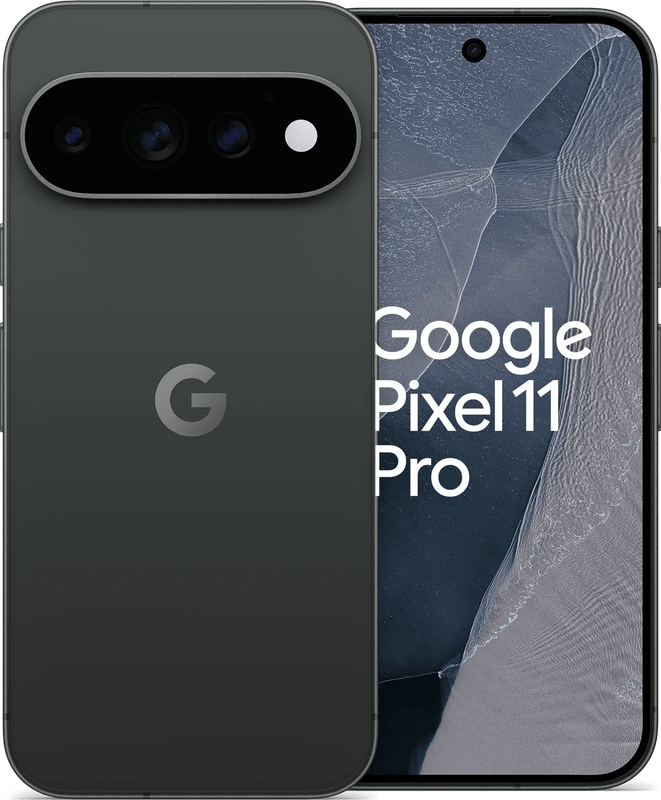
Megapixels sell phones. They don’t take good photos. If you’re buying a smartphone mainly for its camera, look at three other things: the size of the main sensor, the focal lengths of the telephoto cameras and how long the device will receive updates. By these criteria, we recommend the Google Pixel 11 Pro to most people. Almost the same camera is in its predecessor, the Pixel 10 Pro, which costs considerably less.
General buying advice without a focus on the camera can be found in our smartphone guide and our guide to Android smartphones.
Why the sensor matters more than the pixel count
A large image sensor captures more light. You notice it in the evening, indoors and with movement: less noise, shorter exposure times, fewer blurry photos of the kids. Google specifies a sensor size of 1/1.3 inch for the main camera of the Pixel 11 Pro, and Samsung also gives 1/1.3 inch for the Galaxy S26 Ultra. Those are large sensors for a phone. The ultrawide cameras are smaller: Google lists 1/2.51 inch, Samsung 1/2.52 inch. In low light, the difference from the main camera is clearly visible, so in the evening it’s better to take a step back than to switch to the ultrawide.
Megapixels say little about this. A 200-megapixel sensor usually combines several pixels into one to gather light. Full resolution helps in daylight for tight crops. Nothing more.
Zoom: optical, optical-quality, digital
This is where it gets confusing. „100x zoom“ appears on many spec sheets, and it almost always means a digitally enlarged crop. What matters are the real telephoto cameras.
The Pixel 11 Pro has a 48-megapixel telephoto camera with 5x optical zoom. For the iPhone 18 Pro, Apple lists 100 mm (4x) and 8x optical-quality zoom, meaning a crop from the telephoto sensor. Samsung builds two telephoto cameras into the S26 Ultra: 3x and 5x. And Oppo relies on two telephotos with 200 and 50 megapixels in the Find X9 Ultra.
For portraits, 2x to 3x is enough. For concerts, animals and architecture, 5x and more is helpful. If you never zoom, you don’t need an Ultra model.
And the software?
People rarely buy a camera phone for just two years. Google promises seven years of operating system and security updates for the Pixel 10 Pro and Pixel 11 Pro. That is a strong argument, especially for an expensive device.
Six camera phones compared
| Model | Main camera according to the manufacturer | Telephoto camera(s) | Weight | For whom |
|---|---|---|---|---|
| Google Pixel 11 Pro | 50 MP, 1/1.3 inch, f/1.68 | 48 MP, 5x optical | 204 g | most photographers |
| Google Pixel 10 Pro | 50 MP, 1/1.3 inch, f/1.68 | 48 MP, 5x optical | 207 g | same class, smaller budget |
| Apple iPhone 18 Pro | 48 MP, variable aperture f/1.48 to f/4.0 | 48 MP, 100 mm (4x) | 211 g | video, Apple users |
| Samsung Galaxy S26 Ultra | 200 MP, 1/1.3 inch, f/1.4 | 50 MP 5x and 10 MP 3x | 214 g | zoom fans with S Pen |
| OPPO Find X9 Ultra | 200 MP, f/1.5 | 200 MP and 50 MP | approx. 235 g | telephoto shots, large battery |
| OPPO Find X10 Pro Max | 200 MP, f/1.5 | 200 MP | approx. 226 g | three 200 MP cameras |
Google Pixel 11 Pro: our recommendation
Three cameras that work well together: a 50-megapixel main camera with a large sensor, a 48-megapixel ultrawide with macro focus and a 48-megapixel telephoto with 5x optical zoom. Google lists optical and electronic stabilization for the wide and telephoto cameras as well as multi-zone laser autofocus. Add to that the Tensor G6 chip and seven years of updates. The Pixel 11 Pro weighs 204 grams, the XL version 226 grams.
Google Pixel 10 Pro: last year’s model, hardly weaker
The camera specs of the Pixel 10 Pro are almost identical to those of its successor: the same main sensor, the same aperture, the same 5x telephoto. Google lists up to 100x instead of 120x digital zoom here. Seven years of updates also apply to the 10 Pro. If you want to save money, you lose hardly anything on the camera.
Apple iPhone 18 Pro: strong on video
According to Apple, the main camera of the iPhone 18 Pro has a variable aperture from f/1.48 to f/4.0. That lets you control depth of field as you would with a traditional camera. The ultrawide and telephoto cameras also resolve 48 megapixels. For video, Apple lists, among other things, 4K Dolby Vision at up to 120 frames per second, ProRes, ProRes RAW and Apple Log 2. For people who shoot video and edit on a Mac, it is the obvious choice.
Samsung Galaxy S26 Ultra: two telephotos and a pen
Samsung combines a 200-megapixel main camera (1/1.3 inch, f/1.4) with a 50-megapixel ultrawide and two telephoto cameras: 50 megapixels at 5x and 10 megapixels at 3x. If you use a lot of intermediate focal lengths, that gives you more room than Google. The S Pen is included, and the display measures 6.9 inches. Samsung states the weight as 214 grams, barely more than the iPhone.
OPPO Find X9 Ultra: for telephoto lovers
Oppo fits five cameras on the back: a 200-megapixel main camera with f/1.5, a 200-megapixel telephoto, a second telephoto with 50 megapixels and a very narrow 11-degree field of view, a 50-megapixel ultrawide and a monochrome camera. It records video in 8K at 30 frames per second. According to Oppo, the battery has 7,050 mAh. At around 235 grams, it is the heaviest device here. Coolblue also sells it in a bundle with a Hasselblad camera kit.
OPPO Find X10 Pro Max: three times 200 megapixels
The newest Oppo relies on three 200-megapixel cameras for ultrawide, main and telephoto, plus a multispectral camera for color tuning. According to Oppo, the battery holds 7,150 mAh. A second, longer telephoto like the one on the Find X9 Ultra is missing. For telephoto shots, the Ultra therefore remains the better choice; for wide-angle and everyday use, the Pro Max.
Which camera phone for whom?
- Balanced camera and long updates: Google Pixel 11 Pro.
- The same image quality class for less money: Google Pixel 10 Pro.
- Lots of video, Apple ecosystem: Apple iPhone 18 Pro.
- Many focal lengths and S Pen: Samsung Galaxy S26 Ultra.
- Concerts, animals, details from afar: OPPO Find X9 Ultra.
- High resolution on all three main cameras: OPPO Find X10 Pro Max.
If you use the camera seriously, consider a case with a raised edge, because otherwise the large camera bumps rest directly on the table. Suitable models are shown in our guide to iPhone cases.
Frequently asked questions
Are more megapixels better in a phone camera?
Hardly. A 200-megapixel sensor usually combines several pixels into one to gather light. Full resolution only helps in daylight for tight crops. Sensor size matters more, because a large sensor captures more light and produces less noise in the evening.
What does 100x zoom mean on a smartphone?
Almost always a digitally enlarged crop. What matters are the real telephoto cameras: the Pixel 11 Pro has a telephoto with 5x optical zoom, and the Galaxy S26 Ultra has two telephotos at 3x and 5x. For portraits, 2x to 3x is enough; for concerts and animals, 5x and more helps.
Is the Pixel 10 Pro worth buying instead of the Pixel 11 Pro?
For the camera, yes. Main sensor, aperture and 5x telephoto are almost identical to its successor; only the digital zoom reaches 100x instead of 120x. Seven years of updates also apply to the 10 Pro. If you want to save money, you lose hardly anything on the camera.
Which camera phone is best for video?
The Apple iPhone 18 Pro. Apple lists, among other things, 4K Dolby Vision at up to 120 frames per second, ProRes, ProRes RAW and Apple Log 2, plus a variable aperture from f/1.48 to f/4.0. If you shoot video and edit on a Mac, this is the obvious choice.
Which smartphone has the strongest zoom for concerts and animals?
The OPPO Find X9 Ultra with two telephoto cameras, one with 200 megapixels and the other with 50 megapixels and a very narrow 11-degree field of view. At around 235 grams, however, it is the heaviest device in the comparison. The Galaxy S26 Ultra also offers many intermediate focal lengths.
Sources
- Google Store: Pixel 11 Pro, tech specs
- Google Store: Pixel 10 Pro, tech specs
- Apple: iPhone 18 Pro, tech specs
- Samsung: Galaxy S26 Ultra and Galaxy S25 Ultra compared
- OPPO: Find X9 Ultra, tech specs
- OPPO: Find X10 Pro Max, tech specs
Where to buy
- Google Pixel 11 ProView at CoolblueAvailable in Germany: Coolblue
- Google Pixel 10 ProView at CoolblueAvailable in Germany: Coolblue
- Apple iPhone 18 ProView at CoolblueAvailable in Germany: Coolblue
- Samsung Galaxy S26 UltraView at CoolblueAvailable in Germany: Coolblue
- OPPO Find X9 UltraView at CoolblueAvailable in Germany: Coolblue
- OPPO Find X10 Pro MaxView at CoolblueAvailable in Germany: Coolblue