Contents13 sections
This guide was first published in German on handgetestet.de.
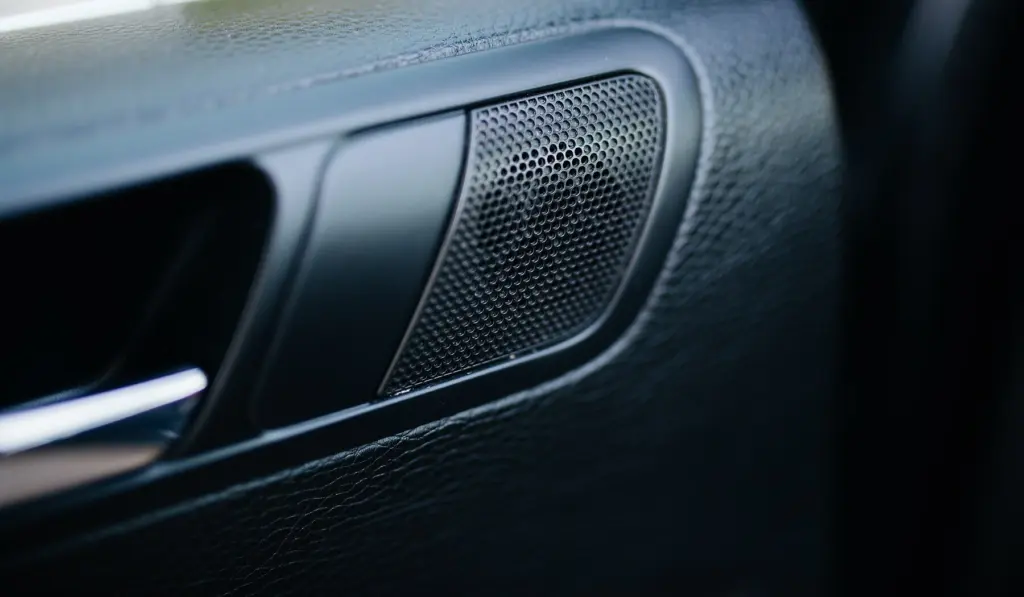
If you want better sound in your car, you often buy the subwoofer first. In most cases, that is the wrong order. With factory equipment, the door speakers are usually the weakest part of the system. A decent 16.5 cm (6.5-inch) coaxial system such as the Focal ACX 165 brings the biggest step forward for most vehicles. Only after that does the question of component speakers, an amplifier and bass in the trunk come up.
Measure first, then order
Before a speaker goes into your shopping cart, the door panel needs to come off. Three dimensions decide whether it fits or not. The diameter is usually 16.5 cm, and in older small cars also 13 cm. Mounting depth is the tricky figure: when the window is fully lowered, there is often little space left behind the basket. Focal lists 62.5 mm each for the ACX 165 and the ASE 165. If your door is just under that, the window will rub against the magnet. Third, the mounting. Factory speakers frequently sit in plastic rings with their own hole pattern, and then you need a vehicle-specific adapter ring along with a plug adapter so that no wire has to be cut.
The electrics have consequences too. Most aftermarket speakers run at 4 ohms, whereas JBL’s Club series runs at 3 ohms. That gets a bit more power out of the head unit, but also puts more load on its output stage. Sensitivity tells you how loud a speaker plays at the same power. Between 91.5 and 93 dB there are 1.5 dB, which is noticeable on a car stereo without an amplifier.
Coaxial or component?
A coaxial system carries the tweeter in the center of the woofer. It goes into the existing opening, two wires, done. A component system separates the two: the woofer stays low in the door, the tweeter moves to the mirror triangle or the A-pillar, and a separate crossover is added. The advantage is audible. The highs then come from above instead of from knee height, and the soundstage moves forward.
That takes work. Tweeters need to be mounted cleanly, and the crossovers need a dry spot. Where available, the factory location in the mirror triangle is the simpler solution compared with drilling a new hole in the panel. Our position: coaxial is always enough for the rear doors. Up front, component speakers are worth it if you are willing to spend an afternoon on the installation, or if you hire a shop to do it.
Six models for doors and trunk
Focal ACX 165
A 2-way coaxial with a polypropylene woofer and an inverted Mylar tweeter, which Focal combines with a waveguide for wider dispersion. 60 W RMS and 4 ohms suit any aftermarket head unit. At 62.5 mm deep, it fits into most doors. For the front speakers, this is our pick if you do not want any modifications.
Hertz DCX 165.3
Hertz’s entry-level Dieci line. A paper cone with water-repellent treatment and a neodymium tweeter with a 15 mm dome. At 93 dB, it plays slightly louder than the Focal at the same power. That makes it interesting for rear doors that are wired directly to the head unit.
Focal ASE 165
Technically the twin of the ACX 165, just built as separate components. According to Focal, the tweeter can go into the A-pillar or the factory location, and the crossover comes separately. The manufacturer lists operation on the head unit or on an external amplifier. A sensible way to try component speakers without rebuilding the whole system right away.
JBL Club 64C
The third generation of the Club series. According to the installation manual, 70 W RMS, 3 ohms, 92 dB and a crossover point of 5.5 kHz. The included Starfish mount is handy: it lets the tweeter sit behind the factory grille or in the A-pillar. You set the tweeter level on the crossover to 0 or +3 dB, depending on where it is mounted. The set only shows its reserves on an amplifier.
JBL BassPro SL2
A flat powered subwoofer with an 8-inch (20 cm) driver and 125 W RMS, designed for the space under the front seat. The crossover can be set between 50 and 120 Hz, with bass boost up to +9 dB at 70 Hz. There are RCA and speaker-level inputs, and according to the spec sheet a remote level control is included. JBL specifies a 15 A fuse and a maximum current draw of 12 A. If you need your trunk, this is the more sensible compromise.
Ground Zero GZIB 25BR-ACT
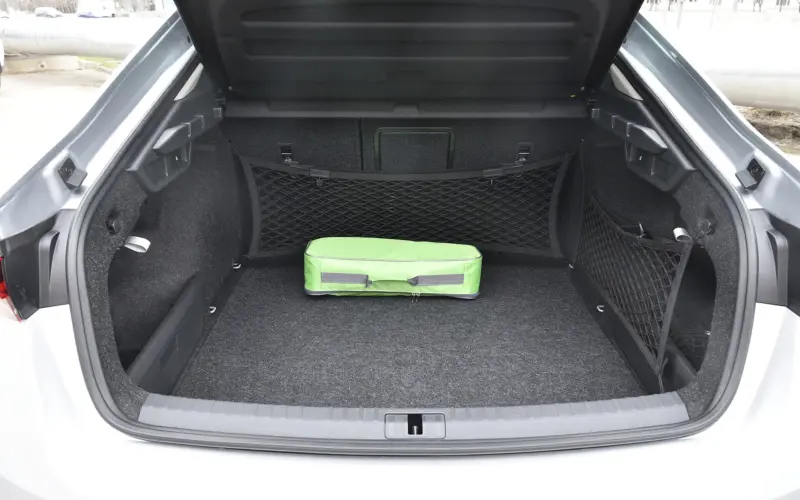
A bass reflex enclosure made of MDF with a 25 cm driver and a built-in class A/B amplifier. The manual lists 150 W RMS, a low-pass of 30 to 120 Hz, a phase switch and a speaker-level input that switches on automatically. The enclosure measures 440 × 320 mm and is up to 360 mm deep. For the power supply, Ground Zero requires a cable cross-section of at least 6 mm². With a volume of 33 liters, it has considerably more air than a flat under-seat woofer. In return, part of the trunk disappears.
Do you need an amplifier?
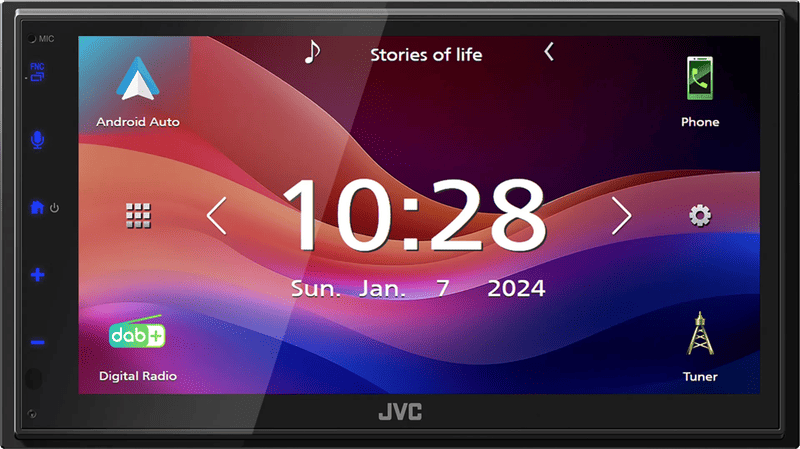
Not for a coaxial system on an aftermarket head unit. Look at the continuous power of your head unit in the data sheet, not the peak figure printed on the front. A component set such as the JBL Club 64C becomes noticeably more controlled on an amplifier, especially at higher volumes. If you are planning a subwoofer later anyway, get a four-channel amplifier with bridge mode right away, or a powered subwoofer that connects to the speaker wires via its speaker-level input. Which head units have preamp outputs is covered in our guide to car stereos with CarPlay and DAB+.
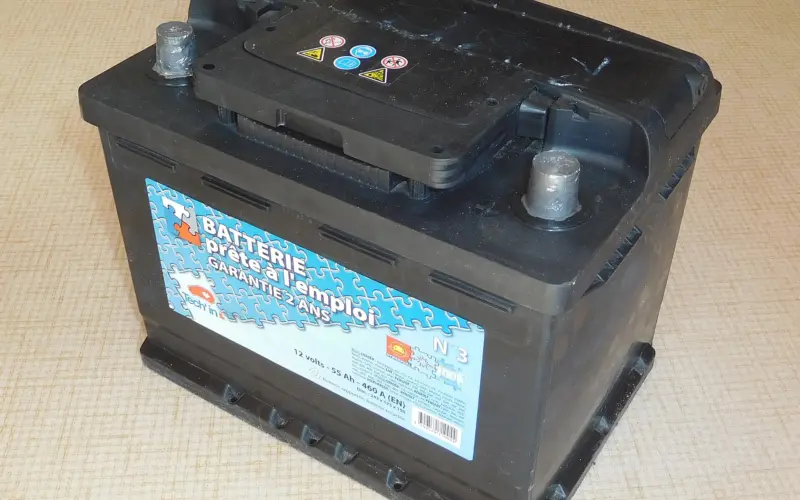
Powered subwoofers and amplifiers draw their power through a separate cable from the battery. In its installation notes, Ground Zero says never to drill into the fuel tank, brake lines or cables, not to route cables over sharp edges, and to run power cables separately from signal cables. More on the electrical system in our car battery guide (in German). Ground Zero expressly recommends a specialist dealer for putting the system together, installing it and tuning it.
Volume and traffic
A powerful system is tempting. Under Section 23 of the German Road Traffic Regulations (StVO), the driver is responsible for ensuring that his or her hearing is not impaired by devices. Sirens and horns must therefore remain audible. The German Environment Agency (Umweltbundesamt) explains that noise-induced hearing damage cannot be cured, because destroyed hair cells do not grow back; for music in nightclubs and at concerts, it cites measured levels between 90 and 110 dB(A). Ground Zero itself points out in its manual that systems with high amplifier power can reach 130 dB and more.
How we would decide
- Just better door speakers, head unit stays: Focal ACX 165 up front, the Hertz DCX 165.3 in the rear.
- Up front with the tweeter in the A-pillar, without an amplifier: Focal ASE 165.
- Component speakers with their own amplifier: JBL Club 64C.
- Bass, but with the trunk kept free: JBL BassPro SL2 under the seat.
- Low-end extension matters more than cargo space: Ground Zero GZIB 25BR-ACT.
An order that has proven itself: front doors first, then sound deadening, then bass. A deadened door rattles less and absorbs the sound that would otherwise travel inward into the panel.
Frequently asked questions
What do I need to measure before buying car speakers?
Three dimensions decide: the diameter, usually 16.5 cm, the mounting depth and the mounting method. Depth is the tricky one, because the window can rub against the magnet when it is lowered. Factory speakers often sit in their own plastic rings, in which case you need a vehicle-specific adapter ring along with a plug adapter.
What is the difference between coaxial and component speakers?
In a coaxial system, the tweeter sits in the center of the woofer, and it goes into the existing opening. A component system separates the two, and the tweeter moves to the mirror triangle or the A-pillar. The highs then come from above instead of from knee height. According to this guide, coaxial is always enough for the rear doors.
Do new door speakers need an amplifier?
Not for a coaxial system on an aftermarket head unit. What matters is the head unit's continuous power, not the peak figure printed on the front. A component set such as the JBL Club 64C becomes noticeably more controlled on an amplifier, especially at higher volumes.
What does 3 ohms instead of 4 ohms mean for car speakers?
Most aftermarket speakers run at 4 ohms, JBL's Club series at 3 ohms. That gets a bit more power out of the head unit but puts more load on its output stage. Sensitivity counts too: the difference between 91.5 and 93 dB is noticeable without an amplifier.
Which subwoofer keeps the trunk free?
A flat powered subwoofer under the front seat; in this guide, the JBL BassPro SL2 with an 8-inch (20 cm) driver and 125 W RMS. If deep bass matters more to you than cargo space, go for the bass reflex enclosure Ground Zero GZIB 25BR-ACT with 33 liters, which takes up part of the trunk.
How loud can music be in the car?
Under Section 23 of the German Road Traffic Regulations (StVO), the driver's hearing must not be impaired by devices; sirens and horns must remain audible. The German Environment Agency (Umweltbundesamt) points out that noise-induced hearing damage cannot be cured. Ground Zero states 130 dB and more for high-power systems.
Sources
- Focal: ACX 165
- Focal: ASE 165
- Hertz: DCX 165.3
- Hertz: DCX 165.3 data sheet (PDF)
- JBL: Club Gen 3 installation manual (PDF)
- JBL: BassPro SL2 spec sheet (PDF)
- Ground Zero: GZIB 25BR-ACT
- Ground Zero: GZIB BR-ACT manual (PDF)
- Section 23 of the German Road Traffic Regulations (StVO, in German)
- German Environment Agency: hearing damage (in German)
Where to buy
- Focal ACX 165Check price at Amazon.deCheck price at Amazon.co.ukCheck price at Amazon.nlCheck price at Amazon.com.beCheck price at Amazon.frCheck price at Amazon.itCheck price at Amazon.esCheck price at Amazon.plCheck price at Amazon.seAvailable in Germany: Amazon.de
- Hertz DCX 165.3Check price at Amazon.deCheck price at Amazon.co.ukCheck price at Amazon.nlCheck price at Amazon.com.beCheck price at Amazon.frCheck price at Amazon.itCheck price at Amazon.esCheck price at Amazon.plCheck price at Amazon.seAvailable in Germany: Amazon.de
- Focal ASE 165Check price at Amazon.deCheck price at Amazon.co.ukCheck price at Amazon.nlCheck price at Amazon.com.beCheck price at Amazon.frCheck price at Amazon.itCheck price at Amazon.esCheck price at Amazon.plCheck price at Amazon.seAvailable in Germany: Amazon.de
- JBL Club 64CCheck price at Amazon.deCheck price at Amazon.co.ukCheck price at Amazon.nlCheck price at Amazon.com.beCheck price at Amazon.frCheck price at Amazon.itCheck price at Amazon.esCheck price at Amazon.plCheck price at Amazon.seAvailable in Germany: Amazon.de
- JBL BassPro SL2Check price at Amazon.deCheck price at Amazon.co.ukCheck price at Amazon.nlCheck price at Amazon.com.beCheck price at Amazon.frCheck price at Amazon.itCheck price at Amazon.esCheck price at Amazon.plCheck price at Amazon.seAvailable in Germany: Amazon.de
- Ground Zero GZIB 25BR-ACTCheck price at Amazon.deCheck price at Amazon.co.ukCheck price at Amazon.nlCheck price at Amazon.com.beCheck price at Amazon.frCheck price at Amazon.itCheck price at Amazon.esCheck price at Amazon.plCheck price at Amazon.seAvailable in Germany: Amazon.de
Still undecided?
Keep comparing at your own pace – every article in this category is checked monthly for new and discontinued models.