Contents13 sections
This guide was first published in German on handgetestet.de.
Cycling glasses are first and foremost protection against headwind, insects and grit, and only then sunglasses. If you buy by tint alone, you will ride into the shade of an autumn forest with glasses that are too dark and miss the root. That is why we recommend photochromic glasses for most riders, specifically the ROAD TO SKY Photochrome with adjustable nose pads. If you want to spend little, the polarized ROCKBROS glasses give you four interchangeable lenses.
How do they differ from ordinary sunglasses?
The shape. The Kuratorium Gutes Sehen (German Good Vision Board) lists four requirements for sports glasses: they should sit firmly without pinching, be well ventilated, protect against UV light, wind, dirt and insects, and have lenses made of shatterproof polycarbonate. Fashionable sunglasses usually meet only the UV protection requirement. The German Federal Office for Radiation Protection (BfS) also advises large lenses or a curved shape, because UV radiation scatters strongly and also comes from the side.
For everyday riding in the city, well-fitting sunglasses are enough. On a fast descent without side protection, your eyes start watering after just a few minutes.
Which tint should it be?
The EN ISO 12312-1 standard divides sunglass lenses into five filter categories. According to the Kuratorium Gutes Sehen, roughly:
- Category 0 blocks up to 20 percent of the light, for overcast skies and the evening.
- Category 1 blocks 20 to 57 percent, for changeable weather.
- Category 2 blocks 57 to 82 percent, the all-round level for Central Europe.
- Category 3 blocks 82 to 92 percent, for bright sun, the sea and the mountains.
- Category 4 blocks up to 97 percent and is not permitted in road traffic.
The last point also applies on a bike. The BfS recommends category 2 or 3 and considers category 4 too dark. Worth knowing: the tint says nothing about UV protection. Look for the UV 400 label, meaning protection up to 400 nanometers, and for the CE mark, which is usually printed on the inside of the temple.
When it comes to color, gray and brown lenses are the safe choice. According to the BfS, blue or red tints can reduce contrast and sharpness. That also applies to colorful mirrored lenses, where the base tint underneath is what counts.
Photochromic, polarized or interchangeable lenses?
According to the Kuratorium Gutes Sehen, photochromic lenses darken between 10 and 90 percent within about 30 seconds. In a car, older lenses work poorly because the windshield filters out the UV light that triggers the tinting. On a bike, there is no windshield. That is exactly what makes photochromic lenses interesting here: one pair of glasses for sun, forest and dusk. Only speed sets limits. Going from sunlight into a tunnel takes less than 30 seconds.
Polarized lenses filter reflected light from wet roads or water and increase contrast in the distance. When looking at the path directly in front of the front wheel, however, contrast can become weaker, the Kuratorium writes. For mountain bikers on a carpet of roots, that is a drawback; for road cyclists by a lake, more of a plus.
Interchangeable lenses are the affordable solution for changing light. You just have to remember to pack the light lens.
One case is often forgotten: commuters. If you ride home at half past five in November, you do not need sunglasses but a clear category 0 lens that only keeps out wind, rain and insects and adds no extra darkening in the headlights of oncoming cars. Many interchangeable lens sets include exactly such a lens. Check before you buy.
And with a prescription?
Photochromic lenses are also available with correction, and even strongly curved sports lenses can be ground to prescription. That goes through an optician, not through off-the-shelf glasses. The models below are without prescription.
Six pairs of glasses compared
For ROCKBROS, the information comes from the retailer’s product title, which does not state any filter categories. The uvex data comes from the manufacturer. Prices appear automatically from the retailer data.
| Model | Lenses | According to the seller | Who it is for | Offer (affiliate link) |
|---|---|---|---|---|
| ROAD TO SKY Photochrome Fahrradbrille | photochromic | UV400, adjustable nose pads | Rides with sun and forest | View at ROCKBROSAvailable in Germany: ROCKBROSVoucher code ROCKBROSEU5 at ROCKBROS until 31.12., terms at the retailer |
| uvex sportstyle 806 V | photochromic | Category 1–3, transmission 74–9 % | narrow faces, any weather | Check price at Amazon.deCheck price at Amazon.co.ukCheck price at Amazon.nlCheck price at Amazon.com.beCheck price at Amazon.frCheck price at Amazon.itCheck price at Amazon.esCheck price at Amazon.plCheck price at Amazon.seAvailable in Germany: Amazon.de |
| ROCKBROS Fahrradbrille BOUNDLESS Drei-Gläser | three interchangeable lenses | configuration system | those who choose their own lenses | View at ROCKBROSAvailable in Germany: ROCKBROSVoucher code ROCKBROSEU5 at ROCKBROS until 31.12., terms at the retailer |
| ROAD TO SKY Polarisierte Fahrradbrille | polarized | UV400, adjustable nose pads | Road, water, backlight | View at ROCKBROSAvailable in Germany: ROCKBROSVoucher code ROCKBROSEU5 at ROCKBROS until 31.12., terms at the retailer |
| ROCKBROS Polarisierte Fahrradbrille mit 4 Wechselgläsern | polarized, four lenses | interchangeable lenses | small budget | View at ROCKBROSAvailable in Germany: ROCKBROSVoucher code ROCKBROSEU5 at ROCKBROS until 31.12., terms at the retailer |
| ROCKBROS Smarte Radbrille mit elektronischer Verdunkelung | electronic | electronic darkening | tech enthusiasts | View at ROCKBROSAvailable in Germany: ROCKBROSVoucher code ROCKBROSEU5 at ROCKBROS until 31.12., terms at the retailer |
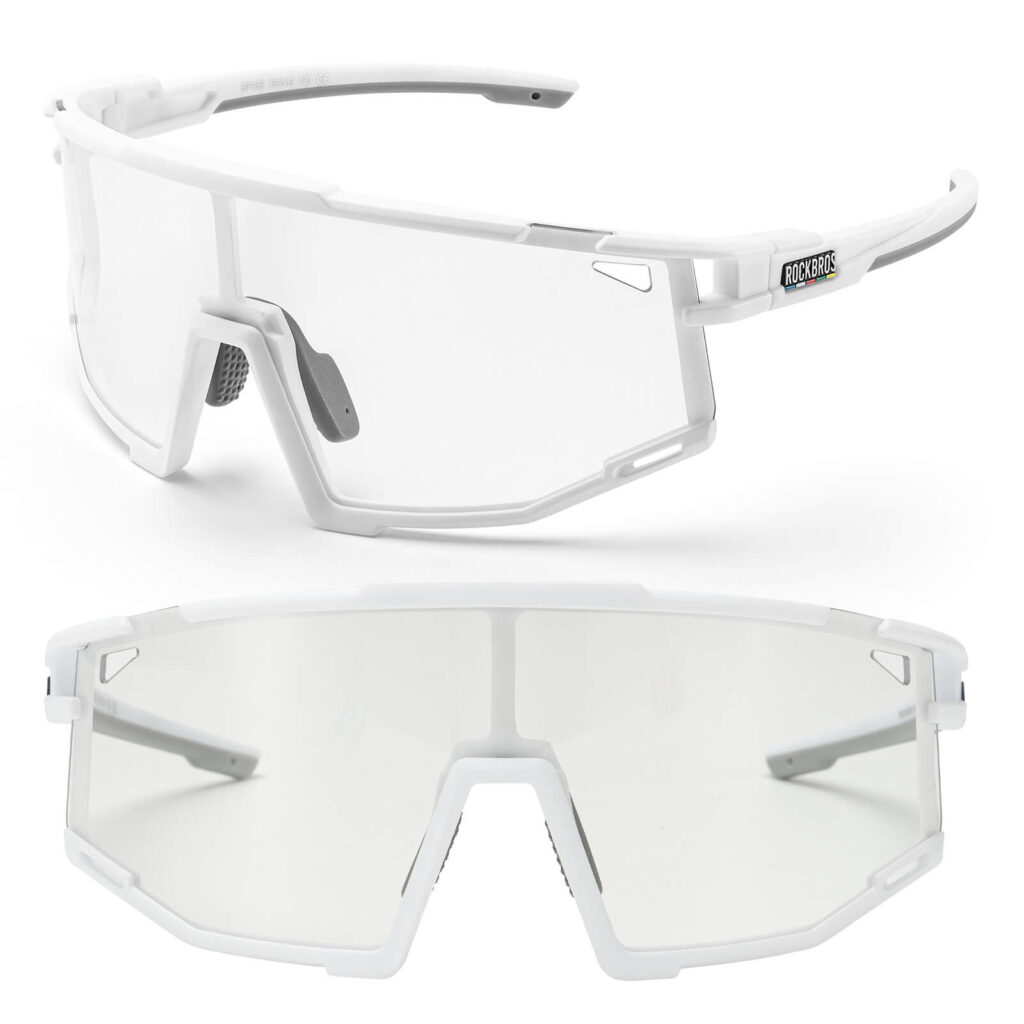
ROAD TO SKY Photochrome Fahrradbrille
Photochromic with UV400 and adjustable nose pads, according to the retailer. The pads matter more than they sound: only if the glasses sit firmly will they not slide down to the tip of your nose when you sweat. The retailer does not state a filter category. Ask before you buy so that you do not end up with glasses that darken up to category 4.
uvex sportstyle 806 V
Our reference model from a German manufacturer, with complete data. According to uvex, the variomatic lenses tint between category 1 and 3, at 74 to 9 percent light transmission. On top of that come an anti-fog coating and soft nose pads, tested to EN ISO 12312-1. Uvex recommends them for narrower faces. They cost more than the ROCKBROS glasses, but you know what you are getting.
ROCKBROS Fahrradbrille BOUNDLESS Drei-Gläser
Three lenses to swap depending on the light. The product title does not say which tints are included. A clear lens for dusk and rain would make sense. Practice swapping the lenses a few times at home before you try it by the roadside with cold fingers. On some glasses, the mounts are surprisingly tight.
ROAD TO SKY Polarisierte Fahrradbrille
Same frame as the Photochrome, but with polarized lenses. A good fit for road cycling on asphalt with backlight, less so off-road.
ROCKBROS Polarisierte Fahrradbrille mit 4 Wechselgläsern
The most affordable set here (polarized glasses with four interchangeable lenses). Four lenses in one purchase is a sensible way for beginners to find out which tint suits their own routes.
ROCKBROS Smarte Radbrille mit elektronischer Verdunkelung
Instead of chemical tinting, electronics do the switching here (smart cycling glasses with electronic darkening). That sounds like the solution for the tunnel. We remain skeptical as long as neither the switching time nor the battery life nor the filter categories are known, and for the money we would rather go for classic photochromic glasses.
The decision in brief
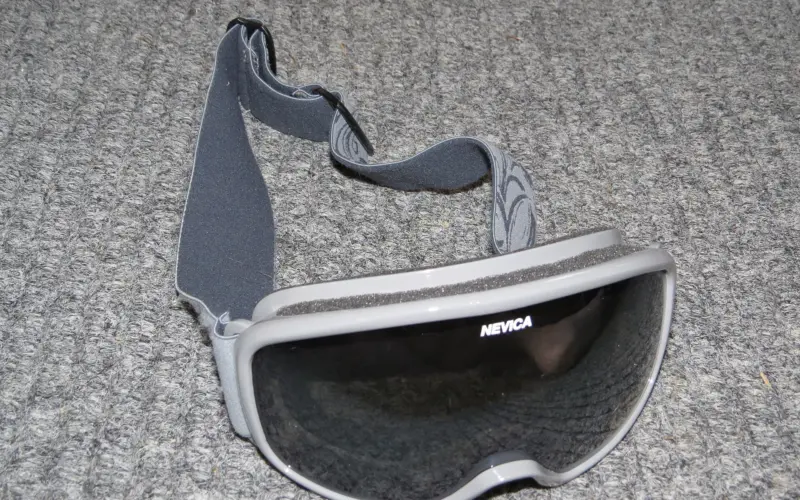
For rides with changing light: photochromic, meaning the ROAD TO SKY Photochrome or, with documented specifications, the uvex. For road and water: polarized. To get started: the set with four lenses. And if you need ski goggles in the mountains anyway, you will find the differences in our guide to ski goggles.
Frequently asked questions
What is the difference between cycling glasses and sunglasses?
Above all, the shape. For sports glasses, the Kuratorium Gutes Sehen (German Good Vision Board) lists a firm fit without pressure, good ventilation, protection against UV light, wind, dirt and insects, and shatterproof polycarbonate lenses. Fashionable sunglasses usually only meet the UV protection requirement.
Which filter category do you need on a bike?
The German Federal Office for Radiation Protection recommends category 2 or 3. Category 2 is considered the all-round level for Central Europe; category 3 is intended for bright sun, the sea and the mountains. Category 4 is not permitted in road traffic, and that also applies on a bike.
Are photochromic cycling glasses worth it?
On a bike, there is a lot to be said for them. According to the Kuratorium Gutes Sehen, photochromic lenses darken between 10 and 90 percent in about 30 seconds. Unlike in a car, there is no windshield filtering out the UV light that triggers them. Speed sets the limits, for example when riding into a tunnel.
Do polarized lenses make sense for cycling?
Polarized lenses filter reflections from wet roads or water and increase contrast in the distance. According to the Kuratorium, contrast directly in front of the front wheel can become weaker. For road cyclists by a lake, that is more of a plus; for mountain bikers on a carpet of roots, a drawback.
Which lens color is suitable for cycling glasses?
Gray and brown lenses are the safe choice. According to the BfS, blue or red tints can reduce contrast and sharpness. With colorful mirrored lenses, the base tint underneath is what counts. Incidentally, the tint says nothing about UV protection.
Which glasses do commuters need in the dark?
If you ride home in the evening in November, you do not need sunglasses but a clear category 0 lens. It keeps out wind, rain and insects and does not add any darkening in headlight glare. Many interchangeable lens sets include such a lens; check before you buy.
Sources
- Kuratorium Gutes Sehen: sunglasses, UV protection and filter categories
- German Federal Office for Radiation Protection: UV protection for the eyes
- uvex: sportstyle 806 V
Where to buy
- ROAD TO SKY Photochrome FahrradbrilleView at ROCKBROSAvailable in Germany: ROCKBROS
- uvex sportstyle 806 VCheck price at Amazon.deCheck price at Amazon.co.ukCheck price at Amazon.nlCheck price at Amazon.com.beCheck price at Amazon.frCheck price at Amazon.itCheck price at Amazon.esCheck price at Amazon.plCheck price at Amazon.seAvailable in Germany: Amazon.de
- ROCKBROS Fahrradbrille BOUNDLESS Drei-GläserView at ROCKBROSAvailable in Germany: ROCKBROS
- ROAD TO SKY Polarisierte FahrradbrilleView at ROCKBROSAvailable in Germany: ROCKBROS
- ROCKBROS Polarisierte Fahrradbrille mit 4 WechselgläsernView at ROCKBROSAvailable in Germany: ROCKBROS
- ROCKBROS Smarte Radbrille mit elektronischer VerdunkelungView at ROCKBROSAvailable in Germany: ROCKBROS
Still undecided?
Keep comparing at your own pace – every article in this category is checked monthly for new and discontinued models.