Contents11 sections
This guide was first published in German on handgetestet.de.
The look and the lid of a trash can are quickly chosen. The more important question is how many types of waste your kitchen produces and where the container should go. If you have free floor space, we think a dual-compartment bin for general waste and packaging is the best choice, such as the Brabantia Bo Touch Bin with two 30-liter buckets. Organic waste goes into its own small container. Why is explained further down.
How many compartments does a German kitchen need?
At least two. Empty packaging made of plastic, metal and composite materials goes into the yellow bin or yellow bag of Germany’s packaging collection, paper and cardboard go into paper recycling, while soiled paper such as paper towels or tissues goes into general waste. That is how the German Environment Agency (Umweltbundesamt) sums it up. Disposing of packaging in general waste is not intended under Section 13 of the German Packaging Act. And in practice, things go wrong: according to the agency, up to 40 percent of what ends up in yellow bags and bins is waste that does not belong there.
Two pieces of advice from the agency have a direct impact on bin size. You do not have to rinse packaging, only empty it. And you should not stack it inside each other but throw each item in separately, because sorting plants cannot separate materials that are firmly joined. Loosely lying cups and trays take up space. The packaging compartment should therefore not be smaller than the general waste compartment.
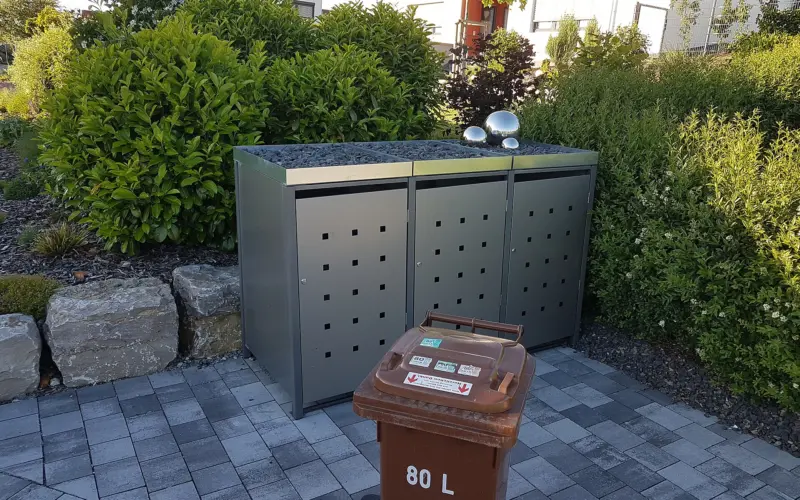
Paper and glass usually do not end up in the kitchen cabinet but in a box in the hallway or basement. For outdoors, there is a separate guide to the garbage bin enclosure for the front yard (in German).
Can organic waste go into the large bin too?
Better not. For kitchen scraps, the German consumer advice center (Verbraucherzentrale) recommends a small, tightly closing container that is emptied at least every three days; if you are allergic to mold, you should take it out daily if possible. Afterward, rinse it and let it dry. A 30-liter compartment tempts you to wait until it is full before emptying it. That is exactly what should not happen with organic waste.
When it comes to bags, the label does not help much. The German Environment Agency states that plastic has no place in the organic waste bin, not even as a bag marked „compostable.“ The consumer advice center adds that some municipalities allow such bags, but most do not want them, because they often do not break down completely in composting plants. According to the consumer advice center, tear-resistant bags made of special paper work well, as does a sheet of newspaper at the bottom. Since May 1, 2025, organic waste in Germany may contain no more than three percent foreign matter. Incorrectly filled bins may be left uncollected more often.
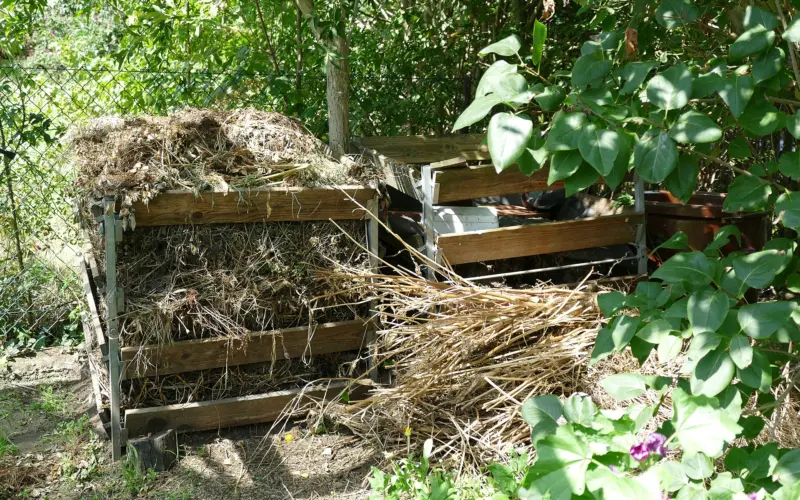
With a garden, you can manage without an organic waste bin: what matters for your own compost is covered in the guide to composters, thermo composters and worm bins.
Pedal, sensor, touch lid or built-in?
A pedal bin needs no power, and your hands stay free. Look for a damper on the lid; otherwise it audibly slams shut every time you let go. Sensor bins open with a wave of the hand but require batteries. In the case of the EKO Mirage Plus, that means six AA cells, which are not included. A touch lid opens when pressed, and with dough on your fingers, your elbow can do that, too.
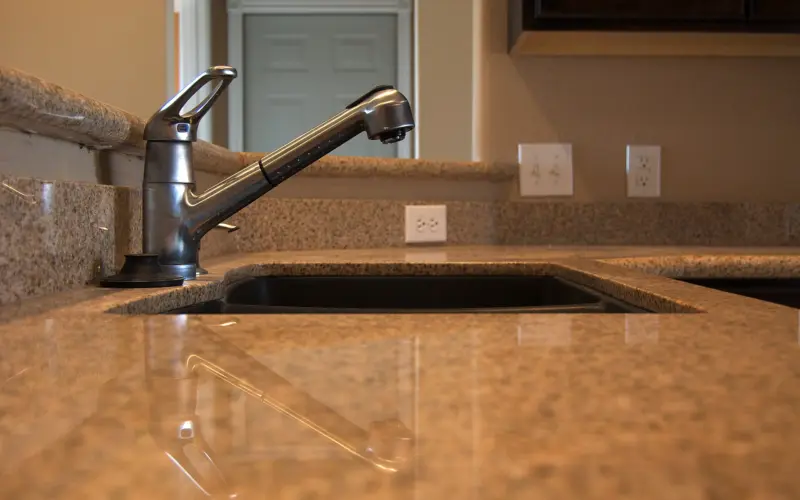
The most discreet solution is still a bin built into the base cabinet. This is, however, where the classic bad buy happens: when measuring. Under the sink sit the trap, the angle valves and sometimes an under-sink water heater. So do not measure the cabinet; measure the space that is actually free in front of all that, and check whether it has a hinged door or a pull-out. With bags, the fine print is worth a look: Brabantia marks a code inside the bin for the matching bags from its own range; for the Bo with two 30-liter buckets, it is code O.
Five trash cans and waste sorting systems with their key specs
Brabantia Bo Touch Bin 2 × 30 l
Two equally sized plastic buckets under a steel housing, both removable. According to the manufacturer, the lid opens with a light press and stays up until you close it. At 31.2 centimeters deep, the bin fits snugly against the wall or in a corner. Brabantia gives a ten-year warranty and states that spare parts are available for up to 20 years; it is made in Belgium. Both compartments sit under a shared lid.
Hailo Multi-Box duo L
According to the manufacturer, this built-in system from Haiger, Germany, fits hinged-door base cabinets from 30 centimeters wide and can be mounted on the left, right or in the center. Two buckets of 14 liters each slide forward on a rail, and the bags clip onto the bucket rim. The housing is made of coated sheet steel. At 50 centimeters deep and 43 centimeters high, things get tight under some sinks. Measure first.
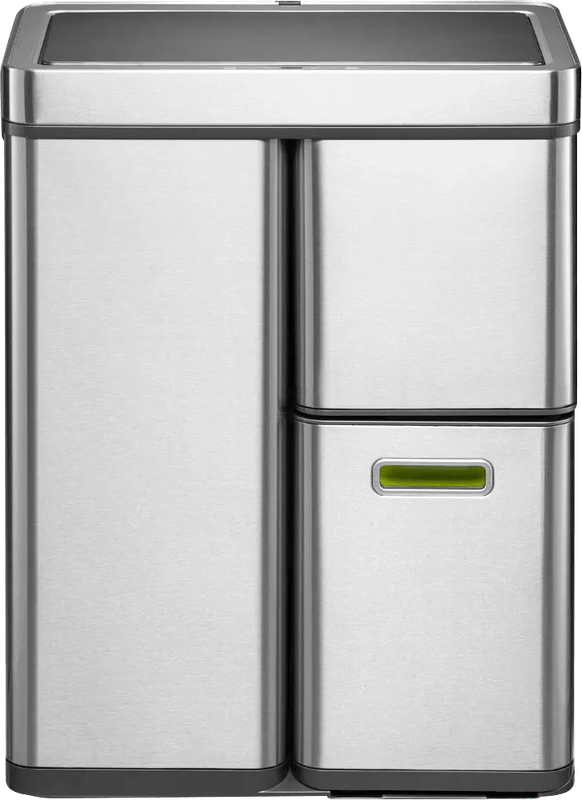
EKO Mirage Plus 30 + 15 + 15 l
Three compartments in a brushed stainless steel housing with a fingerprint-resistant coating. At the top, a 30-liter and a 15-liter bucket sit under the sensor lid; at the bottom, another 15-liter bucket sits in a drawer. The lid opens via motion sensor or button and closes softly; it can be removed to change bags. Even so, we think the bottom compartment is too large for organic waste.
Wesco Kickmaster 33 l
A pedal bin made of powder-coated sheet steel, also available in stainless steel, with a built-in damper. A plastic rim at the bottom protects the floor, and the inner bucket can be removed for cleaning. Wesco recommends a soft, damp cloth and a mild cleaner; powder-coated surfaces do not belong in the dishwasher, and matte ones should not be cleaned with microfiber. One compartment, lots of color. You will have to sort your waste elsewhere.
Wenko Leman Easy Close 30 l
Matte stainless steel housing with a fingerprint-resistant coating, pedal, soft-close lid and removable plastic insert. At 30.5 centimeters wide, it fits into gaps next to the refrigerator or stove where a double bin will not go. As a second bin for packaging next to an existing general waste container, it is a simple solution.
How we would decide
- A free wall and two waste types in the kitchen: Brabantia Bo Touch Bin 2 × 30 l, plus a small organic waste container with a tight-fitting lid.
- Everything should disappear behind the cabinet door: Hailo Multi-Box duo L, if the hinged-door cabinet is at least 30 centimeters wide and the trap leaves enough room.
- Three waste types in one place and no pedal: EKO Mirage Plus, with a supply of AA batteries.
- A single bin that can be seen: Wesco Kickmaster.
- A narrow gap or a second bin for packaging: Wenko Leman Easy Close 30 l.
Which waste goes where in your municipality is governed by the local waste regulations. Especially for organic waste, it is worth checking your own waste collection company’s website.
Frequently asked questions
How many compartments does a kitchen trash can need?
At least two, for general waste and packaging. According to the German Environment Agency (Umweltbundesamt), empty packaging made of plastic, metal and composite materials goes into the yellow bin. Because it should not be stacked inside each other, it needs space: the packaging compartment should not be smaller than the general waste compartment.
Can organic waste go into a large compartment of the trash can?
Better not. The German consumer advice center (Verbraucherzentrale) recommends a small, tightly closing container that is emptied at least every three days. A 30-liter compartment tempts you to wait before emptying it. If you are allergic to mold, organic waste should go out daily if possible.
Are compostable bags allowed for organic waste?
Usually not. The German Environment Agency states that plastic has no place in the organic waste bin, even if it is labeled compostable. Some municipalities allow such bags, but most do not. According to the consumer advice center, tear-resistant bags made of special paper or a sheet of newspaper at the bottom work well.
What should you look for in a trash can for the sink cabinet?
Do not measure the cabinet; measure the space that is actually free in front of the trap, the angle valves and possibly an under-sink water heater. Also check whether it has a hinged door or a pull-out. The Hailo Multi-Box duo L is 50 centimeters deep and 43 centimeters high.
What is the difference between a pedal bin, a sensor bin and a touch lid?
A pedal bin needs no power and keeps your hands free; a damper prevents the lid from slamming shut. Sensor bins open with a wave of the hand but need batteries, six AA cells in the case of the EKO Mirage Plus. A touch lid opens when pressed, and if necessary your elbow can do that, too.
Sources
- German Environment Agency (Umweltbundesamt): Sorting waste correctly (as of 02.02.2026)
- German Environment Agency: No recycling without waste sorting
- Verbraucherzentrale: Organic waste – what goes into the organic waste bin? (as of 16.07.2026)
- Brabantia: Bo Touch Bin 2 x 30 liters
- Hailo: Multi-Box duo L
- EKO Europe: Mirage Plus Recycle Sensor Bin 30 + 15 + 15 l
- Wesco: Kickmaster 33 l
- Wenko: Leman Easy Close stainless steel pedal bin, 30 liters
Where to buy
- Brabantia Bo Touch Bin 2 x 30 l (Mattschwarz)Check price at Amazon.deCheck price at Amazon.co.ukCheck price at Amazon.nlCheck price at Amazon.com.beCheck price at Amazon.frCheck price at Amazon.itCheck price at Amazon.esCheck price at Amazon.plCheck price at Amazon.seAvailable in Germany: Amazon.de
- Hailo Multi-Box duo LCheck price at Amazon.deCheck price at Amazon.co.ukCheck price at Amazon.nlCheck price at Amazon.com.beCheck price at Amazon.frCheck price at Amazon.itCheck price at Amazon.esCheck price at Amazon.plCheck price at Amazon.seAvailable in Germany: Amazon.de
- EKO Mirage Plus 30+15+15 l (Edelstahl)Check price at Amazon.deCheck price at Amazon.co.ukCheck price at Amazon.nlCheck price at Amazon.com.beCheck price at Amazon.frCheck price at Amazon.itCheck price at Amazon.esCheck price at Amazon.plCheck price at Amazon.seAvailable in Germany: Amazon.deView at CoolblueAvailable in Germany: Coolblue
- Wesco Kickmaster 33 l (graphit)Check price at Amazon.deCheck price at Amazon.co.ukCheck price at Amazon.nlCheck price at Amazon.com.beCheck price at Amazon.frCheck price at Amazon.itCheck price at Amazon.esCheck price at Amazon.plCheck price at Amazon.seAvailable in Germany: Amazon.de
- Wenko Leman Easy Close 30 lCheck price at Amazon.deCheck price at Amazon.co.ukCheck price at Amazon.nlCheck price at Amazon.com.beCheck price at Amazon.frCheck price at Amazon.itCheck price at Amazon.esCheck price at Amazon.plCheck price at Amazon.seAvailable in Germany: Amazon.de
Still undecided?
Keep comparing at your own pace – every article in this category is checked monthly for new and discontinued models.