Contents12 sections
This guide was first published in German on handgetestet.de.
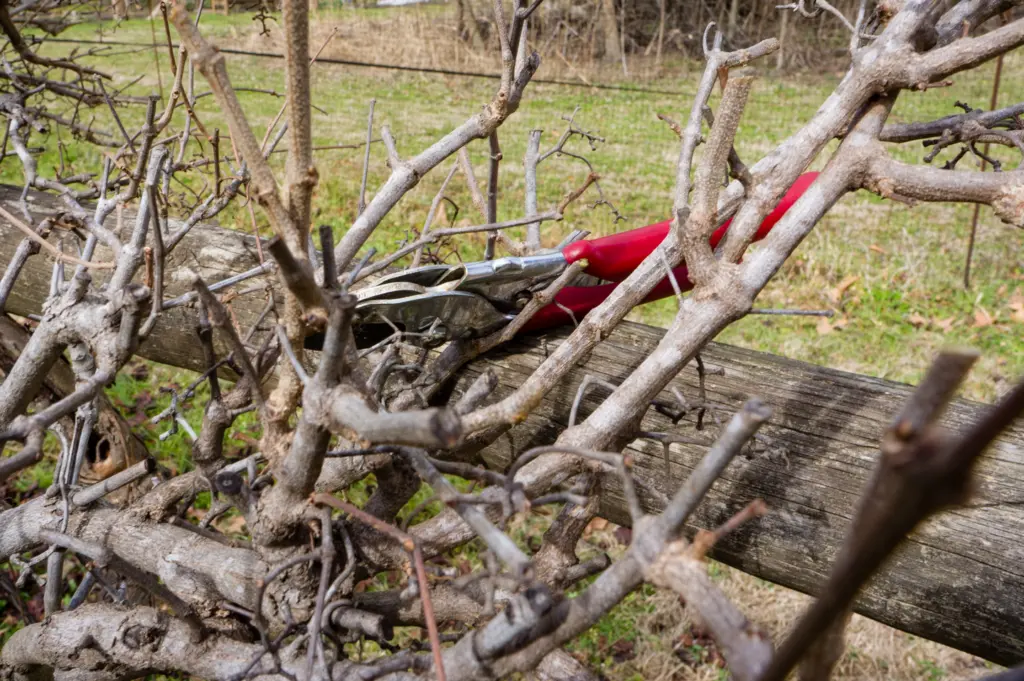
At the garden center, many people reach for anvil shears because they seem more powerful. For roses, currants and young fruit shoots, that is usually the wrong choice, because this wood is alive, and bypass shears are built for living wood. For most gardens, we therefore recommend solid bypass pruning shears such as the Gardena PremiumCut Pro Frisches Holz (for fresh wood). Add geared loppers as soon as you regularly have branches thicker than 2.5 cm to cut.
Bypass or anvil: look at the wood first, then the shears
With bypass shears, two blades slide past each other, much like a pair of paper scissors. Gardena describes the advantage this way: the cut is sharp and close to the trunk, which is why the principle suits fresh, soft wood. With anvil shears, a sharp blade closes onto a flat, blunt base. Original Löwe, maker of the Model 1 anvil shears, cites as strengths the drawing cut that takes less effort and the suitability for old, dry, hard wood. According to Löwe, there is also no typical hard stop at the end of the cut as with bypass shears, which is easier on the hand.
The rule of thumb is simple. Green wood, flowers, roses, berry bushes: bypass. Deadwood, dead rose canes, dry kindling: anvil. If you only want to buy one pair and mostly cut living plants, go with bypass.
What the millimeter figure really means
Manufacturers state a maximum cutting diameter. For pruning shears, it is usually between 20 and 25 mm; for loppers with long handles, around 45 to 50 mm. That is a maximum value. Working is comfortable below it, so leave some margin: for branches just under 2 cm, 24 mm shears are enough, and for anything thicker, a pair of loppers belongs in the shed.
Gearing and leverage are the second factor. In the EnergyCut Pro L, Gardena uses a gear mechanism that, according to the manufacturer, triples the cutting force at the decisive moment. Wolf-Garten says the shape of the cutting head on the Power Cut RR 750 achieves up to three times the power transmission. Both are meant to save muscle power, especially on branches where simple lever shears get stuck.
From about 5 cm, shears reach their limit. Then a pruning saw or, for many thick branches, a cordless reciprocating saw is the right tool; what matters there is explained in our reciprocating saw guide.
Six shears, six uses
| Model | Principle | Max. cut | Length / weight | Best for |
|---|---|---|---|---|
| Gardena PremiumCut Pro Frisches Holz | Bypass | 24 mm | not specified by manufacturer | roses, shrubs, fruit shoots |
| Original Löwe 1.104 | Anvil | 22 mm | 21 cm / 290 g | dry, hard wood; left- and right-handed users |
| Gardena AssistCut | Bypass, battery assistance | 25 mm | not specified by manufacturer | limited hand strength |
| Stihl ASA 20 | Battery-powered | 25 mm | 0.8 kg without battery | many cuts in a row, orchard |
| Gardena EnergyCut Pro L Bypass | Bypass with gearing | 50 mm | 750 mm / 1,225 g | fruit trees, thick fresh branches |
| Wolf-Garten Power Cut RR 750 | Bypass, power transmission in the head | 45 mm | 750 mm / weight not specified | thinning out hedges and shrubs |
All specifications according to the manufacturers.
Gardena PremiumCut Pro Frisches Holz
Classic bypass shears with a 24 mm cutting diameter, made in Germany. Gardena lists coated, precision-ground blades, a buffer for the wrist, a spring that cannot get lost and a one-handed lock. There is a dedicated notch for wire so the cutting edge is protected. The warranty is 25 years, provided you register the shears within three months of purchase.
Original Löwe 1.104
According to the company, Original Löwe has been making the Model 1 anvil shears since 1923. According to the manufacturer, they cut up to 22 mm, measure 21 cm and weigh 290 g. They suit medium to large hands and can be used left- or right-handed. Löwe offers the blade and anvil individually as spare parts. We would not use them for fresh roses, but we would for cutting back deadwood.
Gardena AssistCut
Something in between. These bypass shears first work quite normally by hand; only when a sensor detects resistance does a motor add force. Gardena cites up to five times the extra force and up to 1,400 assisted cuts per battery charge. Charging takes around 100 minutes via USB-C; no power adapter is included. When the battery is empty, you still have ordinary pruning shears with a 25 mm cutting diameter. For people with a weaker hand or joint problems, this is the gentle way in.
Stihl ASA 20
Stihl calls it an Akku-Astschere (cordless branch pruner); in shape, it is a powerful pair of one-handed shears. The blade follows your finger on the trigger and only closes as far as you press. Two opening widths, a display with charge level and cut counter, and an onboard tool for adjusting blade play are included. According to Stihl, it cuts branches up to 25 mm and manages up to 2,000 cuts per charge; the tool weighs 0.8 kg without the battery. It runs on batteries from the AS system. If you already own a Stihl shrub shear, buy the tool without a battery.
Gardena EnergyCut Pro L Bypass
The loppers for fruit trees and thick, fresh branches. Gardena specifies a 50 mm cutting diameter, 750 mm length and 1,225 g. According to the manufacturer, the built-in gearing triples the cutting force; the handles are made of aluminum, and shock absorption is meant to relieve the wrists. For deadwood, the same loppers are available as an anvil version weighing 1,260 g.
Wolf-Garten Power Cut RR 750
Bypass loppers with an overall length of 75 cm and a 45 mm cutting diameter, made in Germany. Instead of gearing, Wolf-Garten relies on a cutting head with up to three times the power transmission. All wear parts can be replaced, and the blade tension can be adjusted. That is a point in their favor if a pair of loppers is meant to last many years.
When am I allowed to cut, and how do I keep the blade clean?
Section 39 (5) of the German Federal Nature Conservation Act (Bundesnaturschutzgesetz) prohibits cutting back, coppicing or removing hedges, living fences, bushes and other woody plants between March 1 and September 30. Gentle shaping and maintenance cuts that only remove new growth or keep trees healthy remain permitted. The provision exempts trees on land used for gardening, but not hedges and bushes. Heavy pruning of shrubs therefore falls in the months from October to February. Shaping larger hedges is done faster with a hedge trimmer than with any hand shears anyway; our guide to cordless hedge trimmers and grass trimmers (in German) compares battery models.
With diseased plants, pathogens travel on with the blade. For fire blight, which mainly affects apple, pear, quince, hawthorn and cotoneaster, the plant protection services of the North Rhine-Westphalia Chamber of Agriculture (Landwirtschaftskammer Nordrhein-Westfalen) and the Bavarian State Research Center for Agriculture (LfL) advise disinfecting shears and saws after use, for example with 70 percent alcohol. The chamber in NRW specifies a contact time of one minute for this. According to the LfL, no other host plants should come into contact with infected plants. According to NRW, diseased plants are destroyed, meaning burned or taken to a landfill in a plastic bag. Healthy clippings, on the other hand, can be turned into mulch by a garden shredder (in German).
How we would decide
- Roses, perennials, berry bushes and young shoots: Gardena PremiumCut Pro Frisches Holz.
- Lots of deadwood, dry vines, hard stems: Original Löwe 1.104.
- Little strength in your hand, but no large tool wanted: Gardena AssistCut.
- Meadow orchard or hundreds of cuts in a day, Stihl batteries already on hand: Stihl ASA 20.
- Fruit tree pruning up to 5 cm: Gardena EnergyCut Pro L Bypass, and the anvil version for deadwood.
- Long service life with replaceable parts for thinning out: Wolf-Garten Power Cut RR 750.
Our advice for getting started: one pair of bypass pruning shears and one pair of geared loppers. This pair covers the typical home garden up to a branch thickness of 5 cm. Anything thicker is a job for the saw.
Frequently asked questions
What is the difference between bypass and anvil shears?
With bypass shears, two blades slide past each other; the cut is sharp and close to the trunk, which is why they suit fresh wood. With anvil shears, the blade closes onto a flat base. Original Löwe calls them suitable for old, dry, hard wood.
How thick a branch can pruning shears cut?
Pruning shears usually manage 20 to 25 mm, loppers with long handles around 45 to 50 mm. That is a maximum value, so leave some margin. For branches just under 2 cm, 24 mm shears are enough; from about 5 cm, it is a job for a saw.
Are there pruning shears for people with limited hand strength?
The Gardena AssistCut first works by hand; only when a sensor detects resistance does a motor add force. Gardena cites up to five times the extra force and up to 1,400 assisted cuts per battery charge. When the battery is empty, you still have ordinary shears with a 25 mm cutting diameter.
When am I allowed to cut hedges and shrubs?
Section 39 (5) of the German Federal Nature Conservation Act (Bundesnaturschutzgesetz) prohibits cutting back or removing hedges and bushes between March 1 and September 30. Gentle shaping and maintenance cuts remain permitted. Heavy pruning of shrubs therefore falls in the months from October to February.
Do I need to disinfect my pruning shears after cutting?
With diseased plants, yes, because pathogens travel on with the blade. For fire blight, the plant protection services in North Rhine-Westphalia and Bavaria advise disinfecting shears and saws after use, for example with 70 percent alcohol. The chamber in NRW specifies a contact time of one minute.
Are cordless pruning shears like the Stihl ASA 20 worth it?
If you make hundreds of cuts a day, for example in a traditional meadow orchard. According to Stihl, they cut branches up to 25 mm and manage up to 2,000 cuts per charge. They run on batteries from the AS system; if you already own a Stihl shrub shear, buy them without a battery.
Sources
- Gardena: PremiumCut Pro Frisches Holz pruning shears
- Gardena: PremiumCut Pro Trockenes Holz pruning shears
- Gardena: AssistCut pruning shears
- Gardena: EnergyCut Pro L Bypass loppers
- Gardena: EnergyCut Pro L Amboss loppers
- Original Löwe 1.104 standard handle
- Original Löwe: How anvil shears work
- Stihl: ASA 20 cordless branch pruner
- Stihl: Cordless tools brochure 2025 (PDF)
- Wolf-Garten: Power Cut RR 750
- German Federal Nature Conservation Act (Bundesnaturschutzgesetz), Section 39
- North Rhine-Westphalia Chamber of Agriculture: Fire blight on fruit and ornamental trees
- LfL Bavaria: Fire blight
Where to buy
- Gardena PremiumCut Pro Frisches HolzCheck price at Amazon.deCheck price at Amazon.co.ukCheck price at Amazon.nlCheck price at Amazon.com.beCheck price at Amazon.frCheck price at Amazon.itCheck price at Amazon.esCheck price at Amazon.plCheck price at Amazon.seAvailable in Germany: Amazon.de
- Original Löwe 1.104Check price at Amazon.deCheck price at Amazon.co.ukCheck price at Amazon.nlCheck price at Amazon.com.beCheck price at Amazon.frCheck price at Amazon.itCheck price at Amazon.esCheck price at Amazon.plCheck price at Amazon.seAvailable in Germany: Amazon.de
- Gardena AssistCutCheck price at Amazon.deCheck price at Amazon.co.ukCheck price at Amazon.nlCheck price at Amazon.com.beCheck price at Amazon.frCheck price at Amazon.itCheck price at Amazon.esCheck price at Amazon.plCheck price at Amazon.seAvailable in Germany: Amazon.de
- Stihl ASA 20Check price at Amazon.deCheck price at Amazon.co.ukCheck price at Amazon.nlCheck price at Amazon.com.beCheck price at Amazon.frCheck price at Amazon.itCheck price at Amazon.esCheck price at Amazon.plCheck price at Amazon.seAvailable in Germany: Amazon.de
- Gardena EnergyCut Pro L BypassCheck price at Amazon.deCheck price at Amazon.co.ukCheck price at Amazon.nlCheck price at Amazon.com.beCheck price at Amazon.frCheck price at Amazon.itCheck price at Amazon.esCheck price at Amazon.plCheck price at Amazon.seAvailable in Germany: Amazon.de
- Wolf-Garten Power Cut RR 750Check price at Amazon.deCheck price at Amazon.co.ukCheck price at Amazon.nlCheck price at Amazon.com.beCheck price at Amazon.frCheck price at Amazon.itCheck price at Amazon.esCheck price at Amazon.plCheck price at Amazon.seAvailable in Germany: Amazon.de