Contents12 sections
This guide was first published in German on handgetestet.de.
Safety glasses lying on the workbench protect no one. Many end up there after ten minutes because they fog up or pinch. If you work without prescription glasses, lightweight spectacle-style safety glasses with an anti-fog coating are your best bet, such as the 3M SecureFit 400 in the Scotchgard version. If you wear glasses, reach for the uvex super OTG overglasses or, as soon as dust and splashes come into play, the uvex ultrasonic safety goggles.
Aren’t all glasses with a CE mark good enough?
No. The CE mark only says that the glasses have passed some kind of test. What they can withstand is shown by small markings on the lens and frame, defined in the European standard EN 166. DGUV Rule 112-192 from the German Social Accident Insurance (DGUV) explains these codes in detail. You should know a few of them before you order.
- The number 1, 2 or 3 is the optical class. According to the DGUV, class 1 is intended for high visual demands and continuous use, class 3 only for rough work in exceptional cases.
- F, B and A indicate impact resistance. Testing uses a 0.86-gram steel ball at 45, 120 or 190 meters per second.
- K stands for a scratch-resistant surface, N for a lens that has passed the anti-fog test.
- The numbers 3, 4 and 5 on the frame indicate the field of use: liquid splashes, coarse dust over 5 micrometers, and gases and fine dust.
A T after the letter for impact resistance means that the glasses maintain this rating even at extreme temperatures. 3M gives the range as minus 5 to plus 55 degrees Celsius. So if a cheap pair of glasses only says „CE“ without any further markings, you essentially know nothing.
I wear glasses. What should I put on?
Ordinary prescription glasses have no protective effect; the DGUV rule says so word for word. For short jobs lasting a few minutes, the accident insurance considers overglasses or goggles acceptable. Such combinations, however, tend to fog up and cause double images. If you spend hours in the workshop every day, it recommends prescription safety glasses with ground lenses.
For the DIYer with glasses who spends two hours cutting tiles on a Saturday, good overglasses are still the practical route. Measure the width of your own frame beforehand and compare it with the dimensions of the overglasses. According to uvex, the super OTG measures 153 millimeters wide.
Why does the lens keep fogging up?
Warm skin, cold garage. And your view is gone. With a dust mask, warm exhaled air can also escape upward, straight against the lens. An N in the marking is therefore the most important symbol in winter and under a mask. Without it, even the most expensive frame will not help much.
The uvex super f OTG in gray shows how closely you have to look: according to the data sheet, its coating carries a K but no N. The clear super OTG with supravision excellence has both.
When do you need safety goggles?
As soon as liquid can splash. In the SecureFit 400 data sheet, 3M states clearly that spectacle-style safety glasses cannot be tested against liquid splashes under EN 166 at all. When stripping paint, handling cleaning agents or mixing tile adhesive overhead, you need goggles with the number 3 on your face. For fine dust under 5 micrometers, the DGUV points to goggles with the number 5.
Be careful with angle grinders. According to 3M, the SecureFit 400 is expressly not intended for angle grinding and welding. For any pair of glasses, check the instructions for use to see whether the manufacturer approves them for such work. Suitable machines are shown in our overview of cordless angle grinders (in German).
Five pairs of safety glasses side by side
| Model | Type | Marking and weight | Best for |
|---|---|---|---|
| 3M SecureFit 400 (Scotchgard, SGAF) | Spectacle-style, rimless lens | Lens 2C-1.2 3M 1 FT KN, 19 g | DIYers without prescription glasses, long wearing times |
| uvex super OTG 9169 | Overglasses | Lens 2C-1,2 W 1 FTKN, 37 g | Glasses wearers drilling, sawing and gardening |
| uvex ultrasonic 9302 | Goggles with head strap | Frame 3, 4, B; lens 1 B KN, 83 g | Splashes, coarse dust, glasses wearers who want all-round protection |
| Honeywell Millennia 2G (Fogban) | Spectacle-style with panoramic lens | Anti-fog and scratch-resistant according to the manufacturer, with eyewear cord | Dusty overhead work, little adjusting |
| Bollé Safety Rush+ | Sporty spectacle-style | 26 g according to retailer information, Platinum coating | Occasional jobs, tight budget |
3M SecureFit 400: light enough to keep on
At 19 grams, the SecureFit is the lightest pair on this list. 3M distributes the pressure of the temples with its own temple technology, plus adjustable nose pads. The key is the SGAF code in the name. Only these versions carry the Scotchgard coating with K and N, not the basic AF models. It is also available with a reading zone up to plus 2.5 diopters, which is an elegant solution for fine work when your near vision is declining. According to 3M, it does not fit over prescription glasses.
uvex super OTG: the classic for glasses wearers
The super OTG is a dedicated pair of overglasses with a flat lens and flexible temples, made in Germany. According to uvex, the 2.1-millimeter polycarbonate lens carries all the important markings: optical class 1, F, T, K and N. It weighs 37 grams and is metal-free. A scratched lens can simply be replaced. For the workshop, the clear version is enough.
uvex ultrasonic: when it needs to seal all around
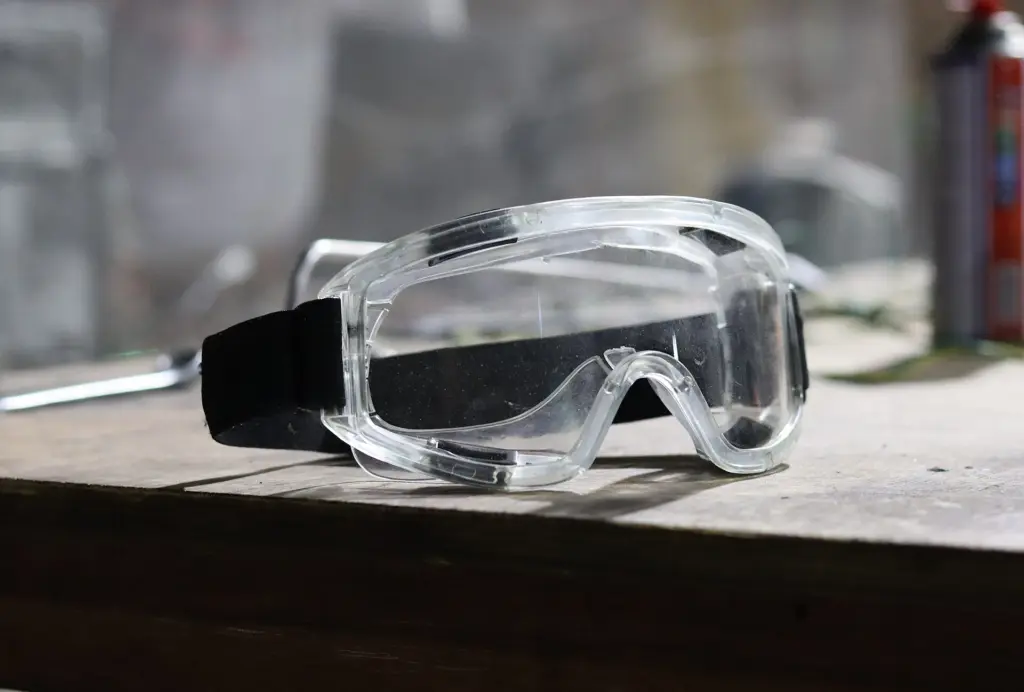
The ultrasonic is a pair of safety goggles with a soft face seal, indirect ventilation and an adjustable head strap. Its frame is approved for splashes and coarse dust, and both lens and frame pass the test at 120 meters per second. Uvex explicitly describes the interior volume as large enough for people who wear glasses. At 83 grams, it weighs more than four times as much as the SecureFit. For stripping an old window frame or working with cleaning agents, it is nevertheless the pair we would choose here.
Honeywell Millennia 2G: put it on, done
Honeywell deliberately does without adjustable temples and nose pieces. One interesting detail is a ridge along the eyebrows, which according to the manufacturer is meant to stop dust from trickling down between the frame and your face. If you drill holes in the ceiling, you notice things like that. The Fogban lens is anti-fog and scratch-resistant and, according to the data sheet, filters more than 99.9 percent of UV radiation up to 385 nanometers. There is no replacement lens. An eyewear cord is included. Some listings also carry the name Pulsafe. The model meant here is the 2G with the number 1032179.
Bollé Safety Rush+: light and sporty
The Rush+ looks more like cycling glasses than workplace protection. According to retailer information, it weighs 26 grams and carries Bollé’s Platinum coating against scratches and fogging. It comes in a smaller size for narrow faces and as a version with a foam seal and head strap. Bollé provides hardly any technical details online in German, not even the EN 166 marking. So check the markings printed on the temple and lens after delivery and before use. It is one of the least expensive pairs in this overview.
Which glasses for which job?
- Drilling, driving screws, sawing wood without prescription glasses: 3M SecureFit 400 in an SGAF version.
- The same jobs with prescription glasses: uvex super OTG with a clear lens.
- Splashes, cleaning agents, coarse dust, also with glasses: uvex ultrasonic.
- Lots of overhead work: Honeywell Millennia 2G with Fogban lens.
- Spare pair for guests and occasional helpers: Bollé Rush+.
One last thing. Never put the glasses down with the lens facing down, as the DGUV also advises, or the scratch-resistant coating will be history after a year. And because your eyes are rarely the only thing at risk, our overview of work gloves belongs right alongside this one.
Laser classes, fumes and safety glasses are covered in our guide Laser engravers at home.
Frequently asked questions
Are safety glasses with a CE mark good enough?
The CE mark on its own says little. What the glasses can withstand is shown by the EN 166 markings on the lens and frame: optical class 1 to 3, F, B or A for impact resistance, K for scratch-resistant, N for anti-fog. If a pair of glasses only says CE, you essentially know nothing.
Which safety glasses for people who wear glasses?
According to the DGUV (German Social Accident Insurance), ordinary prescription glasses offer no protection. For DIYers with glasses, overglasses such as the uvex super OTG are the practical route; compare the width of your own frame with the 153 millimeters of the overglasses first. If you spend hours in the workshop every day, the DGUV recommends prescription safety glasses.
Why do my safety glasses keep fogging up?
Warm skin meets cold air, and with a dust mask, exhaled air also rises against the lens. That is why the N in the marking is the most important symbol in winter and under a mask. With the 3M SecureFit 400, only the SGAF versions carry K and N, not the basic AF models.
When do you need safety goggles?
As soon as liquid can splash, for example when stripping paint or using cleaning agents. According to 3M, spectacle-style safety glasses cannot be tested against splashes under EN 166 at all; you need goggles with the number 3 on the frame, such as the uvex ultrasonic. For fine dust, the DGUV points to goggles with the number 5.
Are all safety glasses suitable for an angle grinder?
No. According to the manufacturer, the 3M SecureFit 400 is expressly not intended for angle grinding and welding. For any pair of glasses, check the instructions for use to see whether the manufacturer approves them for such work.
How do safety glasses stay scratch-free for a long time?
Never put the glasses down with the lens facing down, as the DGUV also advises, or the scratch-resistant coating will soon be gone. With the uvex super OTG, a scratched lens can simply be replaced; there is no replacement lens for the Honeywell Millennia 2G.
Sources
- DGUV Rule 112-192 (German Social Accident Insurance): Use of eye and face protection
- 3M: Technical data sheet SecureFit 400 series
- uvex: Product data sheet super OTG 9169 260
- uvex: Product data sheet super f OTG 9169 586
- uvex: Product data sheet ultrasonic 9302 245
- Honeywell: Millennia 2G
- Honeywell: Data sheet Millennia 2G 1032179
Where to buy
- 3M SecureFit 400 (Scotchgard, SGAF) SF401SGAF klarCheck price at Amazon.deCheck price at Amazon.co.ukCheck price at Amazon.nlCheck price at Amazon.com.beCheck price at Amazon.frCheck price at Amazon.itCheck price at Amazon.esCheck price at Amazon.plCheck price at Amazon.seAvailable in Germany: Amazon.de
- uvex super OTG 9169Check price at Amazon.deCheck price at Amazon.co.ukCheck price at Amazon.nlCheck price at Amazon.com.beCheck price at Amazon.frCheck price at Amazon.itCheck price at Amazon.esCheck price at Amazon.plCheck price at Amazon.seAvailable in Germany: Amazon.de
- uvex ultrasonic 9302Check price at Amazon.deCheck price at Amazon.co.ukCheck price at Amazon.nlCheck price at Amazon.com.beCheck price at Amazon.frCheck price at Amazon.itCheck price at Amazon.esCheck price at Amazon.plCheck price at Amazon.seAvailable in Germany: Amazon.de
- Honeywell Millennia 2G FogbanCheck price at Amazon.deCheck price at Amazon.co.ukCheck price at Amazon.nlCheck price at Amazon.com.beCheck price at Amazon.frCheck price at Amazon.itCheck price at Amazon.esCheck price at Amazon.plCheck price at Amazon.seAvailable in Germany: Amazon.de
- Bollé Safety Rush+Check price at Amazon.deCheck price at Amazon.co.ukCheck price at Amazon.nlCheck price at Amazon.com.beCheck price at Amazon.frCheck price at Amazon.itCheck price at Amazon.esCheck price at Amazon.plCheck price at Amazon.seAvailable in Germany: Amazon.de