Contents11 sections
This guide was first published in German on handgetestet.de.
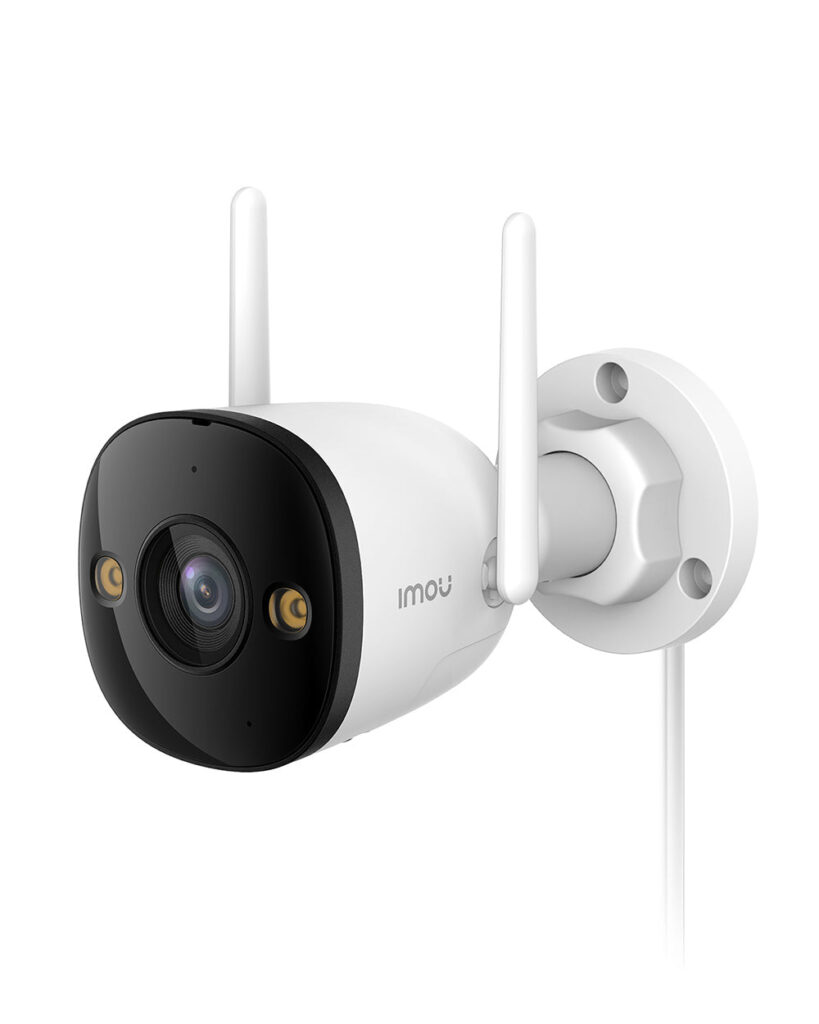
At three in the morning, the app reports „Device offline,“ by morning the feed is running again, and in the evening it stutters as soon as someone is standing at the door. In most cases, the camera is not broken; the wireless link is simply too weak. If you can run a network cable to the mounting spot, you solve the problem most thoroughly; our recommendation for this is the Imou Titan Pro, which runs via LAN and PoE and, until then, can also be connected via dual-band Wi-Fi.
Does a camera really need that much speed?
No. For continuous recording without events, Imou calculates about 21 GB per day for the Titan Pro and a good 23 GB for the Cruiser SC with 8 megapixels. Divide that by the seconds in a day and you are left with around 2 Mbit/s. Any working Wi-Fi network can handle that, even if the live view demands several times as much.
So a faster internet connection hardly helps. A camera transmits nonstop and copes poorly with dropouts. It is about stability at exactly one point on the house wall.
2.4 or 5 GHz: which band belongs to the camera?
For an exterior wall, usually 2.4 GHz. Imou itself describes it this way for the Cell PT 3C: 5 GHz for more speed, 2.4 GHz for greater range and more stable transmission. 5 GHz plays to its strengths when the camera is in the same room as the router or one wall away from it and the 2.4 GHz band in the neighborhood is crowded.
On the router, the channel width also matters. Apple recommends a channel width of 20 MHz for 2.4 GHz because it avoids problems next to other networks and Bluetooth devices.
Outdoors, 5 GHz has its own rules. In Germany, the Federal Network Agency (Bundesnetzagentur) prohibits the 5250 to 5350 MHz range outdoors, and 5150 to 5250 MHz may not be used there on fixed infrastructure. A permanently mounted outdoor access point is therefore limited to 5470 to 5725 MHz. There, dynamic frequency selection, which avoids radar, is mandatory, and such a channel change can briefly disconnect a camera.
Does Wi-Fi 6 solve the problem?
Not by itself. Wi-Fi 6 and 5 GHz are two different things, and that is exactly what many people confuse when buying. The Bullet 3C and Cruiser SC transmit with Wi-Fi 6, but only on 2.4 GHz. The Titan Pro, Cell PT 3C and Ranger 2C Pro support both bands. You also only gain something if the router supports Wi-Fi 6 too. If the camera is connected to an older device, it falls back to that device’s standard.
How do I measure the signal at the mounting spot?
Where the camera is going to hang, not in the hallway behind it. Go outside with your phone, close the door and windows, and hold it at mounting height. Apps usually show the level in dBm, that is, as a negative number: the closer to zero, the better. Compare the value with the one next to the router, in the evening as well, when the neighbors are streaming.
A trial run is more meaningful. Hang the camera temporarily at the spot, power it via an extension cord, and let it run for a whole day before you drill. If the feed already drops out during the trial, it will not get better after drilling.
Repeater, mesh or access point?
That depends on whether a cable can get close. Without a cable, the repeater stays on the inside of the wall. AVM gives clear rules for the FRITZ!Repeater 1200 AX: the distance to the router should be about the same as the distance to the devices it serves, plus distance from radiators, metal housings, the microwave and the DECT base station. The FRITZ!App WLAN rates the position. It must not be used outdoors. It is at its strongest when connected via a LAN cable. The successor, the FRITZ!Repeater 1700, brings Wi-Fi 7 and stays on 2.4 and 5 GHz with a gigabit port. That does little for a single camera at around 2 Mbit/s. The device selection is in our guide to Wi-Fi repeaters; if you need to cover several floors, take a look at the guide to mesh Wi-Fi.
The TP-Link EAP610-Outdoor is the big solution for a yard, barn or garden. The housing is protected to IP67, a PoE adapter is included, and TP-Link states up to 200 meters on 2.4 GHz. That figure comes from field trials and does not apply around the corners of a house. For a single camera, it is overkill, because it needs a network cable itself. Basics and installation are explained in the guide to Wi-Fi access points.
Which devices are worth considering?
| Device | Wireless | Cable | Use |
|---|---|---|---|
| Imou Titan Pro | 2.4 and 5 GHz, Wi-Fi 6 | LAN 100 Mbit/s, PoE 802.3af | Outdoors, if you want to keep the cable as a way out |
| Imou Cruiser SC 8MP | 2.4 GHz only, Wi-Fi 6 | LAN 100 Mbit/s | Outdoors, pan function, 4K resolution |
| Imou Bullet 3C | 2.4 GHz only, Wi-Fi 6 | LAN 100 Mbit/s | Outdoors, fixed viewing direction, small budget |
| Imou Cell PT 3C | 2.4 and 5 GHz, Wi-Fi 6 | none, battery with solar panel | Outdoors without a power outlet |
| Imou Ranger 2C Pro | 2.4 and 5 GHz, Wi-Fi 6 | none | Indoors |
| AVM FRITZ!Repeater 1200 AX | 2.4 and 5 GHz, Wi-Fi 6 | LAN 1 Gbit/s | Extends the Wi-Fi in the house |
| TP-Link EAP610-Outdoor | 2.4 and 5 GHz, Wi-Fi 6 | LAN 1 Gbit/s, PoE 802.3at | Wi-Fi for yard and garden |
Why do we recommend the Imou Titan Pro?
Because it has the way out built in. To start with, Wi-Fi with 2.4 and 5 GHz is enough; later, a single cable supplies both data and power. Imou states less than 12 watts for it, and PoE according to 802.3af delivers up to 12.95 watts at the device. Over up to 100 meters of cable, neither neighboring networks nor radar interfere. At around 2 Mbit/s, the 100 Mbit port is more than enough for a long time. It does, however, need a PoE switch or injector, and at around 24 centimeters tall and more than 700 grams, the housing is not made for discreet corners. Suitable devices are listed in the guide to network switches (in German).
And if you want a different camera?
The Imou Cruiser SC 8MP has a higher resolution of 3840 × 2160 pixels and pans 355 degrees. Its Wi-Fi is limited to 2.4 GHz, which does not have to be a disadvantage on an exterior wall. For power, plan for the included 12-volt power supply.
The Imou Bullet 3C is the simplest answer: fixed viewing direction, IP67 according to Imou, LAN port, 254 grams. It is not designed for PoE, so there has to be a power outlet nearby.
The Imou Ranger 2C Pro is meant for indoor use; Imou specifies it for −10 to 45 degrees. It has no LAN port. That is enough for the hallway next to the router, but not for the garage behind two concrete walls.
What about battery cameras when the wireless link drops?
They have no fallback. The Imou Cell PT 3C has 5,000 mAh, a 5-watt solar panel and dual-band Wi-Fi, but no network port. The 120 meters Imou specifies apply in open terrain. Also check the app: depending on the battery level, the camera can switch to a power-saving mode without recording, which looks like a wireless problem. If the signal at the location is simply not enough, a camera with a SIM card is more honest than a third repeater; see the guide to 4G cameras.
In what order would we proceed?
- First set 20 MHz for 2.4 GHz on the router and put the camera on that band.
- Then measure and do a one-day trial run.
- If it falls just short: a repeater on the inside of the wall, ideally with a LAN cable.
- If a cable is feasible: Titan Pro with PoE; for several cameras, preferably a set with a recorder right away.
- No power outlet, good signal: Cell PT 3C.
How to secure the camera on your network is explained in the guide Setting up a security camera securely (in German).
Frequently asked questions
How much bandwidth does a security camera need?
Less than many people think. For continuous recording, Imou calculates about 21 GB per day for the Titan Pro, which is around 2 Mbit/s. Any working Wi-Fi network can handle that. It is about stability at exactly one point on the house wall, not about a faster internet connection.
2.4 or 5 GHz: which band for the security camera?
For an exterior wall, usually 2.4 GHz; it offers greater range and more stable transmission. 5 GHz plays to its strengths when the camera is in the same room as the router or one wall away from it. Apple recommends a channel width of 20 MHz for 2.4 GHz.
Does Wi-Fi 6 solve the camera's connection problems?
Not by itself. Wi-Fi 6 and 5 GHz are two different things: the Bullet 3C and Cruiser SC transmit with Wi-Fi 6, but only on 2.4 GHz. You only gain something if the router also supports Wi-Fi 6; otherwise the camera falls back to the router's standard.
How do I check the Wi-Fi signal at the mounting spot?
Hold your phone outside at mounting height with the door closed and compare the dBm value with the one next to the router, in the evening as well. A trial run is more meaningful: hang the camera up temporarily and let it run for a whole day before you drill.
Repeater or access point for the outdoor camera?
Without a cable, a repeater such as the FRITZ!Repeater 1200 AX stays on the inside of the wall; it must not be used outdoors. The TP-Link EAP610-Outdoor is protected to IP67 and covers the yard and garden, but it needs a network cable itself and is overkill for a single camera.
Why does my battery camera go offline?
Battery cameras have no fallback via cable. Depending on the battery level, a camera such as the Imou Cell PT 3C can also switch to a power-saving mode without recording, which looks like a wireless problem. If the signal is simply not enough, a camera with a SIM card is the more honest solution.
Sources
- Imou: Titan Pro
- Imou: Titan Pro, data sheet
- Imou: Cruiser SC 8MP
- Imou: Cruiser SC 8MP, data sheet
- Imou: Bullet 3C
- Imou: Bullet 3C, data sheet
- Imou: Cell PT 3C
- Imou: Cell PT 3C, data sheet
- Imou: Ranger 2C Pro, data sheet
- AVM: FRITZ!Repeater 1200 AX manual
- Notebookcheck: FRITZ!Repeater 1700
- TP-Link: EAP610-Outdoor
- German Federal Network Agency: General frequency assignment for 5 GHz (Vfg. 136/2022)
- Apple: Recommended settings for Wi-Fi routers
- Wikipedia: Power over Ethernet
Where to buy
- Imou Titan ProView at ImouAvailable in Germany: ImouView at CoolblueAvailable in Germany: CoolblueCheck price at Amazon.deCheck price at Amazon.co.ukCheck price at Amazon.nlCheck price at Amazon.com.beCheck price at Amazon.frCheck price at Amazon.itCheck price at Amazon.esCheck price at Amazon.plCheck price at Amazon.seAvailable in Germany: Amazon.de
- Imou Cruiser SC 8MPView at ImouAvailable in Germany: Imou
- Imou Bullet 3CView at ImouAvailable in Germany: Imou
- Imou Cell PT 3CView at ImouAvailable in Germany: Imou
- Imou Ranger 2C ProView at ImouAvailable in Germany: Imou
- AVM FRITZ!Repeater 1200 AXView at CoolblueAvailable in Germany: CoolblueCheck price at Amazon.deCheck price at Amazon.co.ukCheck price at Amazon.nlCheck price at Amazon.com.beCheck price at Amazon.frCheck price at Amazon.itCheck price at Amazon.esCheck price at Amazon.plCheck price at Amazon.seAvailable in Germany: Amazon.de
- TP-Link EAP610-OutdoorCheck price at Amazon.deCheck price at Amazon.co.ukCheck price at Amazon.nlCheck price at Amazon.com.beCheck price at Amazon.frCheck price at Amazon.itCheck price at Amazon.esCheck price at Amazon.plCheck price at Amazon.seAvailable in Germany: Amazon.de