Contents13 sections
This guide was first published in German on handgetestet.de.
Many people looking for a smart room thermostat end up buying the wrong product. Smart radiator thermostats sit on the radiator valve. A room thermostat, by contrast, is a wall-mounted device and switches the boiler or the actuators of the underfloor heating via cable. For a gas boiler or water-based underfloor heating, we usually consider the wired second-generation tado X the obvious solution, because it covers both cases. If a smart home system is already running in the house, you are better off staying with that manufacturer.
Only radiators and no wall thermostat? Then you are better off reading about smart radiator thermostats (in German). This article covers the wall-mounted device.
What a wall thermostat actually switches
Before you compare models, you should know what your current thermostat does. The boiler manual or the underfloor heating distribution box usually tells you.
Two tasks need to be distinguished. A thermostat for the boiler gives it an on or off signal. A thermostat for underfloor heating switches the actuators on the heating circuit manifold, often one per room. Not every device can do both. The Eve Thermostat, for example, is intended solely for water-based underfloor heating, according to Eve, not for boilers or heat pumps.
How a classic analog wall controller holds up in continuous operation is shown in our review of the Eberle RTR-E room thermostat after eleven years: it never failed, but has no display, time programs or data.
Voltage, neutral wire, wireless
Actuators come in 230-volt and 24-volt versions. Thermostat and actuators must match the same voltage, otherwise nothing switches or something breaks. Homematic IP therefore offers two separate versions. According to the manufacturer, mains-powered devices such as the Bosch Raumthermostat II 230 V also need a live and a neutral wire at the device.
When it comes to wireless, the camps diverge. Bosch relies on Zigbee and requires its own controller. tado X and Eve communicate via Thread and need a suitable router, in tado’s case the Bridge X. How the hubs differ is explained under smart home hubs.
Electric underfloor heating is a special case. The devices presented here are designed for water-based systems. Heating mats in the bathroom have different loads; clarify that with the manufacturer beforehand.
Installation: a job for a professional
Replacing a room thermostat on the 230-volt mains is work on the building’s electrical installation. Under § 13 (2) of the German Low Voltage Connection Ordinance (Niederspannungsanschlussverordnung), installing, extending and modifying the electrical system behind the main service fuse may only be carried out by the grid operator or a company listed in the installer register. The manufacturers see it the same way. Bosch writes that work on the 230-volt mains must be carried out by a qualified electrician, and Eve’s quick start guide requires qualified personnel for 230-volt work.
At the boiler, the situation is less clear-cut. Netatmo advertises its wired thermostat as self-installable. Even so, we recommend a heating engineer as soon as you cannot assign the terminals with certainty. The appointment costs less than a boiler that goes into fault mode after incorrect wiring. We apply the same rule to the smart light switch (in German).
How much does it really save?
Less than the advertising suggests. According to the German consumer advice center Verbraucherzentrale, automatically lowering the temperature during absence, with timely reheating, reduces heating costs by two to eight percent, depending on how you heated before. It views manufacturers‘ claims of maximum savings critically and considers them partly exaggerated. Netatmo, for example, advertises a fixed euro saving per year and bases it on its own user study from 2023. It remains a manufacturer claim. Not an independent measurement.
With underfloor heating, there is an additional peculiarity. The screed stores a lot of heat and reacts slowly, so in our assessment short setbacks have little effect there. The gain is rather that each room only gets as warm as it should.
Five wall thermostats compared
| Model | Switches | Wireless and hub | For whom |
|---|---|---|---|
| tado X wired (2nd gen.) | Boiler or underfloor heating, 230 V | Thread, Matter; Bridge X or Thread router | Most households replacing their old thermostat |
| tado X wireless (2nd gen.) Starter Kit | Boiler or zone valve via wireless receiver | Thread, Matter; Bridge X included in the kit | Anyone who wants to place the sensor freely in the room |
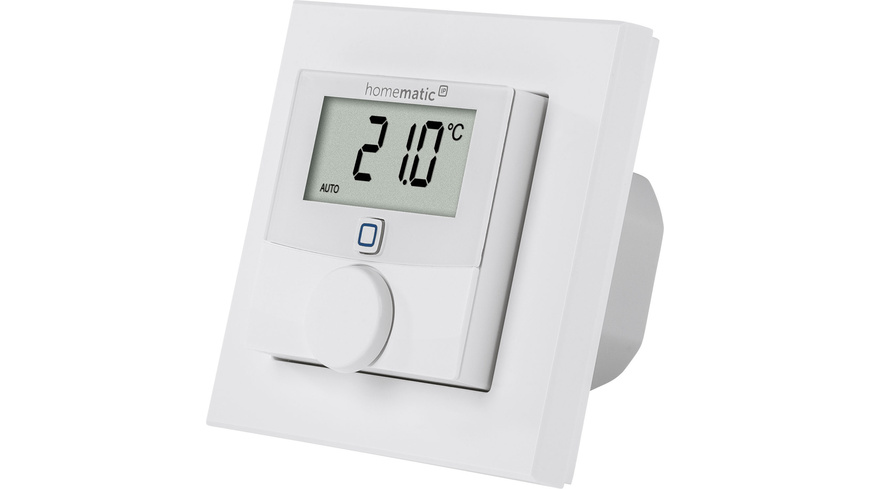
| Homematic IP HmIP-BWTH | Underfloor heating actuators, relay up to 230 W | Homematic IP; also without a hub | Underfloor heating, switch ranges with 55 mm frames |
| Bosch Smart Home Raumthermostat II 230 V | Underfloor heating, gas boiler, volt-free or up to 3 A | Zigbee 3.0; Bosch controller mandatory | Households with Bosch Smart Home |
| Eve Thermostat | Only water-based underfloor heating with 230 V actuators | Thread, Matter; no manufacturer cloud | Apple Home, Google Home, Home Assistant |
tado X wired (2nd generation)
It replaces the existing room thermostat and uses its cable. According to tado, it works with around 95 percent of heating systems in Europe, including gas boilers, heat pumps and water-based underfloor heating. For underfloor heating, tado has provided a dedicated control mode that, according to the manufacturer, reduces constant switching on and off. You need one thermostat per room. tado sells some additional features by subscription; it is best to read up on this at tado beforehand.
tado X wireless (2nd generation)
A wireless receiver sits where switching used to happen, and a temperature sensor measures freely in the room. That helps if the old thermostat is in an unfavorable spot, for example next to the door. For underfloor heating with several zones, according to tado, you need a separate set for each zone valve. With many rooms, that quickly becomes more expensive than the wired solution.
Homematic IP Wandthermostat mit Schaltausgang (HmIP-BWTH)
According to the manufacturer, this wall thermostat with switching output takes the place of the conventional wall controller of an underfloor heating system and fits standard 55 mm frames from brand-name switch ranges. It also runs without a hub and then talks directly to an underfloor heating controller. With the Access Point, app and voice control are added. The separate HmIP-BWTH24 version is intended for 24-volt actuators. So the suffix matters when ordering.
Bosch Smart Home Raumthermostat II 230 V
Bosch lists underfloor heating, gas boilers and other wired systems as applications. A remote sensor for the floor temperature can be connected. However, the device only works together with the Bosch Smart Home Controller. Without this system, you are buying an entire hub for one room.
Eve Thermostat
The Eve Thermostat has been available since July 2026, built exclusively for water-based 230-volt underfloor heating. It switches the actuators quietly via a triac, and there are additional outputs for actuators that need a relay. According to Eve, it needs neither an account nor a manufacturer cloud, but it does need a Matter controller with Thread. Most recently, it was temporarily out of stock in the Eve shop.
And Netatmo, Google Nest?
Netatmo has introduced a new model for boilers and heat pumps with its wired thermostat, the Thermostat Kabelgebunden ORIGINAL. On Amazon.de, there is no confirmed listing for it yet, which is why it is not in the table. We are leaving out Google Nest. Google removed the first- and second-generation Nest Learning Thermostats from the app as of October 25, 2025, and we are not aware of a current European version.
Which thermostat for which heating system?
Gas boiler with wall thermostat: tado X wired. If the old device hangs on a cold exterior wall, the wireless version is the better choice. With underfloor heating, the existing system decides. With Homematic IP in the house, the HmIP-BWTH fits, but check the actuator voltage first; with Bosch Smart Home, the Raumthermostat II 230 V. Without a Bosch system, the controller hardly pays off for one room.
In a Matter household without a cloud, the Eve Thermostat fits, provided the actuators run on 230 volts. And with radiators only, you do not need a wall thermostat at all, but a radiator thermostat on the valve.
Besides consumption, the tariff determines heating costs. What matters with price guarantees, bonuses and cancellation is explained in our guide to switching gas providers (in German).
If you also want to control your radiators smartly, check the valves first. Which adapter belongs on which valve is covered in our guide to valve adapters for radiator thermostats (in German).
For infrared panels and electric radiators, our guide to smart control for electric heating (in German) describes the right actuators. If a room with underfloor heating stays cold, our guide to the actuator (in German) will help.
Frequently asked questions
What is the difference between a room thermostat and a radiator thermostat?
Radiator thermostats sit on the radiator valve. A room thermostat is a wall-mounted device and switches the boiler or the actuators of the underfloor heating via cable. With radiators only, you do not need a wall thermostat at all.
What should you look for in smart thermostats for underfloor heating?
Actuators come in 230-volt and 24-volt versions, and thermostat and actuators must match the same voltage. Homematic IP therefore offers separate versions, and the suffix matters when ordering. According to the manufacturer, mains-powered devices such as the Bosch Raumthermostat II 230 V also need a live and a neutral wire.
Can you install a smart room thermostat yourself?
On the 230-volt mains, this is work on the building's electrical installation. Under § 13 (2) of the German Low Voltage Connection Ordinance (Niederspannungsanschlussverordnung), only the grid operator or a registered company may carry it out, and Bosch and Eve also require qualified personnel. Even at the boiler, we recommend a heating engineer as soon as the terminals cannot be assigned with certainty.
How much does a smart room thermostat save?
Less than the advertising suggests. According to the German consumer advice center (Verbraucherzentrale), automatically lowering the temperature during absence reduces heating costs by two to eight percent, depending on how you heated before. It considers manufacturers' savings claims partly exaggerated. With underfloor heating, the screed reacts slowly, so short setbacks have little effect.
Which hub does a smart room thermostat need?
Bosch relies on Zigbee and requires its own Smart Home Controller. tado X and Eve communicate via Thread and need a suitable router, in tado's case the Bridge X. The Homematic IP HmIP-BWTH also runs without a hub; with the Access Point, app and voice control are added.
Which heating systems is the Eve Thermostat suitable for?
According to Eve, the Eve Thermostat is intended exclusively for water-based underfloor heating with 230-volt actuators, not for boilers or heat pumps. It needs neither an account nor a manufacturer cloud, but it does need a Matter controller with Thread. That makes it a fit for households with Apple Home, Google Home or Home Assistant.
Sources
- tado: Controlling underfloor heating with tado X
- tado: Wired Smart Thermostat X (2nd gen)
- Homematic IP: Wall thermostat with switching output 230 V
- Bosch Smart Home: Raumthermostat II 230 V
- Eve: Eve Thermostat
- Eve: Press release on the market launch
- Netatmo: Thermostat Kabelgebunden ORIGINAL (wired)
- Google: End of support for Nest Learning Thermostats (1st and 2nd generation)
- Verbraucherzentrale: Smart home
- § 13 German Low Voltage Connection Ordinance (NAV)
Where to buy
- tado X verkabelt (2. Gen.)Check price at Amazon.deAvailable in Germany: Amazon.de
- tado X kabellos (2. Gen.) Starter KitCheck price at Amazon.deAvailable in Germany: Amazon.de
- Homematic IP HmIP-BWTHView at ELVAvailable in Germany: ELVCheck price at Amazon.deAvailable in Germany: Amazon.de
- Bosch Smart Home Raumthermostat II 230 VCheck price at Amazon.deAvailable in Germany: Amazon.de
- Eve Thermostat (Matter)Check price at Amazon.deAvailable in Germany: Amazon.de