Contents11 sections
This guide was first published in German on handgetestet.de.
A bad device is rarely the problem. A good one without practice is more likely to be. An avalanche transceiver with three antennas, a probe of at least 240 cm and a metal shovel belong together, and all three are only useful if the routine is second nature. For most beginners, we recommend an easy-to-use device such as the Ortovox Diract Voice as a sensible start, combined with an avalanche course before the first tour.
One thing up front, and in no uncertain terms: no equipment prevents an avalanche, and none guarantees a rescue. This guide helps with buying. It does not replace training.
What belongs in emergency equipment?
The German Alpine Club (DAV) counts an avalanche transceiver, probe and shovel as standard equipment in unsecured terrain. According to the DAV, add a first aid kit, a bivy sack and a phone or radio, at least one per three people. The DAV also explains why speed matters: in the first minutes, the survival chances of completely buried victims are over 90 percent, and after about 15 minutes they drop rapidly. As a rule, rescue therefore comes from companions, not from the mountain rescue service.
How can I tell whether an avalanche transceiver is up to date?
According to the DAV, a modern device has three antennas, works digitally and shows a direction arrow and distance. The third antenna helps above all with the fine search when the buried person lies deep.
And the search strip width? The number comes from the manufacturer and is not measured uniformly. Ortovox states in its manual that the value was determined following a recommendation of the International Commission for Alpine Rescue (ICAR). Others only give the number. A higher value does not automatically make a device better.
With multiple burials, the marking function blanks out a signal that has already been found so you can move on to the next one. Without practice, this very situation quickly becomes confusing.
Which probe, which shovel?
According to the DAV, the probe should be at least about 240 cm long, with a quick, secure tensioning mechanism and a centimeter scale. For the shovel, the DAV recommends a large, sturdy aluminum blade and an extendable shaft. The DAV explicitly advises against making weight the main criterion.
This is exactly where people most often cut corners. A short shaft and a small blade save a few hundred grams but cost time when digging out. If space in your backpack gets tight, our article on hiking backpacks has advice on volume and carrying systems.
Is the equipment enough on its own?
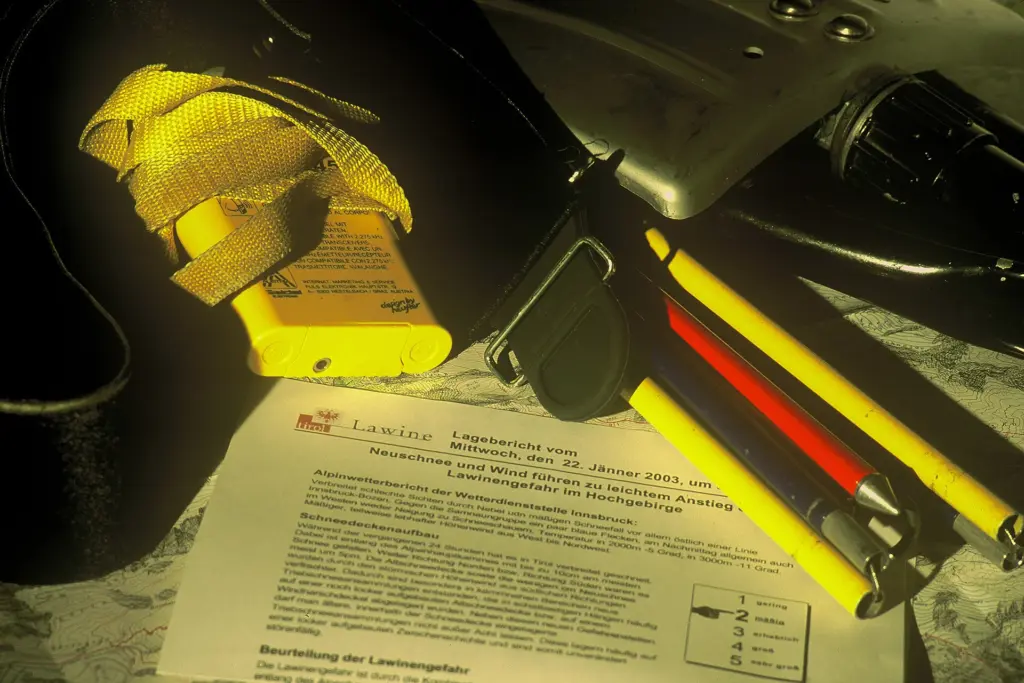
No. The DAV writes that an avalanche course should be mandatory at the start of every winter sports career, that the knowledge should be refreshed regularly and that handling the equipment should be practiced. Courses are offered by the sections of the Alpine clubs and by mountain schools. Before every tour, check the avalanche bulletin. The European avalanche danger scale ranges from 1 (low) to 5 (very high). The Bavarian Avalanche Warning Service publishes the bulletin for the following day from 6 p.m., with the danger level, avalanche problems, aspects and elevations. Since the 2022/23 winter, the Swiss Institute for Snow and Avalanche Research (SLF) has additionally divided the levels into sub-levels.
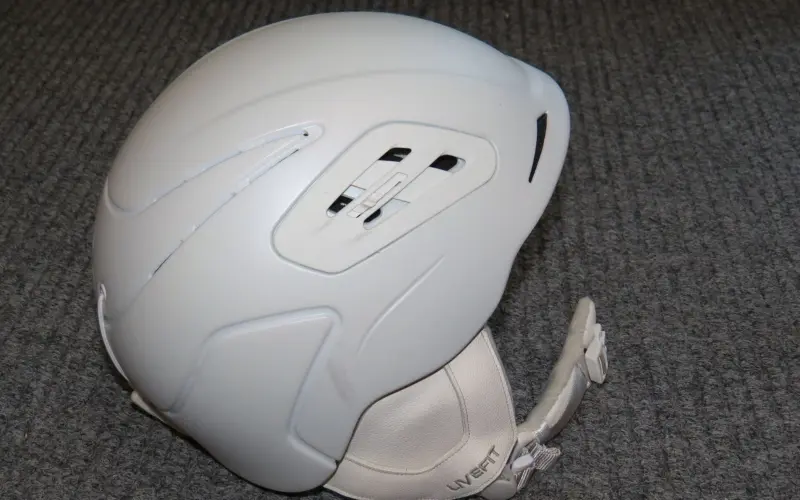
An avalanche airbag is a supplement. According to the DAV, it can prevent a burial or reduce its depth, but it usually has to be triggered by hand. The association puts it briefly: complement, not replace. If your budget is still small, put it first into the transceiver, probe, shovel and a course. The DAV also mentions a helmet as a sensible addition; our article on ski helmets (in German) has advice on choosing one.
Four avalanche transceivers with three antennas
Ortovox Diract Voice
Instead of disposable batteries, the Diract Voice has a lithium-ion battery that charges via USB-C; according to the manual, the device works between minus 20 and plus 45 degrees Celsius. It cannot be charged below 0 degrees, and it does not transmit while charging. Voice guidance gives instructions during the search. Ortovox states a maximum search strip width of 50 m, measured per ICAR. Less than the competition? On paper, yes. According to the manufacturer, the battery lasts more than 200 hours of transmitting, after which one hour remains for searching. Amazon.de offers the device on its own and as a Rescue Set; check exactly what is included there.
Pieps Powder BT
A 60 m search strip width, 230 g with batteries and at least 300 hours of operating time on three AAA cells: that is how Pieps describes the Powder BT. Via Bluetooth and the Pieps app, you can change settings, install updates and start practice scenarios. The latter makes it a good choice for beginners who want to get familiar with the device at home. Amazon.de mainly lists it as a light set with shovel and probe.
Black Diamond Recon X
Three antennas, a 60 m search strip, three AAA batteries and 220 g with batteries, according to the user manual. Added to that are a marking function for multiple burials, a group check and device management via the Pieps app. In the manual, Black Diamond explicitly warns never to use Bluetooth mode in avalanche terrain. Amazon.de offers it as a set with probe and shovel. A starting point for anyone looking for a complete package from a single source.
Mammut Barryvox S
The German retailer Bergfreunde lists a 70 m range and 205 g with batteries for the Barryvox S. It keeps found victims in a list from which those already recovered can be removed. Alongside the digital search, there is an analog mode with greater range for the coarse search, and in search mode the device automatically switches back to transmitting after four minutes without movement. For beginners, that is more device than necessary. Mammut has a successor, the Barryvox S2, but Amazon.de mainly offers the Barryvox S as new stock. The DAV tested the S2 in December 2025 and measured a stable receiving range of 60.5 m in the best orientation, which is less than the 70 m stated by the manufacturer. In addition, Mammut recalled Barryvox 2 and S2 units delivered up to November 2024 for inspection.
Which device for whom?
For the first season, with a course booked, we recommend the Ortovox Diract Voice: a rechargeable battery instead of disposables and voice guidance lower the barrier to entry. Prefer disposable batteries? Then the Pieps Powder BT.
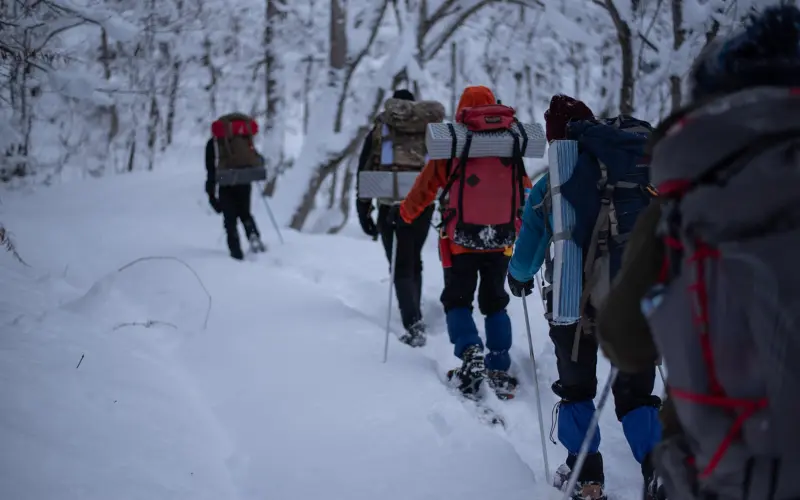
The Black Diamond Recon X Set and the Pieps Powder BT Light Set offer everything in one package, each with probe and shovel. Make sure the probe is at least 240 cm long. Experienced users and group leaders are well served by the Mammut Barryvox S, because it keeps a list of buried victims in multiple burials and also searches in analog mode; recreational users usually do not need that much device. For snowshoers, the same equipment applies away from the ski track as well; for the right binding, see our article on snowshoes.
Before every tour, a group check is part of the routine: are all devices transmitting? After that, the avalanche transceiver goes on your body, not in your backpack. When buying, also check with the manufacturer whether a recall or software update affects your device. And practice several times per season, ideally at an avalanche transceiver training park.
Frequently asked questions
What belongs in avalanche emergency equipment?
The German Alpine Club (DAV) counts an avalanche transceiver, probe and shovel as standard equipment in unsecured terrain. Add a first aid kit, a bivy sack and a phone or radio. According to the DAV, the survival chances of completely buried victims are over 90 percent in the first minutes, and rescue usually comes from their companions.
How can you tell whether an avalanche transceiver is up to date?
According to the DAV, a modern device has three antennas, works digitally and shows a direction arrow and distance. The third antenna helps above all with the fine search when the buried person lies deep. With multiple burials, a marking function blanks out a signal that has already been found.
How important is the search strip width of an avalanche transceiver?
Less important than the number suggests. The value comes from the manufacturer and is not measured uniformly. Ortovox states that it determined the value following an ICAR recommendation; others only give the number. A higher value does not automatically make a device better.
Which probe and shovel do you need for ski touring?
According to the DAV, the probe should be at least about 240 cm long, with a quick, secure tensioning mechanism and a centimeter scale. For the shovel, the DAV recommends a large, sturdy aluminum blade and an extendable shaft. Weight should not be the main criterion, because a small blade costs time when digging out.
Does an avalanche airbag replace the avalanche transceiver?
No. According to the DAV, an airbag can prevent a burial or reduce its depth, but it usually has to be triggered by hand. The association's verdict: complement, not replace. On a tight budget, the money goes first into the transceiver, probe, shovel and a course.
Is the equipment enough without an avalanche course?
No. The DAV writes that an avalanche course should be mandatory at the start of every winter sports career, with the knowledge refreshed regularly. Before every tour, check the avalanche bulletin and do a group check, and carry the device on your body, not in your backpack. No equipment prevents an avalanche.
Sources
- DAV: Emergency equipment on ski tours
- DAV: Shovel and probe
- DAV safety research: Mammut Barryvox S2
- DAV: New danger levels in Switzerland (SLF)
- PowderGuide: Bavarian Avalanche Warning Service
- Pieps: Powder BT
- Ortovox: User manual Diract and Diract Voice (PDF)
- Sport Conrad (German retailer): Ortovox Diract Voice
- Backcountry Magazine: Ortovox Diract Voice
- Black Diamond: User manual Recon X (PDF)
- Bergfreunde: Mammut Barryvox S
Where to buy
- Ortovox Diract VoiceCheck price at Amazon.deCheck price at Amazon.co.ukCheck price at Amazon.nlCheck price at Amazon.com.beCheck price at Amazon.frCheck price at Amazon.itCheck price at Amazon.esCheck price at Amazon.plCheck price at Amazon.seAvailable in Germany: Amazon.de
- Pieps Powder BTCheck price at Amazon.deCheck price at Amazon.co.ukCheck price at Amazon.nlCheck price at Amazon.com.beCheck price at Amazon.frCheck price at Amazon.itCheck price at Amazon.esCheck price at Amazon.plCheck price at Amazon.seAvailable in Germany: Amazon.de
- Black Diamond Recon XCheck price at Amazon.deCheck price at Amazon.co.ukCheck price at Amazon.nlCheck price at Amazon.com.beCheck price at Amazon.frCheck price at Amazon.itCheck price at Amazon.esCheck price at Amazon.plCheck price at Amazon.seAvailable in Germany: Amazon.de
- Mammut Barryvox SCheck price at Amazon.deCheck price at Amazon.co.ukCheck price at Amazon.nlCheck price at Amazon.com.beCheck price at Amazon.frCheck price at Amazon.itCheck price at Amazon.esCheck price at Amazon.plCheck price at Amazon.seAvailable in Germany: Amazon.de
Still undecided?
Keep comparing at your own pace – every article in this category is checked monthly for new and discontinued models.