Contents13 sections
This guide was first published in German on handgetestet.de.
When buying a memory card, the expensive mistake is rarely a card that is too slow. It is a card that is too fast, one the camera cannot even take advantage of. In a typical mirrorless camera with an SD slot, a solid UHS-I card rated V30, such as the SanDisk Extreme PRO, is enough; spending more only makes sense if your camera calls for UHS-II or CFexpress. For a drone or action cam, a microSD card rated V30 will do, and extras are hardly needed.
Which cards does my camera actually accept?
The answer is in the user manual. There you will find which cards the camera accepts and which class it requires for certain video modes, and that information carries more weight than any number in the store.
What do V30, UHS-I and the big MB/s numbers mean?
The most important rating is the Video Speed Class with V30, V60 or V90. According to the SD Association, the number stands for the guaranteed minimum write speed in MB/s while recording video. That is exactly the value that decides whether footage stays free of stutter.
Next to it is the bus. UHS-I reaches up to 104 MB/s in the standard; UHS-II has a second row of contacts and reaches up to 312 MB/s. According to the SD Association, V60 and V90 only exist with UHS-II or faster.
And the big „up to 200 MB/s“ on the front? Almost always a read speed. What counts for the camera is writing, and that is often considerably lower. As for capacity, two mid-sized cards are usually smarter than one huge one. If one gets lost or fails, you do not lose the whole vacation at once.
A UHS-II card also works in a UHS-I slot, but only as fast as the slot allows. With the Sony SF-G, the write speed then drops from 299 to 90 MB/s according to the manufacturer. Without a UHS-II slot in the camera, the extra cost gets you practically nothing.
Type A or Type B: what is the difference with CFexpress?
Professional and higher-end video cameras record to CFexpress. Type A is small and is mainly found in Sony cameras; the larger Type B is used by Nikon and Canon, for example. The form factors are mechanically different. A Type B card does not fit into a Type A slot. You should also pay attention to the generation (CFexpress 4.0 is newer) and the VPG label. According to Sony, VPG400 means a sustained write speed of at least 400 MB/s.
How do I spot a fake card?
Fakes often report a large capacity to the computer but only store a fraction of it. You only notice when footage is missing. In its buying guide, SanDisk advises buying from authorized retailers and names as warning signs packaging without a seal, spelling mistakes, crooked or poorly fitted labels, and a price that seems too good to be true. On Amazon, that means checking the seller. And every new card gets tested before it goes into the camera. Programs such as H2testw fill the entire card and read it back; that takes time, but it reliably exposes inflated capacities.
Six memory cards compared
| Model | Form factor | Speed according to manufacturer | Best for |
|---|---|---|---|
| SanDisk Extreme PRO SDXC UHS-I | SD, UHS-I, V30 | Read up to 200 MB/s, write 90 to 140 MB/s depending on capacity | Mirrorless camera with UHS-I slot, 4K video |
| ProGrade Digital SDXC UHS-II V60 Gold | SD, UHS-II, V60 | Read 250 MB/s, write 130 MB/s, at least 60 MB/s sustained | UHS-II camera, high video bitrates |
| Sony SF-G TOUGH | SD, UHS-II, V90 | Read 300 MB/s, write 299 MB/s | Burst shooting, rugged build wanted |
| Sony CEA-G (CFexpress 4.0) | CFexpress Type A, VPG400 | Read 1,800 MB/s, write 1,700 MB/s (240 GB and up) | Sony cameras with Type A slot |
| Angelbird AV PRO SE CFexpress B v4 | CFexpress Type B 4.0 | Read 3,700 MB/s, sustained 500 to 3,150 MB/s depending on capacity | Cameras with Type B slot, RAW video |
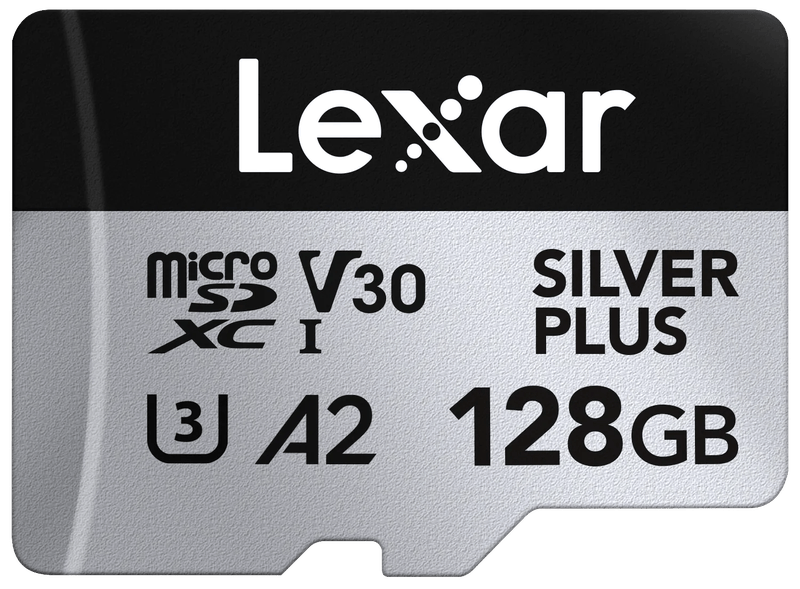
| Lexar Professional SILVER PLUS microSDXC | microSD, UHS-I, V30 | Read up to 205 MB/s, write up to 150 MB/s | Drone, action cam |
SanDisk Extreme PRO SDXC UHS-I
This card probably ends up in a great many camera bags. With U3 and V30, it is good for Full HD up to 4K according to the SD Association, and it is available from 64 GB to 1 TB. It only reaches the 200 MB/s when reading and only with a matching card reader, because SanDisk goes beyond the UHS-I standard to get there. Capacity makes a difference. From 256 GB, it writes at a maximum of 140 MB/s according to the manufacturer, and below that at 90 MB/s.
ProGrade Digital SDXC UHS-II V60 Gold
If your camera supports UHS-II, this is the sensible step up. ProGrade specifies a minimum write speed of 60 MB/s and, according to the company, tests its cards in photo and cinema cameras. The free Refresh Pro software checks the card’s condition. On Amazon, the 128 GB version was temporarily unavailable; the larger versions are offered.
Sony SF-G TOUGH
Sony builds this V90 card without ribs and without a write-protect switch, in other words without the parts most likely to break off an SD card. According to Sony, it also offers IP68 protection and considerably higher bending strength than the SD standard requires. With a write speed of 299 MB/s, it clears the buffer quickly after long bursts. It does, however, top out at 256 GB.
Sony CEA-G (CFexpress 4.0, Type A)
With a Sony camera that has a Type A slot, there is no way around this form factor. The new CEA-G cards from 240 GB support CFexpress 4.0 and, according to Sony, read at up to 1,800 MB/s. Every capacity carries VPG400. The older 80 and 160 GB versions are considerably slower at 800 MB/s read and 700 MB/s write; that is enough for photos, but for long high-bitrate video the new generation is the safer choice.
Angelbird AV PRO SE CFexpress B v4
With this Type B card, almost everything depends on capacity. According to Angelbird, the 256 GB version sustains 500 MB/s and is not VPG-certified, the 1 TB card manages 2,100 MB/s, and from 2 TB it is 3,150 MB/s. So for RAW video, better not pick the smallest one. The three-year warranty including data recovery only applies if you register within 30 days.
Lexar Professional SILVER PLUS microSDXC
Designed for drones and action cams. Lexar explicitly names compatibility with DJI and GoPro devices, and the card carries V30. According to Lexar, the 205 MB/s read speed only applies with the company’s own card reader. Most of these cameras do not need more than V30. You should still take a quick look at your model’s card list. What else matters when buying a drone is explained under Buying a drone; suitable cameras are in our overview of action cams.
Which card for which camera?
- Mirrorless camera with UHS-I slot, photos and 4K: SanDisk Extreme PRO SDXC from 256 GB. Which camera goes with it is covered in our mirrorless camera guide (in German).
- Camera with UHS-II slot: ProGrade V60 Gold for video, Sony SF-G TOUGH if burst shooting and ruggedness matter more than capacity.
- Sony with CFexpress Type A slot: Sony CEA-G from 240 GB.
- Type B camera, RAW video: Angelbird AV PRO SE v4 from 1 TB; for photos, a smaller capacity is enough.
- Drone or action cam: Lexar SILVER PLUS microSDXC with V30.
Two habits apply to every card. Format it in the camera, not on the computer. And move your footage to a second storage location soon. How to discreetly find out which card type is in someone’s camera before giving it as a gift is shown in our guide Gifts for photographers (in German).
Security cameras with continuous recording follow different standards; endurance cards, cloud and recorders are compared in our guide to storage for security cameras (in German).
Frequently asked questions
What do V30, V60 and V90 mean on memory cards?
That is the Video Speed Class. According to the SD Association, the number stands for the guaranteed minimum write speed in MB/s while recording video. That is exactly the value that decides whether footage stays free of stutter. V60 and V90 only exist with UHS-II or faster.
Is a UHS-II card worth it in a UHS-I camera?
Practically not. A UHS-II card does work in a UHS-I slot, but only as fast as the slot allows. With the Sony SF-G, the write speed then drops from 299 to 90 MB/s according to the manufacturer. Which cards your camera accepts is listed in the user manual.
Why is the big MB/s number on the card misleading?
The big "up to 200 MB/s" on the front is almost always a read speed, often only reachable with a matching card reader. What counts for the camera is writing, and that is often considerably lower. With the SanDisk Extreme PRO, for example, it is 90 or 140 MB/s depending on capacity.
What is the difference between CFexpress Type A and Type B?
Type A is small and is mainly found in Sony cameras; the larger Type B is used by Nikon and Canon, for example. The form factors are mechanically different, so a Type B card does not fit into a Type A slot. You should also pay attention to the generation and the VPG label for the sustained write speed.
How can you spot a fake memory card?
Fakes often report a large capacity but only store a fraction of it. SanDisk names packaging without a seal, spelling mistakes, crooked labels and a price that is too good as warning signs. Buy from authorized retailers and check every new card with a program such as H2testw before it goes into the camera.
One large memory card or several smaller ones?
Two mid-sized cards are usually smarter than one huge one. If one gets lost or fails, you do not lose the whole vacation at once. For every card, the same applies: format it in the camera, not on the computer, and copy your footage to a second storage location soon.
Sources
- SD Association: Speed Class
- SD Association: Bus Speed
- SanDisk: Extreme PRO SD UHS-I
- SanDisk: Safe Buying Guide
- ProGrade Digital: SDXC UHS-II V60
- Sony: SF-G TOUGH, specifications
- Sony: CEA-G, specifications
- Angelbird: AV PRO SE CFexpress B v4
- Lexar: Professional SILVER PLUS
Where to buy
- SanDisk Extreme PRO SDXC UHS-I (128 GB)Check price at Amazon.deCheck price at Amazon.co.ukCheck price at Amazon.nlCheck price at Amazon.com.beCheck price at Amazon.frCheck price at Amazon.itCheck price at Amazon.esCheck price at Amazon.plCheck price at Amazon.seAvailable in Germany: Amazon.de
- ProGrade Digital SDXC UHS-II V60 GoldCheck price at Amazon.deCheck price at Amazon.co.ukCheck price at Amazon.nlCheck price at Amazon.com.beCheck price at Amazon.frCheck price at Amazon.itCheck price at Amazon.esCheck price at Amazon.plCheck price at Amazon.seAvailable in Germany: Amazon.de
- Sony SF-G TOUGH UHS-IICheck price at Amazon.deCheck price at Amazon.co.ukCheck price at Amazon.nlCheck price at Amazon.com.beCheck price at Amazon.frCheck price at Amazon.itCheck price at Amazon.esCheck price at Amazon.plCheck price at Amazon.seAvailable in Germany: Amazon.de
- Sony CEA-G (CFexpress 4.0)Check price at Amazon.deCheck price at Amazon.co.ukCheck price at Amazon.nlCheck price at Amazon.com.beCheck price at Amazon.frCheck price at Amazon.itCheck price at Amazon.esCheck price at Amazon.plCheck price at Amazon.seAvailable in Germany: Amazon.de
- Angelbird AV PRO SE CFexpress B v4Check price at Amazon.deCheck price at Amazon.co.ukCheck price at Amazon.nlCheck price at Amazon.com.beCheck price at Amazon.frCheck price at Amazon.itCheck price at Amazon.esCheck price at Amazon.plCheck price at Amazon.seAvailable in Germany: Amazon.de
- Lexar Professional SILVER PLUS microSDXCCheck price at Amazon.deCheck price at Amazon.co.ukCheck price at Amazon.nlCheck price at Amazon.com.beCheck price at Amazon.frCheck price at Amazon.itCheck price at Amazon.esCheck price at Amazon.plCheck price at Amazon.seAvailable in Germany: Amazon.deView at CoolblueAvailable in Germany: Coolblue