Contents13 sections
This guide was first published in German on handgetestet.de.
The summer vacation is booked, and this time the coastline is supposed to end up on video from above. Before cameras even come into it, there is a completely different number to consider: 250 grams. Below that, hobby filmmakers do not need a proof of competency, which is why a camera drone in this weight class is the sensible way to start for the vast majority. You still have to register with the German Federal Aviation Office (Luftfahrt-Bundesamt, LBA) as soon as there is a camera on board.
More image quality, zoom or stability in the wind only comes with classes C1 and C2. Then the EU A1/A3 proof of competency is mandatory. Here we classify seven current models based on manufacturer specifications.
What is on the label, and what follows from it?
Within the EU, private camera drones almost always fly in the „open category.“ Which rules apply to you is determined by the class printed on the drone. For this, we rely on dipul.de (the German federal government’s drone portal) and the EU agency EASA.
Registration is mandatory from a takeoff weight of 250 g. Lighter drones are also affected if they carry a camera or a microphone. You receive an e-ID that applies to all of your drones.
For C0 (under 250 g), nobody requires a proof of competency, but the A1/A3 certificate is recommended. Flying over individual uninvolved people is allowed. Flying over crowds is not.
With C1 (under 900 g), you must hold the EU A1/A3 proof of competency before the drone takes off for the first time, and uninvolved people should not be overflown.
C2 (under 4 kg) may only fly close to people with the additional A2 remote pilot certificate. According to EASA, a distance of 30 m from uninvolved people then applies, or 5 m in low-speed mode.
Without A2, you are limited to subcategory A3, with a distance of 150 m from residential, commercial, industrial and recreational areas.
For all classes, there is a ceiling of 120 m above ground. Liability insurance for the drone is mandatory. Whether your personal liability insurance covers drones is better clarified beforehand than afterwards. Registration, the online course and the exam are handled via the portal of the German Federal Aviation Office (lba-openuav.de); where you are allowed to fly is shown on the map at dipul.de, and which maps and apps help with that is compared in our guide Drone map: where am I allowed to fly?.
Why the battery can change the class
What counts is the C marking of the exact version, not that of the model. Larger batteries can push a drone over the 250 g limit. Then suddenly different rules apply, as the Mini 5 Pro further down shows.
And what matters technically?
First, the sensor. A larger one (1 inch, 4/3 inch) helps at dusk and against the light; 4K video is now standard, and high frame rates allow slow motion. All-around obstacle detection sensors save beginners from expensive mistakes. Budget models often leave them out.
When it comes to flight time, skepticism pays off. The manufacturer figures are achieved under ideal conditions; outdoors, you get fewer minutes, which is why a bundle with extra batteries is usually money well spent. Small models take off from your hand and follow you without a remote controller. For landscapes, flying with a classic remote controller is more pleasant.
Seven drones from 151 grams to professional class
| Model | Weight / class | Camera | Flight time according to manufacturer | Best for |
|---|---|---|---|---|
| DJI Neo 2 | 151 g / C0 | 1/2 inch, 4K up to 60 fps | approx. 19 min | selfies, sports, travel |
| DJI Flip | under 249 g / C0 | 1/1.3 inch, 4K up to 100 fps | 31 min | vloggers, beginners |
| Potensic Atom 2 | under 250 g / check class for each version | 1/2 inch, 4K up to 30 fps | 32 min | beginners on a smaller budget |
| DJI Mini 4 Pro | under 249 g / C0 | 1/1.3 inch, 4K up to 100 fps | 34 min | ambitious beginners |
| DJI Mini 5 Pro | approx. 250 g / C0 or C1 depending on bundle | 1 inch, 4K up to 120 fps | 36 min | best image quality under 250 g |
| DJI Air 3S | 724 g / C1 | 1 inch + 1/1.3 inch telephoto, 4K up to 120 fps | 45 min | advanced pilots, travel filmmakers |
| DJI Mavic 4 Pro | approx. 1,063 g / C2 | 4/3 inch + two telephoto, 6K up to 60 fps | 51 min | professionals and demanding users |
DJI Neo 2
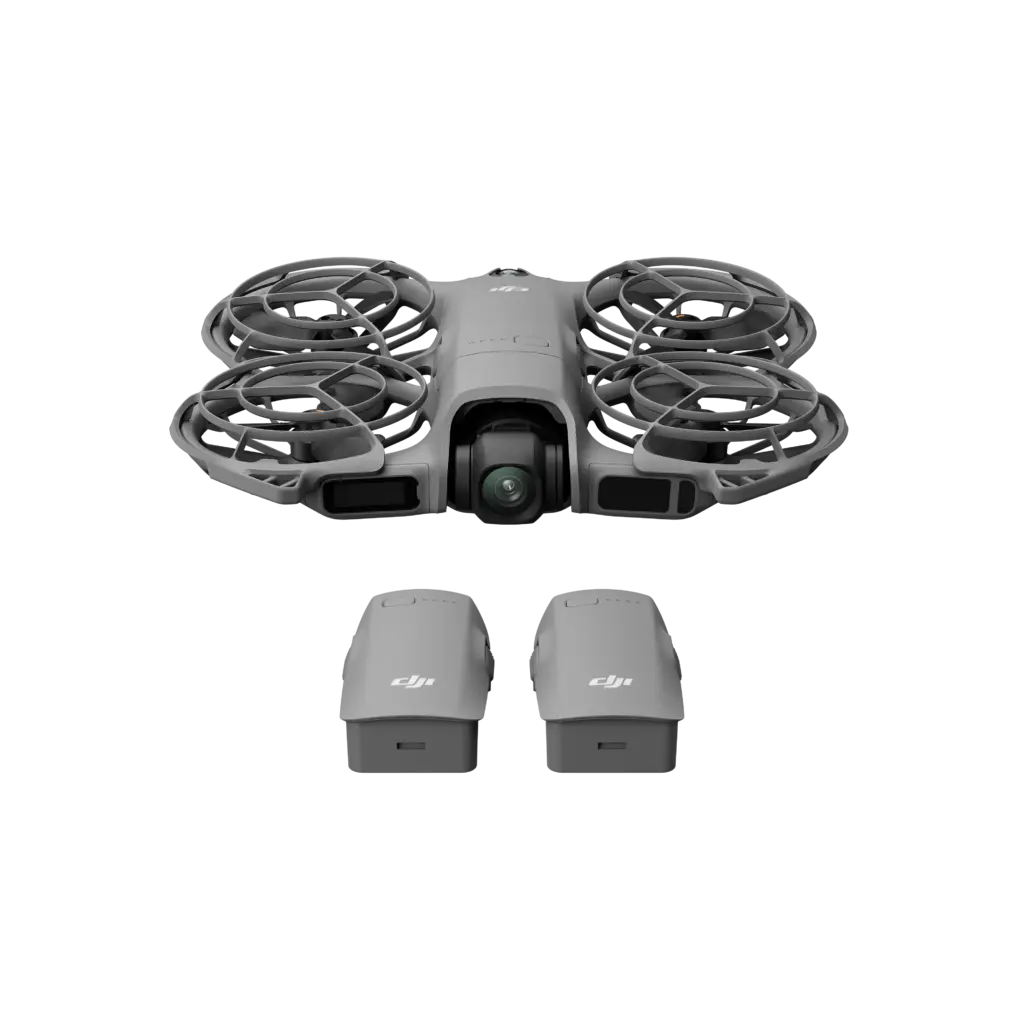
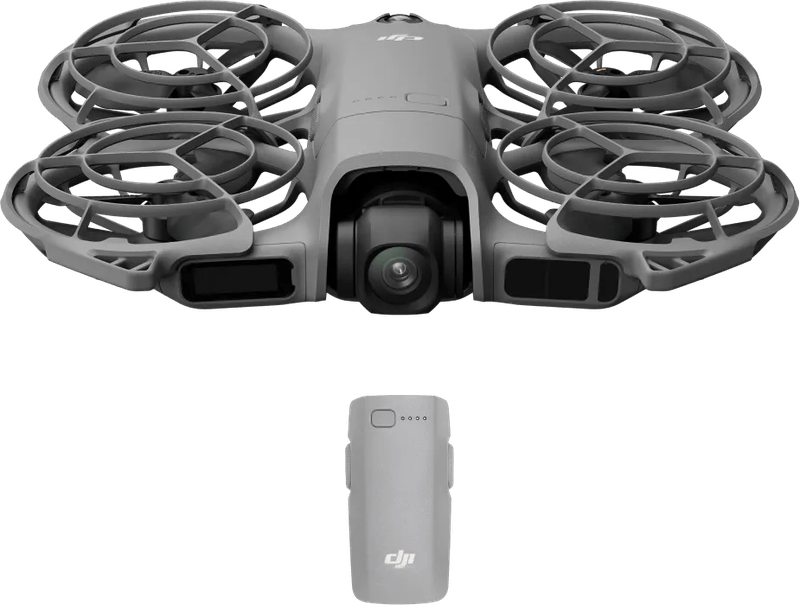
Only 151 g according to DJI, with full propeller guards. The Neo 2 takes off from and lands on your palm, responds to gestures and follows you even without a remote controller; all-around vision sensors and a forward-facing LiDAR are included. The small 1/2-inch sensor and around 19 minutes of flight time reveal what it is meant for.
A companion camera. Not a tool for landscapes. Price range: entry level.
DJI Flip
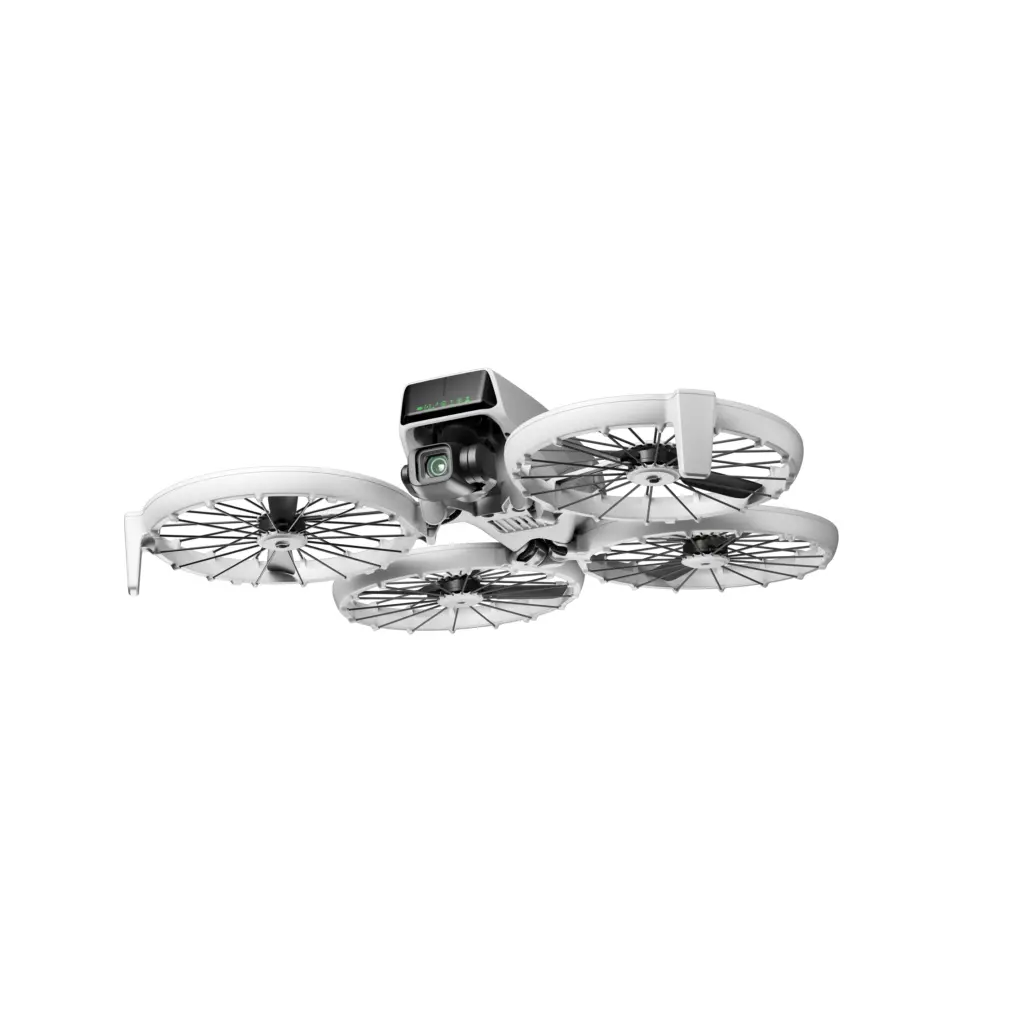
Between the Neo and the Mini sits the Flip with its foldable propeller guard. DJI states that it stays under 249 g, films 4K at up to 100 frames per second and stays in the air for 31 minutes. It takes off from your hand. Obstacle detection, however, only works forward (3D infrared) and downward; to the sides and rear, it is up to you. Price range: entry level to mid-range.
Potensic Atom 2
One of the best-known alternatives to DJI under 250 g. Retailers list a 1/2-inch sensor, 4K video at 30 frames per second and a maximum of 32 minutes of flight time. All-around obstacle detection is missing. Check whether the version on offer carries a C0 marking; otherwise, a mandatory course quickly eats up the savings. Price range: entry level.
DJI Mini 4 Pro
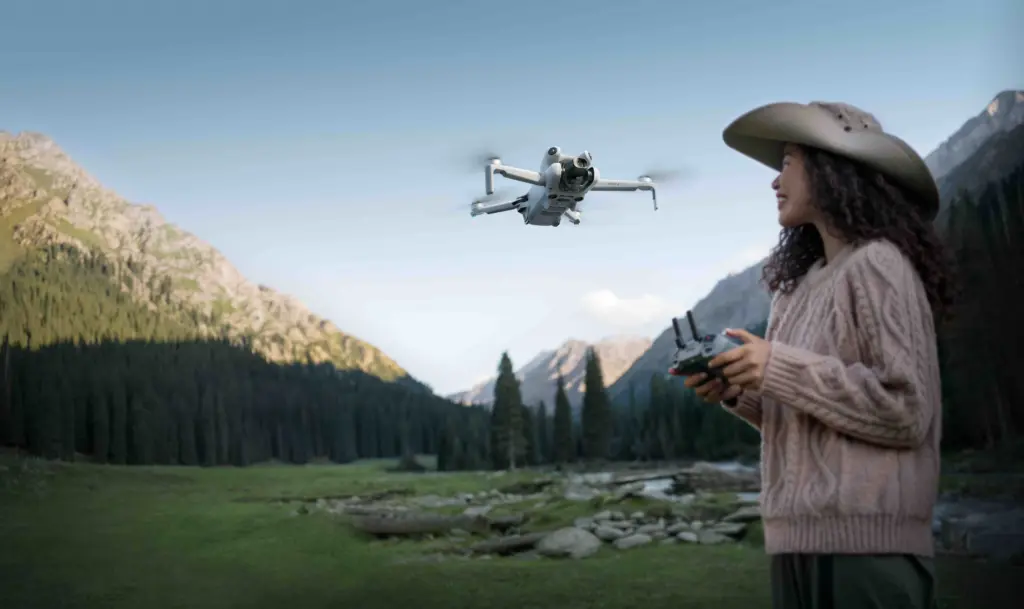
The predecessor of the Mini 5 Pro is still on sale and remains a sensible choice. With the standard battery, it weighs under 249 g according to DJI (C0). The 1/1.3-inch sensor has 48 MP, it films in 4K at up to 100 frames per second, and all-around vision sensors provide protection while flying. DJI states 34 minutes of flight time. Price range: mid-range.
DJI Mini 5 Pro
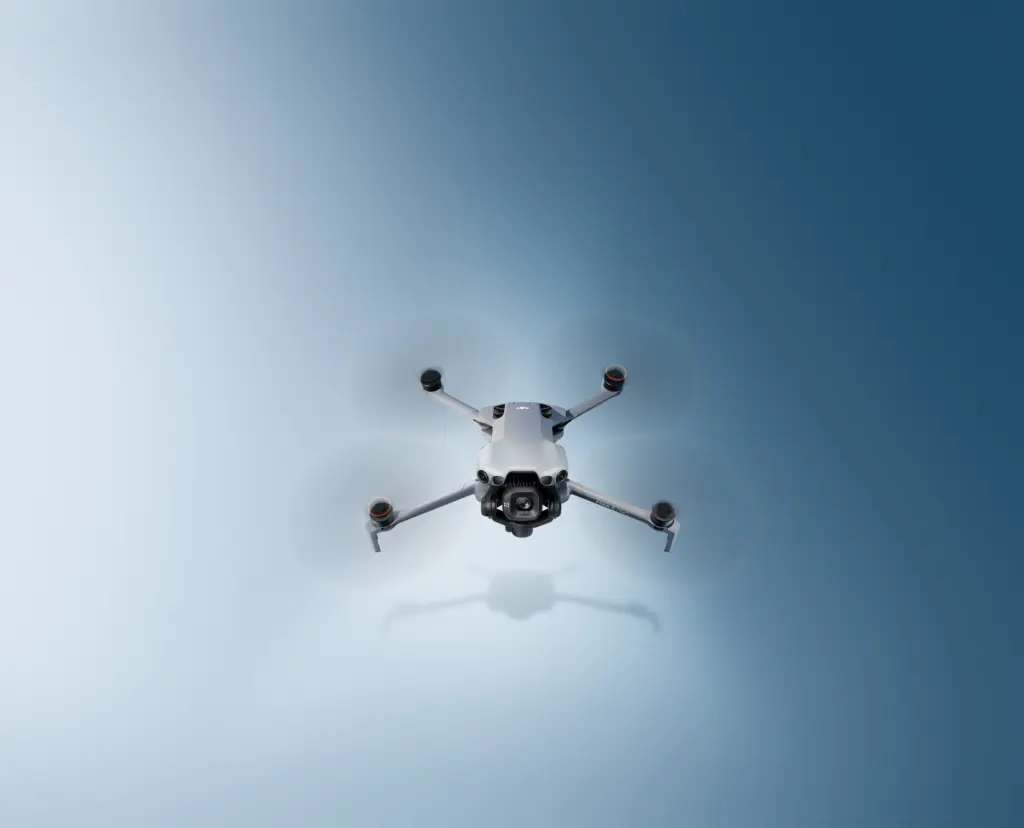
For the first time, a 1-inch sensor (50 MP) sits in a drone of the 250 g class. It films in 4K at up to 120 frames per second, with all-around vision sensors and a forward-facing LiDAR.
You should take a close look at the weight. DJI states around 249.9 g with a tolerance of ±4 g. The Fly More Combo is certified as C0, whereas the Fly More Combo Plus is certified as C1. With the larger Plus battery (up to 52 minutes), the drone therefore no longer counts as C0, and the A1/A3 certificate becomes mandatory. Price range: mid-range to upscale.
DJI Air 3S
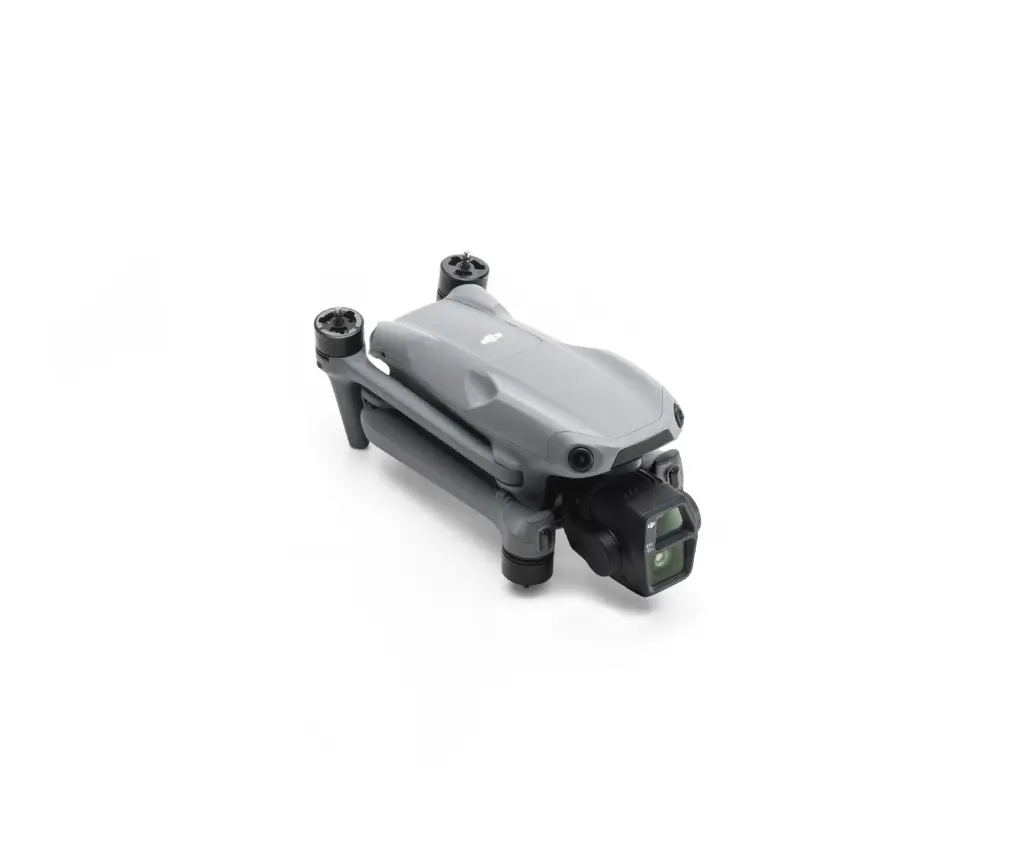
724 g and class C1. The Air 3S carries two cameras, a wide-angle camera with a 1-inch sensor and a medium telephoto camera with 1/1.3 inch. DJI states 45 minutes of flight time. All-around sensors and a forward-facing LiDAR help even at night. Because of its higher weight, it is steadier in the wind than the Mini models, and on the coast or in the mountains, that is exactly what makes the difference. Price range: upscale.
DJI Mavic 4 Pro
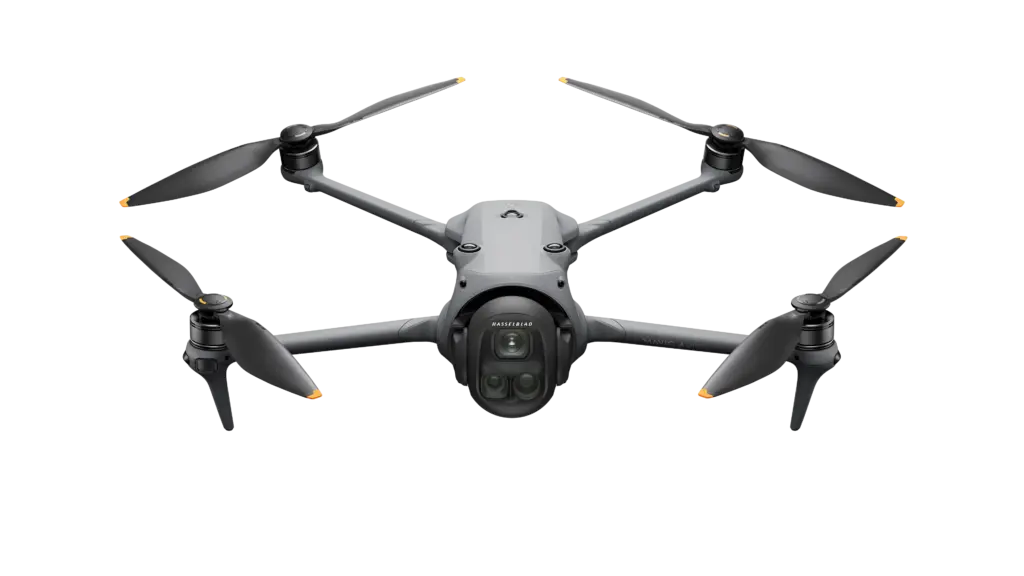
The top model in this overview weighs around 1,063 g and is classified as C2. The main camera with a 4/3-inch sensor and 100 MP films in 6K at up to 60 frames per second, complemented by two telephoto cameras (70 and 168 mm full-frame equivalent). DJI states 51 minutes as the maximum flight time. For flights close to people, you need the A2 certificate. Vacation videos do not justify this effort, but paid jobs do. Price range: premium.
Back to the coast: which drone comes along?
If you mainly want to film selfies, sports and travel without a remote controller, the DJI Neo 2 or the DJI Flip will serve you well. If image quality without a proof of competency is the priority, the DJI Mini 5 Pro in its C0 version is the best fit. A little cheaper: the Mini 4 Pro.
- Budget entry: Potensic Atom 2, provided you can do without all-around obstacle detection.
- Advanced pilots with the A1/A3 certificate: DJI Air 3S with a second telephoto camera.
- Professional requirements: DJI Mavic 4 Pro, ideally together with the A2 certificate.
All technical specifications come from the manufacturers or retailers. We have not flown the drones ourselves. Check the exact version before ordering and the current rules on dipul.de before takeoff.
If you would rather learn to fly a model airplane instead of a drone, our guide to model airplanes for beginners covers RTF sets, training aids and what needs to be done before the first takeoff.
Frequently asked questions
Do you have to register a drone under 250 grams?
Yes, as soon as it carries a camera or a microphone. From a takeoff weight of 250 g, registration is mandatory anyway. You receive an e-ID that applies to all of your drones. In Germany, registration, the online course and the exam are handled via the portal of the German Federal Aviation Office (Luftfahrt-Bundesamt, LBA).
What do the drone classes C0, C1 and C2 mean?
C0 is under 250 g; a proof of competency is not required but recommended. C1 is under 900 g and requires the EU A1/A3 proof of competency before the first flight. C2 is under 4 kg and may only fly close to people with the additional A2 remote pilot certificate.
Why can a larger battery change the drone class?
What counts is the C marking of the exact version, not that of the model. With the DJI Mini 5 Pro, the Fly More Combo is certified as C0, whereas the Fly More Combo Plus with a larger battery is certified as C1. Then the A1/A3 certificate becomes mandatory.
Which rules apply to all drones?
For all classes, there is a ceiling of 120 m above ground, and liability insurance for the drone is mandatory. Check beforehand whether your personal liability insurance covers drones. Where you are allowed to fly in Germany is shown on the map at dipul.de.
How realistic are the manufacturers' flight times?
The figures are achieved under ideal conditions; outdoors, you get fewer minutes. A bundle with extra batteries is therefore usually money well spent. According to the manufacturers, the range in our comparison extends from about 19 minutes for the DJI Neo 2 to 51 minutes for the DJI Mavic 4 Pro.
What should you keep in mind with the Potensic Atom 2?
It is considered a well-known alternative to DJI under 250 g, with a 1/2-inch sensor, 4K at 30 frames per second and up to 32 minutes of flight time according to retailers. All-around obstacle detection is missing. Check whether the version on offer carries a C0 marking; otherwise, a mandatory course eats up the savings.
Sources
- dipul.de: Registration and proof of competency
- dipul.de: Open category
- EASA: Open category
- German Federal Aviation Office (Luftfahrt-Bundesamt): Registration and online exam
- DJI: Neo 2, specifications
- DJI: Flip, specifications
- DJI: Mini 4 Pro, specifications
- DJI: Mini 5 Pro, specifications
- DJI: Air 3S, specifications
- DJI: Mavic 4 Pro, specifications
Where to buy
- DJI Neo 2View at CoolblueAvailable in Germany: Coolblue
- DJI FlipView at CoolblueAvailable in Germany: Coolblue
- Potensic Atom 2Check price at Amazon.deCheck price at Amazon.co.ukCheck price at Amazon.nlCheck price at Amazon.com.beCheck price at Amazon.frCheck price at Amazon.itCheck price at Amazon.esCheck price at Amazon.plCheck price at Amazon.seCheck price at Amazon.comCheck price at Amazon.ca
- DJI Mini 4 ProCheck price at Amazon.deAvailable in Germany: Amazon.deCheck price at Amazon.nlCheck price at Amazon.com.beCheck price at Amazon.frCheck price at Amazon.itCheck price at Amazon.esCheck price at Amazon.seCheck price at Amazon.com
- DJI Mini 5 Pro (Standard)Check price at Amazon.deCheck price at Amazon.co.ukCheck price at Amazon.nlCheck price at Amazon.com.beCheck price at Amazon.frCheck price at Amazon.itCheck price at Amazon.esCheck price at Amazon.plCheck price at Amazon.seCheck price at Amazon.comCheck price at Amazon.ca
- DJI Air 3SView at CoolblueAvailable in Germany: Coolblue
- DJI Mavic 4 ProView at CoolblueAvailable in Germany: Coolblue