Contents12 sections
This guide was first published in German on handgetestet.de.
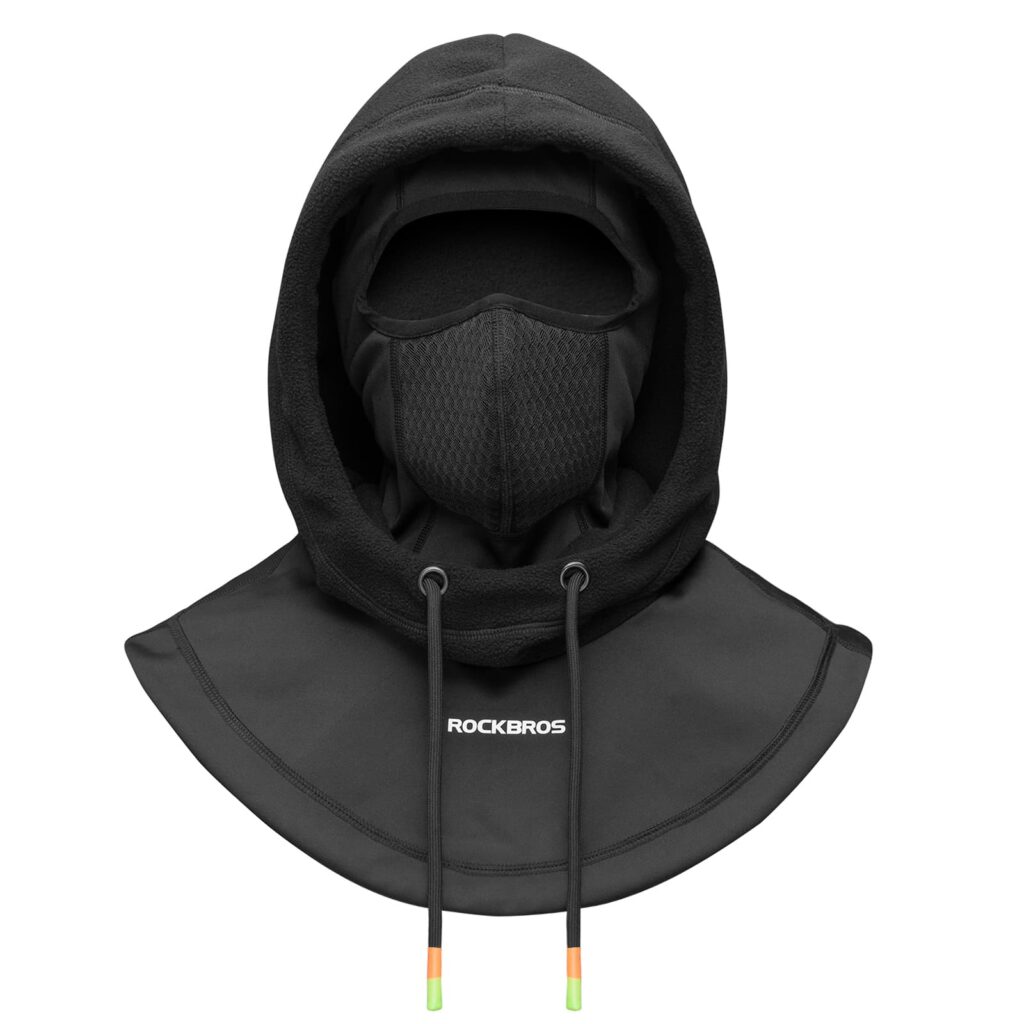
Can you even wear a cap under your bike helmet? The question comes up every November, and the answer is reassuringly clear: yes, as long as the helmet still fits firmly afterward. For commuting in freezing temperatures, we recommend a thin, windproof balaclava that covers your head, ears and neck in one piece, for example the ROCKBROS windproof full-face balaclava. If you only want to keep your ears warm, a fleece helmet liner cap is the cheaper option.
What the Swiss accident researchers measured
The Swiss Council for Accident Prevention (BFU) investigated exactly this in 2020. Five different caps were placed under three helmets, including a model with MIPS and an e-bike helmet, for 15 combinations in total. Testing was done in the lab according to the EN 1078 helmet standard, as well as with test subjects and in the field. The result: protection did not drop to a biomechanically relevant degree. All helmets could be adjusted correctly over every cap, and hearing was barely muffled. The BFU therefore sees no reason to do without warm headwear.
It does set one condition, though: the helmet has to fit just as correctly with the cap as without. If it shifts easily, you should choose a different cap.
How to check the fit
Put on the balaclava and then the helmet. It should sit level, about two finger widths above your eyebrows, and must not move when you shake your head. According to the German automobile club ADAC, the straps form a triangle below the ears, and about one and a half centimeters should remain between the chin strap and your chin. Readjust the dial at the back of the helmet with the cap on, not before.
Thick knit hats are where it gets difficult. The German cyclists‘ association ADFC points out that a thick hat can require a larger helmet, and in its own test the association stresses that the helmet has to sit snugly on the head to protect you in a fall. A thick wool hat keeps you warm but does not fit underneath. That is why there are thin balaclavas and helmet liner caps made specifically for cycling.
If you are buying a new helmet right now, take the balaclava along to the fitting. The German consumer testing organization Stiftung Warentest advises year-round riders to do exactly that: choose a well-ventilated helmet and check in the store whether it can be adjusted properly with a helmet cap underneath. The second lever is on top of the helmet. According to Stiftung Warentest, helmets with small vents are better suited to the cold season, and a rain cover over the helmet seals the vents a little more in cold weather. The ADFC recommends a windproof and waterproof helmet cover for this, so the headwind does not blow through the openings. This combination is often enough on its own, and a thin cap under the helmet will then do instead of a thick balaclava.
Balaclava, cap or neck gaiter?
A balaclava covers the head, ears, neck and usually the chin and mouth. Only the eye area stays uncovered, sometimes the nose as well. In sub-zero temperatures and a headwind, it is the solution that leaves the fewest gaps.
A helmet liner cap warms the head and ears, but not the neck. Combined with a neck gaiter, which the ADFC recommends as a neck warmer and which can be pulled up over the mouth and nose when needed, it forms a flexible system. When it gets warm, the gaiter goes into your pocket. With a balaclava, that is not possible.
One point speaks in favor of the thinner solution. Moisture from your breath collects under a tight balaclava in front of your mouth, and anyone who wears glasses knows the result: they fog up at the traffic light. Balaclavas with an opening in front of the mouth or with a breathing filter are meant to reduce this.
Six balaclavas and caps compared
All features according to the ROCKBROS retailer listings. Prices are shown automatically from the retailer data.
| Model | Type | Details according to retailer | Best for |
|---|---|---|---|
| ROCKBROS windproof full-face cycling balaclava | Balaclava, full face | windproof | Commuters in freezing temperatures |
| ROCKBROS thermo-sensitive fleece winter balaclava | Balaclava | fleece | very cold days |
| ROCKBROS windproof under-helmet balaclava | Balaclava for under the helmet | windproof, fleece | Road bike, gravel |
| Winter cycling under-helmet cap | Cap | head circumference 54–61 cm | Warm ears, neck uncovered |
| ROCKBROS heated balaclava | Balaclava with heating | windproof | People who are always cold |
| ROCKBROS men’s windproof winter balaclava | Balaclava | sizes 56–60 and 61–66 | large heads, small budget |
ROCKBROS windproof full-face cycling balaclava
Explicitly described for cycling, windproof and covering the whole face. According to the retailer, it is also available in a waterproof version. For commuters riding in sub-zero temperatures, it covers the spots where the headwind hurts the most: ears, forehead, chin. Check as described above whether the helmet still fits properly over it.
ROCKBROS thermo-sensitive fleece winter balaclava
Fleece is warmer than thin technical fabric but also a little bulkier. For really cold days, when you may have to loosen the helmet by one notch.
ROCKBROS windproof under-helmet balaclava
Sold as a helmet liner, so it is designed to sit flat under the helmet. For sporty riders who sweat but still do not want wind on their ears.
Winter cycling under-helmet cap
A classic cap to wear underneath, for head circumferences of 54 to 61 centimeters according to the retailer. Measure directly above your eyebrows around the widest part of the back of your head, just as you would when buying a helmet. It does not cover the neck.
ROCKBROS heated balaclava
With battery-powered heating. For a normal commute, we consider it unnecessary; a good windproof balaclava is usually enough. On very long, slow rides in severe frost, things may look different. More on this in our guide to heated cycling clothing (in German).
ROCKBROS men’s windproof winter balaclava
The budget pick, and one of the few with two sizes. Anyone with a head circumference above 60 centimeters knows how often one-size-fits-all pinches. For narrow heads, on the other hand, the smaller size makes sense, because a balaclava that is too loose bunches up under the helmet and slips at the forehead.
How we would decide
Your commute takes half an hour, it is minus three degrees Celsius and windy: balaclava. You ride hard and sweat quickly: a thin helmet liner cap plus a neck gaiter you can take off. And if the helmet no longer fits properly with any balaclava, the problem is not the balaclava but the helmet size. In that case, take a look at our bike helmet (in German) guide.
Wash balaclavas regularly. They sit right against your mouth and nose and constantly absorb moisture as you breathe.
Frequently asked questions
Can you wear a cap under a bike helmet?
Yes, as long as the helmet still fits firmly afterward. In 2020, the Swiss Council for Accident Prevention (BFU) tested five caps under three helmets, 15 combinations in total, according to the EN 1078 standard. Protection did not drop to a biomechanically relevant degree. If the helmet shifts easily with the cap on, choose a different one.
How do I check whether the helmet fits properly over the balaclava?
It should sit level, about two finger widths above your eyebrows, and must not move when you shake your head. According to the German automobile club ADAC, the straps form a triangle below the ears. Readjust the dial at the back of the helmet with the cap on, not before.
What is the difference between a balaclava and a helmet liner cap?
A balaclava covers the head, ears, neck and usually the chin and mouth; only the eye area stays uncovered. A helmet liner cap warms the head and ears, but not the neck. Combined with a neck gaiter, it forms a flexible system in which the gaiter goes into your pocket when it gets warm.
Why does a thick wool hat not fit under a helmet?
The German cyclists' association ADFC points out that a thick hat can require a larger helmet, and the helmet has to sit snugly on the head to protect you in a fall. That is why there are thin balaclavas and helmet liner caps made specifically for cycling. A helmet cover that keeps the wind from blowing through the vents also helps.
Why do my glasses fog up with a balaclava?
Moisture from your breath collects under a tight balaclava in front of your mouth, and your glasses fog up at the traffic light. Balaclavas with an opening in front of the mouth or with a breathing filter are meant to reduce this. Because the balaclava constantly absorbs moisture, you should wash it regularly.
Which balaclava fits a large head circumference?
According to the retailer, the ROCKBROS men's windproof winter balaclava comes in sizes 56–60 and 61–66. For narrow heads, the smaller size makes sense, because a balaclava that is too loose bunches up under the helmet and slips at the forehead.
Sources
- BFU: Bike helmet and cap – do they go together? (2020)
- ADAC: Adjusting a bike helmet correctly
- Stiftung Warentest: Bike helmet buying checklist (03/21/2024)
- ADFC: The right clothing for cold weather
- ADFC: Seen and ridden – Well tempered
Where to buy
- ROCKBROS Sturmhaube Winddicht Fahrrad Full FaceView at ROCKBROSAvailable in Germany: ROCKBROS
- ROCKBROS Winter Balaclava Herren Winddicht SturmmaskeView at ROCKBROSAvailable in Germany: ROCKBROS
- ROCKBROS Thermo-Sensitiv Winter Balaclava FleeceView at ROCKBROSAvailable in Germany: ROCKBROS
- ROCKBROS Sturmhaube winddichte UnterhelmmützeView at ROCKBROSAvailable in Germany: ROCKBROS
- Winter Fahrrad UnterziehmützeView at ROCKBROSAvailable in Germany: ROCKBROS
- ROCKBROS Beheizte BalaclavaView at ROCKBROSAvailable in Germany: ROCKBROS