Contents12 sections
This guide was first published in German on handgetestet.de.
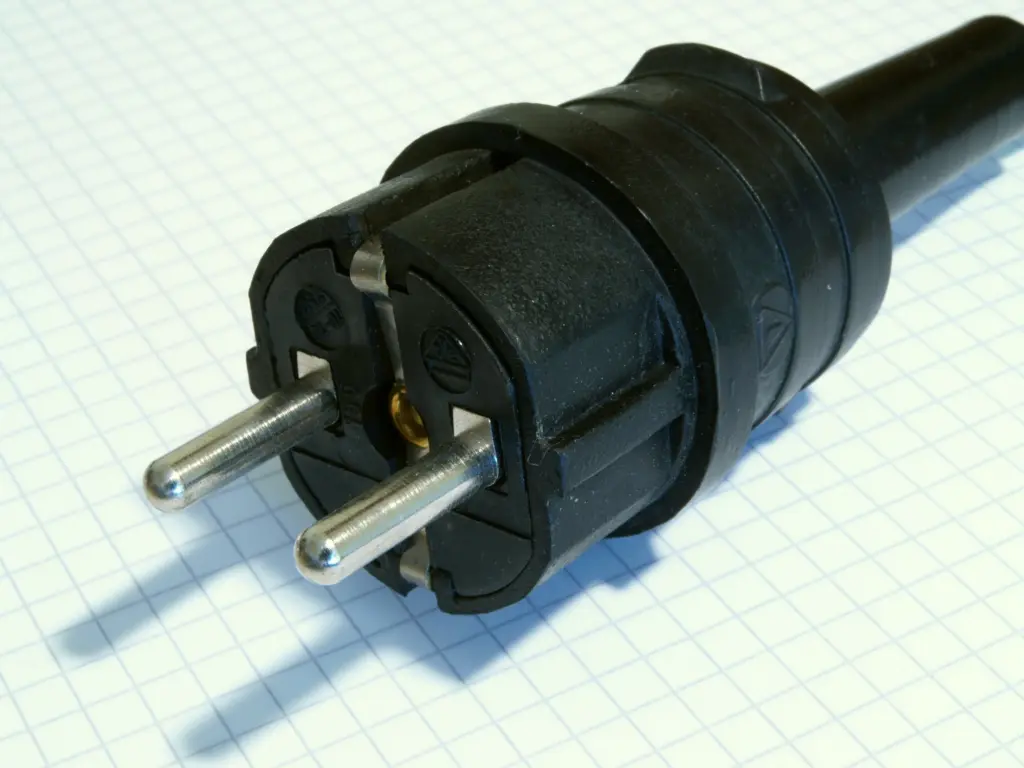
Sixteen amps are printed on the outlet, ten should flow overnight. That is all you need to remember for a start. If you occasionally charge your EV from a Schuko outlet, the standard German and European household socket (type F), and already own a Type 2 cable, you are well set up with the Lapp Mobility Dock, because the device stays fixed at 10 amps and monitors the temperature at the plug. Before that, though, the outlet should be inspected by a qualified electrician. If you charge at the outlet every day, you are looking for the wrong cable anyway.
Why 16 amps on paper do not apply all night
The technical guideline from the German standards bodies DKE and VDE FNN and four other associations is clear: under DIN VDE 0620-1, Schuko outlets can only handle the full 16 amps for a limited time and are therefore not suitable for permanent charging. The problem rarely lies in a new outlet. Aged contacts, terminals in the supply line or a sloppy installation increase resistance. That is where a so-called hotspot forms, and with it the fire hazard grows. A hair dryer runs for minutes. A car charges for ten hours straight.
The sources agree surprisingly well on where the limit lies. The German consumer advice center Verbraucherzentrale considers household outlets unsuitable for hours of load above 10 amps and recommends using the outlet only in emergencies. In its manual, go-e names a maximum of 10 amps as advisable and limits single-phase adapters to 6 amps by default. Lapp refers to the product standard IEC 60884, which according to the manufacturer provides for 10 amps of continuous current for household outlets. The German automobile club ADAC wants charging limited to exceptional cases and reduced power.
How much speed does caution cost? At 230 volts, 6 amps gives about 1.4 kW, 10 amps 2.3 kW and 13 amps 3 kW. Lapp calculates 18.4 kWh for eight hours at 2.3 kW, which at 15 kWh per 100 kilometers means 120 kilometers of range. That is often enough for commuters, but not for an empty 60 kWh battery before a vacation trip.
Other countries sometimes have different limits. For Schuko attachments, NRGkick lists 10 amps in Norway and France, 8 in Finland and Switzerland, and 6 in Denmark.
What the electrician should clarify
The German Insurance Association (GDV) writes that a qualified electrician should always check and certify whether, and for which charging current, the outlet and installation are suitable. The guideline also recommends having existing installations checked before connecting an EV and upgraded if necessary, for example with the E-CHECK, a German electrical safety inspection. NRGkick even makes the inspection a prerequisite and requires a dedicated residual current device and circuit breaker for the circuit. go-e requires a type A residual current device (RCD) and a circuit breaker on the building side.
Ask the electrician three specific questions. Which continuous current is acceptable at this specific outlet? What else is on the same circuit? And is there an RCD that suits the cable? Get the answer in writing. How outdoor power is planned properly is shown in our guide to outdoor power posts (in German), using the garden as an example.
If the car charges there regularly, a new solution is due. The ADAC describes red and blue CEE outlets as rated for continuous current. NRGkick allows 14 or 16 amps at „Green Up“ outlets depending on the model, but explicitly not at other household outlets. And according to go-e, Mode 2 is not intended for permanent charging under the standard at all. At the end of this line of thought, there is usually the station from the wall box guide.
Five things an emergency charging cable must do
Mode 2 and Mode 3 are explained in our guide to charging cables (in German). At a household outlet, this is what counts:
- Approval as an in-cable control and protection device under IEC 62752, verifiable in the data sheet or declaration of conformity.
- A temperature sensor in the plug. The heat builds up in the outlet, not in the box.
- A current limit of no more than 10 amps, whether fixed or adjustable. For unknown outlets, NRGkick and go-e recommend the lowest setting.
- Strain relief for the outlet. According to NRGkick, the device’s weight must not pull on the plug; a hook or support helps.
- A direct connection. For safety reasons, the guideline advises against extension cords, power strips and cable reels (in German), and NRGkick prohibits extension cords.
Six solutions for the household outlet
| Model | Design | Current at the household outlet | Temperature protection at the plug | Best for |
|---|---|---|---|---|
| Lapp Mobility Dock | Charger for the outlet, needs a Mode 3 cable | fixed 10 A, up to 2.3 kW | yes, reduces power or shuts off | You already own a Type 2 cable |
| Mennekes charging cable Mode 2 Type 2 13A 4m | classic emergency charging cable with box | 13 A, up to 3 kW | yes, multi-stage | one cable without accessories, short distances |
| NRGkick 16A | mobile wall box with plug attachments | 13 A attachment; adjustable on the device | yes, on every attachment | switching between Schuko and CEE |
| go-e Charger Gemini flex 2.0 11 kW | charging box, Schuko adapter as an accessory | 6 A by default, recommendation no more than 10 A | sensors present, location not stated | CEE at home, Schuko occasionally |
| Juice Booster 3 air | mobile wall box with adapters | adjustable according to the ADAC | yes, sensor in the plug pins | frequent travel with changing outlets |
| EVDANCE Schuko charging cable 16 A | emergency charging cable with control box | 6–16 A according to the seller, up to 3.68 kW | no information known to us | only at the 10 A setting or lower |
Lapp Mobility Dock
Not a cable but a 750-gram box that plugs directly into the wall outlet and takes your existing Mode 3 cable. According to the data sheet, it supplies a maximum of 10 amps, includes residual current protection for 30 mA AC and 6 mA DC, and monitors the electronics and plug for heat. A fold-out support takes the load off the outlet. We would still only buy it with eyes open: without a Type 2 cable, nothing works, and the data sheet does not mention a lower setting for questionable outlets.
Mennekes charging cable Mode 2 Type 2 13A 4m
The classic emergency charging cable. According to the data sheet, it reduces power in several stages when the Schuko plug or box gets hot, detects incorrectly connected protective conductors and resumes charging on its own after a power outage. It weighs 1.85 kilograms. Four meters is tight, though, and 13 amps is above what Verbraucherzentrale and go-e name for continuous operation. Fine for emergencies, not for a permanent solution. This cable is currently not available on Amazon (as of November 9, 2026).
NRGkick 16A
This Austrian charging unit belongs in the upper price range and only makes sense if CEE comes into play alongside Schuko. According to the data sheet, temperature monitoring sits on every plug attachment. For Schuko, there are attachments with 13 amps, with 10 amps for France and Norway, and with the „Green Up“ function. With five meters of cable, the device weighs about 2.55 kilograms and must therefore be supported.
go-e Charger Gemini flex 2.0 11 kW
The Schuko adapter is an accessory, and it has to be an original. By default, go-e limits single-phase adapters to 6 amps; check the country setting in the app beforehand. If it overheats, the box reduces the current. The manual does not describe a separate sensor in the Schuko plug.
Juice Booster 3 air
In the ADAC’s 2024 comparison, it came out on top with a grade of 1.6 (on the German scale where 1 is best). According to Juice, the sensor sits directly in the pins of the household adapter. From 70 degrees Celsius, the device stops charging in a controlled way, continues at lower power after cooling down and gives up after the third time. For pure Schuko charging, that is more device than you need.
EVDANCE Schuko charging cable 16 A
According to the seller, adjustable from 6 to 16 amps, 3.68 kW and 6.1 meters long. That advertised figure is exactly what you should ignore at a household outlet; set the cable to 10 amps or less. The seller does not provide the manual, data sheet or declaration of conformity online, so check the manual and test marks before buying. For unknown brands, the ADAC advises looking for the manufacturer information on the rating plate and the declaration of conformity. On Trustpilot, EVDANCE scored 3.9 out of 5 from 37 reviews in November 2026, 24 percent of them with one star. Complaints mainly concern shipping and service, and in individual cases also failures and a melted plug.
How we would decide
- Type 2 cable on hand, outlet only now and then: Lapp Mobility Dock, after the outlet has been inspected.
- No cable yet, just an emergency reserve in the trunk: Mennekes Mode 2, well away from continuous use.
- Alternating between Schuko and CEE, for example at a vacation home: NRGkick 16A or Juice Booster 3 air.
- There is already a CEE outlet at home: go-e Gemini flex, with Schuko remaining the exception.
- Charging at the outlet is everyday routine: do not buy a cable. Call an electrician and plan a CEE outlet or wall box.
Does a portable power station work as a mobile charging source? The answer, with the math, is in the guide charging an EV with a power station (in German).
Frequently asked questions
Can you charge an EV from a Schuko outlet?
In exceptional cases and at reduced power, according to the German automobile club ADAC. According to the German technical guideline, Schuko outlets can only handle the full 16 amps for a limited time. Aged contacts or terminals can create hotspots and thus a fire hazard. The German consumer advice center Verbraucherzentrale recommends using the outlet only in emergencies.
How many amps should you charge with at a household outlet?
No more than 10 amps; Verbraucherzentrale, go-e and Lapp largely agree on that. go-e even limits single-phase adapters to 6 amps by default. For unknown outlets, NRGkick and go-e recommend the lowest setting.
How long does charging at an outlet take?
At 230 volts, 10 amps gives about 2.3 kW. Lapp calculates 18.4 kWh for eight hours, which at 15 kWh per 100 kilometers means 120 kilometers of range. That is often enough for commuters, but not for an empty 60 kWh battery before a vacation trip.
What should the electrician check at the outlet?
Which continuous current is acceptable at this specific outlet, what else is on the same circuit and whether a suitable residual current device is present. The German Insurance Association (GDV) advises always having this checked and certified by a qualified electrician. Get the answer in writing.
What should you look for in an emergency charging cable?
Approval to IEC 62752, a temperature sensor in the plug and a current limit of no more than 10 amps. The device's weight must not pull on the plug. For safety reasons, the guideline advises against extension cords, power strips and cable reels.
What is the solution for daily charging at home?
Not a Schuko outlet. The ADAC describes red and blue CEE outlets as rated for continuous current, and according to go-e, Mode 2 is not intended for permanent charging under the standard. For regular charging, plan a CEE outlet or a wall box with your electrician.
Sources
- DKE, VDE FNN, BDEW, ZVEH, ZVEI, VDA: Technical guideline on charging infrastructure for electromobility, version 4.1 (PDF)
- Verbraucherzentrale: Charging an EV with your own charging station
- ADAC: Charging cables and plug types
- ADAC: Mobile wall boxes compared (July 2024)
- GDV: Charge EVs at normal outlets only in exceptional cases
- Lapp Mobility: Mobility Dock type E/F data sheet (PDF)
- Lapp Mobility: Mobility Dock FAQ
- Mennekes: Product data sheet charging cable Mode 2 Type 2 13A 4m (PDF, Swedish)
- NRGkick: Operating manual (PDF)
- NRGkick: 16A and 32A data sheet (PDF)
- NRGkick: Plug attachments
- go-e: Gemini flex installation and operating manual (PDF)
- Juice Technology: Charging at household outlets with temperature monitoring
- CMS-Buttler: User report on the EVDANCE cable (blog with affiliate links)
- Trustpilot: Reviews of EVDANCE
Where to buy
- Lapp Mobility DockCheck price at Amazon.deAvailable in Germany: Amazon.de
- Mennekes Ladekabel Mode 2 Typ 2 13A 4mCheck price at Amazon.deAvailable in Germany: Amazon.de
- NRGkick 16ACheck price at Amazon.deAvailable in Germany: Amazon.de
- go-e Charger Gemini flex 2.0 11 kWCheck price at Amazon.deAvailable in Germany: Amazon.de
- Juice Booster 3 airCheck price at Amazon.deAvailable in Germany: Amazon.de
- EVDANCE Schuko-Ladekabel 16 AView at EVDANCEAvailable in Germany: EVDANCE